
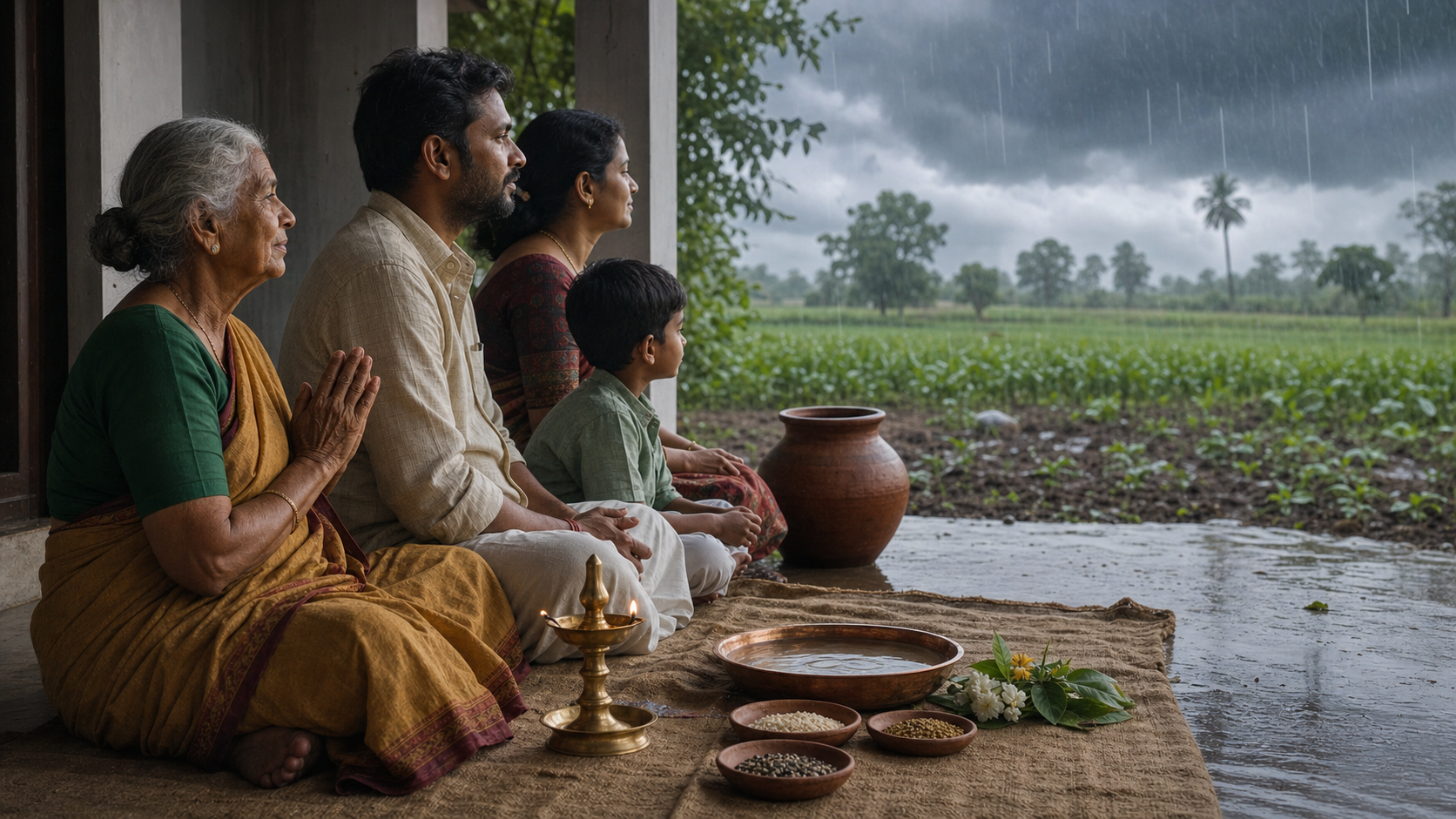
If Ashadhi Beej has reached you only as a date on a family calendar, you may be wondering what you are actually meant to do. The observance does not require an elaborate ceremony. Its central discipline is to pause at the opening of the rainy season, pray for rain in the right measure, and make wiser choices about water, soil, seed, and shared well-being.
In India, Ashadhi Beej falls on July 16 in 2026. You can mark it with a short household puja, an attentive reading of the monsoon, and one practical act of ecological responsibility. That combination preserves both the devotional and agrarian meaning of the day.
Why the 2026 date depends on the tithi

Ashadhi Beej, also called Ashadhi Sud Beej or Ashadi Bij in regional usage, is observed on Ashadha Shukla Dwitiya. This is the second tithi of the waxing, or bright, fortnight of the lunar month of Ashadha.
A tithi is determined by the changing angular distance between the Moon and the Sun, not by a midnight-to-midnight civil date. Each tithi covers 12 degrees of lunar elongation. Dwitiya begins after the Moon has moved more than 12 degrees ahead of the Sun and ends before it reaches 24 degrees. A regional Panchang then assigns the observance to a civil date by considering when that tithi overlaps the local sunrise.
This explains why you should consult a Panchang for your location, especially outside India. Amanta and purnimanta calendars may organize lunar months differently, but the relevant designation remains Ashadha Shukla Dwitiya. For most of India, the applicable date in 2026 is July 16.
The same tithi also carries the widely celebrated Jagannath Ratha Yatra. The calendrical meeting should not be used to collapse two distinct observances into one. It shows how a regional monsoon tradition and a major devotional festival can participate in the same broader rhythm of the Hindu calendar.
Read the monsoon as a relationship, not a prediction trick
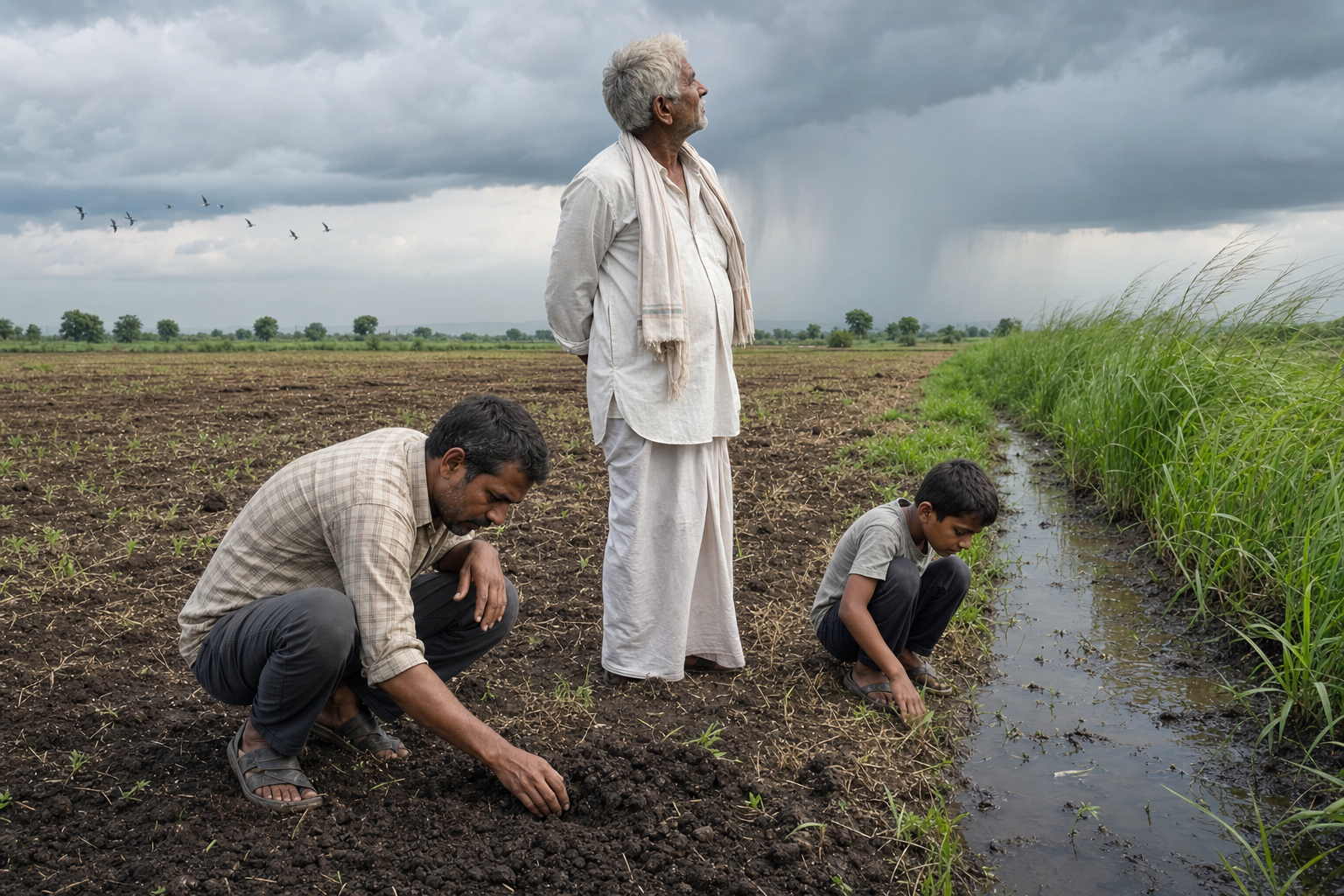
Ashadhi Beej is especially rooted in western India, notably Gujarat and Kutch, and is also observed in parts of North India such as Uttar Pradesh. In Kutch, its association with a new season carries practical weight. Families and farming communities prepare for work whose success depends on the arrival, distribution, and duration of rain.
Traditional monsoon reading begins with repeated observation. Farming communities have watched the direction and steadiness of winds, the shape and movement of early clouds, shifts in heat and humidity, the behavior of birds and insects, and the scent and response of soil after the first showers. No single sign guarantees what the season will do. The value lies in noticing several changes together and comparing them with the behavior of the local landscape.
You can recover that discipline without pretending that inherited indicators replace meteorology. Keep a simple seasonal record with the date, wind direction, cloud conditions, soil response, rainfall observed, and the decision that followed. Over time, this turns a vague impression such as “the rains seem late” into a usable local memory.
For a cultivator, the consequences are concrete. Monsoon conditions affect how intensively a field should be prepared, when first sowing is prudent, and whether drought-tolerant or flood-tolerant seed varieties deserve consideration. The tithi marks a moment for attention and planning; it is not an automatic instruction to sow on that civil day.
The sound approach is to place inherited knowledge beside current forecasts, medium-range weather models, and soil-moisture advisories. If a cloud pattern looks promising but the forecast and field moisture do not support sowing, do not treat ritual enthusiasm as agronomic evidence. Conversely, modern data becomes more useful when interpreted by someone who knows how that particular soil drains, crusts, retains moisture, and responds to the first rain.
A simple Ashadhi Beej observance for your household
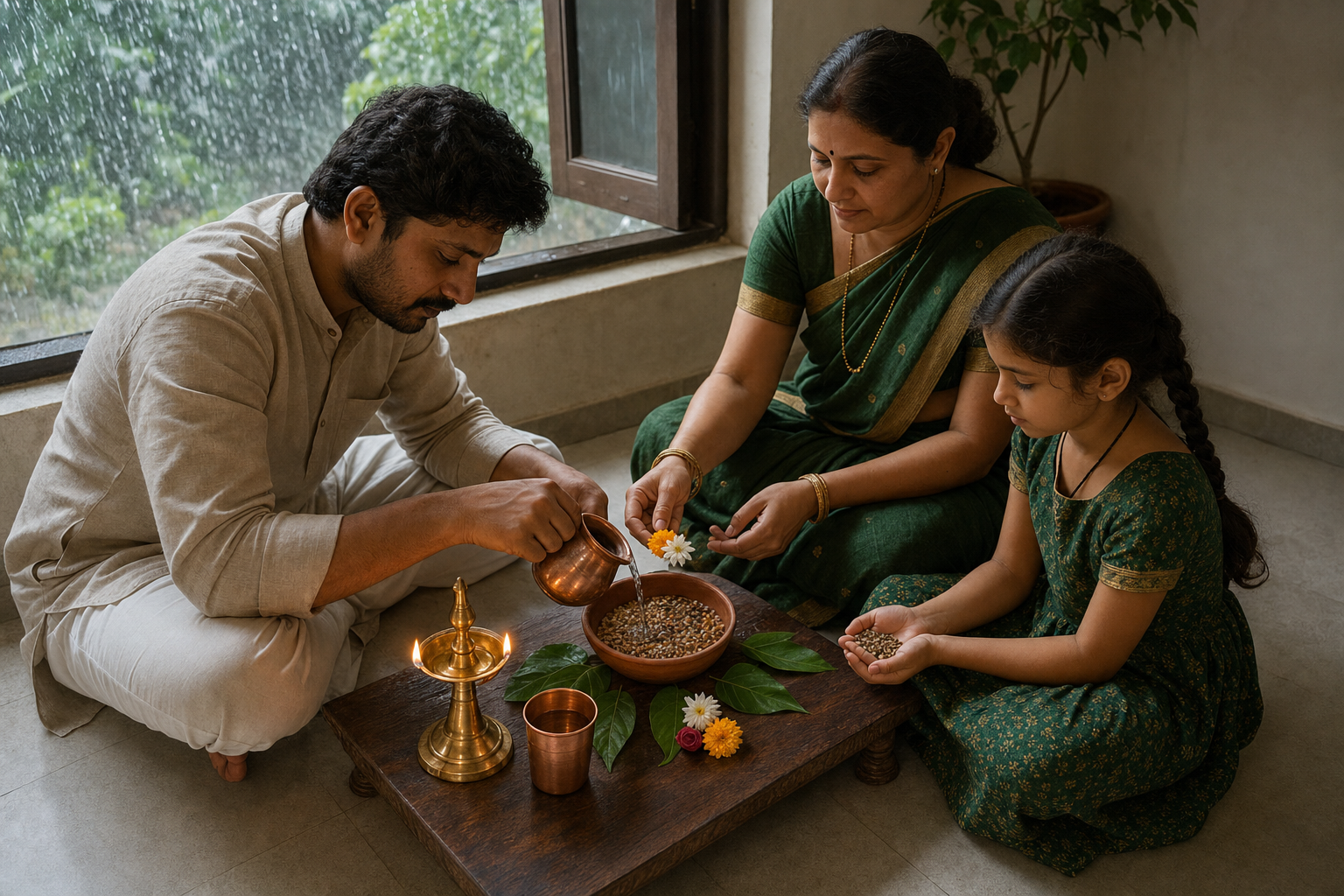
There is no need to invent an elaborate universal ritual. Regional and family customs differ, and a sincere observance can remain brief. The following sequence keeps the focus on gratitude, restraint, and responsibility.
- Prepare a clean, sattvic prayer space. Use your household altar rather than treating the festival as a reason to create a display disconnected from family practice.
- Make a clear sankalpa. Pray for timely and well-distributed rainfall, fertile soil, the welfare of cultivators, and the well-being of the wider community. A plain-language intention is sufficient: “May rain come in the right measure, may the soil remain fertile, and may we use water without waste.”
- Invoke the divine according to your tradition. Some families address Varuna or Indra because of their associations with water and rain. Others pray to their Ishta-devata through a Vaishnava, Shaiva, or other inherited form. You do not need to replace your kula or household practice with a supposedly standard Ashadhi Beej formula.
- Offer seasonal food with moderation. Seasonal grains or fruit make an appropriate naivedya. The offering should express gratitude for nourishment, not consumption for its own sake.
- Honor the means of cultivation where relevant. An agricultural household may respectfully acknowledge its seeds, implements, or plough. This is not worship of productivity alone. It is a reminder that tools, labor, soil, water, animals, and human judgment must work together.
- Complete the observance with dana or service. Share useful seeds with a smallholder, support a community pond or water-conservation effort, or contribute to sustainable agriculture. Choose an act that improves the actual conditions for which you have prayed.
If elders in your family know an Ashadhi Beej song, kirtan, prayer, or local story, record it with their permission and learn when it was traditionally used. Preserving context matters. A field song, a household vrata, and a temple observance may all belong to the season without being interchangeable.
Carry the tradition into farm, city, and diaspora life
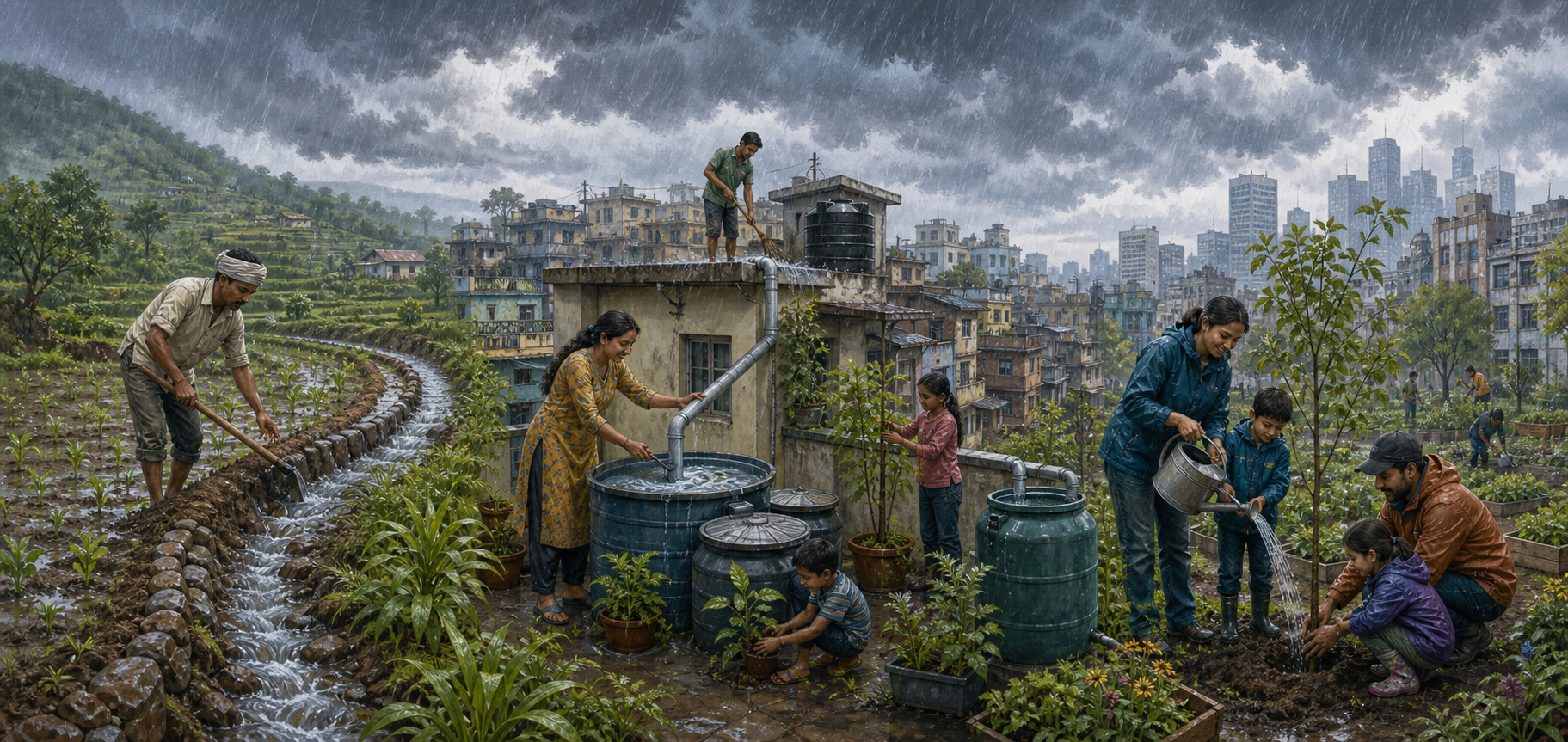
If your family farms
Use the day to review decisions that rainfall variability can expose. Compare local observations with available forecasts and soil-moisture guidance. Revisit the timing of first sowing, the resilience of chosen seed varieties, and the danger of committing the entire field on the strength of one early shower. Ashadhi Beej sanctifies careful work; it does not reward avoidable risk.
This is also an appropriate time for intergenerational exchange. Ask an elder which signs were considered meaningful, under what conditions they failed, and how the soil behaved after different kinds of rain. Then place that knowledge beside present-day advisories. Respecting ancestral wisdom does not require freezing it in time.
If you live in a city
Do not reduce the day to nostalgia for a rural life you no longer inhabit. Your household still depends on watersheds, agricultural labor, functioning soil, and seasonal rainfall. Select one action you can verify: correct a source of water waste, help an urban growing space, support a credible pond or watershed effort, plant where responsible long-term care is available, or direct dana toward cultivators and sustainable agriculture.
The important distinction is between a symbolic gesture and stewardship. A prayer for abundant rain paired with careless water use leaves the observance incomplete. A modest ritual paired with a durable change in conduct is closer to its agrarian spirit.
If you live outside Bharat
Your local season may not resemble the Indian monsoon in July. You can still observe the correct tithi using a regional Panchang while acknowledging the festival’s origin in Bharat’s rainy-season cycle. Let the ritual connect you to that civilizational memory, then apply its ethic to the watershed and climate in which you actually live.
This avoids two common errors. The first is abandoning the date because the weather outside your window is different. The second is pretending that every climate follows Bharat’s monsoon calendar. The tithi preserves continuity; locally appropriate stewardship makes that continuity responsible.
Recognize unity without erasing distinct traditions
Ashadhi Beej is a Hindu seasonal observance, but its concerns belong to a wider Dharmic landscape. The Ashadha period leads toward Chaturmas disciplines in Hindu and Jain life. The Buddhist rains retreat, or Vassa, begins around the Ashadha full moon in Theravada countries. Sikh agrarian communities also carry seasonal rhythms into communal life.
These are not different names for the same festival. Their practices, theological frames, and calendars should retain their integrity. The civilizational relationship appears in a shared willingness to let season, restraint, gratitude, and responsibility shape human conduct. For you, the practical lesson is to seek unity at the level of dharmic values without manufacturing uniformity at the level of ritual.
Key takeaways for Ashadhi Beej 2026
- Ashadhi Beej falls on Ashadha Shukla Dwitiya and is observed on July 16, 2026, in India.
- Because a tithi is lunar and Panchang dates depend on local sunrise overlap, observers elsewhere should check a regional Panchang.
- A simple household observance can include a clean altar, a sankalpa for balanced rain and community welfare, prayer to Varuna, Indra, or your Ishta-devata, seasonal naivedya, and dana.
- Traditional signs such as wind, clouds, humidity, animal behavior, and soil response should cultivate attention, not false certainty.
- Farm decisions should combine local knowledge with forecasts, weather models, and soil-moisture guidance.
- Urban and diaspora families can preserve the tradition through responsible water use, support for cultivation, and care for their local ecological setting.
Before July 16, choose one prayer and one practical commitment. Ask what your household receives from rain, soil, and agricultural labor, then make the observance answer that dependence with gratitude and disciplined care.