
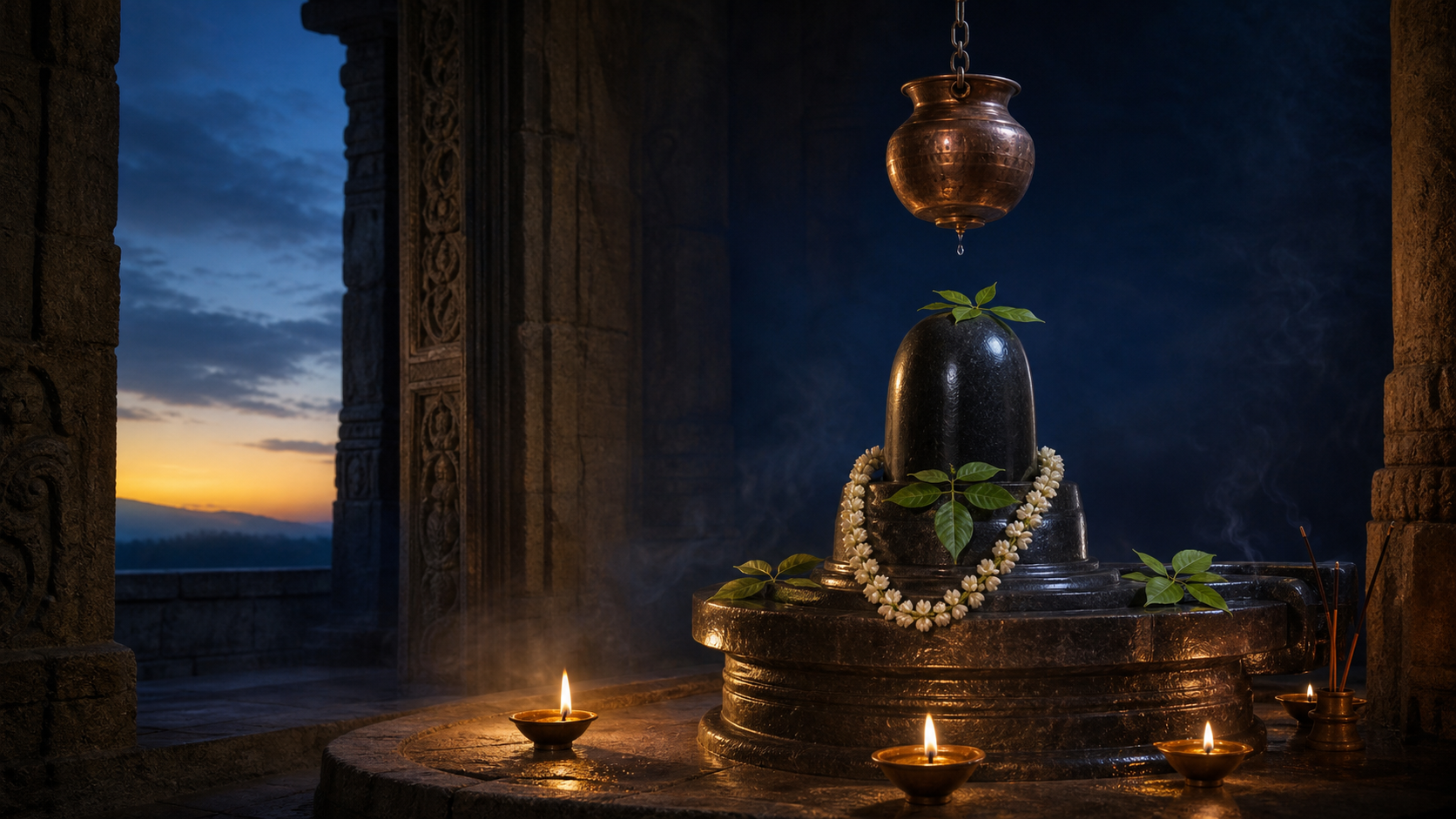
If you are deciding whether to observe Pradosh, keep the Monthly Shivaratri vrata, or schedule an important task on Friday, May 15, the early-morning tithi change is the fact that settles the first two questions. The civil date stays the same, but the relevant lunar day does not.
For most Indian locations using an IST baseline, Krishna Paksha Trayodashi ends at 05:52 on May 15. Krishna Paksha Chaturdashi then governs the rest of the day and the approaching night. That makes Friday night the expected time for Monthly Shivaratri worship, while the fortnight’s evening Pradosh belonged to May 14. Your city-level Panchang must still confirm the local Nishita Kaal and tithi span.
Key takeaways for May 15
- May 15, 2026 is a Friday in Krishna Paksha.
- Trayodashi ends at 05:52 IST on the India baseline; Chaturdashi follows.
- Do not observe Friday evening as this fortnight’s Pradosh in most Indian locations. Trayodashi no longer prevails during the evening Pradosh Kaal.
- Monthly Shivaratri worship is expected during the late night of May 15-16, provided your local Panchang shows Chaturdashi during Nishita Kaal.
- Use city-specific sunrise, sunset, Nishita, Rahu Kalam and Nakshatra timings. The clock times below are planning references, not universal muhurta.
Why the evening is Shivaratri, not Pradosh
A tithi is determined by the changing angular relationship between Surya and Chandra. It can begin or end at any clock time, so it does not follow the midnight-to-midnight shape of a civil date. On May 15, Trayodashi survives only until the early-morning transition at 05:52 IST; Chaturdashi follows it.
Pradosh is not simply any evening near Trayodashi. The decisive condition is Trayodashi prevailing during Pradosh Kaal, the twilight period after sunset. Because Trayodashi has already ended by Friday evening on the India baseline, moving the observance to May 15 would separate it from its governing tithi. This fortnight’s Pradosh worship therefore falls on the evening of May 14 in most Indian locations.
This distinction also resolves an apparent contradiction you may see in calendars. A calendar can emphasize the tithi present at sunrise, while a vrata follows the tithi present during its prescribed worship period. Even if a daily entry prominently displays Trayodashi, that label alone does not establish an evening Pradosh. For Pradosh, inspect the tithi at sunset and twilight. For Monthly Shivaratri, inspect it during Nishita Kaal.
Nishita is the midnight worship window near local solar midnight; it should not be assumed to mean 12:00 a.m. on every clock. Chaturdashi is expected to prevail during the relevant night of May 15-16 in India, making that the appropriate Monthly Shivaratri night. If you live far from India, the local tithi boundaries and even the applicable civil date can differ enough that an IST calendar should not be used as your final authority.
A practical Monthly Shivaratri observance
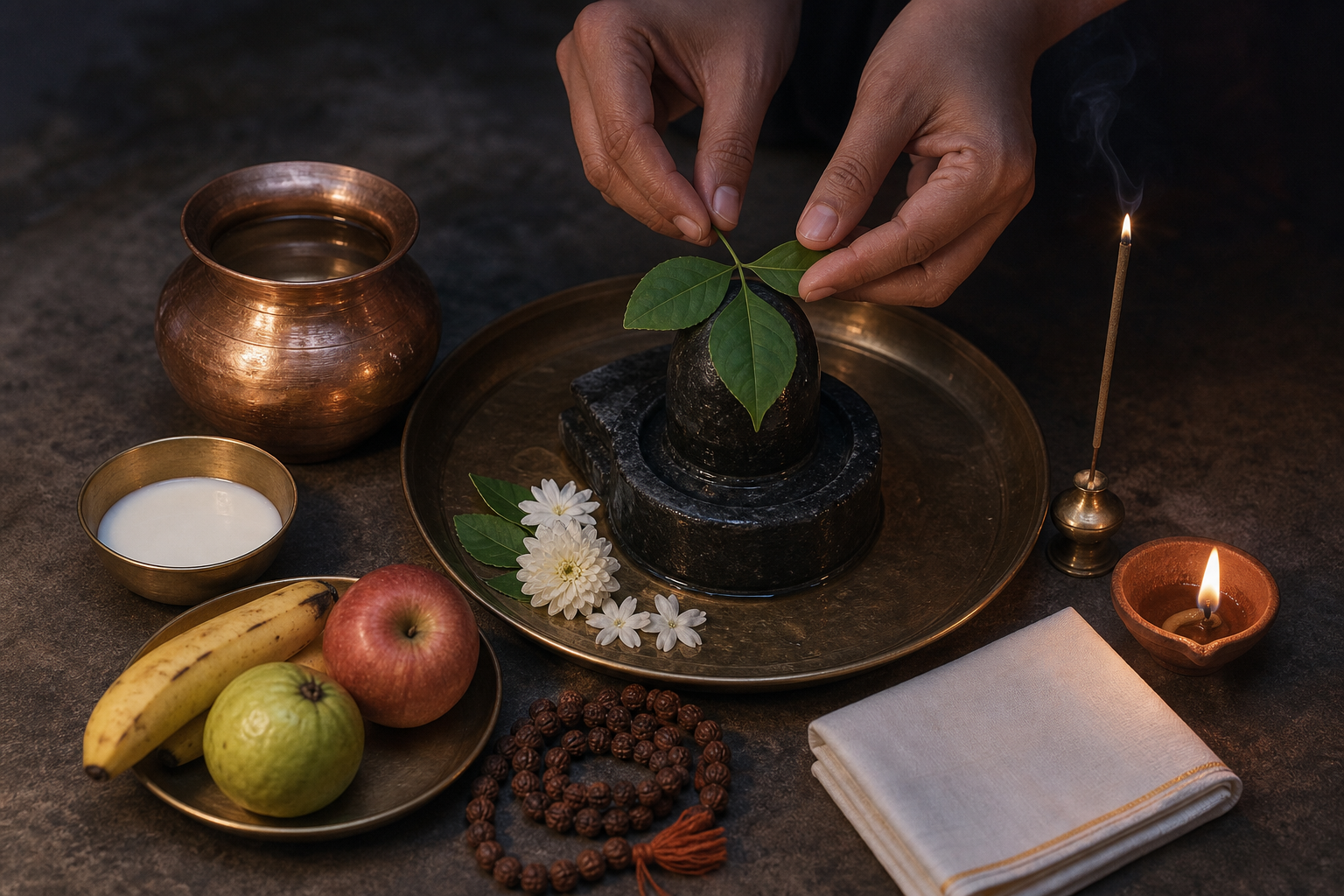
The purpose of this Chaturdashi night is focused Shiva-upasana: restraint, inward attention, japa and dhyana. Your family tradition, temple practice or sampradaya should determine the detailed ritual form. The following sequence keeps the timing clear without turning a household observance into an unnecessarily complicated ceremony.
- Check your city before making the sankalpa. Confirm that Krishna Paksha Chaturdashi prevails during the local Nishita Kaal on the night of May 15-16. Also note sunset on May 15 and sunrise on May 16.
- Choose the vrata you can keep responsibly. Devotees commonly undertake upavasa, while a simpler observance may use sattvika ahara. Follow your sampradaya rather than copying a fasting rule detached from your health needs or customary practice.
- Use the evening to reduce distraction. Godhuli Vela, around local sunset, is suitable for sandhya practice and a deepa offering. Remember that this devotional twilight is not Pradosh vrata on May 15, because Trayodashi is no longer present.
- Perform the principal Shiva puja in the verified night window. Depending on your practice, this may include abhisheka with panchamrita and either panchopachara or shodashopachara worship. A familiar household procedure is preferable to improvising ritual details you have not learned.
- Give the quiet part of the vrata real time. Repeat Om Namah Shivaya, sit for dhyana, or continue the parayana used in your tradition. Do not let preparation for offerings consume the entire period meant for upasana.
- Complete parana according to your local rule. Fast-breaking is generally planned after the following local sunrise, but Amavasya and post-puja constraints can affect the permitted time in a particular sampradaya. Record the local instruction in advance instead of deciding it while tired on May 16.
A vrata is not a test of how much physical discomfort you can endure. If fasting conflicts with medical instructions or your health needs, do not force a strict form. A restrained sattvika meal, sincere worship, japa and dhyana preserve the day’s spiritual direction without treating unsafe fasting as a measure of bhakti.
How to use Friday’s daily time windows
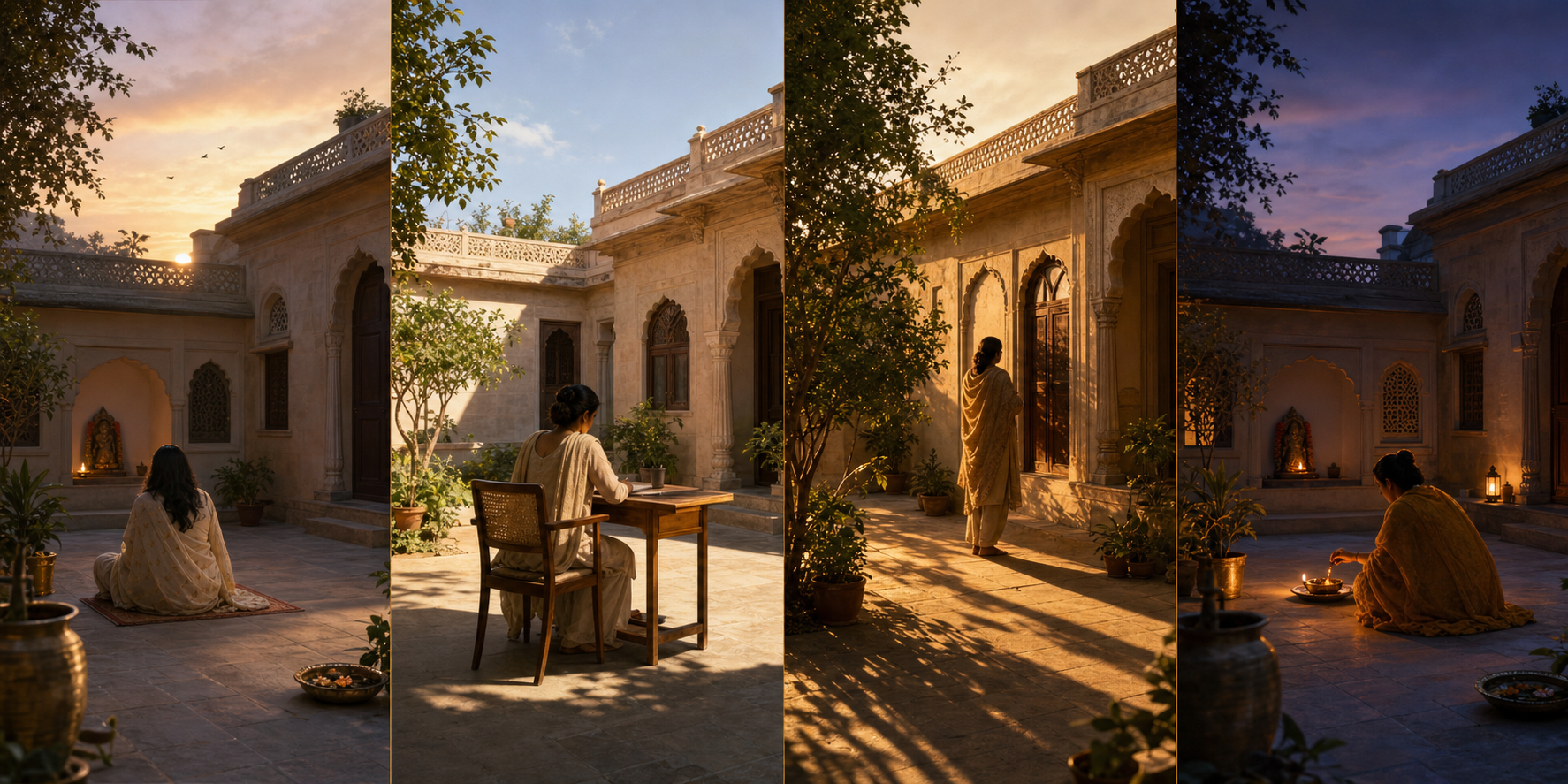
The tithi tells you which lunar observance governs the day; the daily kaal divisions help you place ordinary work and devotional practice. They answer different questions. A correct Chaturdashi date does not make every hour equally suitable for beginning a contract, journey or other consequential undertaking.
| Window | Reference timing | Practical use |
|---|---|---|
| Brahma Muhurta | Begins about 96 minutes before local sunrise | Use for meditation, japa and study. |
| Gulika Kalam | About 07:30-09:00 when sunrise is normalized to 06:00 | Treat as a cautionary period if your tradition observes it; verify the local interval. |
| Rahu Kalam | About 10:30-12:00 on Friday when sunrise is normalized to 06:00 | Avoid initiating high-stakes work, travel or contract execution during the local interval. |
| Abhijit Muhurta | Approximately 24 minutes before and after local solar noon | Useful for important non-ritual beginnings when a more specific muhurta is not required. |
| Yamaganda | About 15:00-16:30 when sunrise is normalized to 06:00 | Do not use the sample clock time blindly; check the locally scaled period before a major start. |
| Godhuli Vela | Around local sunset | Use for sandhya, deepa and devotional preparation for the night. |
The three Friday caution periods above are normalized to an approximate 06:00 sunrise. They must be scaled to the actual sunrise-to-sunset span. If your sunrise is 05:30, for example, copying 10:30-12:00 as Rahu Kalam will not produce the locally calculated interval. Longitude, latitude, time zone and daylight-saving rules all matter.
Abhijit is also centered on local solar noon, not automatically on 12:00 by the civil clock. If your calculated Abhijit window overlaps a period your tradition excludes, do not assume that one generic label cancels the other. For a costly, irreversible or ritually significant beginning, choose a reviewed local or personal muhurta. For routine study and office work, the table is best used as planning guidance rather than a reason to suspend the whole day.
What may differ on your local Panchang
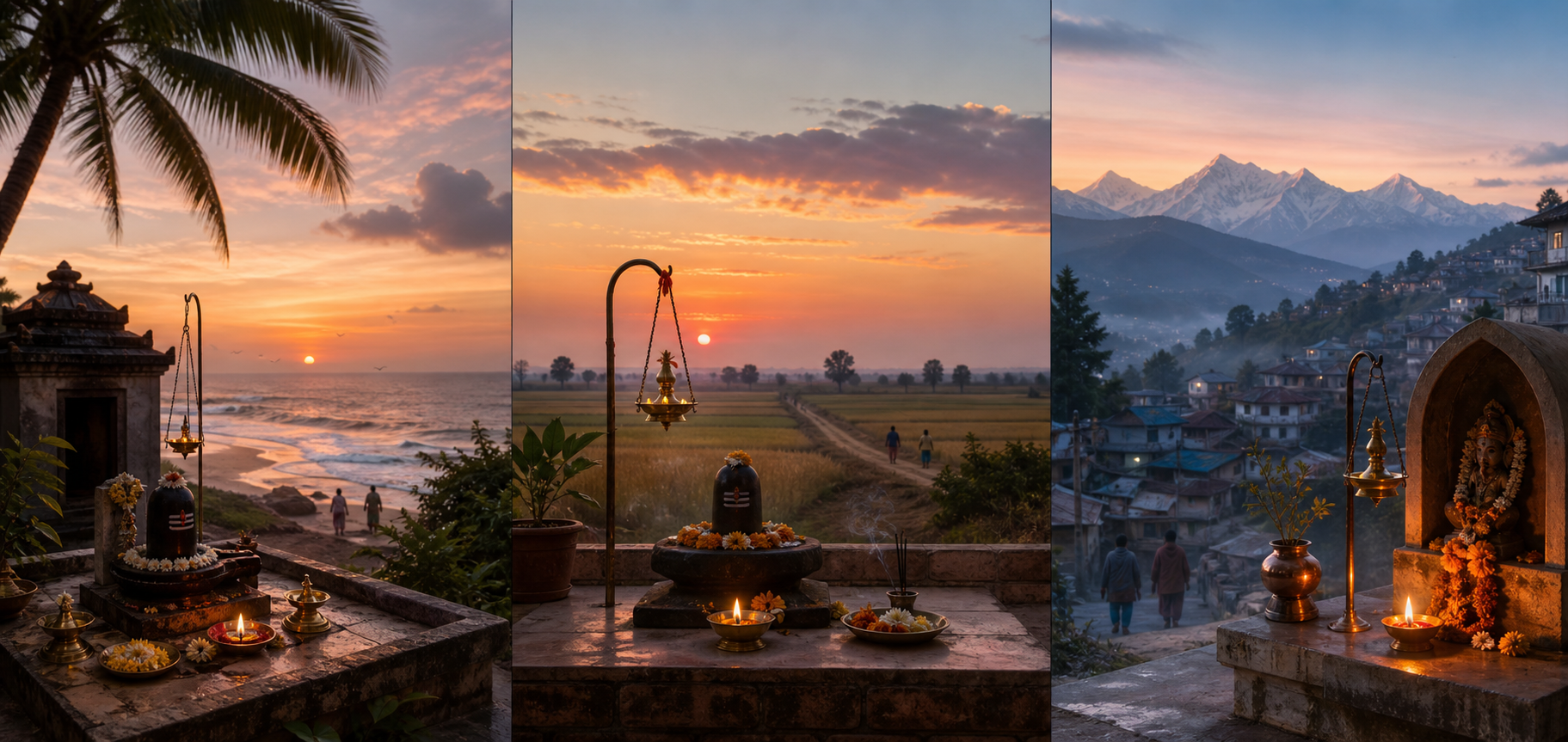
The month name can change without the sky changing. In calendars using the Amanta reckoning, the date may be identified within Vaishakha Krishna Paksha. A Purnimanta calendar may describe it as part of the closing fortnight of Chaitra. If two family calendars appear to disagree, first check which month convention each one follows; do not assume that they are describing different lunar phases.
The broad astronomical setting is Surya in Vrishabha. Chandra is near Surya as Amavasya approaches and is expected to spend much of May 15 in Mesha, moving through late Bharani toward Krittika. A later ingress toward Vrishabha may appear regionally as the new moon approaches. These are useful orientation points, but they are not precise enough for a Nakshatra-dependent rite because the boundary times vary by place.
Before relying on any screenshot, forwarded calendar card or India-wide timetable, verify these fields in a reliable topocentric Panchang:
- The city is your actual location, not merely the nearest country or time zone.
- The date, time zone and daylight-saving setting are correct.
- Trayodashi’s end and Chaturdashi’s span are shown for that location.
- Chaturdashi prevails during the displayed Nishita Kaal.
- Sunrise on May 16 and the applicable parana instruction are recorded.
- The Nakshatra and Chandra Rashi boundary times are checked if your intended rite depends on them.
Make those checks before May 15. Then the day becomes straightforward: keep ordinary commitments outside the locally calculated caution periods, reserve the evening for quiet preparation, and enter the verified Nishita window with the vrata procedure already settled. The Panchang is most useful when it removes last-minute uncertainty and leaves your attention free for Shiva-upasana.