
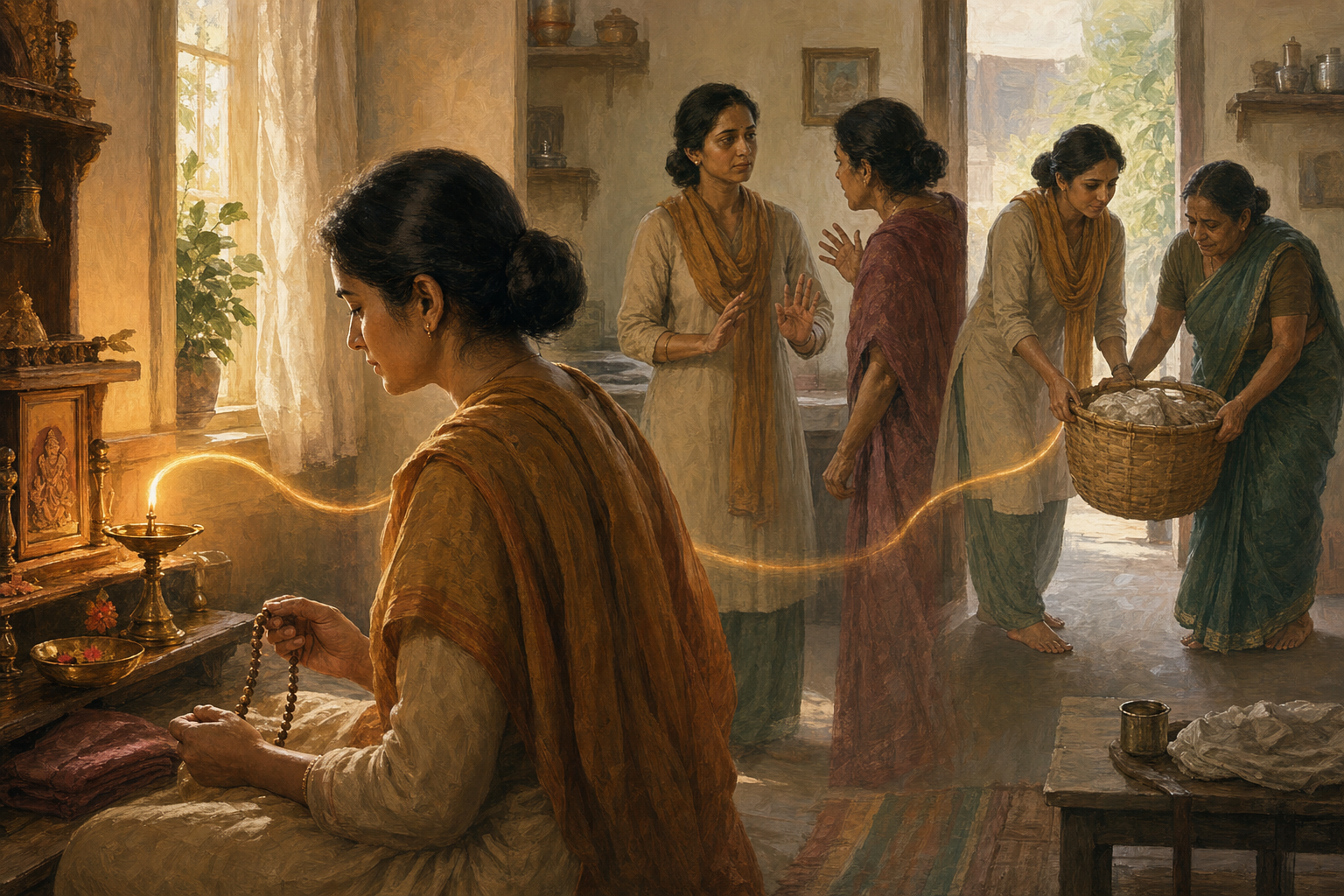
You can chant every morning, complete a stotra, or sit through kirtana and still wonder whether anything inside you is changing. The doubt usually appears after the early sweetness fades: is this devotion, habit, or merely sound?
Don’t look first for visions, constant peace, or an ideal devotional mood. Look at the next moment of friction. Notice the interval between irritation and speech, the honesty of your work when nobody is watching, and your willingness to serve without recognition. Inner transformation becomes visible when remembrance begins to alter those ordinary choices.
Look for formation, not a dramatic feeling
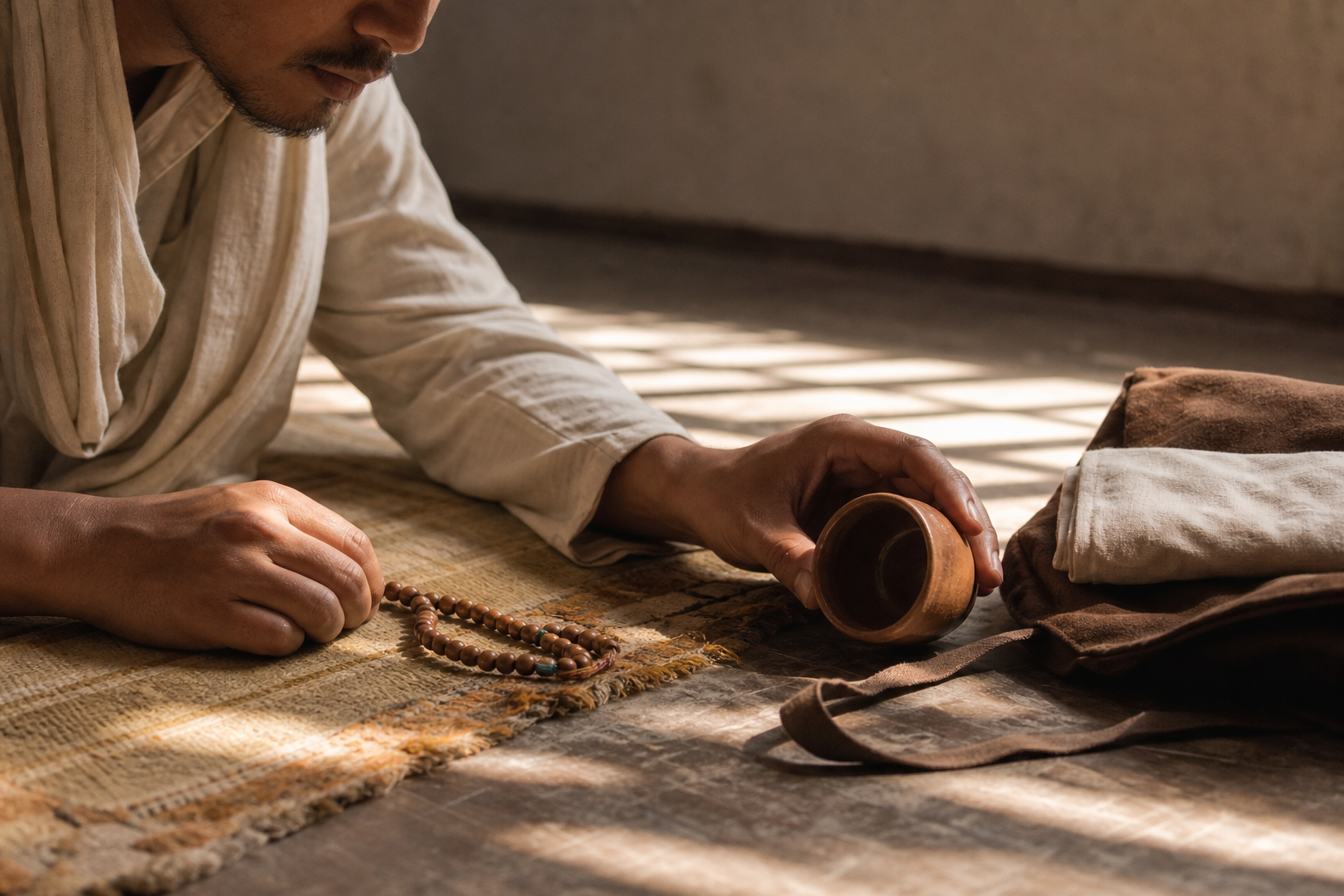
A moving experience may encourage you, but it isn’t yet a stable change of character. Transformation means that a better response becomes more available under pressure. Fear may still arise, but it no longer commands your first action. Anger may still appear, but you notice it before turning it into cruel speech. Duty remains demanding, but you become less dependent on praise before performing it.
The traditional idea of phalashruti places devotional practice within a range of possible fruits. These include purification of mind, steadiness, clearer recollection, relief from fear, prosperity, devotion, insight, and liberation. They are not all the same kind of result. Some concern your immediate inner condition, some concern life in the world, and some point beyond worldly acquisition altogether.
That distinction protects you from treating sacred practice as a commercial exchange. A phalashruti isn’t a receipt obliging the Divine to produce a preferred outcome by a deadline. It is better understood as a charter of formation: practice sincerely, within dharma, and certain capacities are cultivated. The first fruits may be quiet enough to miss unless you know where to look.
- Your attention returns to the Divine more quickly after distraction.
- You create a pause between a strong emotion and the action it is urging you to take.
- Your speech becomes less exaggerated, less contemptuous, and more truthful.
- You carry out an unpleasant responsibility without turning it into a performance of resentment.
- You recover from a missed practice instead of using one lapse as permission to abandon the discipline.
- You offer help with less mental bookkeeping about who noticed and what you are owed.
These changes are not secular substitutes for devotion. They are devotion’s practical fingerprints. If worship remains intense at the altar but leaves dishonesty, humiliation, neglect, and self-importance untouched, the practice has not yet entered the places that most need it.
Different Dharmic traditions explain this transformation through different metaphysical frameworks. Hindu bhakti may describe purification and an increasingly loving relationship with Bhagavan. Buddhist disciplines work on craving, misperception, and suffering without affirming a permanent self. Jain practice addresses the jiva’s karmic bondage through restraint and purification. Sikh practice centers remembrance of Naam and seva. These positions shouldn’t be collapsed into one doctrine. Yet they share a demanding practical test: trained attention must reduce self-centered reactivity and become compassionate action.
Give remembrance a form your week can hold

Devotional aspiration becomes formative through repetition. If you keep changing the practice whenever it feels dry, you never remain with one discipline long enough to discover what the dryness is teaching you. Choose a primary form that belongs to a clear tradition, then make it simple enough to survive an ordinary week.
Build one complete practice loop
- Choose one primary engagement. It might be nama-japa, a stotra such as Vishnu Sahasranama, attentive sacred reading, kirtana, or another practice received through your family, sampradaya, or teacher. Other forms can remain in your life, but one should be the dependable anchor.
- State a sankalpa you can carry into conduct. Instead of asking only for a pleasant session, name the capacity you need: steadier attention, freedom from vindictive speech, courage in duty, gratitude, or willingness to serve.
- Attach the practice to a stable cue. Use an event that already occurs, such as bathing in the morning, lighting the lamp, returning from work, or preparing for sleep. A cue removes the daily negotiation over whether you feel devotional enough to begin.
- Bring body, sound, attention, and meaning together. Sit upright without rigidity, release unnecessary tension, and chant at a pace that lets you hear what you are saying. If you are reading, pause where meaning disappears instead of letting the eyes race ahead.
- Give the sound an honest bhava. Recall one Divine quality relevant to your condition: mercy when you feel ashamed, protection when you are afraid, guidance when you are confused, or gratitude when life feels generous. You do not have to manufacture sweetness. Fatigue, grief, doubt, and longing can also be offered.
- Seal remembrance with silence and seva. After the final repetition, sit quietly for a minute and notice what has settled. Then name one action through which the practice will enter the day.
The last step is where many devotional routines remain incomplete. Sacred sound gathers attention, but seva gives that attention direction. Your next act might be answering a family member without impatience, correcting an error at work, preparing food without resentment, keeping a promise, or helping someone who cannot repay you. Keep it close enough to perform that day.
Use a three-part daily rhythm
A sustainable day can have a main anchor, a reset, and a review. The morning anchor establishes remembrance before competing demands take over. A brief midday return to the Name interrupts accumulated agitation. An evening review converts the day’s successes and failures into learning rather than self-congratulation or shame. This rhythm of initial practice, renewed attention, and evening consolidation also prevents spirituality from becoming a compartment that closes when formal worship ends.
- At the main anchor: complete your chosen japa, stotra, reading, or kirtana with full attention rather than adding several optional practices.
- At the reset: stop, relax the jaw and shoulders, take up the Divine Name, and recollect the morning sankalpa before sending the difficult message or entering the next conversation.
- At the review: identify one moment when remembrance changed your response and one moment when forgetfulness governed it. Offer both without editing the record to protect your self-image.
If mornings are unstable because of work, caregiving, or health, don’t turn the clock into a test of spiritual worth. Keep the sequence but attach the main practice to the most dependable event in your day. Regularity matters because it trains return, not because one hour is sacred for every person in every circumstance.
Let desire enter the practice, then teach it where to go
Many people begin devotion because they want relief: safety during uncertainty, recovery from fear, stability at home, help with livelihood, or protection for someone they love. Pretending you have no such desire only pushes it into hiding. A more truthful practice brings the desire before the Divine and allows devotion to educate it.
This is the practical wisdom of adhikari-bheda, the recognition that seekers begin with different capacities and motives. Sakama practice can mature toward nishkama devotion without shaming the person who first approached with a need. The direction matters: from demanding an outcome, toward receiving guidance; from using worship to control life, toward allowing worship to transform the one who acts within life.
Before practice, write or speak three plain lines:
- What do I want? Name the desired outcome without disguising it as lofty language.
- What quality does this situation ask me to cultivate? Choose something you can embody, such as patience, truthfulness, courage, restraint, or compassion.
- What can I offer today? Identify the duty or act of service that remains yours regardless of the outcome.
Suppose you want a conflict resolved. Your prayer need not deny that wish. But the practice should also ask whether you are willing to stop rehearsing contempt, hear an unwelcome truth, speak firmly without humiliation, and accept a resolution that doesn’t flatter your ego. The external request has then become a doorway into inner work.
Nishkama does not mean becoming passive, indifferent, or incapable of preference. It means that devotion and dharmic action are no longer cancelled when the preferred fruit is delayed. You still seek healing, justice, livelihood, or reconciliation through appropriate action. You simply stop making the Divine relationship conditional on receiving your chosen result.
You can notice this maturation in three places. You continue the practice when its novelty is gone. Gratitude becomes service rather than private relief. And when events resist your will, your first question gradually changes from Why was I denied? to What is dharma asking from me now?
When devotion stays on the surface, change the conditions
A dry or distracted session isn’t proof that devotion is false. It is diagnostic information. Bhakti traditions distinguish inattentive recitation, a clearing phase, and purified absorption; sincerity, association, and repeated return help chanting mature. The useful question is not whether distraction appeared, but what you did when you noticed it.
- Your mouth is chanting while the mind runs elsewhere. Slow down. Hear one name at a time, and reduce the quantity for that session if quantity is making honest attention impossible. The corrective act is returning, not scolding yourself for having wandered.
- You are trying to force an elevated feeling. Replace emotional performance with one genuine offering. Gratitude is appropriate when gratitude is present; vulnerability, fatigue, remorse, or longing may be more truthful on another day. Bhava gives sacred sound an emotional direction, but it does not require theatrical intensity.
- You keep extending the session because it felt unsuccessful. More duration can produce more resentment when attention is already exhausted. Shorter, more frequent returns can restore warmth more effectively than pushing through prolonged distraction. Finish cleanly, carry one name into the next task, and begin again at the next cue.
- You practice only when the mood is favorable. Make beginning the vow, not feeling. A modest practice completed during a difficult day trains continuity more deeply than an ambitious routine dependent on ideal conditions.
- You leave devotion at the altar. Pair every formal session with one behavioral translation. If you invoke compassion and then speak contemptuously, repair the speech. If you invoke truth and conceal a harmful mistake, correct the record. Seva is where remembrance is tested against preference.
- You compare experiences, counts, or apparent advancement. Comparison converts worship into status. Return to the less glamorous measures: reliability, restraint, truthful speech, patience, and readiness to perform unseen service.
- You interpret severe distress as a failure of faith. Chanting and paced remembrance may support calm and help create a pause before reaction, but they are not substitutes for mental-health care. If anxiety, panic, trauma symptoms, or low mood persist, worsen, or interfere with daily functioning, seek a qualified health or mental-health professional while retaining spiritual practice as appropriate support.
Association also changes the conditions. Satsanga can correct pronunciation, deepen understanding, protect you from eccentric interpretations, and remind you that inconsistency is worked through in community. Good association should make you more truthful and responsible, not more dependent on displaying spiritual belonging.
Audit the fruit in conduct, then keep going
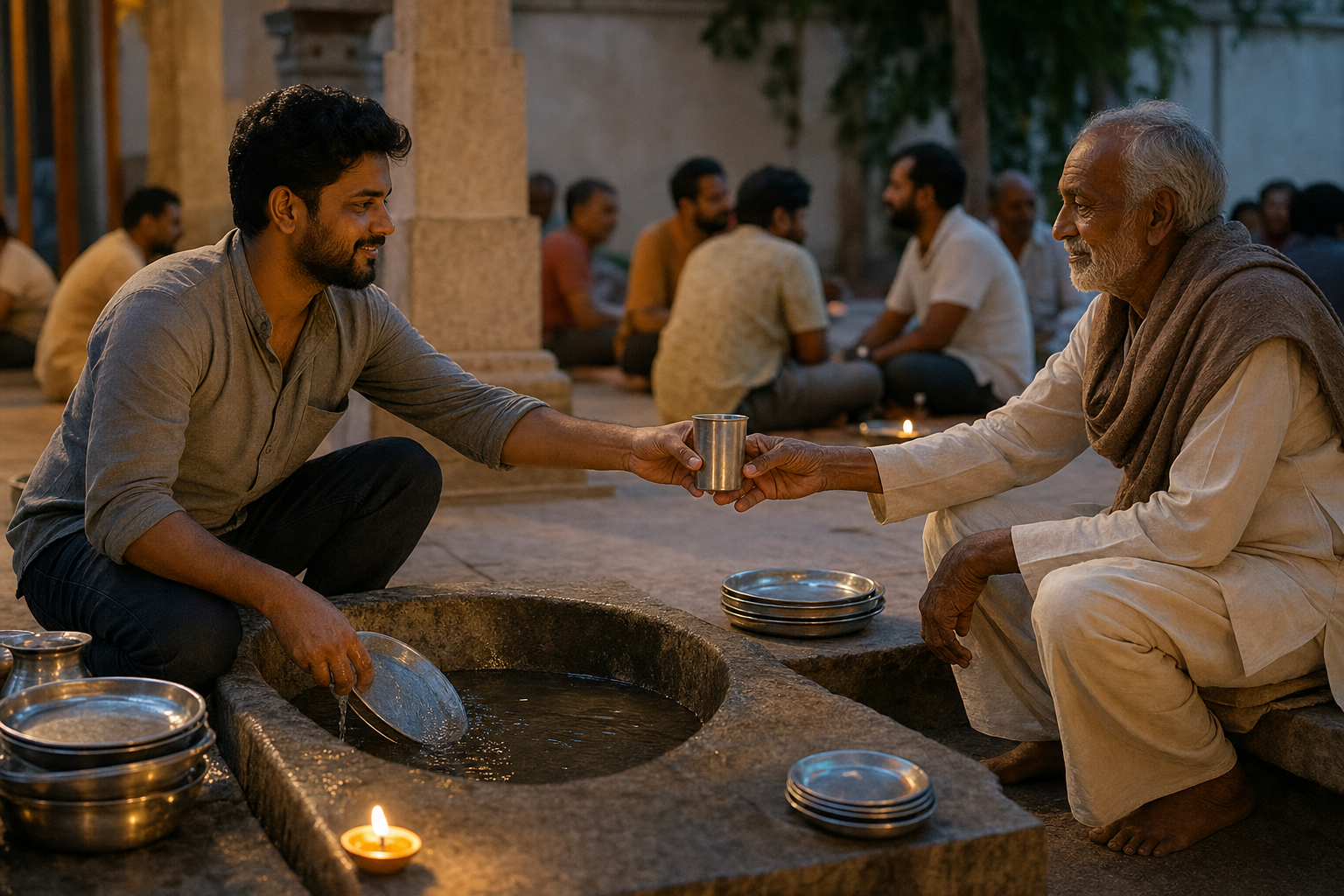
Memory is selective. After a peaceful session, you may overestimate the change; after a difficult day, you may decide nothing is working. Use a brief weekly audit based on events rather than impressions. Write one concrete incident for each question you can answer.
- What provoked me this week, and did remembrance create any pause before I responded?
- Where did my speech become more truthful, measured, or kind?
- Which duty did I perform without waiting for praise or ideal motivation?
- Did I use devotion to face a mistake, or to avoid looking at it?
- After distraction or a missed session, how readily did I return?
- What act of seva cost me some convenience, attention, or pride?
Avoid vague entries such as I was calmer or My chanting was better. Record the observable change: you waited before replying, admitted an error, completed an unwanted duty, stopped rehearsing an insult, or restarted after missing the usual cue. Over weeks, these incidents reveal a pattern that a single devotional high or low cannot show.
The audit is not a scorecard of spiritual superiority. Its purpose is to identify the next place where remembrance must enter. If speech is improving but resentment remains, work with the resentment. If formal practice is stable but service is absent, reduce ornamental complexity and add a concrete offering. If you are serving constantly but never recollecting the sacred, restore the anchor so service does not harden into exhaustion or self-importance.
Key takeaways
- Inner transformation appears first in attention, reaction, speech, duty, and service, not necessarily in extraordinary experiences.
- Choose one lineage-grounded devotional anchor and attach it to a cue that already exists in your day.
- Bring your actual desire into prayer, then connect it to a quality you must cultivate and a duty you can perform.
- Use bhava honestly. Feeling supports remembrance, but forced emotion is not evidence of deeper devotion.
- Close formal practice with silence and a specific act of seva so sacred remembrance enters conduct.
- Review concrete incidents each week; the trend across difficult moments is more revealing than the mood of one session.
At your next practice, change only one thing. State a truthful sankalpa before you begin. After the final name or verse, remain quiet for a minute and choose one act through which remembrance will enter the day. Then watch that action, not your mood, for the first sign of fruit.
References
- DharmaRenaissance Blog — Phalashruti in Hindu Scriptures: Timeless Promise, Mimamsa Logic, and Transformative Practice
- Dandavats — From Impermanence to Eternal Service: A Clear Path through Dharma, Devotion, and Liberation
- Dandavats — Chanting with Feeling: How Remembrance of Hari Dissolves Fear and Calms the Mind