
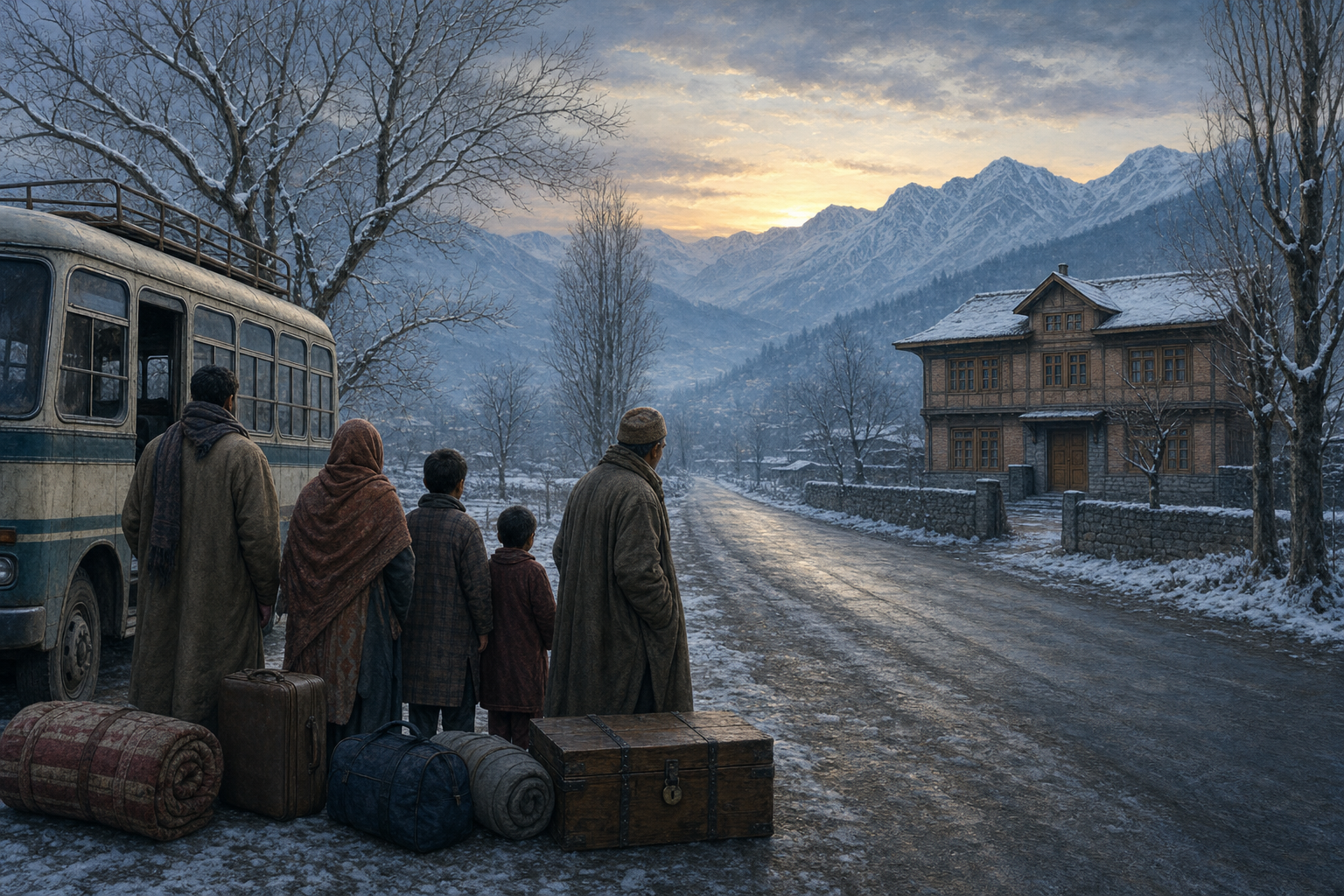
If someone asks you why Kashmiri Pandits left Kashmir, do not answer that they simply migrated. The community remembers its 1989-90 flight as forced displacement amid Pakistan-supported Islamist militancy, hostility toward a vulnerable Hindu minority, and the failure of public institutions to protect it.
The harder task is explaining that history without euphemism, unsupported claims, or indiscriminate blame. You need language precise enough to defend the truth, a chronology that explains why the rupture cut so deeply, and practical standards for judging promises of return.
Name the displacement before debating its label
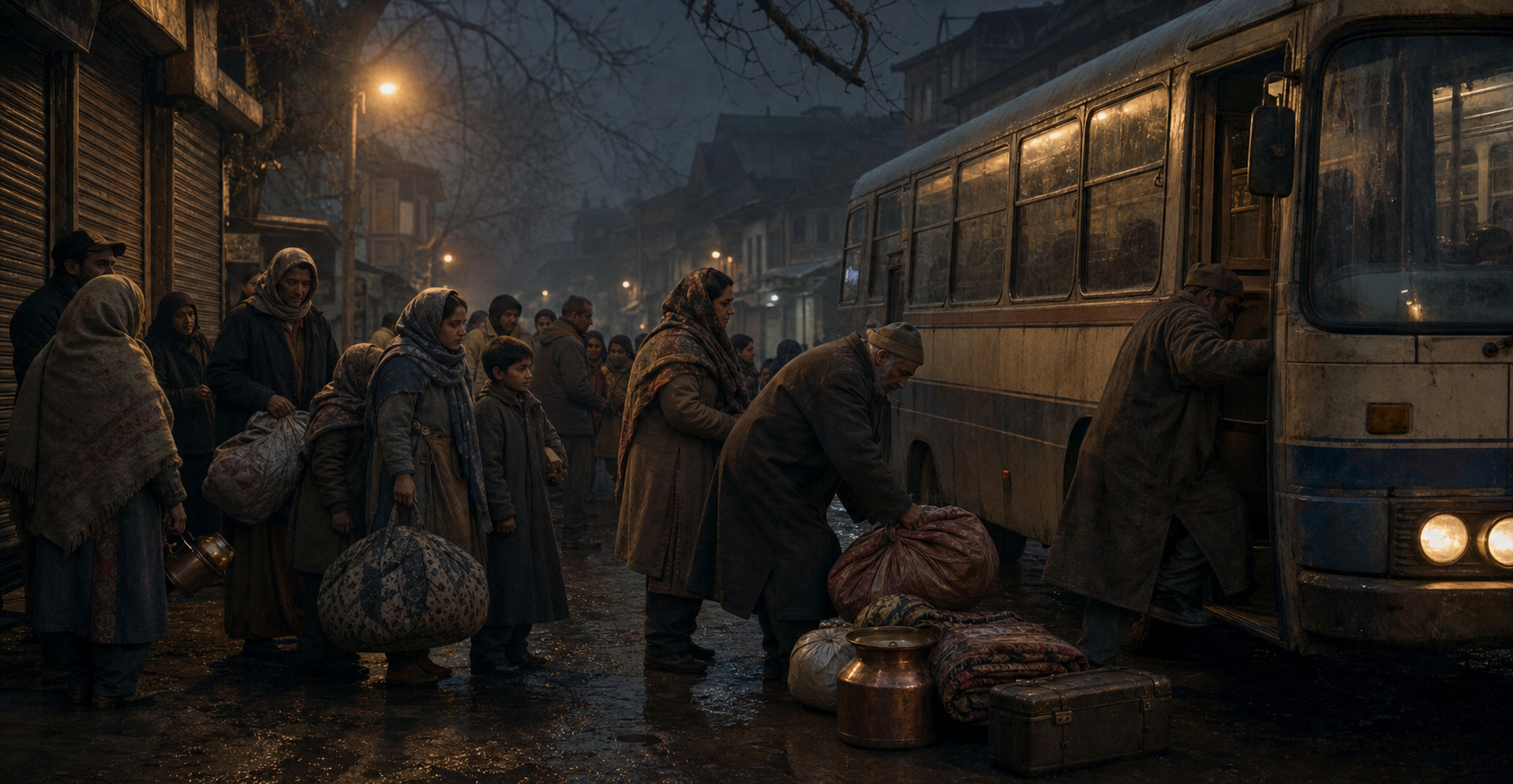
Start with what the available record clearly supports: a small Hindu minority left its ancestral homeland under coercive conditions in 1989-90 because it could not rely on the state or surrounding society for effective protection. That is forced displacement. Calling it ordinary migration removes the pressure that made remaining intolerable.
“Exodus” is also accurate as a description of a community leaving in large numbers, but it can sound strangely agentless. Pair it with the cause: the Kashmiri Pandit exodus was a forced flight during a violent fundamentalist and terrorist upsurge, compounded by institutional failure. The cause matters because “people left” and “people were driven into flight” are not equivalent statements.
“Internally displaced” is the most precise baseline description. Kashmiri Pandits fled their homes without leaving India, making them people displaced within their own country rather than cross-border refugees in the ordinary legal sense. The phrase “refugees in their own country” conveys the moral paradox, but it should not replace the clearer category when you are writing, teaching, or discussing policy.
The community and its advocates also describe what happened as ethnic cleansing and genocide. Those terms express how Kashmiri Pandits understand the intended destruction or removal of their presence in the Valley. They also carry substantial political and legal weight. Unless you can identify a competent legal finding, do not imply that a court or tribunal has adjudicated either characterization. Say whose characterization it is, while refusing the opposite error of reducing forced displacement to voluntary relocation.
- For the least disputable factual description: use “the forced displacement of Kashmiri Pandits from the Kashmir Valley in 1989-90.”
- When discussing community memory: explain that many Kashmiri Pandits understand the displacement as ethnic cleansing or genocide.
- When discussing legal status: distinguish an asserted characterization from an adjudicated finding.
- When discussing responsibility: name the actors and institutions supported by the evidence instead of assigning identical conduct to every Kashmiri Muslim.
Place 1989-90 within the longer history without making it inevitable
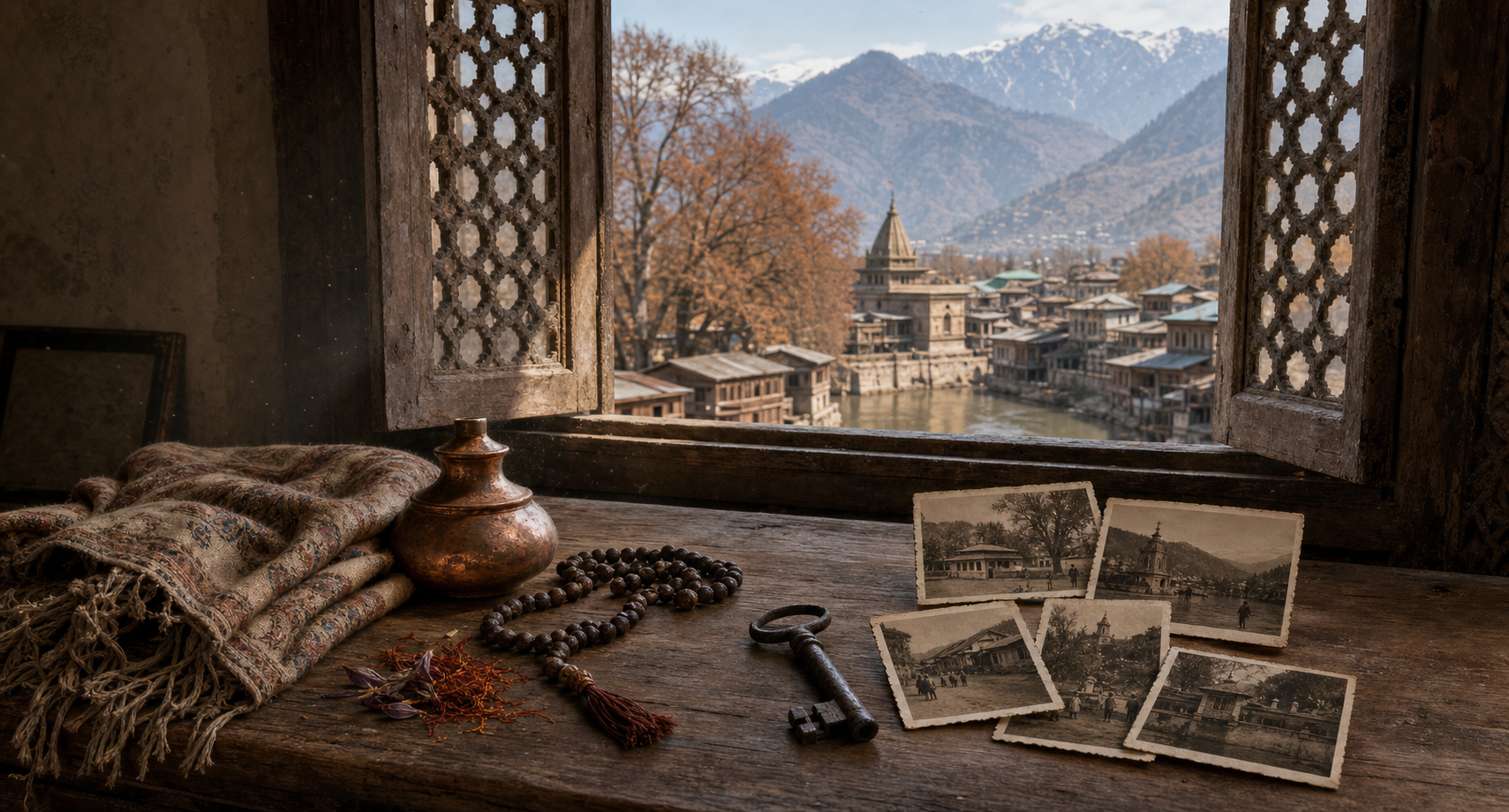
The displacement cannot be understood only as a sudden breakdown at the end of the twentieth century. Kashmiri Pandit memory places it within a much longer experience of demographic decline, religious persecution, intermittent relief, renewed communal violence, political exclusion, and broken assurances.
- Medieval persecution forms the distant background. After political power passed to the sultans in the fourteenth century, Kashmiri Hindu memory records persecution, killings, pressure to convert, and a transformation from majority to small minority. Zain-ul-Abidin, remembered as Budshah, is identified as an important exception among the rulers discussed in this history.
- Sikh and Dogra rule brought a period of relief. The political change beginning in 1819 interrupted the earlier pattern of persecution and gave the diminished Hindu community greater respite.
- Modern government did not end communal vulnerability. Kashmiri Pandits remember attacks and upheavals in 1931, 1947, 1967, and 1986. These episodes should be named, but not embellished with details or figures you cannot document.
- The rupture of 1989-90 followed deepening fundamentalism and violence. By then, the community was economically constrained, politically marginal, socially vulnerable, and unable to obtain the protection it expected from constitutional government.
The period after 1947 matters especially. Kashmiri Pandits had reason to hope that constitutional government, democracy, secularism, and the rule of law would make older cycles of persecution irrelevant. They placed trust in political arrangements associated with Sheikh Abdullah, Jawaharlal Nehru, the state government, and the Union government. The later displacement was therefore experienced not only as communal expulsion, but as a breach of the constitutional bargain on which a vulnerable minority had relied.
This chronology should sharpen your analysis, not turn it into fatalism. Earlier persecution does not prove that coexistence was always impossible or that every neighbour behaved in the same way. It explains why the community interprets 1989-90 as another stage in a recurring loss of security and belonging. Hold both points together: the historical pattern deserves recognition, and responsibility should still be assigned as precisely as the evidence permits.
Judge any return proposal by conditions, not symbolism
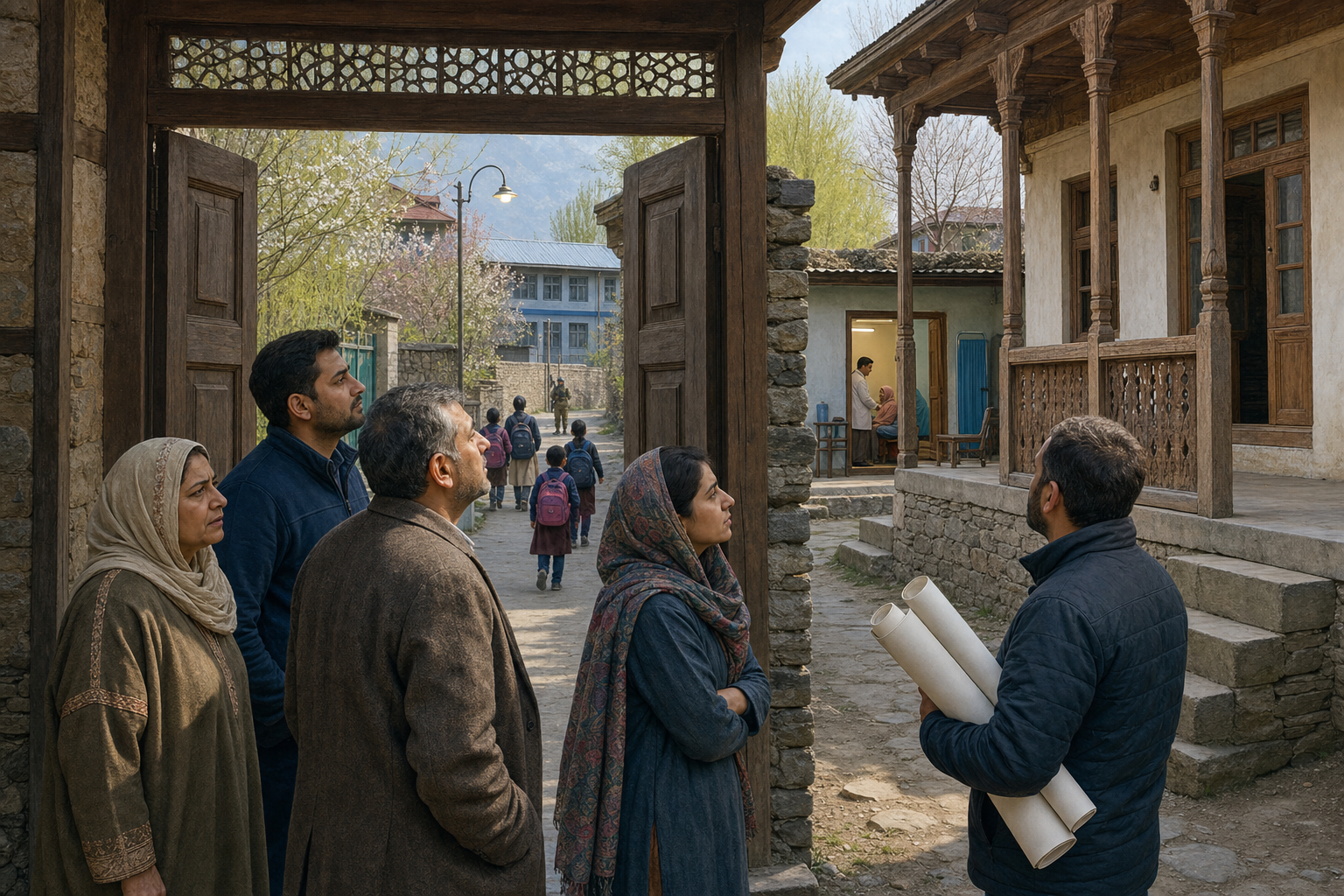
A ceremony, housing announcement, constitutional slogan, or appeal to communal harmony is not the same as return. A return is meaningful only when Kashmiri Pandit families can choose it freely, live without exceptional danger, sustain a household, practise their traditions, and remain after public attention moves elsewhere.
Do not let arguments over statehood or constitutional provisions substitute for those household-level questions. Political arrangements matter because they determine authority and accountability, but their value to displaced people must be tested against concrete protections.
- Security: Who is responsible for preventing threats, investigating them, and protecting families if conditions deteriorate? Is that responsibility written and reviewable, or merely promised from a podium?
- Choice: Can families decide whether, when, and where to return without losing support or being used to satisfy a political target? Return should be an option, not a loyalty test.
- Home and property: Is there a credible process for dealing with homes, land, documentation, occupation, loss, or compensation? A dwelling cannot be treated as restored merely because a replacement unit exists somewhere else.
- Livelihood and services: Can a household obtain work, education, healthcare, transport, and ordinary public services? Security without the means to live produces a temporary presence, not durable rehabilitation.
- Cultural continuity: Can the community maintain temples, customs, family sites, language, festivals, and its relationship with Kashmir’s sacred geography? Return stripped of cultural life reduces belonging to an address.
- Representation: Do displaced Kashmiri Pandits have an effective role in designing, monitoring, and revising the plan? Consultation after decisions have been made is not meaningful participation.
- Accountability: What happens when an official fails, a threat is ignored, or a promise is not delivered? A plan without a remedy leaves families dependent on political goodwill.
These tests also reveal common warning signs. Be wary when a proposal celebrates the number of people moved but says nothing about how many can safely remain; provides housing without work and services; invokes reconciliation while avoiding responsibility; or expects isolated families to demonstrate normalcy on behalf of the state.
Safety and dignity must be demonstrated before return, not inferred from the act of returning. No displaced person should have to accept unmanaged risk to prove patriotism or attachment to the homeland.
Make memory harder to erase and advocacy harder to dismiss

You do not need to be a historian or lawyer to strengthen the public record. You do need to distinguish what a family member remembers, what a surviving document establishes, what later interpretation argues, and what policy you personally favour. Mixing those layers makes even a truthful account easier to challenge.
Use a disciplined explanation
A reliable short explanation has four parts: who was displaced, when it happened, what made continued residence unsafe, and why the displacement remains unresolved. For example: “Kashmiri Pandits, a Hindu minority with ancestral roots in the Kashmir Valley, were forced into large-scale flight in 1989-90 during an Islamist militant upsurge and a collapse of effective protection; their secure and dignified return remains unresolved.”
Then add details only when you can support them. Do not insert a death toll, a named incident, an attributed slogan, or a claim about an individual’s conduct because it circulates widely online. An unsupported detail does not strengthen the case. It gives critics an avoidable opening to dismiss the larger history.
Precision also means resisting collective guilt. You can name Islamist terrorists, fundamentalist mobilization, mob violence, social exclusion, political leadership, or institutional failure where the record supports those descriptions. Saying that every member of a religious population acted with the same intent is a different claim and requires evidence you are unlikely to possess. Moral clarity becomes stronger when blame is not hereditary or indiscriminate.
Preserve a family record with context
- Record the account in the narrator’s own language. Ask for names, neighbourhoods, schools, temples, occupations, family relationships, the sequence of departure, and what the narrator directly witnessed. Mark second-hand information as second-hand.
- Digitize supporting material without altering the original. Preserve letters, photographs, property papers, certificates, diaries, newspaper clippings, and images of family or religious sites. Scan both sides when the reverse contains stamps, notes, or dates.
- Add identifying context. A file called “old house” will become meaningless. Include the person, place, approximate or exact date, document type, and the family member who supplied the description. Label uncertain dates as uncertain.
- Keep copies in separate places. Maintain an offline copy and a protected remote copy so that loss of one device does not erase the collection.
- Obtain consent before publication. A private archive and a public campaign are not the same thing. Remove identity numbers, current addresses, signatures, or other information that could expose a living person to fraud, harassment, or unwanted attention.
- Preserve ordinary life as well as persecution. Record recipes, rituals, humour, scholarship, music, work, neighbourhood relations, pilgrimage routes, and family customs. Kashmiri Pandit identity is a civilization and living community, not merely a catalogue of victimhood.
This work turns inherited memory into evidence with provenance. It also protects something political debate routinely loses: the texture of the homeland from which people were displaced.
Key takeaways
- The most defensible baseline description is the forced internal displacement of Kashmiri Pandits from the Kashmir Valley in 1989-90.
- “Exodus” should be paired with its causes so that the language does not make a coerced departure sound spontaneous.
- Genocide and ethnic cleansing should be identified as community characterizations unless a specific legal adjudication is being cited.
- The history before 1989-90 explains the community’s sense of repeated vulnerability, but it does not justify attributing identical guilt to an entire population.
- A credible return plan must address security, choice, homes, livelihoods, cultural continuity, representation, and enforceable accountability.
- Family testimony becomes more useful when direct memory, supporting documents, later interpretation, and policy opinion remain clearly separated.
If you want to act now, preserve one family account with names, places, dates, consent, and supporting records. In public, use the narrowest claim the evidence can carry and the clearest language the event requires. Exact memory is more durable than rhetoric, and disciplined advocacy is harder to erase.