If a student has said they intend to die, has taken a step towards harming themselves, or has a plan and access to lethal means, do not leave them alone while you debate whether the threat is serious. Stay nearby, move to a safer setting, reduce access to harm if you can do so safely, and contact local emergency services, the campus crisis team, or the nearest hospital. If they have already harmed themselves, seek emergency medical help immediately rather than waiting for symptoms.
If your concern is less clear, you still do not need to diagnose the student before acting. You need to notice meaningful changes, ask a plain question, listen without judgment, and complete a safe handoff to someone qualified to assess the risk. This plan shows parents, teachers, hostel wardens, coaching staff and friends how to do that.
Key takeaways
- Ask directly: “Are you thinking about suicide?” Clear language gives the student permission to answer clearly.
- A current plan, access to lethal means, a time in mind, or an action already taken requires an emergency response. Do not rely on a promise that the student will stay safe.
- Do not merely send a helpline number or counselling link. Sit with the student while contact is made, arrange transport or accompaniment, and confirm that a named person has accepted responsibility for the next step.
- Academic setbacks become especially dangerous when a student feels trapped, alone or like a burden. Make alternative educational, financial and living arrangements concrete rather than offering vague reassurance.
- Pranayama, meditation, simran, kirtan and supportive spiritual community can strengthen coping and belonging, but they must remain voluntary and must never replace clinical or emergency care.
When danger may be immediate, make a safe handoff
Your first task is not to determine why the student feels this way or persuade them to feel grateful. It is to shorten the time between disclosure and effective care. A calm conversation is the beginning of that process, not the treatment itself.
Open with what you have actually noticed
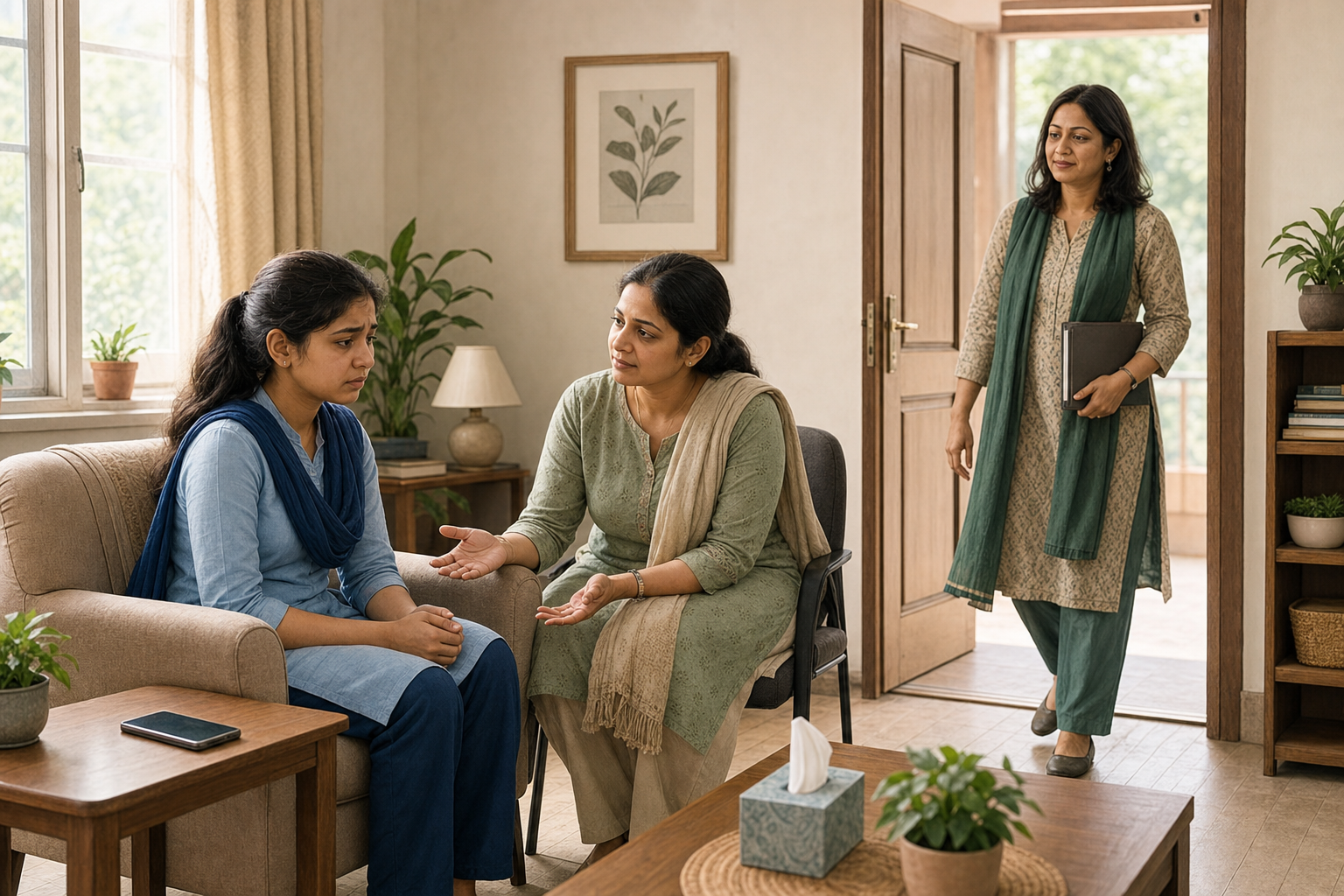
Speak privately, but remain within reach of other responsible adults if safety is uncertain. Start with an observation rather than an accusation: “You have stopped coming to class, you are barely sleeping, and yesterday you said everyone would be better without you. I am concerned about your safety.” This is harder to dismiss than “You seem negative lately.”
Then use the word you mean: “Are you thinking about suicide?” Do not hide it behind “doing something silly” or “taking an extreme step.” Euphemisms make a frightened student guess what can safely be disclosed. Ask slowly, and leave enough silence for an honest answer.
If the answer is yes, perhaps, sometimes, or “I don’t know,” continue with four short questions:
- “Are you thinking about suicide right now?”
- “Have you thought about when or how you might do it?”
- “Do you currently have access to what you would use?”
- “Have you already done anything to hurt yourself or prepare for suicide?”
You are not conducting a clinical risk assessment. You are identifying whether the student needs emergency intervention now or an urgent professional assessment the same day. A current intention, a plan, access, a time in mind, preparations, or harm already done places the situation in the emergency category. An unclear answer should not be treated as reassurance.
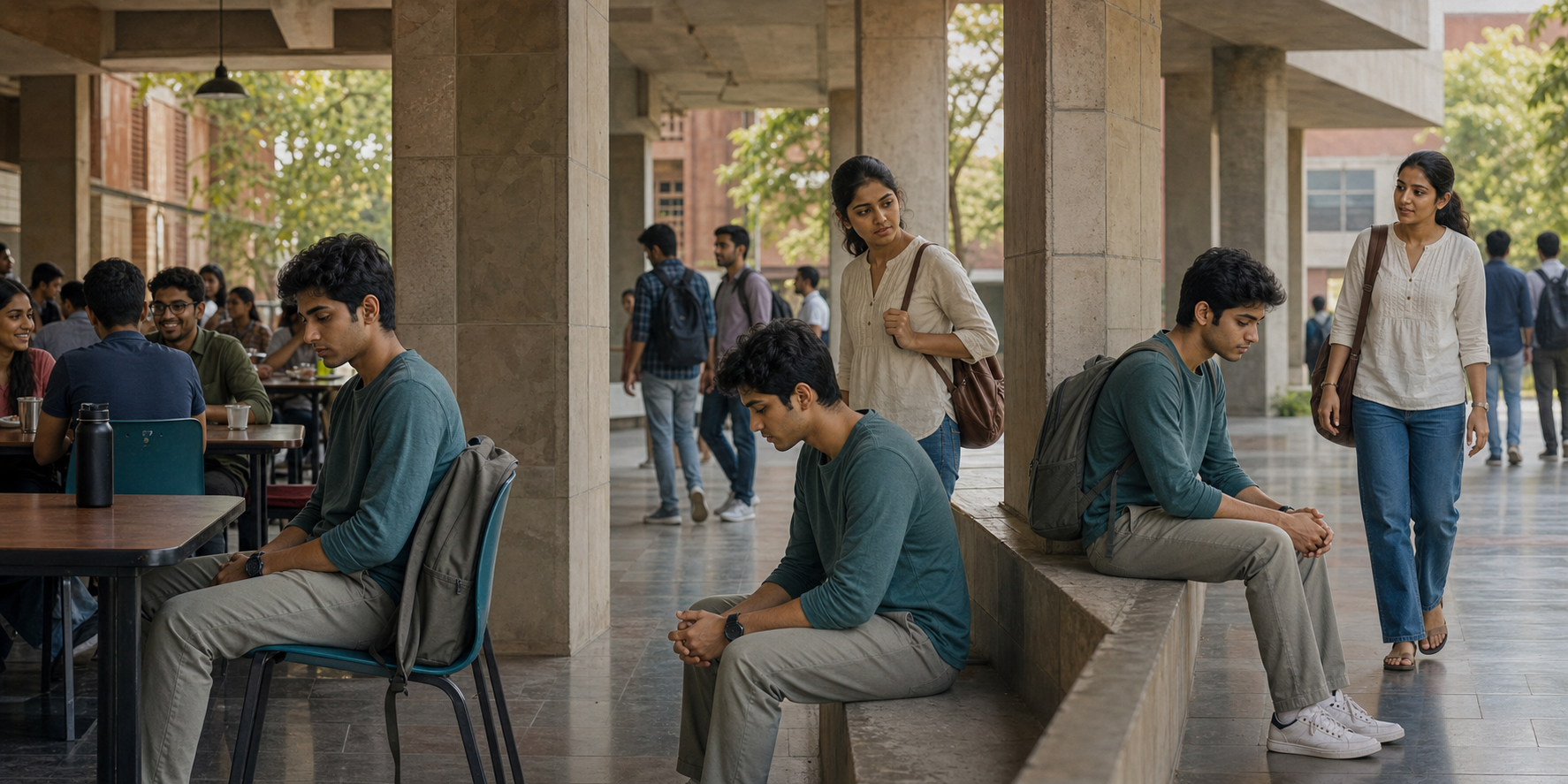
A direct “no” does not end the conversation when the student’s words or behaviour remain alarming. Explain what you have noticed, arrange prompt contact with a counsellor or mental-health professional, and keep checking in. Sustained hopelessness, withdrawal, major changes in sleep or appetite, a sharp academic decline, giving away possessions, and talk about death or being a burden all warrant attention.
Listen without trying to win an argument
Statements such as “Think of what this will do to your parents,” “Other students have it worse,” “You just need discipline,” or “Your family sacrificed too much for you to fail” add guilt to a mind that may already feel burdensome. A theological lecture can do the same. Do not debate whether the student has a sufficient reason to suffer.
Use language that creates safety and movement: “I am glad you told me. You do not have to carry this alone. Marks, fees and attendance can be dealt with later. I am staying with you while we get help.” You are not promising that every problem will disappear. You are making one reliable promise: the student will not have to navigate the next step alone.
Do not promise secrecy. Say, “I will respect your privacy, but I cannot keep a life-threatening risk only between us. I will involve only the people needed to keep you safe.” If the student is a minor, follow the institution’s child-safeguarding procedure and involve a responsible parent, guardian or designated authority. If involving someone at home could itself expose the child to danger, use the formal safeguarding route rather than sending the child back into that danger.
Complete the emergency sequence
- Stay with the student in a calm, safer place. If remaining close would put you or others in danger, call emergency help and maintain a safe distance.
- Contact local emergency services, the institution’s crisis responder, or the nearest hospital. If an injury or ingestion has already occurred, treat it as a medical emergency even if the student says they now feel fine.
- Reduce access to potentially lethal means only when this can be done safely. Ask another responsible adult to help. Do not enter a physical struggle that could increase danger.
- Give the receiving professional the student’s exact words, the changes you observed, and any action or preparation disclosed. Separate facts from assumptions.
- Remain until a named person has accepted the handoff. “I sent them the number” is not a completed handoff; “Counsellor Mehta is with them and the hospital assessment is arranged” is.
A verbal promise such as “I swear I won’t do anything” is not a safety plan and should not be used to downgrade an otherwise serious situation. Once emergency danger has been addressed, ask the counsellor or clinician to help the student create a written plan covering personal warning signs, supportive people, professional contacts, coping steps and a safer environment.
If the situation is urgent but not judged to require emergency care, remove the friction from help-seeking. Sit beside the student while the appointment is made. Walk them to the counselling centre or arrange transport. Before separating, agree on the exact next contact: who will check in, at what time, and where. Also address the problem that may prevent follow-through, such as fear of disciplinary action, lack of money, a language barrier, an unsafe roommate or the belief that counselling will appear on an academic record.
Read the whole student, not only the mark sheet
National Crime Records Bureau reporting has placed the annual number of students who died by suicide above 13,000 in recent reporting years. That grave figure does not prove that examinations alone cause suicide. Risk tends to accumulate across mental-health vulnerability, academic pressure, family expectations, isolation, bullying, discrimination, financial strain, relationship loss, disrupted sleep and access to lethal means. Prevention fails when adults look for one dramatic cause and miss the combination.
| What you notice | What to do next |
|---|---|
| Talk about death, being a burden or having no reason to live; possessions being given away | Speak privately and ask about suicide now. If thoughts are current or a plan, access or preparation is disclosed, begin the emergency sequence. |
| Persistent hopelessness, social withdrawal, or drastic changes in sleep or appetite | Start a same-day conversation and arrange professional support. Do not wait for an explicit threat before taking sustained change seriously. |
| Sudden absence, academic collapse or panic after an examination, disciplinary event or result | Lower immediate demands, make contact, and present concrete options for leave, reassessment or a changed study plan while arranging support. |
| Isolation after moving to a coaching centre, hostel, new state or new language environment | Create predictable check-ins and connect the student with a peer, warden, counsellor and culturally or linguistically familiar community. |
| Ragging, bullying, discrimination or cyberharassment | Prioritise the student’s safety, preserve relevant factual information, use the formal reporting process, and ensure that the student is not left to confront perpetrators alone. |
The crucial shift is often from stress to entrapment. A difficult examination is painful but limited; it becomes more dangerous when the student experiences it as permanent humiliation, believes no acceptable path remains, and feels that seeking help will burden the family. Rank-based comparison, family debt, relocation and sleep loss can narrow the student’s view until one result appears to define an entire life.
Counter that narrowing with specific alternatives. Do not merely say, “There are many options.” Put the options on paper: a compassionate pause, another attempt, a different course, a return home, a room change, financial advice, treatment, or a different career route. Name the person who can explain each option and when the conversation will happen. The aim is not to force a career decision during a crisis. It is to show that the present situation has exits.
Sleep deserves particular attention because it affects emotional regulation, concentration and impulse control. Late-night study, continuous notifications and anxious scrolling can reinforce one another. Ask about the student’s actual sleep pattern rather than praising all-night work as dedication. Protect a regular rest period, move non-essential notifications out of that period, and adjust an overloaded timetable. If severe sleep disruption persists alongside hopelessness or withdrawal, connect the student with professional care instead of treating sleep as the whole explanation.
Change the conditions at home, in class and in the hostel
Suicide prevention cannot consist of telling a distressed student to become more resilient while leaving the surrounding pressures untouched. Families and institutions need routines that make disclosure ordinary, help accessible and academic setbacks survivable.
For parents and caregivers
A predictable check-in is more useful than an interrogation triggered by a poor mark. For a student living away from home, agree on regular contact that is not cancelled when everyone is busy. Ask questions that cannot be answered with a rank: “What felt heaviest this week?” “How are you sleeping?” “Who can you talk to in the hostel?” If you hear hopelessness or burdensomeness, ask directly whether the student has thought about suicide.
Make belonging unconditional in words the student can remember under stress: “Your place in this family does not depend on this examination.” After a bad result, begin with food, rest, presence and safety. Decisions about another attempt, fees or a new course can wait until acute distress has settled.
Avoid comparing siblings, publicly discussing ranks, threatening withdrawal of affection, or repeatedly listing financial sacrifices. Families can be honest about money without making the student feel like a failed investment. Say which costs the adults will handle, which choices remain open, and when the family will review them together.
Before a high-stakes result arrives, write down a plan for more than one outcome. Include whom the student will be with when results are checked, when the family will discuss next steps, and which educational alternatives are genuinely affordable. A plan made in a calm week is easier to retrieve than reassurance invented in a panicked hour.
For schools, colleges, coaching centres and hostels
Every institution should be able to answer one operational question: if a student discloses suicidal thoughts at night, who takes the call and where does the student go? The written pathway should name the responsible staff role, counselling contact, emergency route, nearby hospital and handoff procedure. Displaying a helpline without assigning responsibility leaves the hardest part to the person least able to manage it.
- Train teachers, wardens, coaches and student leaders to recognise warning signs, ask a direct safety question and refer. Gatekeepers are connectors, not substitute counsellors.
- Provide confidential counselling and a clear route for urgent triage. Explain privacy limits before a crisis, including what happens when there is immediate danger.
- Allow compassionate leave, deadline flexibility and reassessment during mental illness, bereavement or acute crisis. A student should not have to choose between treatment and automatic academic ruin.
- Review public rank displays, humiliating feedback and relentless assessment schedules, especially in NEET and JEE preparation environments. Feedback can remain rigorous without turning performance into identity.
- Offer proactive transition support to first-year students, migrants, scholarship students under financial strain, students crossing language regions, LGBTQ+ students and others who may lack an immediate support network. Support should not require forced disclosure of private identity.
- Use academic early alerts to offer help, not punishment. Limit access to the information, explain why it was collected, and do not turn counselling referrals into disciplinary records.
- Reduce access to hazardous locations and potentially lethal means on campus. Environmental safety is a prevention measure, not an accusation against students.
After a campus suicide, the institution’s response can either reduce or amplify harm. Use the phrase “died by suicide,” avoid graphic or method-related details, stop rumours, communicate help resources repeatedly, and reach out to close friends, roommates and affected staff. Do not romanticise the death or present it as the inevitable result of an examination. Remembrance grounded in care or service is safer than a spectacle that turns the death into a model for other distressed students.
For friends and classmates
You may be the first person to see an alarming message because students often disclose sideways: a late-night post, a goodbye, a joke about disappearing, or a sudden transfer of belongings. Contact the person privately and ask where they are. Ask directly about suicide. If the answer indicates danger, involve a trusted adult, warden, counsellor or emergency responder and stay connected until the handoff is complete.
Do not accept “Promise you won’t tell anyone” when a life may be at risk. A useful response is: “I care about you too much to carry this by myself. I am going to bring in someone who can help, and I will stay with you while we do it.” Do not debate the disclosure in a group chat or recruit classmates to investigate. Public attention can increase shame and spread private details.
After professional help begins, keep offering ordinary belonging. Share a meal, walk to class, send notes from a missed lecture, or sit together without demanding a report on treatment. The student needs care that does not reduce every interaction to surveillance.
Put dharmic practice in its proper, protective role
A dharmic response begins with ahimsa expressed as protection, karuna expressed as non-judgmental presence, and seva expressed as practical help. It does not begin by asking whether the student meditated enough, had sufficient faith, or created suffering through karma. Spiritual blame deepens shame; spiritual companionship helps carry it.
Use practice to strengthen regulation and belonging
Voluntary contemplative practices can support attention, emotional regulation, sleep and social connection. Hindu pranayama and dhyana, Buddhist anapanasati, Jain preksha dhyana, and Sikh simran or kirtan offer different cultural forms for steady attention and a less punitive relationship with distress. Sangha and sangat add something solitary practice cannot: people who notice an absence, share a meal and keep a student connected to community.
Gentle regulated breathing at approximately six comfortable cycles per minute may help settle physiological arousal for some people. It should feel easy, not like a test of lung capacity or spiritual achievement. If a distressed student wants to use breathing while help is being arranged, avoid forceful pranayama, long breath retention or competitive instruction. Stop if dizziness, panic or discomfort increases.
For ongoing well-being, let the student choose a sustainable practice and a trustworthy facilitator. A brief period of gentle breathing, meditation, prayer, simran or quiet attention can sit alongside regular sleep, movement, counselling and medical care where indicated. Family prayer, kirtan, collective meals, nature walks and seva can also restore routine and belonging when they are invitations rather than tests of conformity.
Know the boundary between spiritual support and treatment
Meditation is not emergency triage. Pranayama is not a substitute for assessment of suicidal thoughts. A guru, granthi, monk, acharya, yoga teacher or community elder can listen, accompany and encourage help-seeking, but should have a referral route to qualified mental-health and emergency services. If a student is in immediate danger, prayer may accompany the journey to care; it must not delay that journey.
Participation must also remain voluntary and pluralistic. A Hindu, Buddhist, Jain or Sikh institution can draw confidently on its own tradition while respecting the student’s Ishta, sect, different faith or freedom to practise none. Coercion destroys the sense of agency that prevention is trying to rebuild.
Choose one concrete action now. If a particular student worries you, contact them, name what you noticed and ask the direct question. If you run an institution, ask to see the written night-time crisis pathway and test whether every warden knows it. Prevention does not require perfect prediction. It requires us to take concern seriously, protect life and remain present until real help has taken hold.