If your studies are ending, or your family is preparing for Vivaha, you may be wondering whether Samavartana is simply a traditional graduation ceremony that can be added to the festivities. That understanding is too small. Samavartana asks a more demanding question: are you ready to turn what you have learned into truthful conduct, responsible livelihood, gratitude, service, and care for a household?
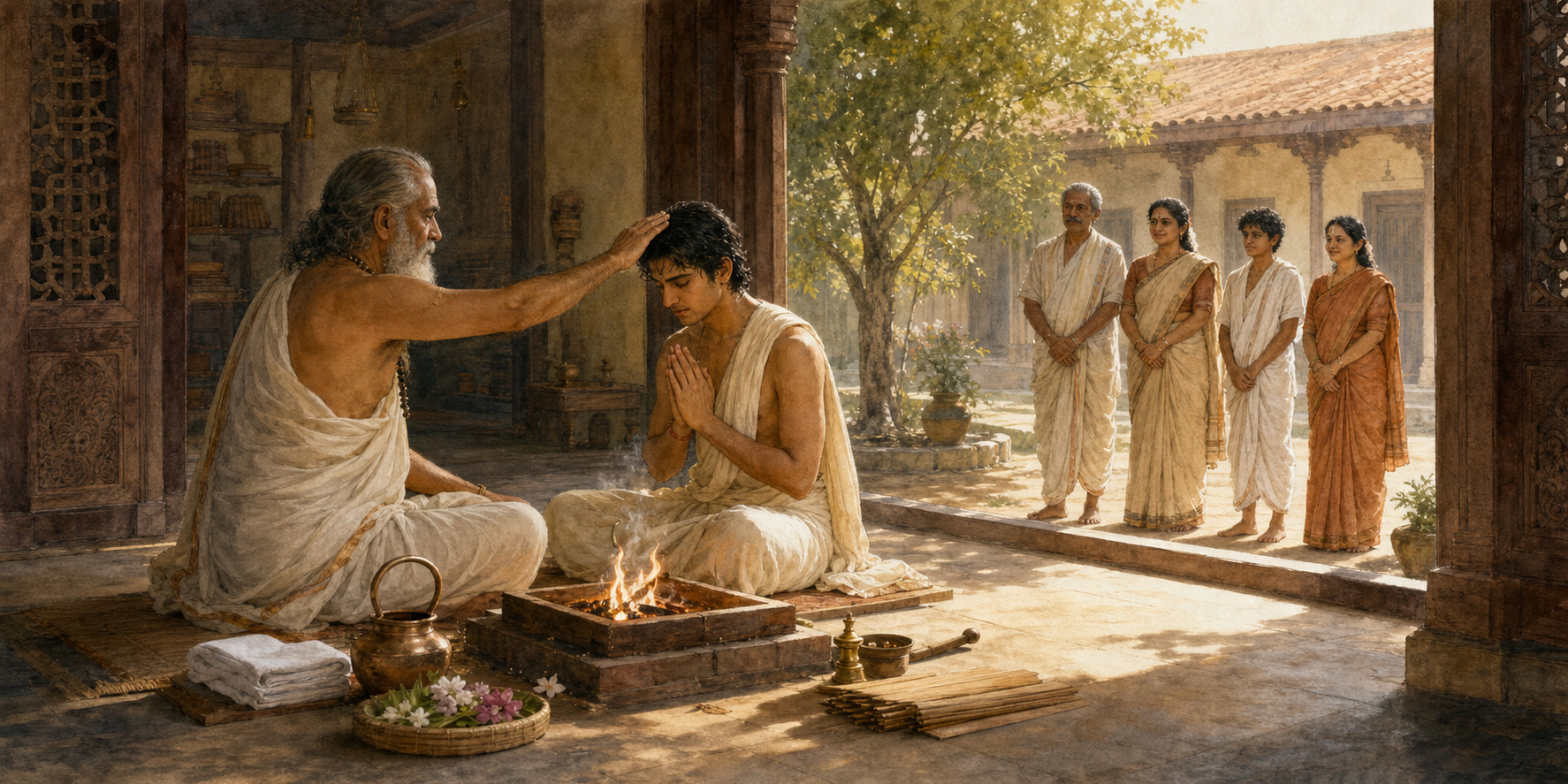
The rite marks the completion of Brahmacharya and movement toward Grihastha. Planning it well therefore means doing more than arranging a bath, homa, new garments, and a meal. You need to identify what course of learning is being completed, whom you must thank, which commitments you are prepared to make, and how those commitments will appear in ordinary life after the ceremony.
Know which threshold you are actually crossing
Within the classical four-Ashrama framework, Brahmacharya is the disciplined life of learning; Grihastha is the life of household responsibility; Vanaprastha turns attention toward gradual withdrawal; and Sannyasa is renunciation. Samavartana closes the first stage and authorizes a return from concentrated student life to society. Its name carries that sense of turning back or returning.
The person who completes the rite becomes a Snataka, literally one who has bathed. This is an important distinction. Samavartana does not simply rename a graduate as a fully established householder. It places the Snataka between the discipline of the gurukula and the complete domestic responsibilities normally established through Vivaha. The interval may be short, but it has its own ethical weight.
This distinction prevents two common misunderstandings. First, Samavartana is not merely a certificate presentation with Sanskrit decoration. It consecrates readiness for adult duty. Second, it is not identical to Vivaha. When the two rites are performed close together, Samavartana states the values the graduate carries forward, while Vivaha establishes the household in which many of those values will be practiced.
Before fixing a date, answer three questions in writing:
<!– wp:list {