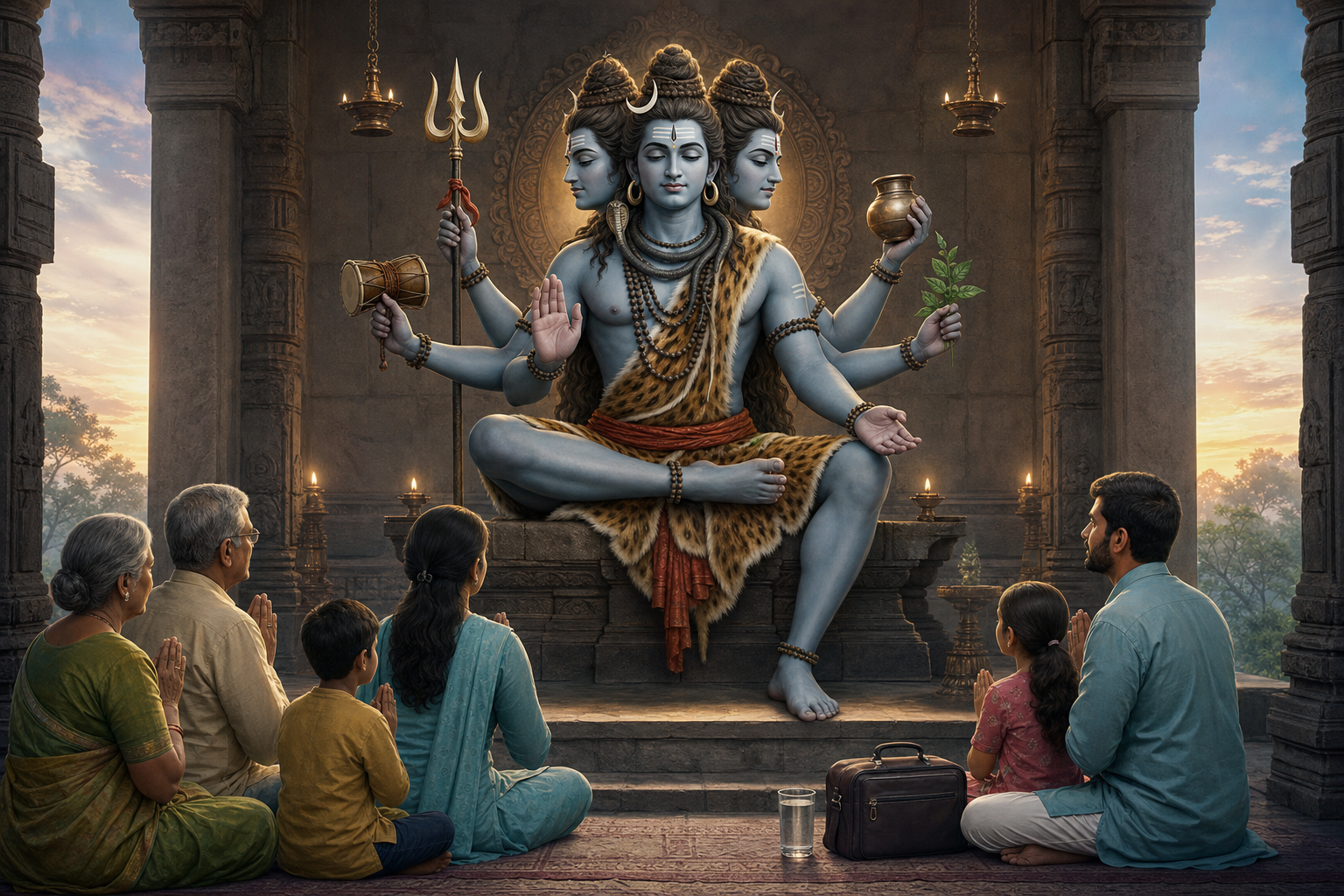
When illness enters your home, the devotional question is often immediate: what can you do before fear takes over? If you turn to Shiva as Jwarahareshwara, you are not choosing between prayer and medicine. You are giving prayer a disciplined purpose while treatment proceeds.
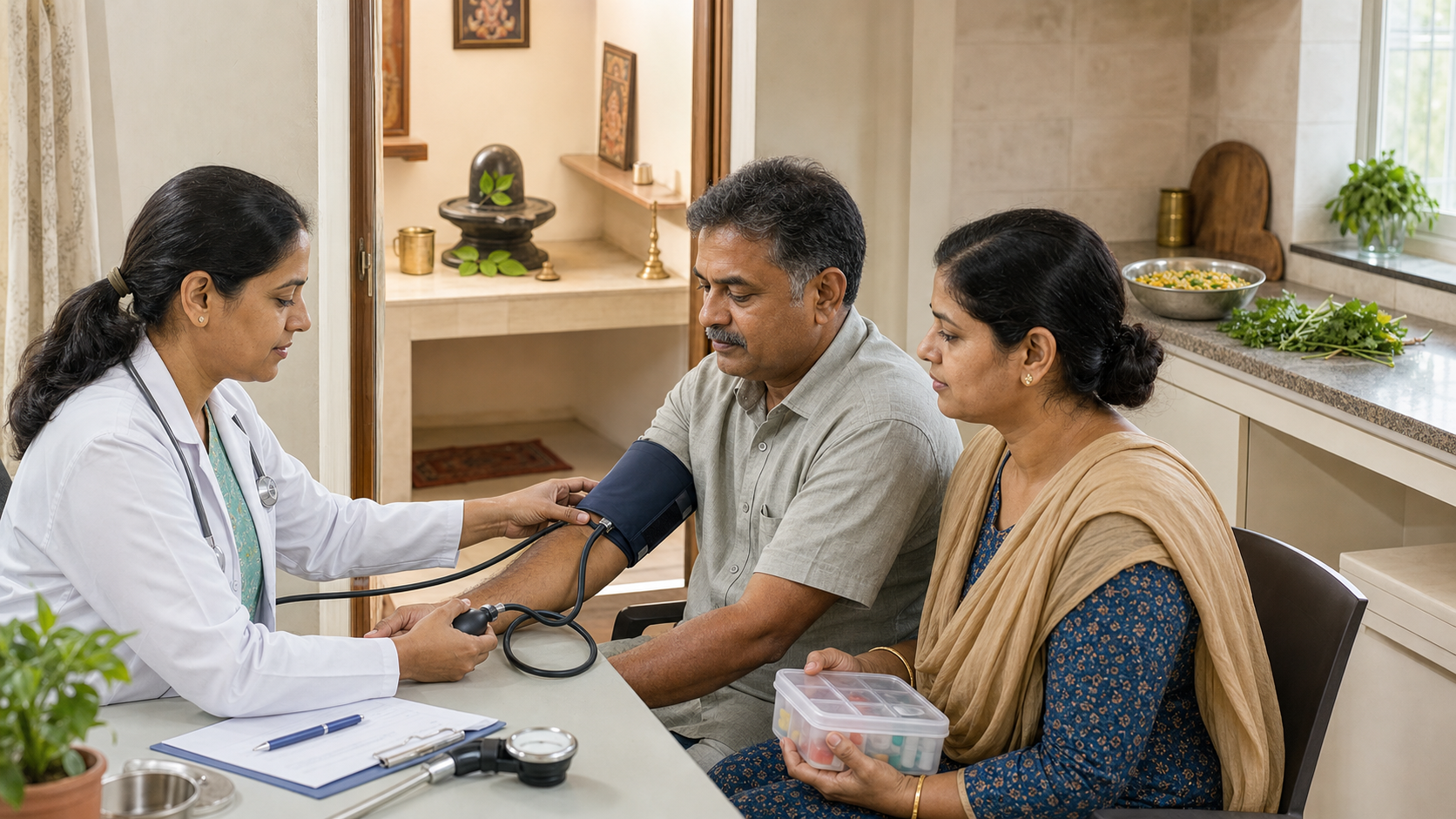
If someone is ill now, arrange appropriate medical assessment and follow clinical advice. Do not wait for an auspicious day, a priest, or the completion of a ritual. Then let this healing form of Shiva help you gather what illness can scatter: attention, courage, family cooperation, and compassionate action.
Key takeaways
- Jwarahareshwara means the Lord who removes jvara, principally fever and, in devotional interpretation, the fear and agitation surrounding affliction.
- The rare three-headed, three-legged, six-armed form teaches balance, stability, fearlessness, and active care; it is not a diagram for diagnosing disease.
- Abhishekam, mantra, and sankalpa can support composure and solidarity, but they cannot determine the cause of symptoms or replace treatment.
- A simple observance may use water, bilva, sandalwood, and a learned Shiva prayer. No elaborate setup is required.
- The puja is incomplete as a dharmic response unless it leads to seva for the patient, caregiver, or another person in need.
Who Jwarahareshwara is when illness enters the home
The name can be read as jvara-hara-ishvara: the Lord who removes fever and affliction. Jvara first names a bodily condition. Within worship, it also becomes a language for the mind made feverish by dread, helplessness, agitation, or despair.
Keep those meanings distinct. A spiritual reading of fear must never minimize a physical fever, and a physical illness must not be blamed on insufficient faith. The theological point is that the sick person and the frightened household both need care. Medicine addresses the condition; devotion can help the family meet it without panic, neglect, or loss of moral focus.
This healing identity is continuous with Rudra-Shiva. Vedic devotion remembers Rudra as fearsome yet also as a bearer of remedies, or bheshaja. The same divine power associated with affliction is approached for protection and restoration. Jwarahareshwara brings that merciful aspect into the foreground: Shiva is invoked not only to remove suffering but also to grant abhaya, freedom from paralyzing fear.
That distinction should shape your sankalpa. Do not frame the prayer as a bargain or a guaranteed cure. Make it precise and dharmic: seek relief for the ill person, steadiness for the family, sound judgement for caregivers, skill for healthcare workers, and strength to follow necessary treatment. A sankalpa like that remains meaningful even when recovery is slow or the outcome is uncertain.
How to read the three heads, three legs, and six arms
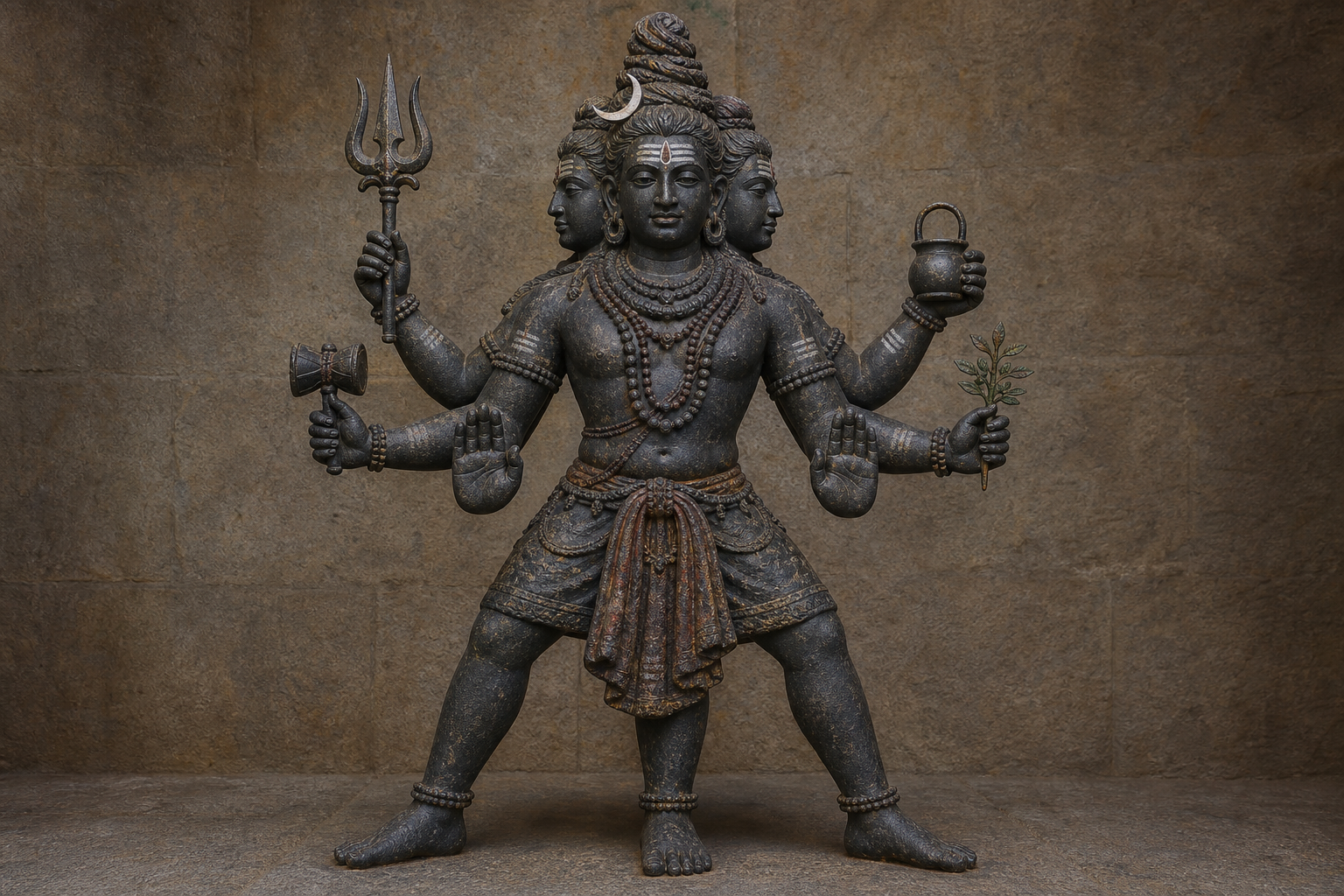
Jwarahareshwara’s unusual iconography is commonly described as three heads, three legs, and six arms. Regional images and the attributes placed in the hands can vary, so do not treat one modern picture as the sole canonical model. The enduring meaning lies in a many-sided divine capacity to restore balance and protect life.
- Three heads: These are read through several Dharmic triads: creation, preservation, and dissolution; sattva, rajas, and tamas; or past, present, and future. For a devotee, the practical lesson is completeness. Illness should not narrow attention to one frightened moment. Remember the person’s history, respond to the present condition, and prepare responsibly for what comes next.
- Three legs: Their uncommon stability can represent presence across the three worlds. Some interpretations also connect them with mastery of vata, pitta, and kapha. That dosha association is theological symbolism, not an Ayurvedic diagnosis. Do not infer a treatment, diet, herb, or dosha imbalance from the image.
- Six arms: The arms express compassionate reach and the capacity to confront many forms of disorder at once. They can also recall the six inner adversaries: kama, krodha, lobha, moha, mada, and matsarya. Illness can magnify anger, attachment, confusion, pride, or resentment in a household; noticing those reactions early prevents them from obstructing care.
- Trishula and damaru: The trident points toward mastery of triadic forces, while the drum evokes rhythm and ordered movement. In practice, let the symbols remind you to restore a workable rhythm of medicine, rest, meals, communication, and prayer.
- Kapala and akshamala: The skull confronts mortality rather than hiding it. The rosary trains repeated, attentive remembrance. Together they ask for honesty without despair: acknowledge vulnerability, then return the mind to its duty.
- Abhaya and varada mudras: One hand removes fear; another grants benevolence. Read them as paired obligations. Reassurance without practical help is incomplete, while practical help delivered with panic or harshness can deepen distress.
You do not need to memorize every correspondence before praying. Use the form as an examination of conduct. What has become unbalanced in the body, mind, or household? Which fear needs to be named? What useful action is being delayed? Who needs protection, and who needs the generosity represented by varada? The icon becomes most useful when it changes the next decision you make.
Where healing worship meets Ayurveda and medical care
The Caraka Samhita and Sushruta Samhita give jvara exceptional importance, traditionally describing it as the king of diseases. Fever can involve broad disturbance rather than one isolated symptom, so the classical Ayurvedic response considers regimen, diet, remedies, bodily balance, and mental calm. Jwarahareshwara’s triadic form can be contemplated as a religious counterpart to that systemic vision: healing concerns the whole person within a household and community.
The analogy stops before diagnosis. A sacred image cannot tell you whether an illness is infectious, what caused it, which dosha is involved, whether a medicine is appropriate, or when symptoms require urgent intervention. Those decisions belong to qualified health professionals. Do not begin herbs, fasting, restrictive diets, or changes to prescribed medicine merely because they seem to fit an iconographic correspondence.
The Bhagavata Purana, in 10.63, places jvara within the cosmic confrontation involving Shiva and Krishna. Fever appears as a force and is ultimately pacified within a movement from conflict toward reconciliation. This is theological drama, not a biological account of fever. Its value during illness is moral and contemplative: forces that appear overwhelming can be met through wisdom, courage, restraint, and grace.
Use worship for the work worship can actually do:
- Gather the household around a clear intention instead of rumor and panic.
- Give the mind a steady phrase, breath, and sequence when uncertainty has broken concentration.
- Strengthen the resolve to follow medical instructions and maintain necessary routines.
- Invite relatives and community members to offer practical support without crowding the patient.
- Make room for fear without allowing fear to control every decision.
Use medical care to assess symptoms, identify risk, determine treatment, and review any worsening or unexpected change. If a condition appears severe, urgent, or rapidly worsening, seek professional help immediately. No mantra count, abhishekam, fast, or temple visit needs to be completed first. This boundary does not diminish the puja; it keeps the puja aligned with ahimsa and responsibility.
A simple Jwarahareshwara observance you can perform at home
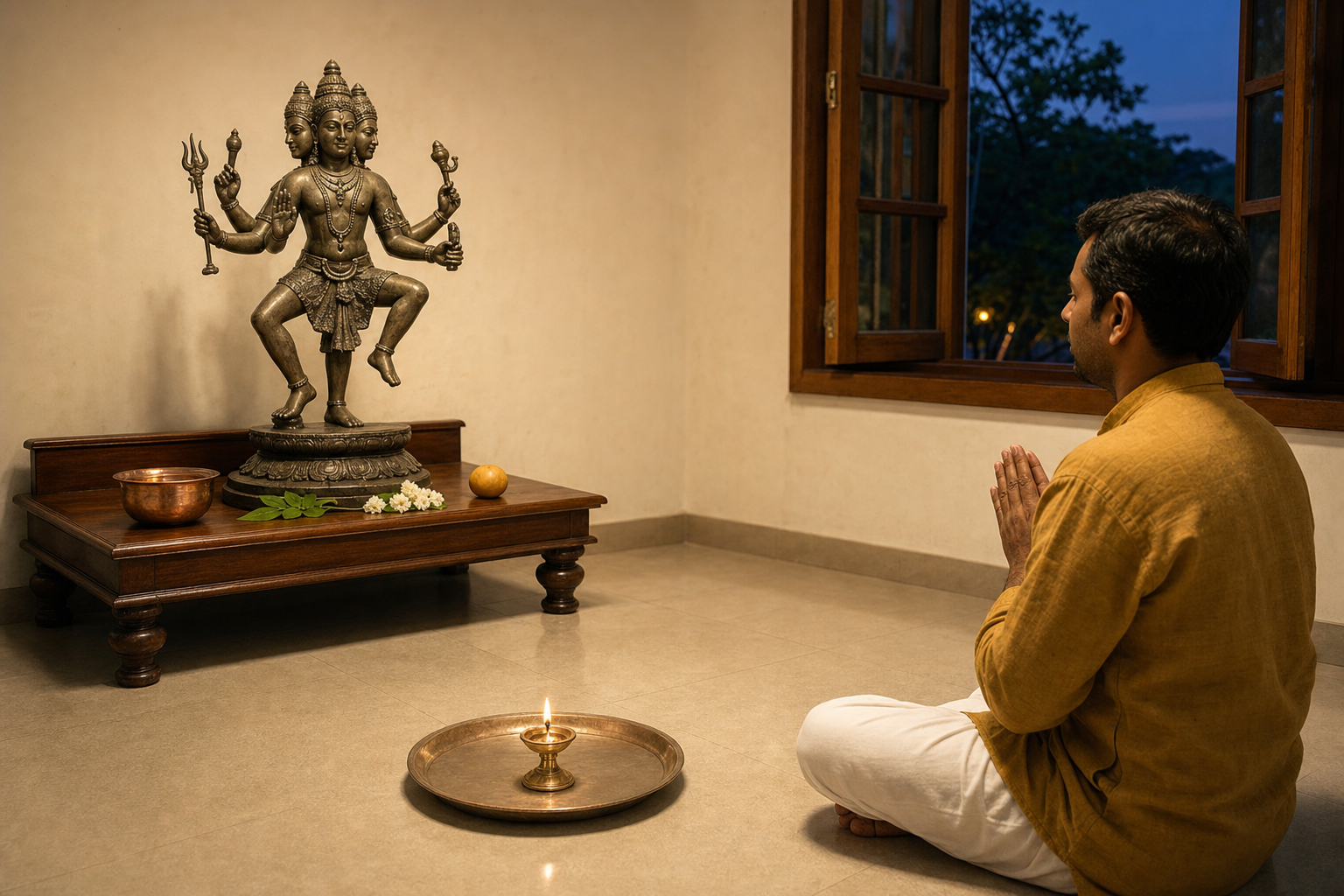
You can perform a modest observance before a Shiva linga, an image of Jwarahareshwara, or another established form of Shiva. The rare icon is meaningful, but owning a specialized murti is not a condition of sincere worship. If your family follows a guru, sampradaya, or temple procedure, preserve that received practice.
- Put care first. Confirm that the ill person has appropriate assessment, treatment, medicine, rest, and supervision. Place the puja around the care plan, not in competition with it.
- Prepare a clean, quiet place. Set the image or linga securely. Keep water, bilva leaves, sandal paste, and prasada ready if these belong to your custom. Light a lamp only when an open flame is safe; the worship remains valid as a prayerful observance when a flame would create a hazard.
- State one clear sankalpa. Name the person or community for whom you are praying, while respecting privacy. Ask for arogya, fearlessness, wise treatment, strength for caregivers, and the removal of obstacles to proper care. Include healthcare workers if they are carrying the burden of the illness.
- Offer a cooling abhishekam. Water, milk, sandalwood, and bilva are associated with this healing worship. A simple observance can use clean water and the offerings your household can manage respectfully. Pour liquids only over a suitable linga or ritual image; if the image could be damaged, place the water before it as an offering instead. The ritual cooling is directed to the deity and symbolizes pacification. It is not a medical cooling procedure for the patient.
- Recite a prayer you actually know. The Maha Mrityunjaya mantra, Sri Rudram, or a jvara-nashaka stotra received through a local tradition may be used. Do not invent a mandatory count. Follow your lineage or temple custom; if you have none, choose an attentive and sustainable period of recitation rather than pursuing a large number mechanically.
- Pause and identify the next duty. Sit quietly after the recitation. Decide on one concrete act: call the clinician, collect medicine, arrange transport, prepare suitable food, update a concerned relative, or relieve an exhausted caregiver.
- Conclude with prasada and follow-through. Distribute prasada as appropriate to the person’s diet and clinical instructions. Then perform the act of service named in your sankalpa. A resolve that never leaves the altar has not yet become seva.
Mondays, Pradosha evenings, the month of Shravana, and Maha Shivaratri are traditionally meaningful times for Shiva worship. Use them for a fuller family or community observance if circumstances permit. Illness itself, however, is sufficient reason to pray now. Never postpone medical attention or a sincere home prayer while waiting for a preferred date.
If you want temple worship, contact the temple before traveling. Jwarahareshwara may be present as a sub-shrine, a regional form, an epithet used during a healing rite, or a special observance rather than a prominent standalone murti. Ask whether the temple offers a disease-pacification abhishekam or accepts a sankalpa for arogya and abhaya. This avoids assuming that every Shiva temple follows the same iconographic or ritual practice.
Carry the prayer from the altar into seva
Jwarahareshwara worship is most coherent when fearlessness becomes service. After the puja, look for the unattended burden. The patient may already have medicine but no transport to the next appointment. One caregiver may be answering every message and losing needed rest. An elderly relative may understand neither the instructions nor the schedule. A family may need one calm person to coordinate help rather than ten people offering conflicting advice.
- Ask what help is needed instead of assuming.
- Write down clinical instructions accurately and keep them available to the responsible caregiver.
- Offer a defined task, such as transport, a suitable meal, medicine collection, or a scheduled check-in.
- Respect the patient’s privacy; a healing sankalpa is not permission to publicize someone’s condition.
- Follow professional infection-control guidance when illness could spread. Devotional enthusiasm should not expose the patient, priest, or community to avoidable risk.
- Support the caregiver as well as the patient. Relief from fear often begins when no one person must carry the whole burden alone.
This union of spiritual refuge and compassionate action appears across the wider Dharmic family. Buddhism venerates Bhaisajyaguru, the Medicine Buddha, in connection with relief from illness and fear. Jain discipline joins ahimsa, clarity, and responsible conduct. Sikh ardas holds trust in the Divine beside active labor for the removal of suffering and rog. The forms differ, but compassion, discipline, and wisdom remain inseparable from healing.
So begin where you are. Arrange the care that is needed, offer water to Shiva, recite the prayer you have received, and leave the altar with one duty clearly named. Jwarahareshwara’s protection is honored when devotion makes you steadier, more truthful about illness, and more dependable to the person who needs you.