
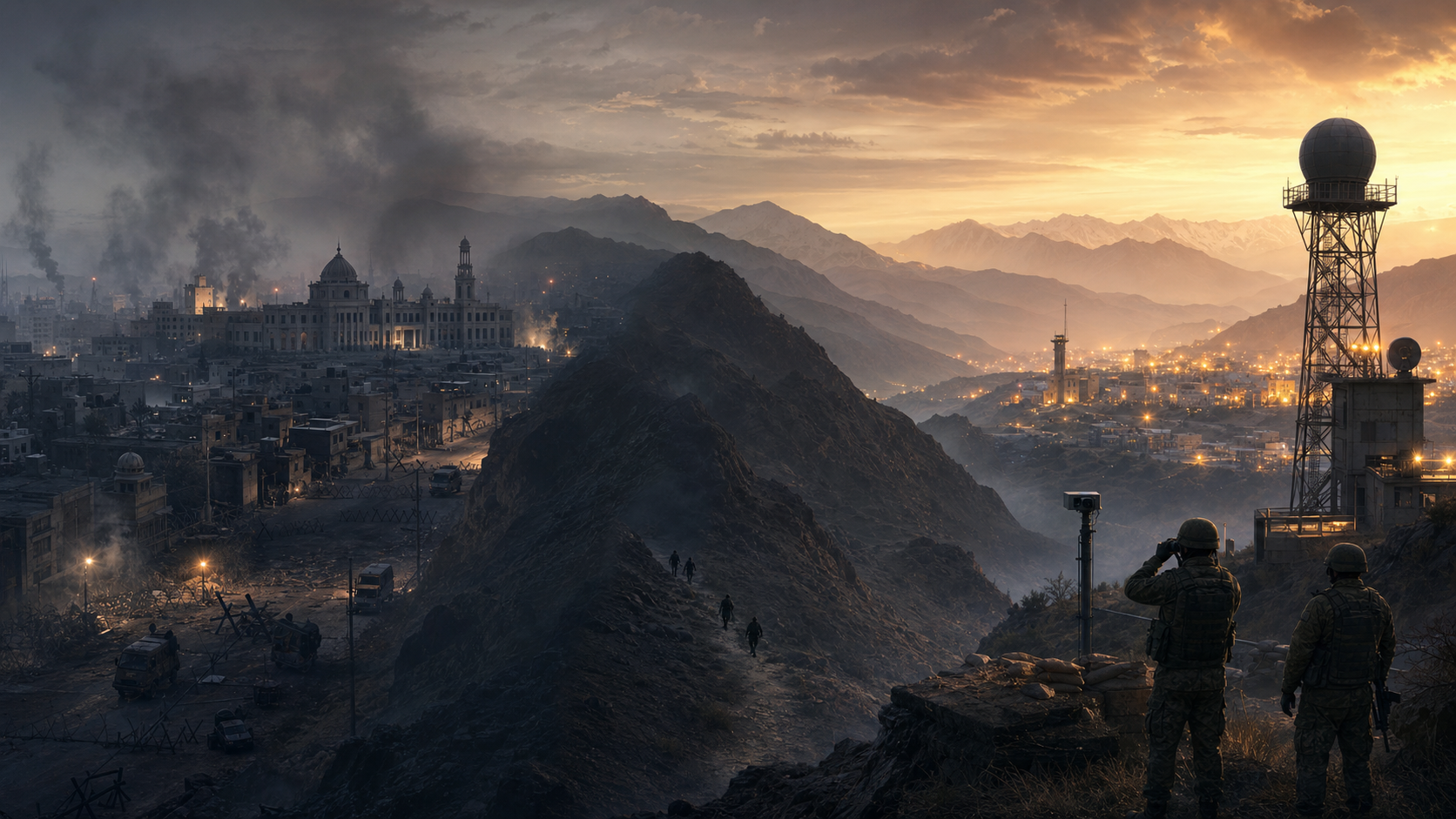
When Pakistan suffers another internal rupture, you may be tempted to read it as good news for Bharat: a hostile establishment occupied at home should have less capacity to cause trouble abroad. That may be true over time. In the more dangerous short term, however, weakness can also create an incentive for provocation.
The sensible response is neither panic nor complacency. Bharat needs a warning model that treats a severe Pakistani domestic shock as a trigger for closer scrutiny, not as proof that an attack has been ordered. You can use the same distinction when deciding what to believe, what precautions to take, and what conduct to demand from public institutions.
Why a cornered establishment can become more dangerous

Instability changes both capability and incentive, often in opposite directions. When security forces are absorbed by an insurgency, their resources and authority may be stretched. Yet the leadership may also feel a greater need to recover prestige, redirect public anger, or prove that only the military can defend the country.
That produces four questions Bharat should ask whenever a major internal shock occurs in Pakistan:
- Capacity: Is the military merely distracted, or do parts of the security system still retain the means to enable pressure against Bharat?
- Incentive: Would an external confrontation help the establishment change the political subject, restore its standing, or rally support?
- Deniability: Might indirect violence appear less costly than an acknowledged military action?
- Control: Does the leadership appear to believe that a limited provocation or short conflict can be contained?
The last question is especially important. A confrontation conceived as brief and controlled can acquire its own momentum. Casualties create public pressure, multiple armed actors complicate command, and each side’s attempt to demonstrate resolve can narrow the route back to restraint. Even a leadership seeking diversion rather than a large war can misjudge the consequences.
This is a risk scenario, not a claim that every Pakistani crisis produces an attack. Domestic disorder can reduce the establishment’s freedom of action as readily as it can encourage adventurism. The practical mistake is assuming that the first effect automatically cancels the second.
It is also essential to distinguish Pakistan’s military establishment, insurgent organisations, political factions and ordinary people. They are not one actor with one purpose. A hostile or reckless security policy does not turn every Pakistani civilian into an enemy, and the suffering of a neighbouring population is not a strategic success for Bharat.
The 2025 sequence is a warning, not a predictive formula
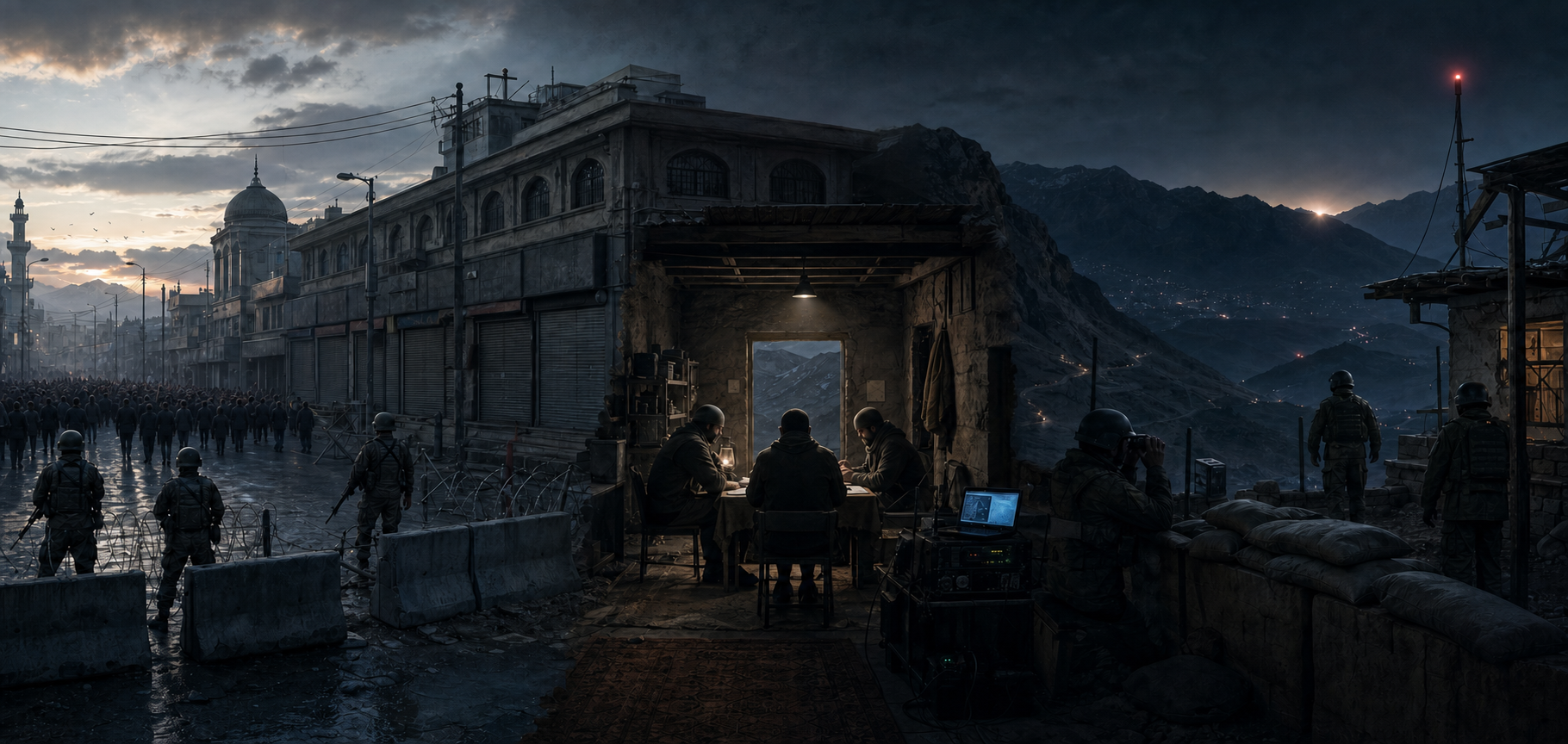
One recent sequence shows why the timing deserves attention. On March 11, 2025, Baloch insurgents hijacked the Jaffar Express; barely six weeks later, 26 tourists were massacred at Pahalgam after being identified on religious grounds as Hindus.
The timing does not establish that the train hijacking caused the Pahalgam attack, that the same command structure connected them, or that every insurgent success in Balochistan will be followed by violence in Bharat. One sequence cannot support any of those conclusions.
It does support a narrower and more useful lesson: the interval between an internal humiliation and an external security crisis can be short enough that preparations begun after an attack will be too late. A major shock should therefore start a review during the following weeks, while protections remain reversible and proportionate.
- Record the trigger. Note what happened, which institution was embarrassed or weakened, and when it occurred.
- Test the mechanism. Ask whether the shock changes incentive, capability, deniability or confidence in escalation control.
- Look for independent confirmation. Do not convert a historical pattern, anonymous warning or confident prediction into evidence of a present plot.
- Raise reversible safeguards. Review security at exposed venues, transport routes and public gatherings without declaring that an attack is inevitable.
- Reassess as evidence changes. Heightened vigilance should be renewable when indicators accumulate and reduced when they do not.
The religious selection of the Pahalgam victims adds another dimension. An attack that identifies Hindus before killing them aims beyond the immediate casualties. It can frighten travellers and pilgrims, wound Hindu confidence, provoke indiscriminate anger, and damage trust within Bharat. Protecting Hindu lives and refusing collective blame are therefore not competing duties. Both deny terrorists the wider outcome they seek.
Watch converging indicators, not one dramatic headline

A reported rise in insurgent attacks in Balochistan matters because it can expose the gap between the Pakistani military’s ambitions and its control on the ground. It still does not tell you, by itself, whether danger to Bharat has risen. A sound assessment looks for several layers moving together.
- A consequential domestic trigger: Look for a high-visibility insurgent operation, a serious loss of military prestige, or another event that forces the establishment to confront a failure of control.
- Narrative preparation: Watch for a coordinated effort to blame Bharat for Pakistan’s internal troubles, intensify anti-Hindu language, or present confrontation as necessary retaliation. A single speech or television segment is weak evidence; sustained messaging across official and aligned channels is more significant.
- Operational warnings: Give greater weight to official reports of disrupted plots, attempted infiltration, target reconnaissance, recovered material or specific local security advisories. Such reports must still be assessed for credibility and corroboration.
- Military signalling: Pay attention to readiness changes acknowledged through reliable official channels. Viral claims about troop movements, unexplained video clips and anonymous maps should not be treated as confirmation.
- Target exposure: Consider whether a festival, pilgrimage, tourist season, transport hub or crowded public event creates an opportunity for attackers to produce fear beyond the immediate site.
No one indicator proves that an attack is imminent. Concern becomes more justified when a serious internal trigger, hostile narrative preparation, credible operational warnings and visible security changes begin to align. This is the difference between a warning framework and fortune-telling.
You do not need to become an amateur intelligence analyst. Keep a small evidence log instead: the date of the claim, its original publisher, whether an official body has corroborated it, and when you will check again. Discount undated footage, cropped screenshots, recycled videos, anonymous predictions with precise attack dates, and claims that accuse an entire religious or national community. This simple habit prevents alertness from turning into rumour-driven fear.
A disciplined response has two levels

Bharat’s answer has to protect likely targets while preserving room for evidence-based decisions. Public vigilance helps, but only security institutions can assess classified intelligence, attribute sponsorship or decide how the state should respond.
What security and political institutions should do
- Use a standing review trigger. A major insurgent blow against Pakistan’s security establishment should prompt an immediate reassessment of risks to Bharat. It should not produce an automatic declaration that an attack is coming.
- Protect exposed places quietly. Tourist locations, pilgrimage routes, transport facilities and crowded events may warrant temporary measures based on local threat assessments. Authorities should avoid publicising operational details that would help an attacker.
- Separate warning from attribution. Defensive readiness can rise before responsibility is known. Punitive action, public accusation and diplomatic escalation require a firmer evidentiary standard.
- Prepare graduated options and exits. If an attack occurs, leaders should have proportionate choices and clear objectives before public anger compresses the decision window. A response without an attainable end state can hand control of escalation to the adversary.
- Speak with precision. Public communication should name suspected perpetrators and supporting structures only as far as evidence permits. It should distinguish them from Pakistan’s population and from Indian Muslims, who bear no collective responsibility for an external attack.
A pro-Hindu security policy should be judged by whether it protects Hindu lives, deters those who target them, establishes responsibility accurately and prevents the enemy from widening the conflict inside Bharat. Loudness is not a substitute for any of those outcomes.
What you, your family and your community can do
- Base travel decisions on current official advisories. If you are visiting a pilgrimage site, tourist area or large gathering during a period of heightened concern, share your itinerary and check-in plan with one trusted person.
- Notice exits before you need them. At a crowded venue, identify the nearest safe route and follow instructions from organisers or police. Do not touch or investigate an unattended object yourself.
- Give one person responsibility. A temple, gurdwara or community organisation should designate an incident lead, maintain current local-police contacts, and ensure volunteers know who communicates with authorities during a disturbance.
- Review crowd procedures with professionals. Evacuation and sheltering can require different responses, so venue managers should agree on appropriate procedures with local authorities instead of improvising during an emergency.
- Protect operational information. Do not post live security deployments, poorly guarded entrances or the movement of responders. Do not circulate attacker propaganda or graphic footage merely because it is labelled urgent.
- Reject profiling and vigilantism. Report conduct that creates a credible concern, not a person’s religion, language, dress or place of origin. Confronting a suspected person yourself can endanger bystanders and interfere with a legitimate investigation.
If you encounter an immediate threat, move away when it is safe to do so, alert the responsible local authority, and follow emergency instructions. Do not remain at the scene to record footage or gather material for social media.
Key takeaways
- Pakistan’s internal weakness can reduce its capabilities while increasing the establishment’s incentive to seek an external diversion.
- The Jaffar Express hijacking and the Pahalgam massacre form a warning sequence, not proof of causation or a timetable for the next attack.
- A domestic shock should trigger closer review; it should never be treated as sufficient evidence that violence against Bharat is imminent.
- Converging indicators carry more weight than a viral clip, anonymous prediction or isolated speech.
- Effective vigilance protects vulnerable people, preserves evidentiary standards and refuses collective blame.
When the next major shock inside Pakistan occurs, write down the trigger, wait for corroboration, review any exposed travel or community plan, and demand precision from those making public claims. Early vigilance and disciplined judgment reinforce each other. That is how Bharat can prepare for danger without allowing an adversary to dictate its fears or fracture its society.