
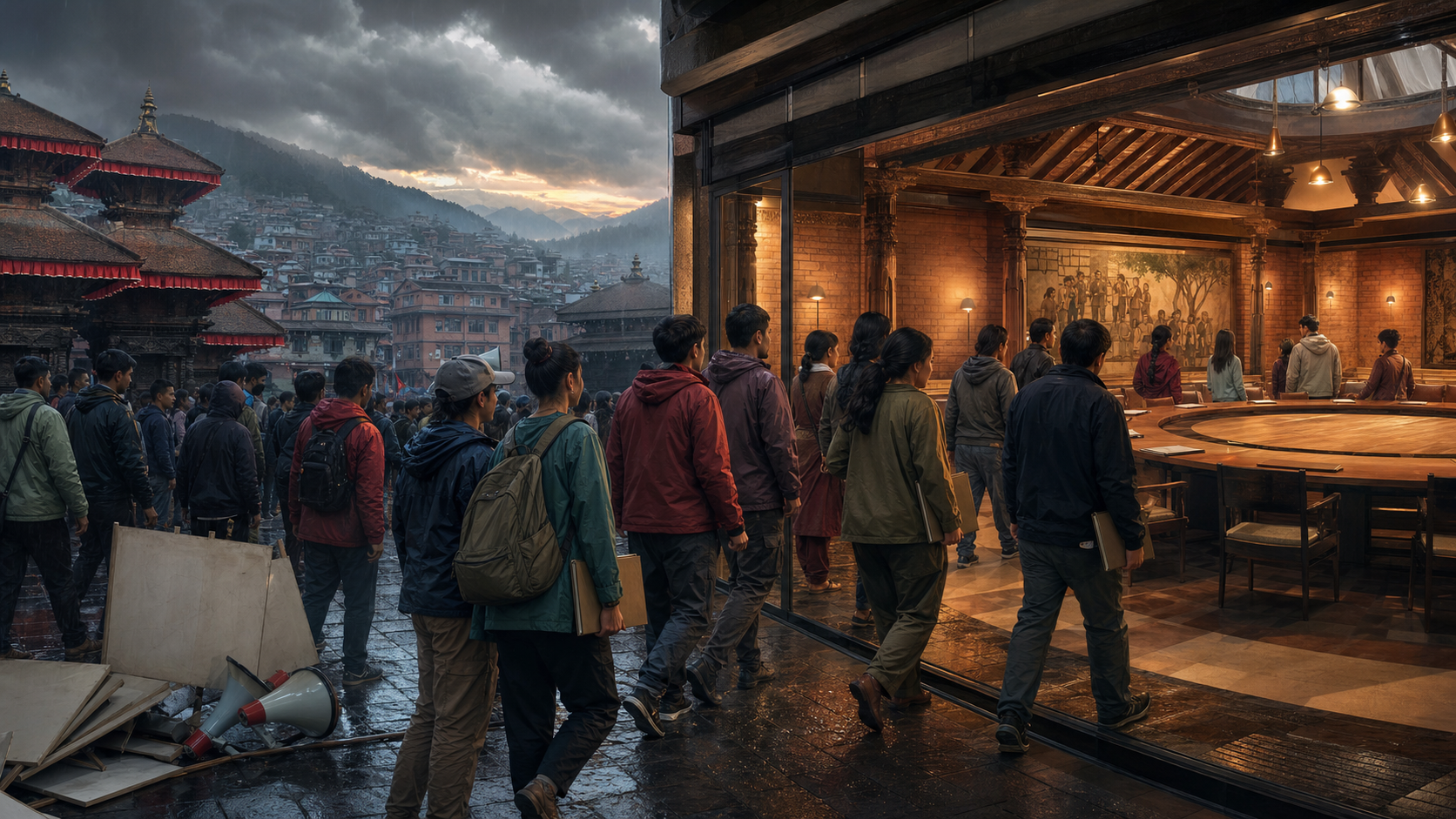
If you welcomed Nepal’s youth-driven break with old politics, the protests against Prime Minister Balen Shah create an uncomfortable question: has the new government already betrayed the movement, or are its supporters demanding results before reform has had time to work?
Neither verdict is justified yet. Nepal’s Gen Z transition has reached a more revealing stage: the people who rejected the old guard must now decide whether they will scrutinise their own political choice with the same seriousness. The test is no longer whether an outsider can win power. It is whether power becomes more accountable after the outsider wins.
The revolution has moved from rejection to responsibility
In less than a year, Nepal’s young anti-corruption protesters helped remove a prime minister, backed rapper-turned-politician Balen Shah, and helped his new government secure a commanding election victory. That sequence demonstrated the movement’s power to reject an establishment. It did not yet demonstrate an ability to replace established habits of government.
Opposition is held together by what it rejects. Government must choose between competing demands, supervise street-level officials, explain delays and accept responsibility when the state causes harm. That is where a movement’s moral language either becomes administrative practice or dissolves into another personality cult.
By Shah’s 100-day point, hundreds of mostly young demonstrators had gathered outside the Singhadurbar Secretariat. They demanded protection for the poor, respect for human rights and the prime minister’s resignation. The striking fact is not simply that Shah encountered opposition. It is that some of the generation associated with his rise were willing to direct their anger at him.
That can be a sign of democratic maturity rather than political collapse. A citizen who holds a preferred leader accountable is more useful to democracy than a supporter who excuses in the new government what was condemned in the old one. Shah’s electoral mandate remains significant, but a mandate authorises government; it does not suspend scrutiny.
Ganesh Nepali’s death requires facts before symbolism

The immediate crisis followed a devastating event. On July 9, 25-year-old ride-hailing driver Ganesh Nepali set himself on fire outside Kathmandu’s passport office and died the following day. Witnesses connected the incident to a dispute with municipal police over a wheel lock on his motorcycle. Traffic police disputed the claim that a fine or clamp caused his action, said that no citation had been issued, and stated that a formal investigation was underway.
That distinction matters. Nepali’s death is established. A reported confrontation is part of the public account. The precise sequence, cause and institutional responsibility remain contested. Repeating the wheel-lock explanation as settled fact would get ahead of the investigation; dismissing the allegation merely because police disputed it would make the opposite error.
Two more people, Ashwin Raut and Vivek Mandal, attempted self-immolation during the next two days. Their actions increase the urgency, but they do not establish that all three cases had one cause. Their suffering should not be compressed into a convenient political story before the individual facts are known.
If you discuss or share this case, keep three categories separate: what has been confirmed, what witnesses have alleged, and what officials contest. Demand preservation of available records, a clear chronology of each official interaction and public findings that distinguish evidence from inference. This is not pedantry. In a volatile transition, an unverified claim can inflame the street, while an opaque inquiry can convince citizens that the state protects itself.
The government also has a duty larger than determining the immediate trigger. It must examine whether ordinary people experience municipal and traffic enforcement as predictable, reviewable and proportionate. Even if the disputed wheel lock proves unrelated to Nepali’s decision, a system in which precarious workers cannot understand an enforcement action or challenge it without humiliation is still a governance problem.
One hundred days is early, but it is not consequence-free
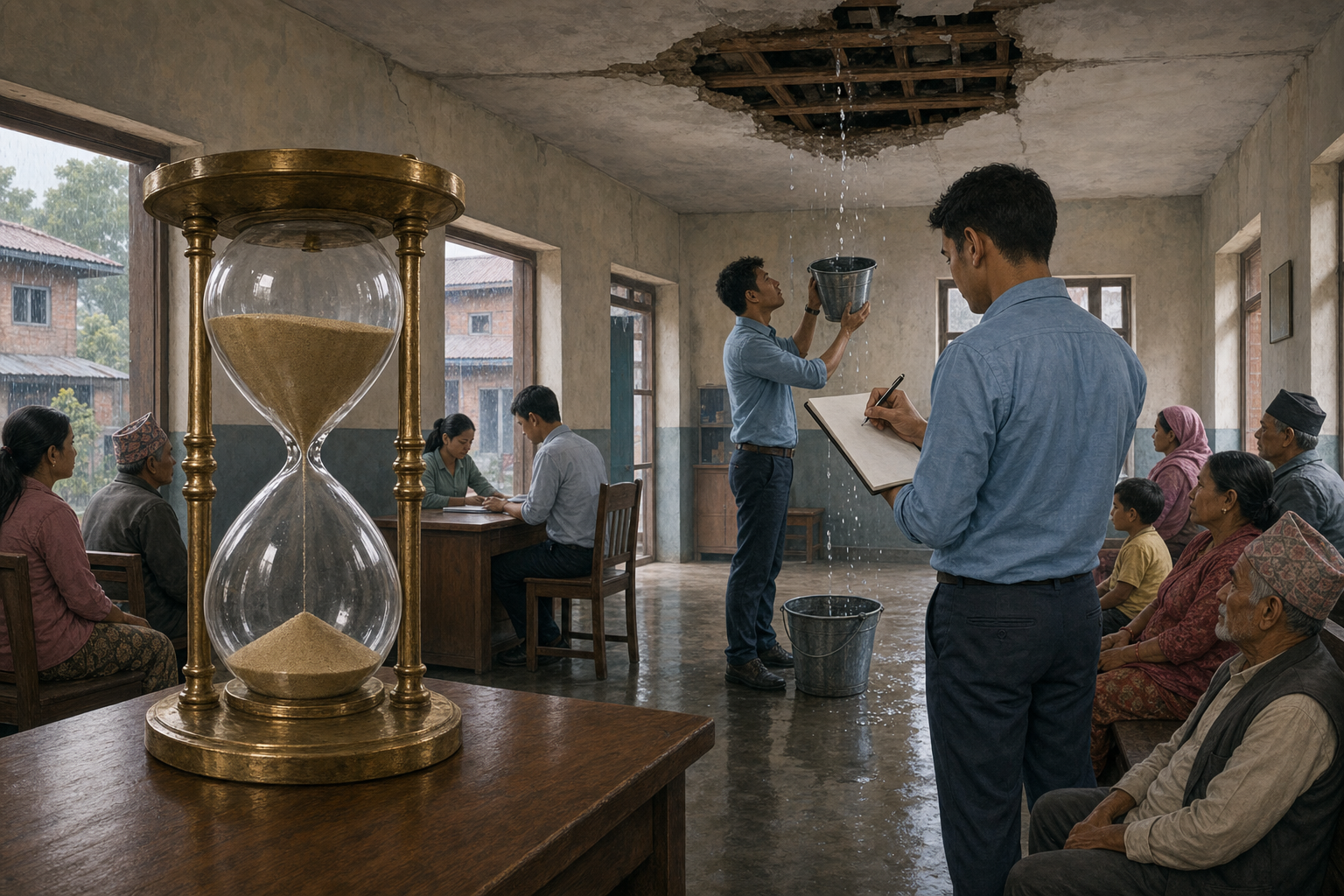
Three months is too short a period in which to prove that entrenched corruption has been dismantled, livelihoods have materially improved or state institutions have been rebuilt. Those outcomes require laws, budgets, personnel, enforcement and repeated implementation. Anyone promising instant transformation is confusing political theatre with institutional change.
But the same 100 days are long enough to reveal a government’s operating habits. Citizens can already judge whether ministers publish reasons for decisions, acknowledge failures, establish deadlines, respond to peaceful dissent and correct a harmful procedure. Structural outcomes take time; transparency and basic administrative discipline can begin immediately.
This gives you a fair way to evaluate Shah without granting either a blank cheque or an instant conviction:
- Demand immediately: a credible inquiry into Nepali’s death, an explanation of the disputed police interaction, protection of peaceful protest and a clear account of any corrective action.
- Measure over time: whether anti-corruption promises become durable procedures, whether public services improve and whether officials face consequences under consistent rules.
- Reject at every stage: concealment, collective blame, dehumanisation of the poor, suppression of legitimate questions and the use of a leader’s popularity as a substitute for evidence.
A demand for resignation is a legitimate political demand, but it is not proof that resignation is the necessary remedy. The proportional questions are more useful: Did the leadership obstruct an investigation? Did it defend a demonstrably abusive practice? Did it refuse a reasonable correction? Did it offer dates and responsibilities that can later be checked? The government’s age does not answer those questions in either direction.
Use a six-signal scoreboard instead of following slogans

The next stage will generate competing declarations of success, betrayal and conspiracy. You can cut through them by tracking six observable signals.
- Quality of the investigation: Look for a public chronology, an explanation of the disputed claims and findings tied to evidence. An announcement that an inquiry exists is only a starting point.
- Street-level administrative reform: Watch whether enforcement comes with written grounds, a record of the action, a usable appeal route and de-escalation rules. Grand anti-corruption speeches mean little if daily encounters remain arbitrary.
- A public reform ledger: Each major promise should have a responsible office, a deadline, a stated measure of completion and a published result. Without that ledger, both the government and its critics can select whichever anecdotes favour them.
- Institutions that outlast Shah: Serious anti-corruption work should become visible in procurement, appointments, conflicts-of-interest rules, complaint handling and consistent enforcement. Reform that depends entirely on one leader’s will is succession risk, not institutional transformation.
- Treatment of dissent: A government born from protest must be especially careful with peaceful protesters. Judge whether it answers their claims, permits scrutiny and distinguishes public order from political embarrassment.
- Consequences for the vulnerable: The placards outside Singhadurbar focused on the poor and human rights. Follow the service points that affect people with little margin for error: permits, documents, transport enforcement, fines and grievance procedures. That is where administrative reform becomes tangible.
If you follow Nepal closely, keep a simple record with five fields: date, government promise, responsible authority, verifiable evidence and current status. Add the consequence for an ordinary citizen. This prevents a dramatic week from erasing the longer record and makes it harder for either side to substitute emotion for performance.
Apply the same standard to claims of outside orchestration. Nepal matters deeply to Bharat, but proximity does not turn every domestic conflict into a geopolitical plot. Until verifiable evidence emerges, begin with the stated Nepali grievance, the conduct of Nepali institutions and the response of the Nepali government. Respect for a civilisational neighbour includes respect for its people’s political agency.
A Dharmic reading resists both hero worship and chaos
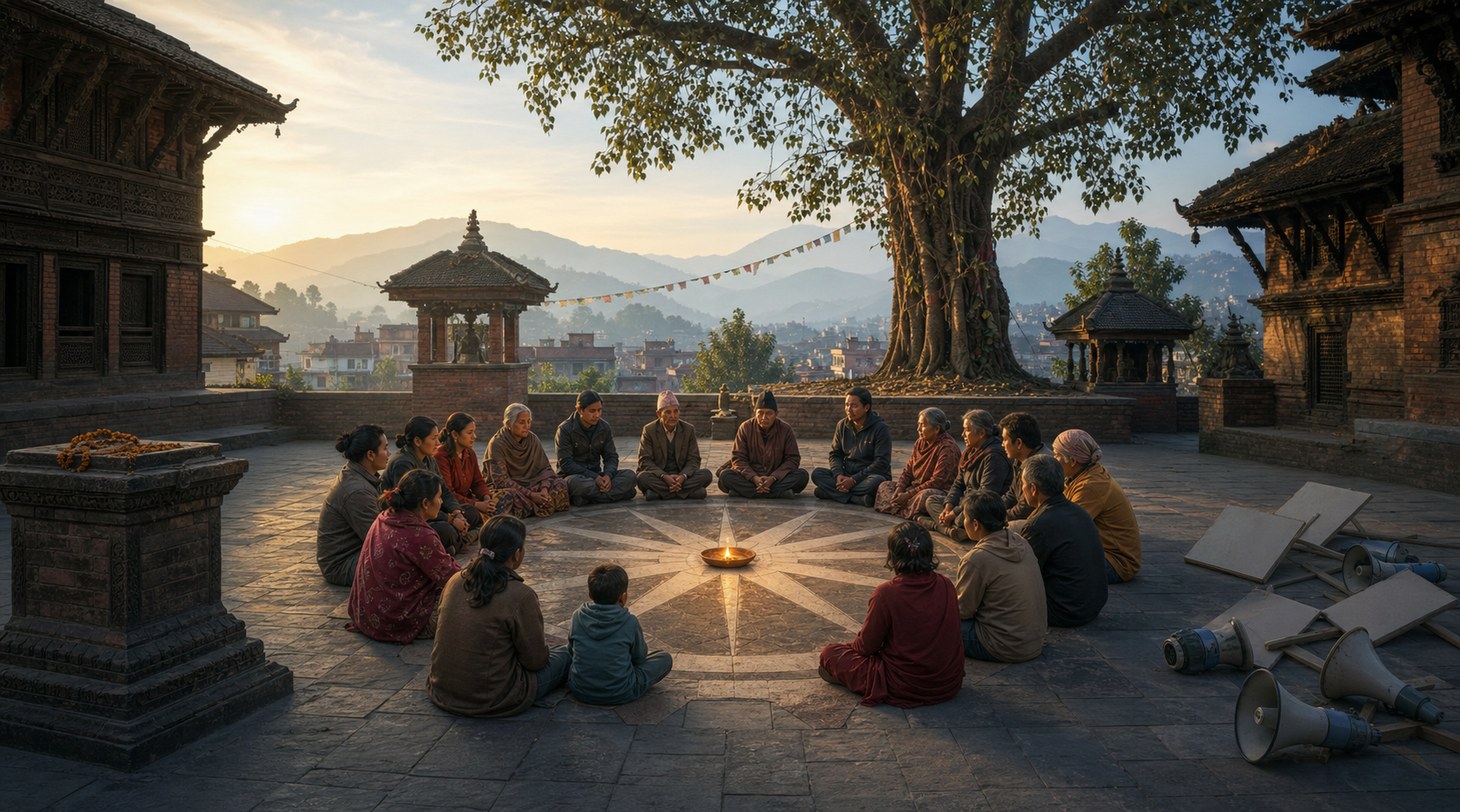
Rajadharma offers a demanding frame for this moment: political authority is judged by duty, restraint and justice, not by the ruler’s origin story. A leader does not become less accountable because he is young, unconventional or preferable to the old establishment. Nor does one failure erase the duty to establish facts and choose a proportionate remedy.
This frame also disciplines protest. Ahimsa is not passive acceptance of injustice, but neither is it permission to turn human suffering into spectacle or rumour into a weapon. A Dharmic civic response protects life, insists on truth, gives special attention to those with the least power and refuses to dehumanise political opponents.
Key takeaways
- Nepal’s Gen Z movement is now being tested by government, not merely by protest.
- One hundred days is too early to declare structural reform complete or defeated, but it is enough to judge transparency, responsiveness and administrative habits.
- Ganesh Nepali’s death demands an evidence-led investigation because the alleged trigger remains disputed.
- Shah should be measured through institutions, procedures and consequences for citizens, not through his outsider image.
- Readers in Bharat should resist reducing Nepal’s domestic accountability crisis to an unsupported geopolitical narrative.
The next meaningful milestone will not be another speech or another resignation slogan. It will be a public account of what happened, a visible correction where systems failed and a reform record that citizens can verify. When the next development comes, update the ledger. If the government opens the facts and strengthens procedures, the transition remains alive. If it asks citizens to trust the personality instead, Nepal may have changed leaders without changing political culture.