
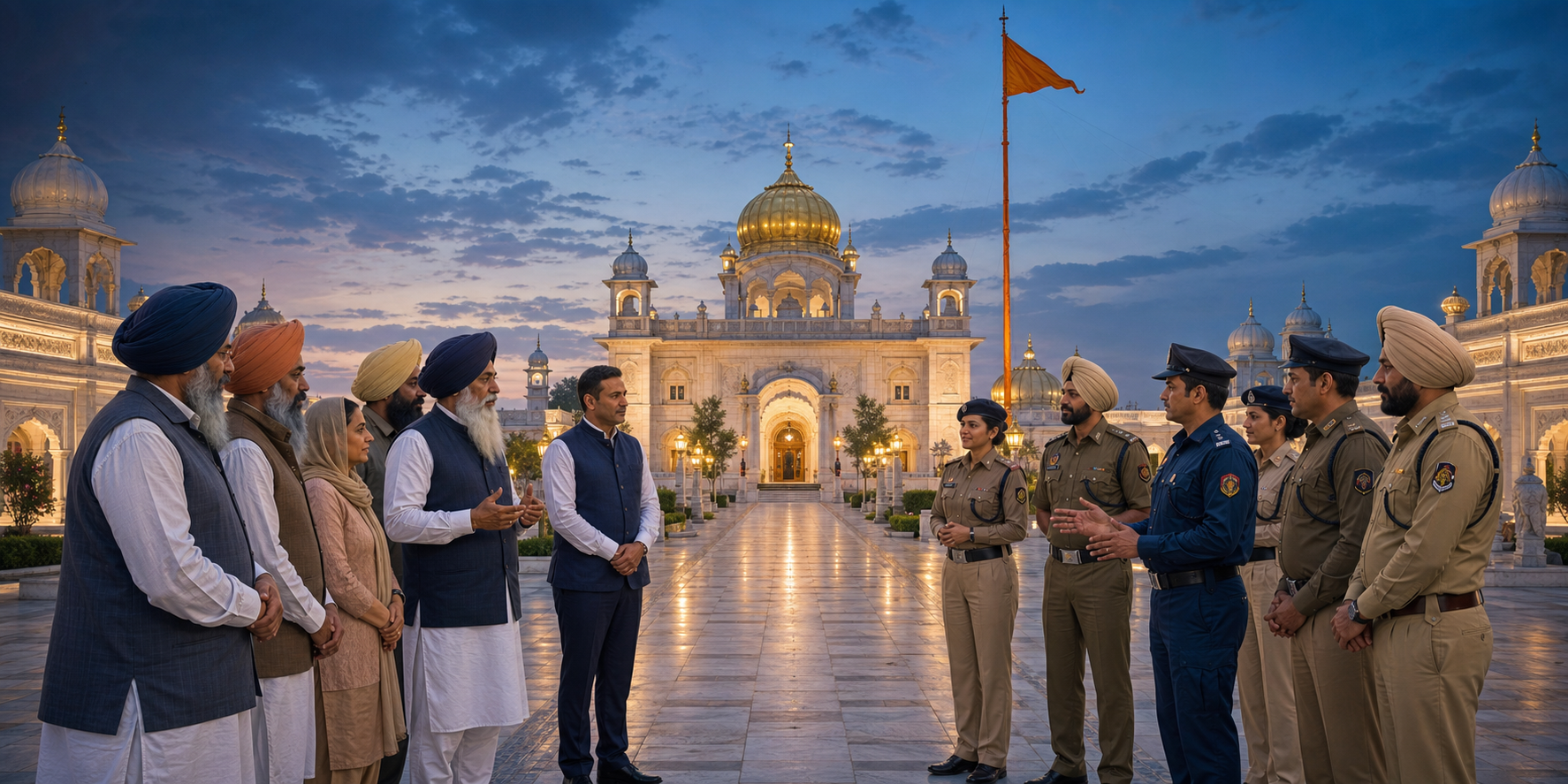
If you are trying to decide whether BJP’s Panthic outreach in Punjab is principled engagement or short-term political accommodation, do not begin with ceremonial appearances. Watch what happens when respect for a Sikh institution collides with public safety, alleged criminal conduct and pressure from an organised religious group.
The sound position is neither hostility to Panthic concerns nor automatic deference to anyone claiming to represent them. BJP has to show that it can respect Sikh religious life, use trusted community intermediaries and still uphold one standard of law. If it sacrifices any one of those duties, the outreach may gain access to influential figures while losing the wider trust it was meant to build.
A gurdwara confrontation reveals the difficult line
For four days beginning 20 June, about half a dozen Nihang Sikhs armed with spears and swords occupied the roof of the Nagrasu Gurdwara in Rudraprayag, Uttarakhand. They had gone up after police arrested four members of their group following an earlier clash in Karnaprayag, and they demanded the four men’s release.
Gurdwara caretakers alleged that the men assaulted volunteers, held the manager hostage and damaged property. Stones were also thrown at police and passers-by. These allegations are serious, but they remain allegations unless established through a lawful process. Religious identity must not be used either to presume guilt or to prevent an investigation.
The district magistrate and superintendent of police made appeals for three days, the ITBP maintained a perimeter, and a Nihang delegation from Punjab eventually persuaded the group to come down. That negotiated ending was preferable to a forced confrontation at a place of worship, where a tactical error could have endangered lives and inflamed religious sentiment far beyond the site.
But de-escalation answers only the immediate safety question. It does not decide what should happen to allegations of assault, hostage-taking, property damage or attacks on police and civilians. A mediator can help end a dangerous standoff; the mediator cannot acquire a veto over investigation or prosecution. Keeping those two functions separate is the central political test.
Key takeaways
- Using respected Sikh intermediaries to prevent bloodshed can be prudent governance; it is not, by itself, appeasement.
- A negotiated surrender must not silently erase allegations arising before or during the confrontation.
- Nihang participants in one dispute cannot be treated as representatives of all Sikhs or of the entire Panth.
- Police restraint protects legitimacy only when it is followed by transparent and even-handed legal procedure.
- BJP’s outreach will be credible only if the standard applied to Panthic actors is the same standard it would defend in any other religious or political dispute.
Panthic respect cannot mean deference to coercion
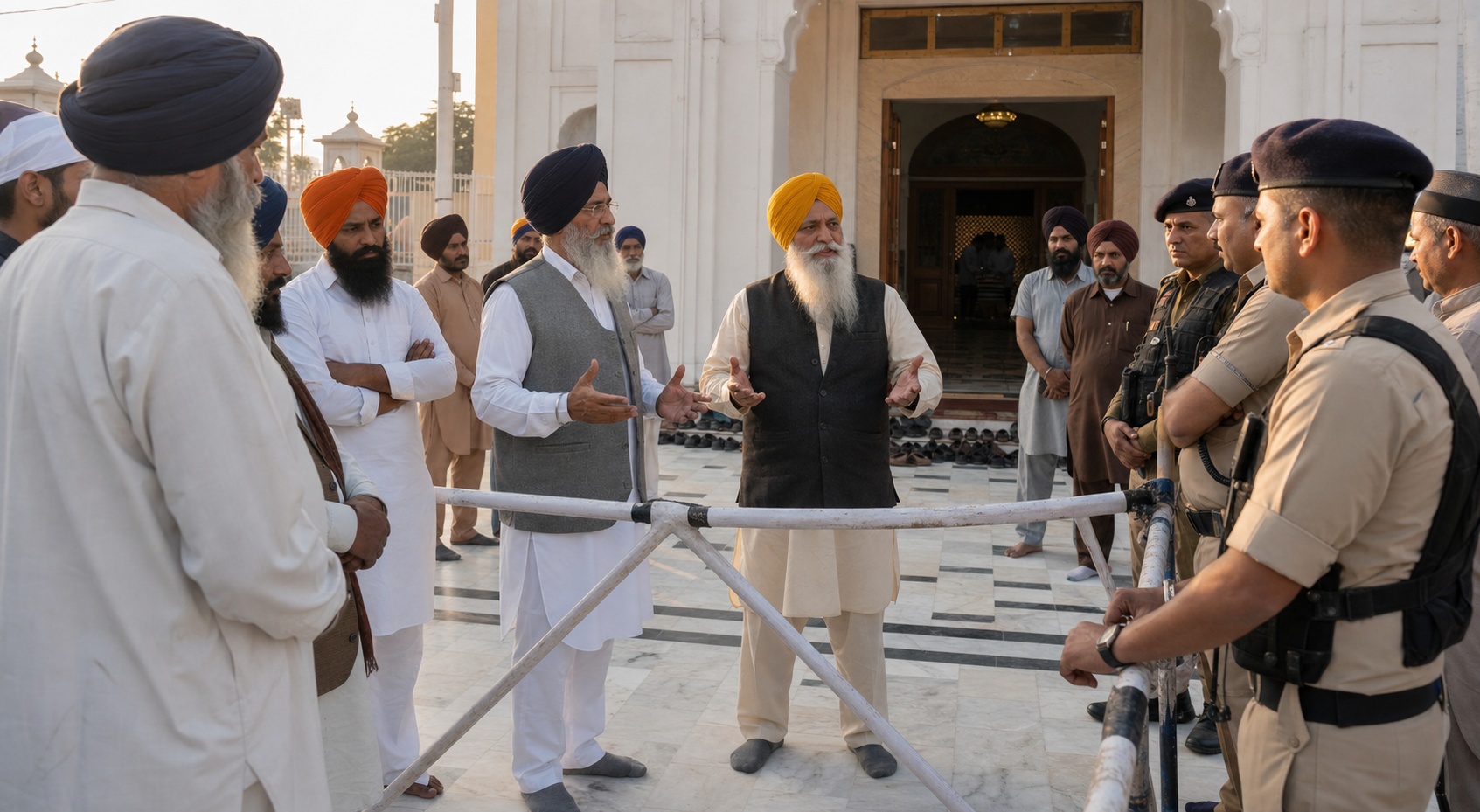
In Punjab politics, Panthic concerns involve Sikh faith, institutions, collective memory and community life. Engaging those concerns is legitimate. A national party should understand the people it asks to represent, and it should be able to speak with religious and community leaders without treating Sikh identity as a problem to be managed.
The mistake begins when engagement with the Panth is reduced to engagement with whichever faction is most visible, best armed or most capable of producing a confrontation. Religious prominence is not the same as representative consent. A group can possess a respected historical identity and still be answerable for the conduct of its individual members.
This distinction also protects Sikhs. A gurdwara’s sanctity is not defended when volunteers can allegedly be assaulted or its management displaced by force. Sikh citizens who reject coercion should not have their political voice eclipsed by the spectacle of an armed standoff. Treating every confrontation with a distinctive Sikh group as a test of Sikh sentiment gives the most confrontational actors an influence they may not possess within the wider community.
A Dharmic approach therefore carries two duties at once. The state should exercise special care around a sacred place, seeking a peaceful resolution whenever circumstances permit. It should also protect worshippers, caretakers, passers-by and public servants from force. Sacred status increases the need for disciplined conduct; it does not create an exemption from public law.
The four trade-offs BJP cannot avoid

BJP cannot make these tensions disappear through better messaging. It has to choose rules for its conduct and then apply them consistently. Four trade-offs deserve particular attention.
Access to leaders versus genuine representation
Relationships with religious figures and community intermediaries can open doors that party machinery cannot. They may also help officials understand grievances before those grievances become crises. Yet access to a prominent figure does not prove that Sikh voters, gurdwara managers, local residents or other Panthic institutions agree with that figure.
BJP should therefore treat every high-level relationship as one channel, not as a certificate of community approval. The practical test is simple: when the party says it has consulted the Panth, ask who was actually in the room. If the answer consists only of a few prominent intermediaries, the consultation is too narrow to support a sweeping political claim.
Peace-making versus moral hazard
Negotiation can save lives. It can also create a dangerous incentive if participants learn that escalation wins political access, public attention or immunity from consequences. The answer is not to reject negotiation. It is to separate the terms needed for a safe exit from the legal treatment of conduct that has already occurred.
Officials should be able to promise a fair hearing, humane treatment and due process. They should not pre-judge an investigation or bargain away accountability merely to end a public spectacle. After any negotiated resolution, citizens should look for a clear account of what was promised, what was not promised and how the earlier allegations will be handled.
Religious sensitivity versus equal citizenship
Equal law does not require identical tactics in every situation. Police may reasonably use greater patience at a crowded place of worship than they would in an isolated setting because the risks to life, sanctity and communal peace are different. Tactical restraint is compatible with equality when the underlying legal standard remains unchanged.
The line is crossed when sensitivity becomes selective immunity. If alleged violence against a manager, volunteers, police or bystanders would be investigated in an ordinary building, the religious setting should not make those people less worthy of protection. The state can avoid an assault on a shrine without abandoning its responsibility to establish what happened.
Punjab outreach versus national credibility
BJP’s conduct in a Panthic dispute will be read beyond Punjab. Hindu supporters may question an apparent double standard if conduct condemned elsewhere is excused for electoral reasons. Sikh citizens may resent the assumption that deference to force is a mark of respect for their faith. Police and administrators may hesitate if political signals do not distinguish mediation from immunity.
This is why consistency matters more than rhetorical toughness. BJP does not need to demonstrate strength by forcing every confrontation to a dramatic end. It needs to demonstrate that the same principles survive changes in state, community and political convenience: protect life, preserve places of worship, investigate credible allegations and let lawful institutions determine responsibility.
Use this six-question test on the next Panthic overture

You do not have to accept either a party’s publicity or its opponents’ accusations at face value. Apply the same audit whenever BJP presents a meeting, intervention or concession as Panthic outreach:
- What concrete concern is being addressed? Look for a specific institutional, security, administrative or community problem rather than symbolic language alone.
- Who is being treated as representative? Distinguish a useful intermediary from someone being presented, without evidence, as the voice of the whole Panth.
- Were non-coercive stakeholders heard? Gurdwara caretakers, affected residents, worshippers, public servants and Sikh citizens opposed to violence should not disappear from the account.
- Did mediation alter legal accountability? A peaceful exit is valuable, but it should not determine whether credible allegations are investigated.
- Would the party defend the same response if the identities were reversed? Mentally substitute another religious or political group. If the principle suddenly changes, the position is partisan rather than principled.
- What happened after the cameras left? Ask whether officials explained the outcome, documented any commitments and followed the ordinary legal process. The end of a standoff is the beginning of accountability, not the end of the public’s interest.
This test also helps you distinguish restraint from weakness. If negotiation protects lives while preserving investigation and due process, restraint has served the law. If authorities offer silence, unexplained concessions or selective non-enforcement, criticism is warranted even though the confrontation ended peacefully.
Do not use a viral image of armed men at a gurdwara to reach conclusions about Sikhs as a community. Just as importantly, do not let accusations of insensitivity prevent scrutiny of coercive conduct. Both shortcuts turn Sikh identity into a political instrument and make serious judgment harder.
What a genuinely pro-Dharma politics should demand
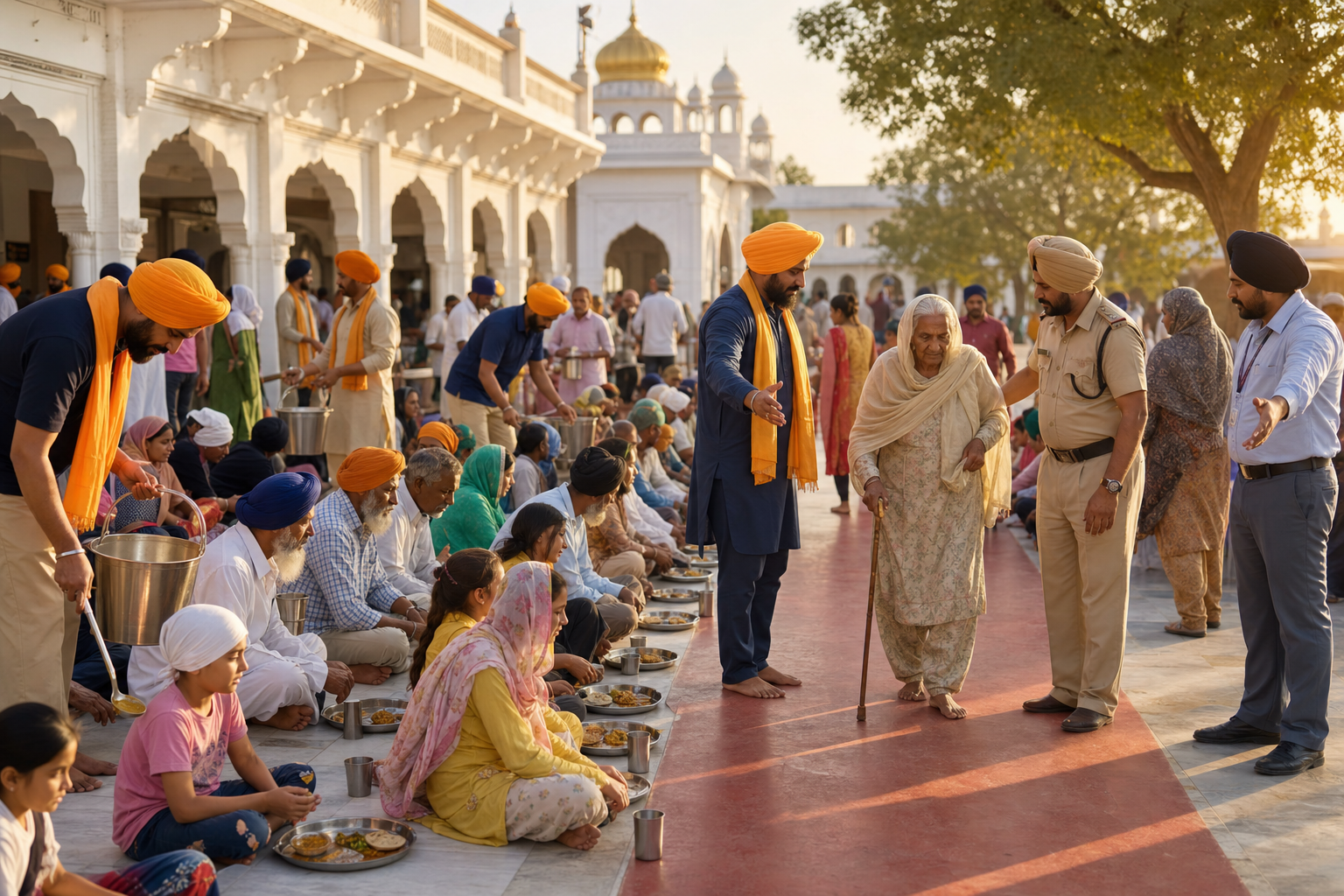
A pro-Dharma position does not require you to choose between Sikh dignity and public order. It requires protection for the sanctity of the gurdwara, the safety of its sevadars and managers, the rights of nearby civilians, and the lawful treatment of the accused. Those obligations reinforce one another when political leaders refuse to use identity as either a weapon or a shield.
BJP’s durable opportunity in Punjab is not to prove that it can placate the most forceful Panthic actors. It is to prove that Sikh institutions can be respected without being politically appropriated, that community leaders can help make peace without displacing the state, and that Hindu and Sikh citizens will receive the same protection from coercion.
Before supporting or rejecting the next Panthic initiative, ask for the institutional outcome rather than the photograph. Who became safer, which grievance was resolved, what commitment was made and did the same law remain in force afterward? If those answers are available, outreach may be building trust. If they are not, what looks like accommodation may simply be postponing a larger political cost.