
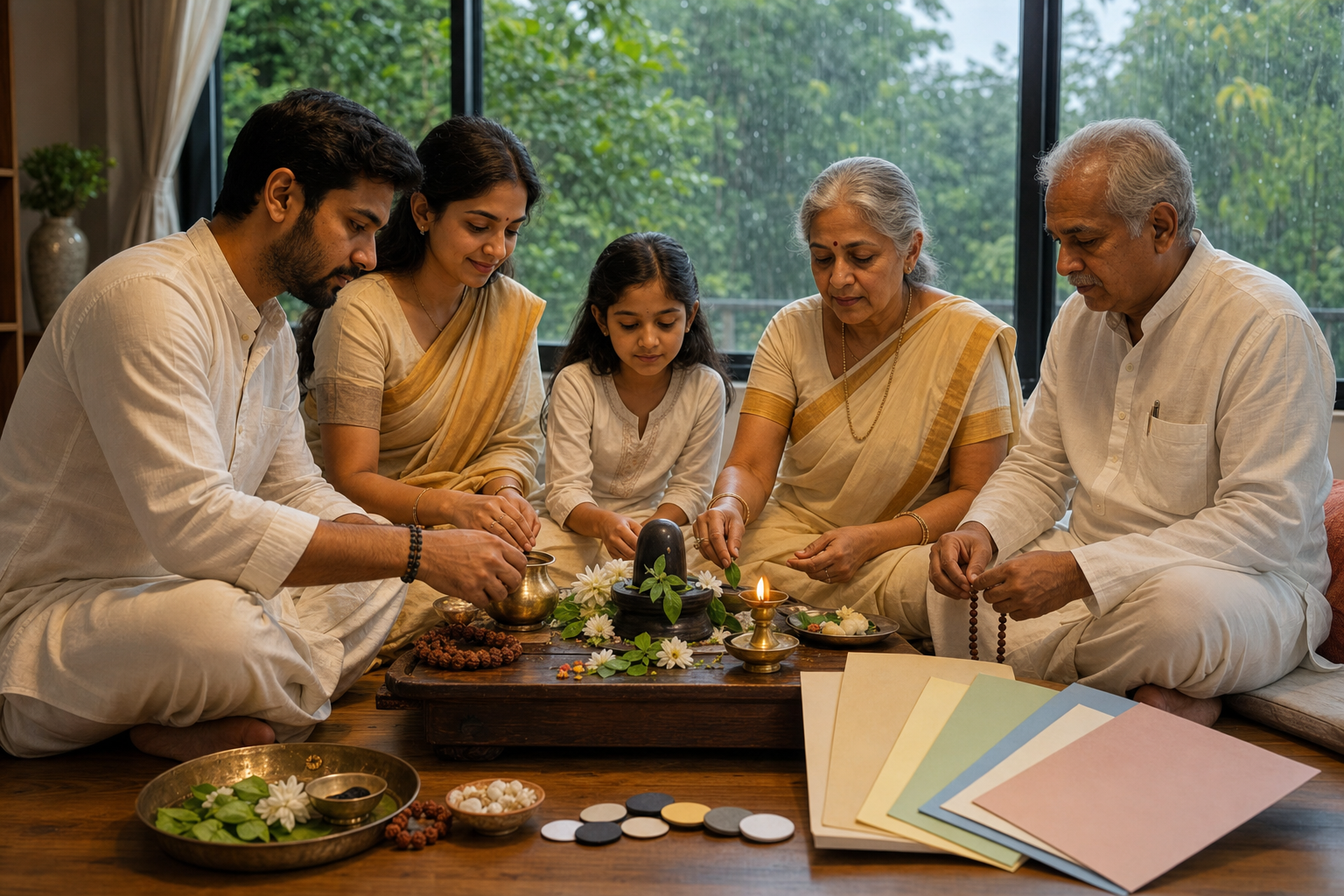
If you are planning Shravan for a household whose relatives use different panchangas, one date copied into the family group chat can create more confusion than clarity. In 2026, observances called Shravan or Shravana fall across July, August and September because regional calendars and ritual traditions do not organize the month identically.
Your task is not to find one supposedly universal list and make every custom fit it. You need to identify the calendar behind each observance, distinguish a recurring weekday vrata from a tithi-based occasion, and prepare for the practices your family or temple actually follows.
Start with the regional calendar, not the festival name
The clearest warning against using a generic calendar is the first Shravan Friday. One Mahalakshmi observance schedule places Mahalakshmi Kalasha Sthapana on July 31. In Andhra Pradesh, Telangana and Karnataka, the Shravana Shukravaram sequence instead begins on August 14. Both dates are described as the first Friday of Shravan within their respective observance frameworks.
That difference is not something to solve by averaging the dates, choosing the earlier one, or assuming one family has made a mistake. A vrata attached to a weekday still depends on which regional reckoning determines when Shravan begins. Whether your family describes its calendar as Amanta or uses another regional convention, the practical authority is the panchanga followed by your household, sampradaya or temple.
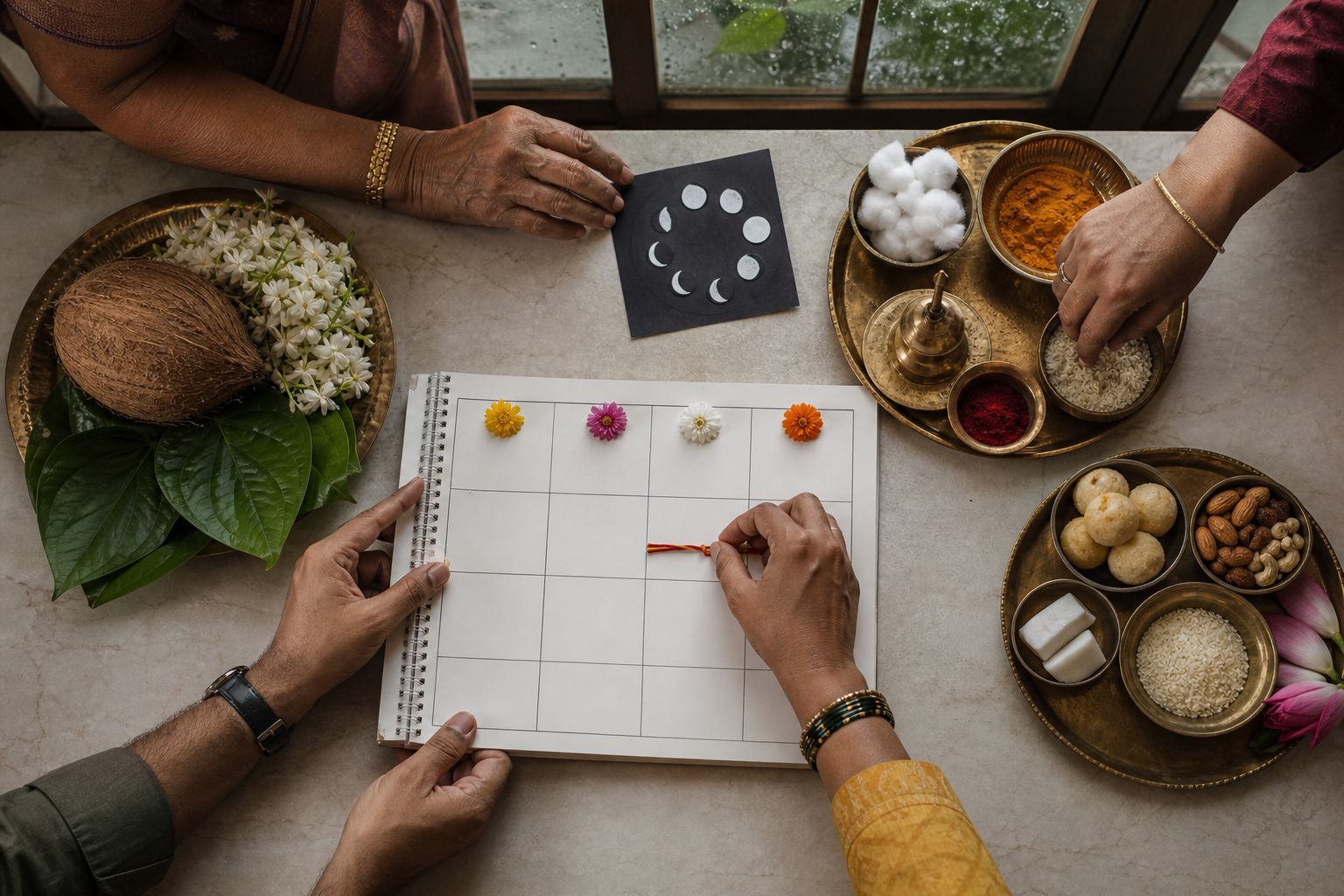
Before entering anything in your calendar, establish three things: which regional panchanga the observance follows, whether it is an inherited household practice or a temple-specific celebration, and whether its marker is a weekday or a lunar tithi. If relatives follow different traditions, keep separate calendar entries. Do not erase the distinction by labelling one date correct and the other incorrect.
The 2026 dates and what each one actually marks
The useful question is not merely when Shravan occurs. It is what is being observed, under which calendar, and whether the date begins a series or stands on its own.
| Regional or ritual setting | 2026 date or sequence | What the date marks |
|---|---|---|
| Mahalakshmi worship, also called Sampada Lakshmi Puja in some traditions | July 31 | The first Shravan Friday and Mahalakshmi Kalasha Sthapana; Mahalakshmi worship then continues on the Fridays of the month. |
| Andhra Pradesh, Telangana and Karnataka | August 14, 21 and 28; September 4 and 11 | The five Shravana Shukravaram Fridays for Mahalakshmi worship. August 14 is the sthapana day in this sequence. |
| Annavaram Satyanarayana Swamy Temple, Andhra Pradesh | August 14 | Satyanarayana Swamy Jayanti, observed there on Shravana Shukla Vidiya, the second day of the bright fortnight. |
| Telugu Panchangam tradition | August 16, Sunday | Ganesha Pavitraropanam on Shukla Paksha Chaturthi, with pavitra cotton threads offered to Ganapathi. |
| Goa and Maharashtra under Konkan and Marathi calendars | August 17, Monday | The first Shravani Somvar and Shivamuth Puja, with tandul, or rice, used for this Monday’s offering. |
The two observances on August 14 should remain separate in your plan. In the Andhra-Telangana-Karnataka Friday cycle, the date opens the Mahalakshmi Shukravaram sequence. At Annavaram, the same civil date carries a temple-specific Satyanarayana Swamy Jayanti associated with Shravana Shukla Vidiya. Sharing a date does not make them interchangeable rituals.
August 16 and 17 also deserve attention because they are consecutive days but belong to different streams. Ganesha Pavitraropanam uses cotton threads on Sunday, while the first Marathi and Konkan Shravani Somvar uses rice on Monday. A family connected to both traditions should prepare and label the two offerings separately before the weekend rather than treating them as one general Shravan puja kit.
Turn the dates into a household observance plan
A calendar becomes useful only when it tells you what must happen on each date. Use this sequence to build a plan without quietly mixing regional practices.
- Name the governing calendar. Write Marathi, Konkan, Telugu, temple-specific or the appropriate household tradition beside every entry. A bare label such as Shravan Friday is not enough when July 31 and August 14 can both appear as first-Friday dates.
- Separate sthapana from repetition. Mark an installation or opening observance differently from the weekly worship that follows. For the southern Shravana Shukravaram sequence, August 14 begins five listed Fridays extending through September 11. For the July 31 Mahalakshmi schedule, the first Friday is the kalasha-sthapana occasion and Friday worship continues through that Shravan month.
- Record the ritual marker. Note Monday or Friday when the vrata is weekday-based. Note Shukla Vidiya or Shukla Paksha Chaturthi when the observance is identified by tithi. This makes it easier to understand why a temple announcement may not look like a generic weekday calendar.
- List only the offering required for that observance. The August 16 Ganesha practice calls for pavitra cotton threads, while the August 17 Shivamuth observance specifies tandul, or rice. Do not assume that an offering named for one date automatically belongs to every Shravan puja.
- Verify local timing and procedure. The civil date tells you which day to reserve, but a local temple or family priest can confirm the panchanga, tithi window and customary method used in your tradition. This is especially important when you have moved to another region or are coordinating worship across time zones.
If your household cannot maintain every recurring date, decide which commitments belong to your inherited practice before the month begins. Do not silently turn a five-Friday vrata into a one-day observance or substitute one regional sthapana date for another. Ask the person who transmits the practice in your family or the temple guiding it, then record the agreed plan clearly.
Notice the three kinds of difference before debating a date
Most apparent calendar disputes in this 2026 schedule can be sorted by asking which of three things has changed: the boundary of the lunar month, the ritual marker, or the scope of the observance.
A month-boundary difference explains how the first Shravan Friday can appear on July 31 in one schedule and August 14 in another. A marker difference separates a Monday vrata such as Shravani Somvar from an event fixed to Shukla Paksha Chaturthi. A scope difference separates recurring Friday Mahalakshmi worship from the Satyanarayana Swamy Jayanti particular to Annavaram.
This method changes the family conversation. Instead of asking whose date is right, ask which calendar, marker and ritual setting produced each date. You can then preserve both practices without pretending that regional variation is carelessness. Dharmic continuity often lives through precisely such local forms: a common sacred month is carried by different deities, offerings, temples and inherited disciplines.
Key takeaways for your 2026 Shravan calendar
- Do not use a region-free first Friday of Shravan: July 31 and August 14 belong to different Mahalakshmi observance schedules.
- For Andhra Pradesh, Telangana and Karnataka, reserve all five listed Shravana Shukravaram dates: August 14, 21 and 28, followed by September 4 and 11.
- Keep Annavaram’s August 14 Satyanarayana Swamy Jayanti distinct from the Mahalakshmi Friday observance on the same date.
- Prepare pavitra cotton threads for Ganesha Pavitraropanam on August 16 if you follow the Telugu practice, and rice for the first Goa-Maharashtra Shivamuth Puja on August 17.
- Confirm the panchanga and local ritual timing with the household or temple whose tradition you are actually observing.
Begin by writing the regional calendar beside each family commitment. Then enter the July 31, August 14, August 16 and August 17 observances that apply to you, add the remaining Friday sequence where relevant, and verify the local timings before purchasing or preparing ritual materials. That small amount of clarity now will let you enter Shravan as a discipline rather than a scheduling dispute.



References
- Hindu Pad — Shivamuth Puja with Tandul (Rice) | 17 August 2026 Shravani Somvar
- Hindu Pad — Mahalakshmi Sthapana Pujan | Mahalakshmi Kalasha Sthapana
- Hindu Pad — Shravana Shukravaram Pooja 2026
- Hindu Pad — Ganesha Pavitraropanam
- Hindu Pad — Satyanarayana Swamy Jayanti in Annavaram Satyanarayana Swamy Temple