
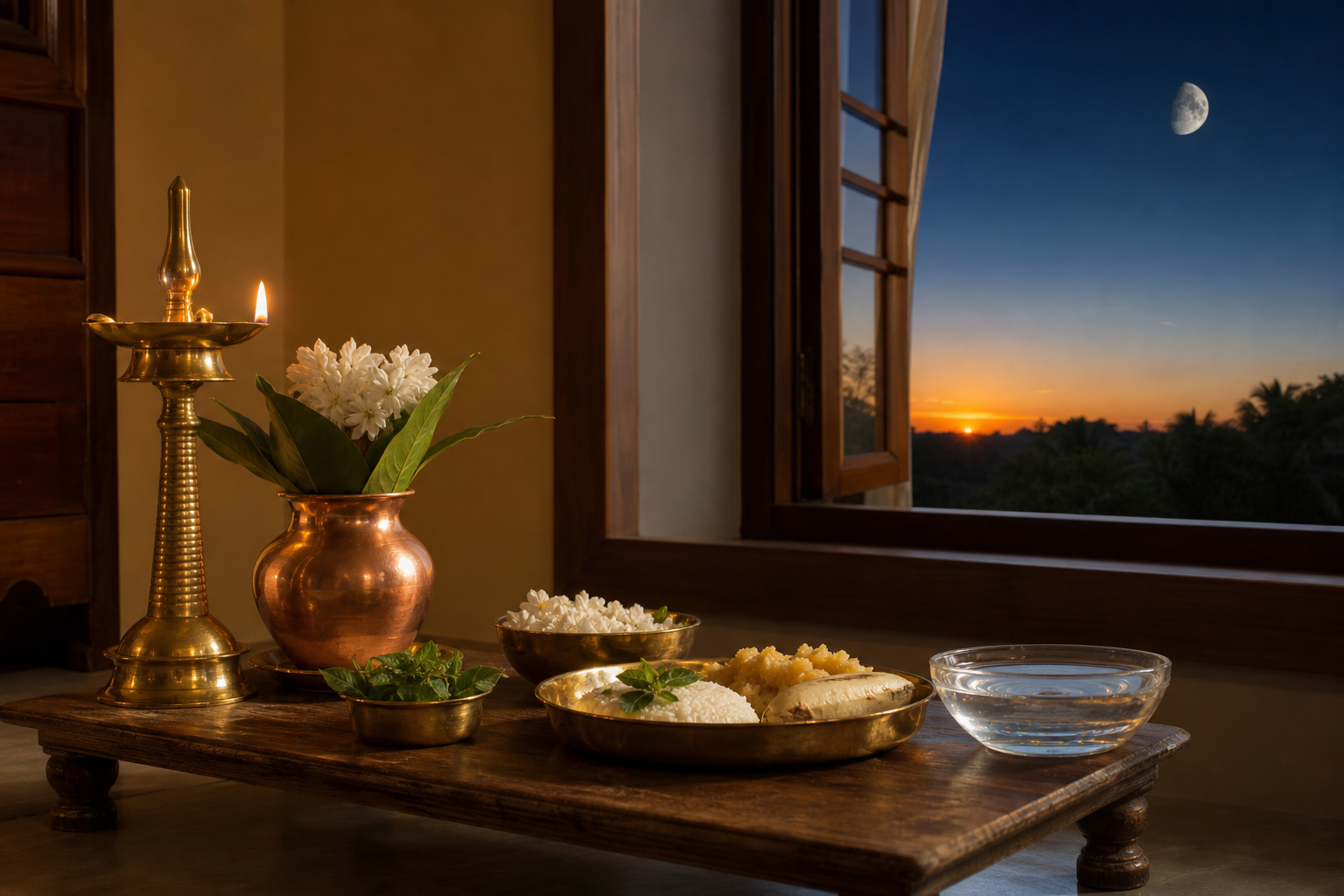
If you are deciding when to complete an Ekadashi fast, whether Friday evening counts for Pradosh, or when to begin a puja, do not let the civil date answer a question that belongs to the tithi. On Friday, June 26, 2026, Shukla Paksha Dwadashi continues until 10:45 PM, followed by Shukla Paksha Trayodashi.
That sequence gives you the day’s basic plan. Dwadashi governs the daylight hours and evening in locations where the stated transition applies. The practical work is to combine that sequence with your local sunrise, sunset, parana window, and tradition before fixing a ritual time.
Key takeaways for June 26
- Shukla Paksha Dwadashi lasts until 10:45 PM; Trayodashi begins afterward.
- If you observed Ekadashi, use the parana interval published for your location and sampradaya. Do not substitute 10:45 PM for the parana time.
- Friday’s sunset occurs during Dwadashi wherever the stated 10:45 PM transition applies. In such locations, June 26 is not the evening for Shukla Pradosh Vrata.
- Friday Rahu Kaal occupies the third eighth of local daylight. A clock time copied from another city may be wrong.
- Brahma Muhurta and the period around local midday can help with ordinary devotional planning, but samskaras and consequential commitments need a complete local muhurta check.
Read the tithi before you read the clock
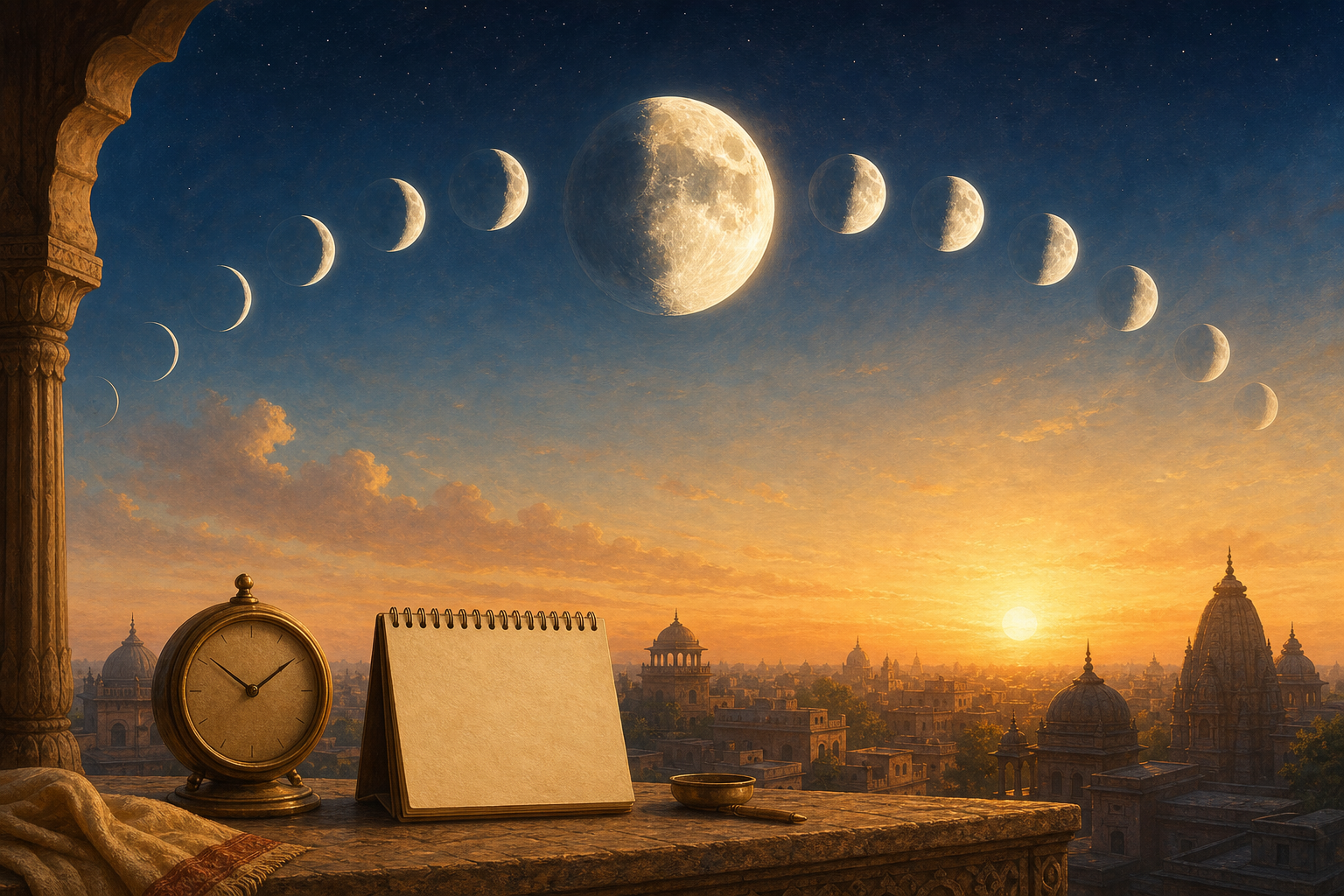
A tithi does not begin automatically at midnight. It changes when the angular distance between the Sun and Moon crosses the next 12-degree interval. That is why Dwadashi can occupy most of June 26 and give way to Trayodashi late at night. The date on your phone and the ritual day are related, but they are not interchangeable.
This distinction prevents two common errors. The first is treating every ritual listed under “June 26” as valid from midnight to midnight. The second is assuming that a late-night Trayodashi automatically makes the preceding sunset a Pradosh observance. For vrata decisions, ask which tithi is present during the required ritual period, not merely which tithi touches some part of the civil date.
You may also see the lunar month called Jyeshtha in one calendar and Ashadha in another. That can reflect the Amanta and Purnimanta month-counting systems, rather than an error. Do not abandon an otherwise reliable Panchang solely because its month label differs from a calendar following the other convention. Compare the tithi, locality, sunrise, and transition time first.
Nakshatra and Chandra Rashi need another layer of care. The zodiac is divided into 27 nakshatras of 13 degrees and 20 minutes each, while Chandra Rashi records the Moon’s broader zodiacal sign. Their ingress times can shift across time zones. If an activity depends on Nakshatra, Rashi, tara bala, or a named muhurta, obtain those details from a Panchang calculated for the place where the activity will occur.
Separate Dwadashi parana from Pradosh observance
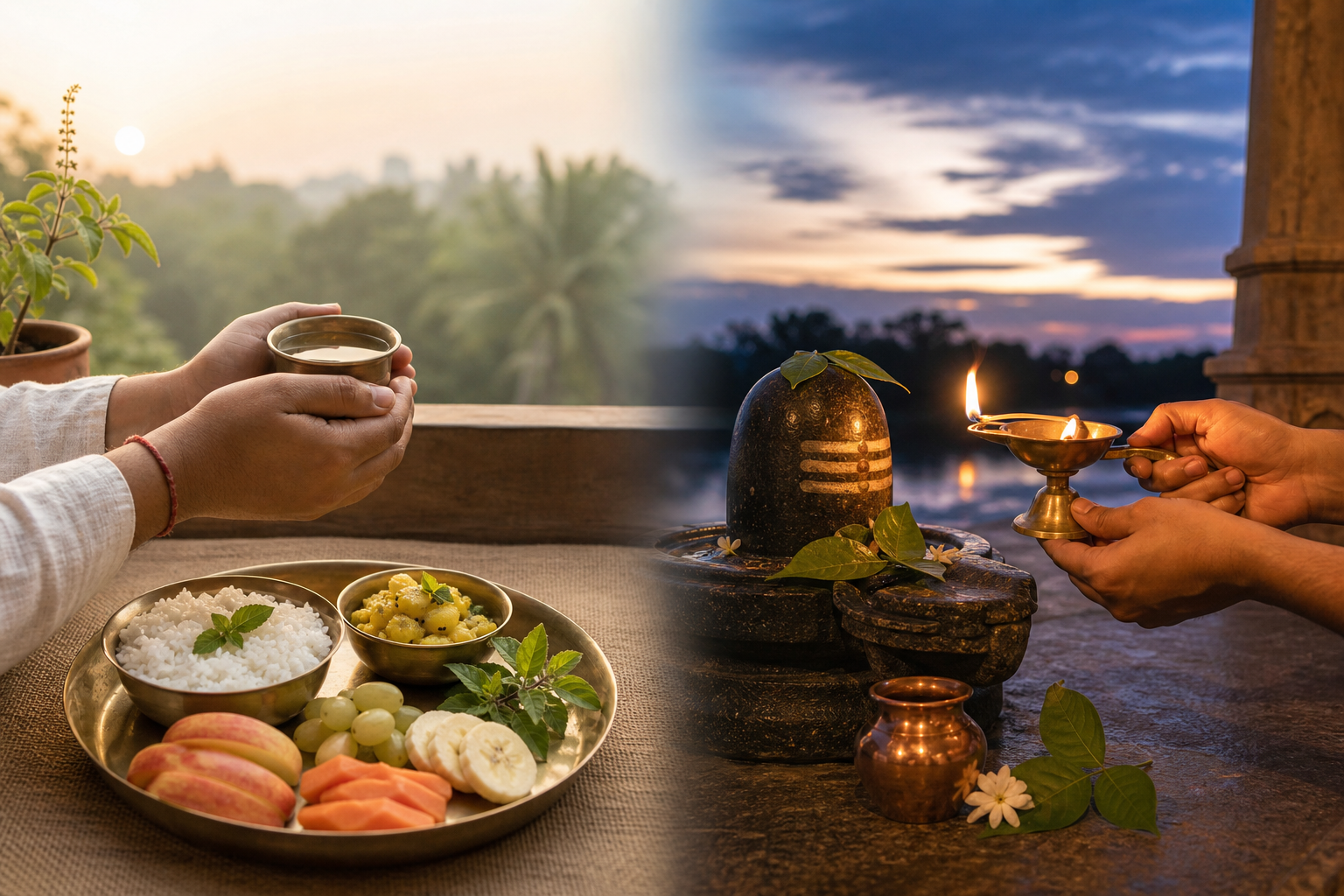
Dwadashi has a specific practical meaning for someone who fasted on Ekadashi: it is the day of parana, the disciplined completion of the vrata. Parana is not simply “eat sometime on Dwadashi.” Its permitted interval depends on local Panchang calculations and may also differ according to Smarta or Vaishnava practice. Look up the parana window for your city and tradition before the morning begins.
When the window arrives, keep the completion proportionate to the vrata. A simple saatvik meal, gratitude, Tulasi worship, and Vishnu archana are customary Dwadashi choices. If you did not keep the Ekadashi fast, you do not need to manufacture a parana ritual; you can still observe Dwadashi through worship, restraint, dana, or study.
Pradosh follows a different test. The relevant question is whether Trayodashi overlaps the local Pradosh Kaal around sunset. On June 26, Trayodashi begins only at 10:45 PM under the stated calculation. Sunset therefore remains within Dwadashi, so Shukla Pradosh Vrata does not belong to that Friday evening in locations where this transition time applies.
Do not move Pradosh worship to 10:45 PM merely because Trayodashi has begun by then. The observance depends on Trayodashi’s relationship to Pradosh Kaal, not on performing worship at the first possible minute of the tithi. Check the following civil date and confirm that Trayodashi prevails during that location’s evening Pradosh period.
Calculate Friday’s usable daylight windows locally
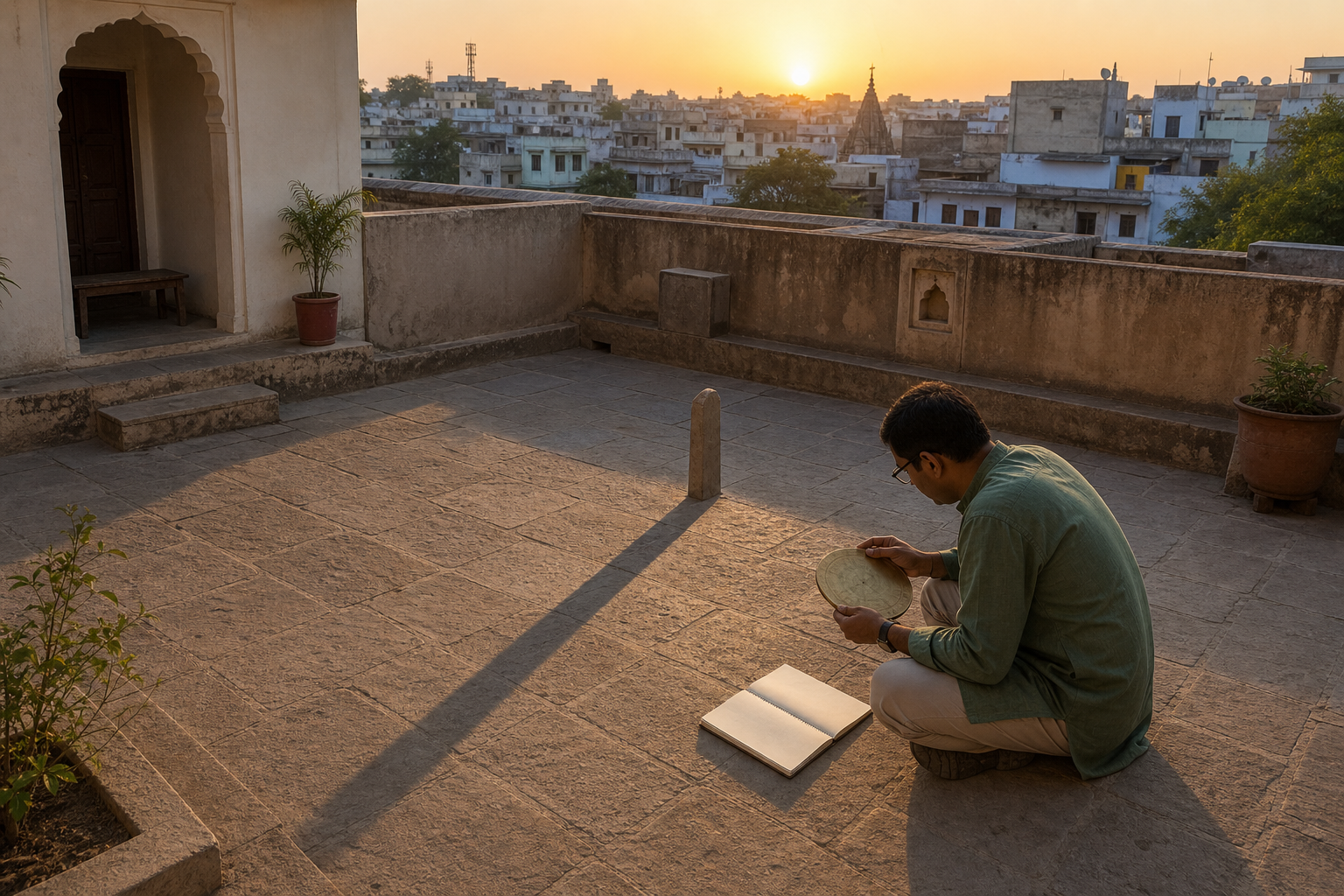
Rahu Kaal is not a fixed clock appointment. It is derived from the interval between local sunrise and sunset. Divide that daylight span into eight equal portions. On Friday, Rahu Kaal is the third portion, so it begins after two eighths of daylight have passed and ends after three eighths.
You can calculate it without special software:
- Record the local sunrise and sunset for June 26.
- Convert the full daylight interval into minutes.
- Divide those minutes by eight to find the length of one segment.
- Add two segments to sunrise for the Rahu Kaal start.
- Add three segments to sunrise for the Rahu Kaal end.
For illustration only, sunrise at 6:00 AM and sunset at 6:00 PM produce 720 minutes of daylight. Each eighth is 90 minutes, making the third segment 10:30 AM to 12:00 PM. Those times are an example based on a 12-hour day, not the answer for every city. Use your actual sunrise and sunset, including the local time zone and seasonal day length.
Yamaganda and Gulika Kaal are also tied to divisions of daylight, but they occupy their own weekday-specific portions. Unless you already use a trusted traditional table, take both intervals directly from the same local Panchang that supplied your sunrise and sunset. Mixing one city’s sunrise with another calendar’s inauspicious periods defeats the calculation.
For spiritual practice, Brahma Muhurta is generally placed approximately 1 hour and 36 minutes before sunrise and is well suited to japa, dhyana, and scriptural contemplation. Abhijit Muhurat is centred around local midday and may serve many ordinary undertakings when a more specific election is unavailable. Neither label should be treated as an automatic override: check Abhijit against the day’s dosha periods, especially because Friday’s Rahu Kaal can approach midday depending on daylight length.
Build a simple Dwadashi schedule you can follow
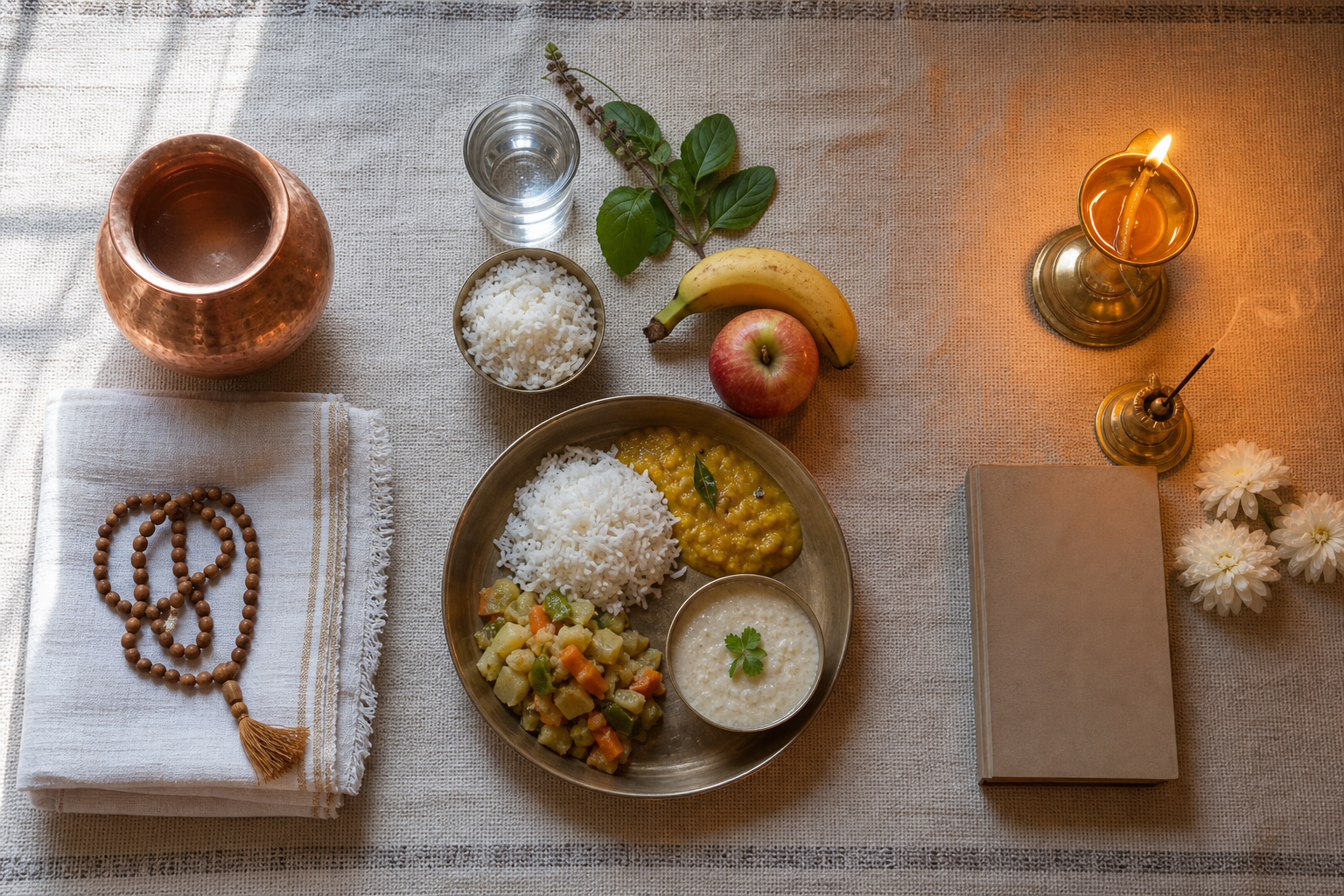
You do not need to turn the entire day into a sequence of competing muhurtas. Give each decision the precision it actually needs. A workable household plan looks like this:
- On June 25, set your Panchang to the exact city where you will observe. Write down sunrise, sunset, the parana window, Rahu Kaal, Yamaganda, Gulika, and the Dwadashi end time.
- Before sunrise, use the locally indicated Brahma Muhurta for quiet japa, meditation, or reading. If waking at that hour is not part of your discipline, choose a sustainable period rather than rushing through worship to satisfy the clock.
- If you kept Ekadashi, complete parana within the interval given for your tradition. Plan the food beforehand so that cooking, travel, or work does not push you past the window.
- During the day, choose one concrete Dwadashi act: Vishnu archana, Tulasi worship, a temple visit, annadana, charity, or the study of a dharma grantha.
- At sunset, retain the Dwadashi orientation. Do not announce or undertake Shukla Pradosh Vrata on that evening merely because Trayodashi begins later at night.
- After 10:45 PM, understand that the tithi has changed under the stated calculation, but do not invent an additional late-night obligation. Prepare instead for the properly determined Pradosh observance on the date when Trayodashi overlaps local Pradosh Kaal.
If relatives are coordinating from different cities, decide whether you are planning one ceremony at one physical site or parallel household observances. Use the ceremony site’s Panchang for a single shared event. For separate home observances, each household should follow its own local sunrise, sunset, and tithi timings rather than forcing every participant onto one city’s clock.
Reserve a full muhurta check for consequential beginnings
A Dwadashi designation by itself does not elect a time for every purpose. Temple visits, dana, study, and ordinary household worship can be planned with the day’s devotional character and local caution periods in mind. A samskara, legal signing, major financial commitment, or another difficult-to-reverse beginning deserves a more complete election.
For such an undertaking, ask the person calculating the muhurta to check the exact locality, tithi at the proposed time, Nakshatra, Chandra Rashi, tara bala, Rahu Kaal, Yamaganda, Gulika Kaal, and any relevant daily doshas. If Abhijit is proposed as a fallback, verify that it does not collide with a period your tradition avoids. The word “auspicious” beside a generic online time is not enough when the decision carries lasting consequences.
The most useful preparation is small and concrete: before June 26 begins, place five items on one page—your parana interval, sunrise, sunset, the three caution periods, and the next valid Pradosh evening. Once those are settled for your location, you can give Dwadashi what it asks from you: completion, gratitude, worship, and a calm transition toward Trayodashi.