
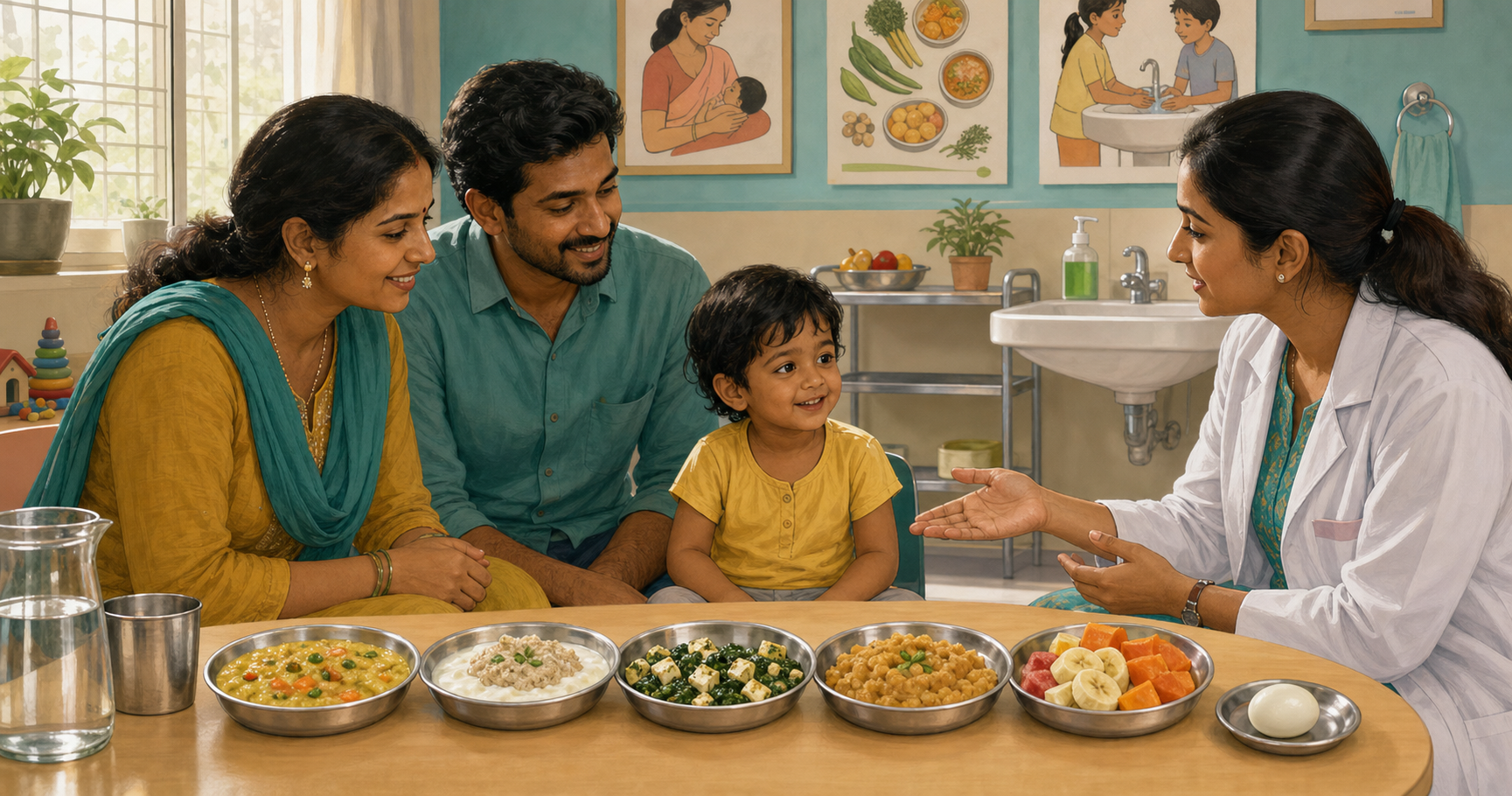
You are standing before a hospital poster because you need a feeding answer, not a dispute about your faith. If the board names a food your family regards as sacred or forbidden, you may stop trusting the rest of the advice, even when the underlying concern about childhood nutrition is real.
Public nutrition guidance in Bharat does not have to choose between clinical accuracy and Dharmic conscience. It has to state the health goal, distinguish the child’s feeding stage, offer more than one workable route, and keep preparation and safety instructions impossible to miss. That is the standard parents can demand and hospitals can implement.
Start with the child’s age and nutrient need, not one food
The controversy in Vashi arose after reports that a municipal hospital poster recommended beef for infants. A culturally charged ingredient came before the nutrient, the child’s age, and the family’s dietary practice. That order matters because a public sign can look like an institutional command rather than one clinical option.
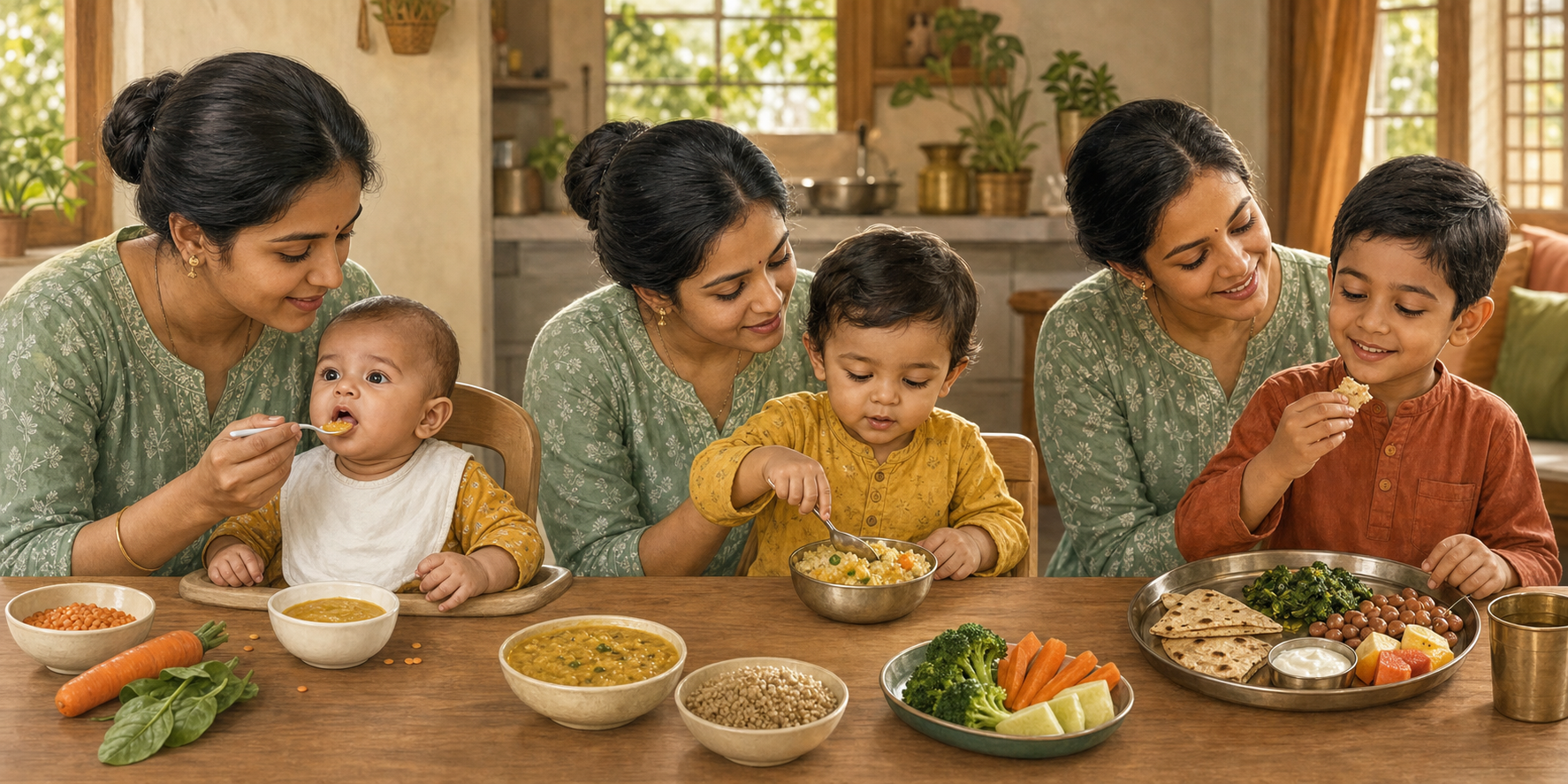
The first distinction should be between the first six months and the period after six months. The World Health Organization and the Indian Academy of Pediatrics recommend exclusive breastfeeding for the first six months. Complementary foods are introduced after six months while breastfeeding continues up to two years and beyond. A poster that uses the broad word infant without placing the age beside the feeding action can blur two very different stages.
The nutritional purpose is urgent. Children aged 6-23 months are especially vulnerable to anemia and growth faltering, while India’s NFHS-5 survey for 2019-21 found a high prevalence of anemia among children aged 6-59 months. Public guidance therefore has good reason to emphasize iron, zinc, vitamin B12, protein, sufficient energy, and age-appropriate complementary feeding.
That purpose does not require presenting one meat as indispensable. Heme iron from meat, poultry, and fish is absorbed more readily than non-heme iron from plant foods. Plant-based iron can still be used in a sound feeding plan, especially when an iron-containing meal is paired with vitamin C. The honest message is not that every food route is nutritionally identical. It is that several routes can be explained clearly enough for families and clinicians to select an appropriate one.
For many Hindus, reverence for the cow is a matter of faith and identity, not a casual preference. Beef is also avoided by many Buddhist, Jain, and Sikh families, although practices differ within every community. Hinduism, Buddhism, Jainism, and Sikhism are not a single dietary code. Public institutions should recognize that diversity without erasing the shared influence of ahimsa, restraint, and respect for life.
A useful drafting rule follows: when a nutrient goal can be communicated through food categories and parallel household options, a government sign should not elevate a needlessly divisive ingredient. More specific advice belongs in an individual consultation when it is clinically relevant and acceptable to the family.
Build parallel food pathways that lead to the same goal
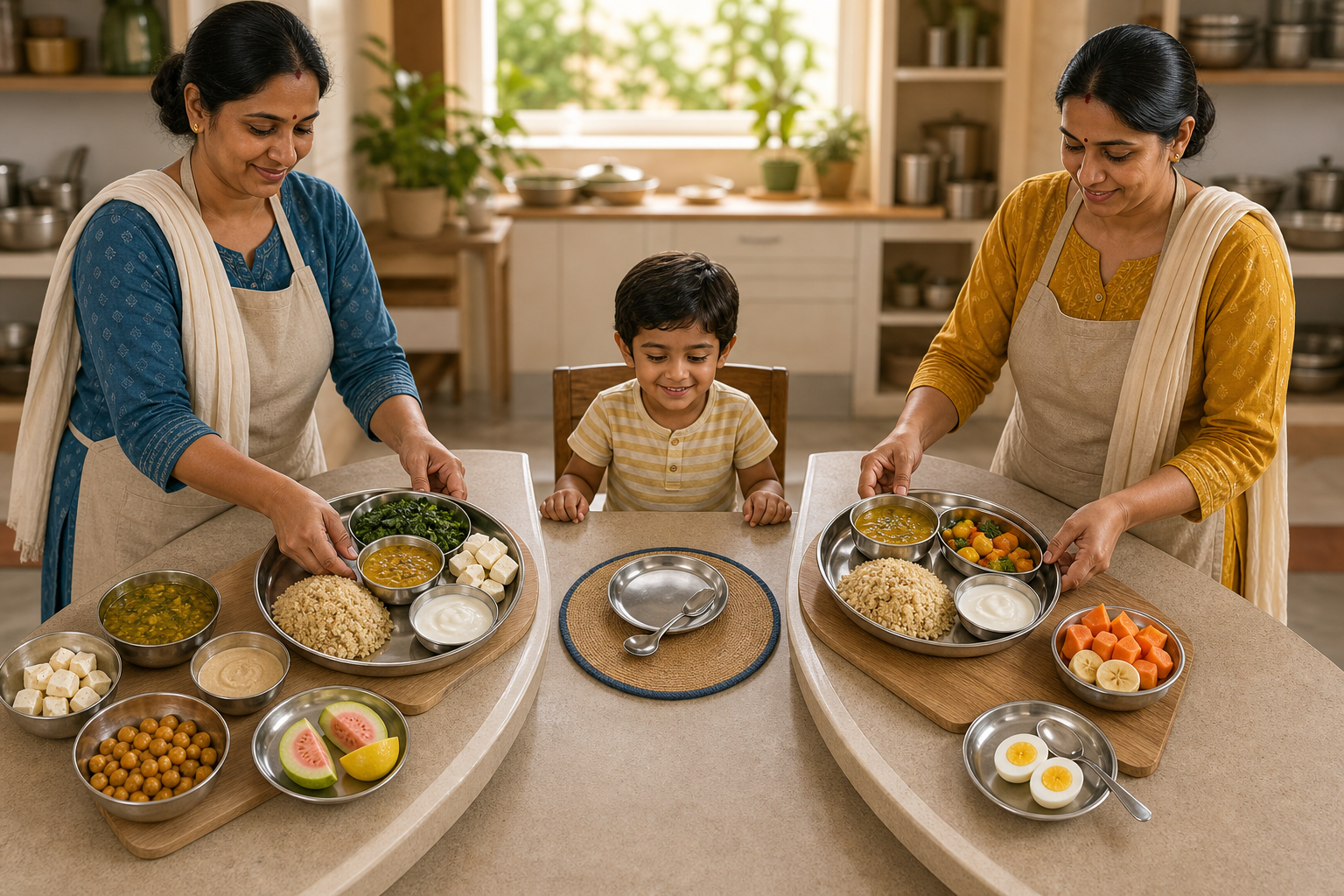
Culturally sensitive guidance cannot be a random list with one vegetarian item added at the end. Each pathway should explain what the foods contribute, how they should be prepared, and what improves their usefulness. Otherwise, the sign offers symbolic inclusion without giving a vegetarian parent enough information to act.
- For a vegetarian iron pathway: name mashed and thoroughly cooked lentils, beans, and chickpeas; ground and well-cooked ragi or bajra; finely chopped and well-cooked green leafy vegetables; and fortified cereals where they are available.
- For better plant-iron absorption: tell families to pair an iron-containing meal with an age-appropriate vitamin C source. Dal with lemon and millet preparations with vegetables are clearer instructions than a vague appeal to serve healthy food.
- For sufficient energy: explain that oil or ghee can be added to cooked cereal or pulse preparations where household practice permits. Do not present oil or ghee as the iron source; its role is to make a small serving more energy-dense.
- For other nutrients: dairy and paneer may be offered after six months as tolerated, but they should not silently displace the foods identified for iron. Vitamin B12 and overall nutrient adequacy deserve individual attention when a household excludes animal foods.
- For every pathway: require an age-appropriate texture, thorough cooking, clean preparation, and safe handling. A nutritionally rich ingredient is not a safe recommendation if the form is unsuitable for the child.
For families that eat animal-source foods, the parallel pathway can mention properly cooked eggs, fish, poultry, or meat. The qualifier should be explicit: if your family eats these foods. That short phrase turns a presumed default into an available option and prevents a food preference from being mistaken for a clinical requirement.
Model wording: After six months, continue breastfeeding and introduce soft, safely prepared complementary foods rich in iron, zinc, protein, and energy. Vegetarian choices include well-cooked and mashed dals, beans, chickpeas, ragi, bajra, leafy vegetables, and fortified cereals where available. Pair plant-based iron foods with vitamin C. If your household eats eggs, fish, or meat, offer them thoroughly cooked in an age-appropriate texture. Ask a paediatrician or dietitian for choices suited to your child’s health and your family’s dietary practice.
This wording does not pretend that every listed food has the same nutrient profile. It makes the feeding stage, the clinical objective, the household condition, and the safety rule visible. It also gives the parent a clear next step when a general poster cannot answer an individual question.
A child with diagnosed anemia or growth faltering needs an individualized clinical plan. A family should not respond by increasing one poster-listed food, starting a supplement, or abandoning its dietary convictions without speaking to a qualified paediatrician or dietitian. Cultural respect and medical escalation belong in the same pathway.
Audit every poster with six practical checks
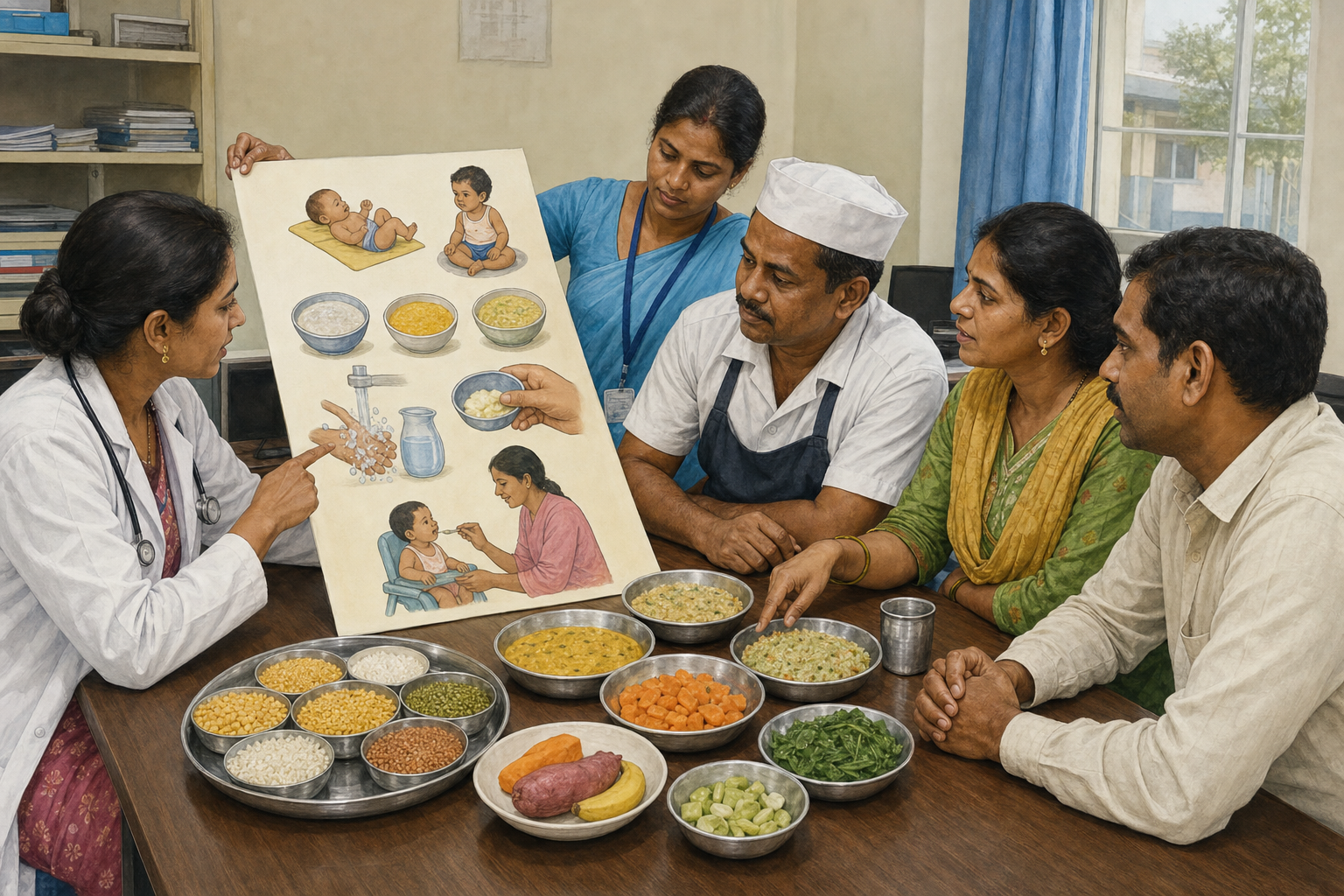
A hospital can prevent most avoidable conflicts before a poster reaches the wall. The review should test whether a parent can understand the action, follow it safely, and find an acceptable option without needing to decode institutional language.
- Put the age gate beside the instruction. If complementary feeding begins after six months, those words must appear next to the foods. Check that no illustration, caption, or translated line could imply that solid foods belong in the exclusive-breastfeeding period.
- Name the clinical purpose. State whether the foods are being offered for iron, zinc, protein, vitamin B12, energy, or broader dietary variety. Terms such as nutritious and strength-giving are too vague to help a parent substitute one acceptable food for another.
- Provide genuinely usable alternatives. Whenever an animal-source option appears, include a coherent vegetarian route rather than a token vegetable. A parent should be able to identify the pulse or millet, the vitamin C pairing, and the appropriate preparation.
- Mark conditional choices. Prefix eggs, fish, poultry, and meat with language such as if your household eats these foods. Do not single out beef when the nutritional category can be stated without overriding a major religious boundary.
- Make safety operational. Use words such as mashed, finely chopped, thoroughly cooked, hygienically prepared, and age-appropriate. Clear icons can reinforce texture and preparation, but an icon should support plain language rather than replace it.
- Show ownership and a route for questions. Use understandable local-language translations, identify the responsible clinical department, maintain an approval and review record, and invite parents to ask a clinician for culturally suitable alternatives.
Pre-display approval should include a paediatrician, dietitian, nursing representative, and the people responsible for patient communication. District hospitals should also maintain a channel for input from Hindu, Buddhist, Jain, and Sikh community representatives. Community participants are not there to veto nutrient facts. Their role is to identify avoidable offense, hidden dietary assumptions, and wording that a household cannot realistically follow.
A brief comprehension check adds another safeguard. Show the draft to people from different dietary backgrounds and ask them to identify the child’s age, the nutrient goal, the acceptable option, and the preparation method. If they give different answers, the material is not ready for display.
Correct a harmful message without abandoning the health goal
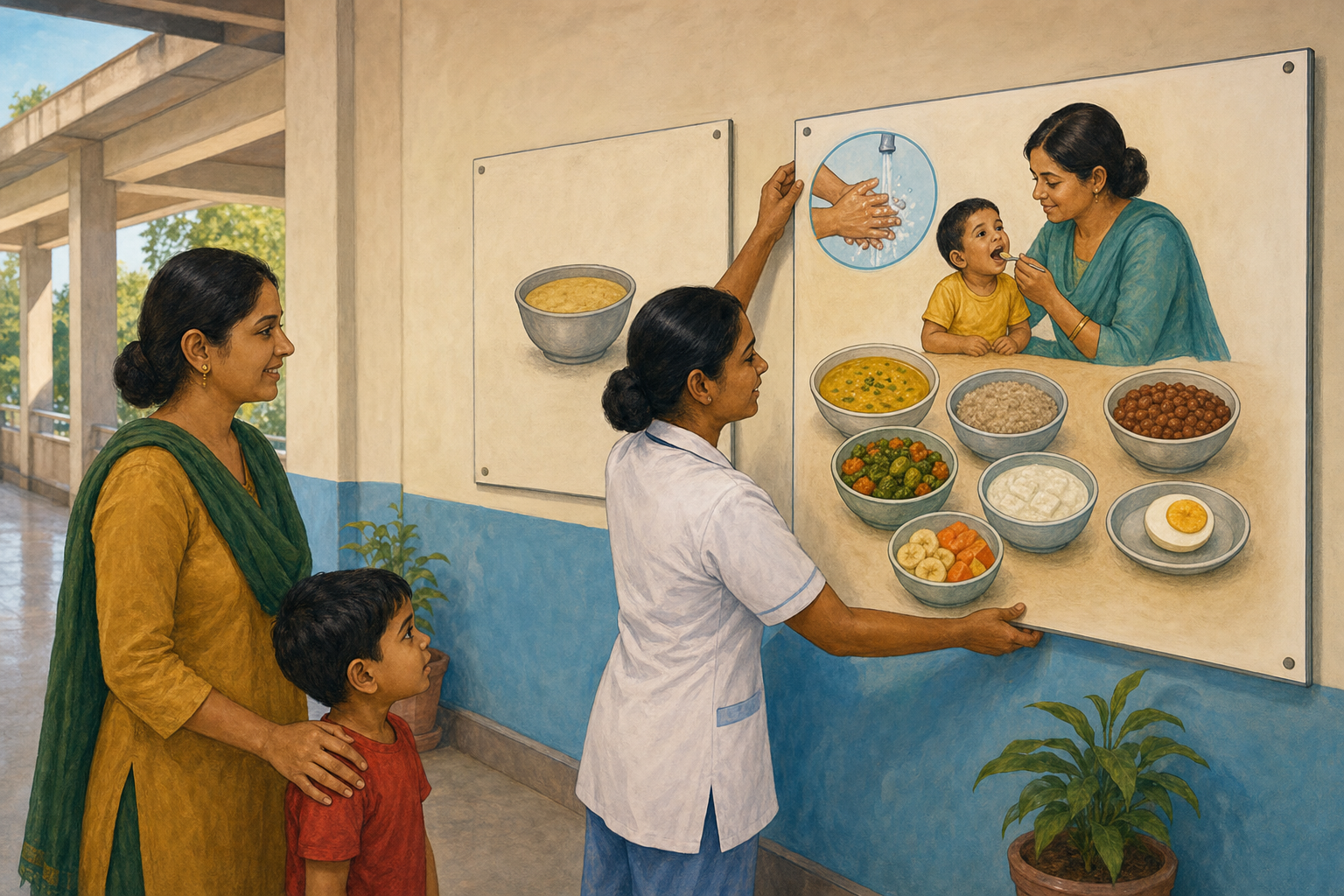
Once a disputed poster is public, an institution has two responsibilities: correct the communication failure and preserve the valid nutrition objective. Quietly removing the sign without replacement leaves parents without needed guidance. Defending every word in the name of science converts an avoidable drafting error into a wider breach of trust.
- Pause the disputed display and preserve a copy. Record where it appeared and retain its approval trail so the review can establish how the wording was created, translated, authorized, and installed.
- Separate three questions. Review clinical accuracy, cultural framing, and administrative approval independently. A recommendation can concern a legitimate nutrient need while still being inappropriate for general public signage.
- Issue replacement guidance promptly. The correction should retain the age, nutrient, preparation, and hygiene information while adding parallel dietary pathways and household qualifiers.
- Explain what changed. A public correction should identify the communication problem, state the nutritional goal, and show the inclusive wording now being used. A vague expression of regret does not help parents decide what to feed.
- Engage concerned communities around a defined task. Where organizations such as the Vishwa Hindu Parishad or other civil-society groups raise an objection, invite them to review cultural language while clinicians retain responsibility for nutrition and safety.
- Give frontline staff a consistent response. Nurses, doctors, and help-desk staff should be able to explain that the poster offers options, direct parents to an appropriate clinician, and record a grievance without belittling the family’s faith.
Article 25 of the Constitution protects freedom of conscience and religious practice. That protection does not make every badly drafted poster a proven legal offence, but it gives public institutions a strong reason to avoid unnecessary collisions with faith. Indian penal law also contains provisions concerning deliberate and malicious acts intended to outrage religious feelings. Whether conduct meets that legal standard is case-specific; administrators and campaigners should not infer malicious intent before the facts and approval process are examined. A formal allegation should be handled through a transparent administrative review and qualified legal advice.
If you are a parent confronting unsuitable guidance, preserve the exact wording, note where it appeared, and ask what nutrient the recommended food is meant to provide. Then request a vegetarian or otherwise culturally acceptable route to that nutrient and submit a written grievance if staff cannot resolve the issue. Do not abruptly change your child’s feeding plan or delay immunization and medical care because the institution communicated badly. Ask a paediatrician or dietitian for advice fitted to the child’s age and clinical needs.
This measured response is not passivity. It protects religious dignity, creates an accountable record, and reduces the chance that mistrust in one poster will spread to other essential health services.
Key takeaways for parents and public hospitals
- Public feeding guidance should distinguish the first six months from complementary feeding after six months; the word infant is not precise enough on its own.
- Lead with the nutrient and clinical purpose, then present culturally acceptable ways to reach that goal.
- A vegetarian pathway needs preparation and absorption guidance, including well-cooked pulses or millets and a vitamin C pairing; a token list of vegetables is not enough.
- Animal-source foods can be presented as conditional options for families that eat them. Naming beef is unnecessary when a broader category communicates the clinical point.
- Cultural sensitivity does not mean concealing iron, zinc, vitamin B12, protein, energy, or food-safety needs. It means communicating those needs without treating one household practice as universal.
- Hospitals need pre-display clinical review, community input, understandable translations, approval records, and a visible route for questions and corrections.
If you oversee a clinic, audit one current infant-feeding poster before its next print run. Ask whether a vegetarian parent, a non-vegetarian parent, and a parent of a child under six months would each understand the correct action. If you are a parent, ask the clinician one precise question: Which acceptable food gives my child the nutrient this recommendation is trying to provide, and how should it be prepared for this age?
A trustworthy public-health system should be able to answer without asking you to choose between your child’s nutrition and your family’s dharma. When the answer is clinically clear and culturally workable, science earns the trust it needs to improve health.