
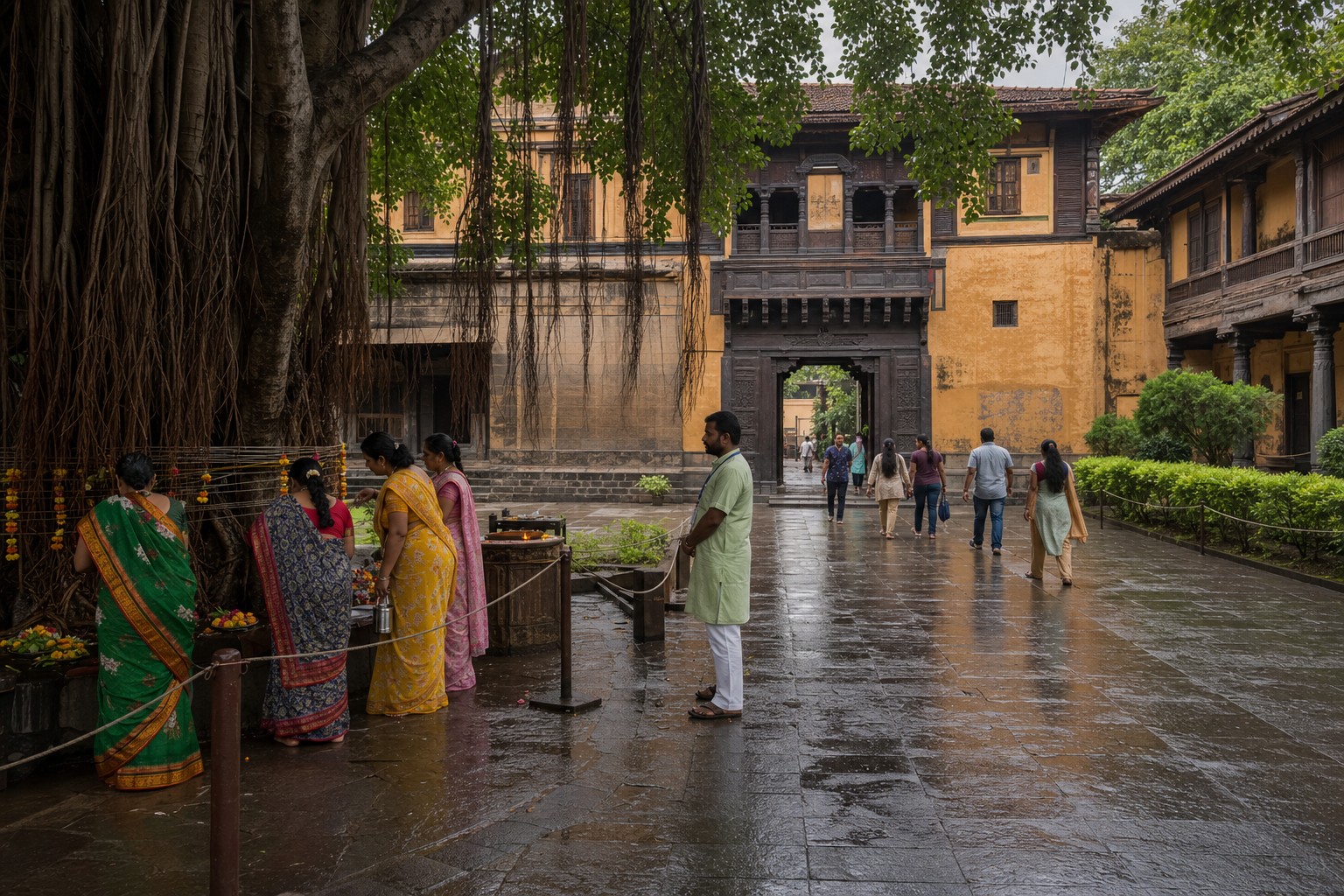
The reported restriction on Vatavriksha Pujan outside Pune’s Mahatma Phule Wada raises a question larger than whether one ritual may occur at one location. It asks how a city should accommodate religious practice when the same space also carries heritage, environmental and public-safety obligations.
The available source argues for withdrawing the prohibition and replacing it with regulated access. Examining that proposal also reveals an important distinction: religious freedom and conservation do not have to be treated as opposing claims if authorities use clear, proportionate and site-specific rules.
What is known – and what remains unclear
The supplied article reports that Hindu Janajagruti Samiti and other Hindu organisations opposed a decision to prohibit or restrict Vatavriksha Pujan outside Mahatma Phule Wada. It presents their demand that the restriction be withdrawn and describes the observance as a locally rooted religious and cultural practice associated with the worship of a banyan tree.
However, the source does not reproduce the official order, identify its precise legal form, or set out the authorities’ stated reasons. It therefore remains unclear from the supplied material whether the measure is a complete ban, a temporary restriction, a heritage-management rule or a limitation applying only to a particular part of the precinct. The source also does not include a response from the municipal authority, heritage custodians, police or local residents.
That evidentiary boundary matters. The existence and scope of the reported restriction should not be described more definitively than the source permits, and the advocacy article should not be mistaken for a complete administrative record. At the same time, its account identifies the substantive tests that any official decision would need to address: the nature of the risk, the necessity of the restriction and the availability of less restrictive safeguards.
Why four public interests converge at the Wada
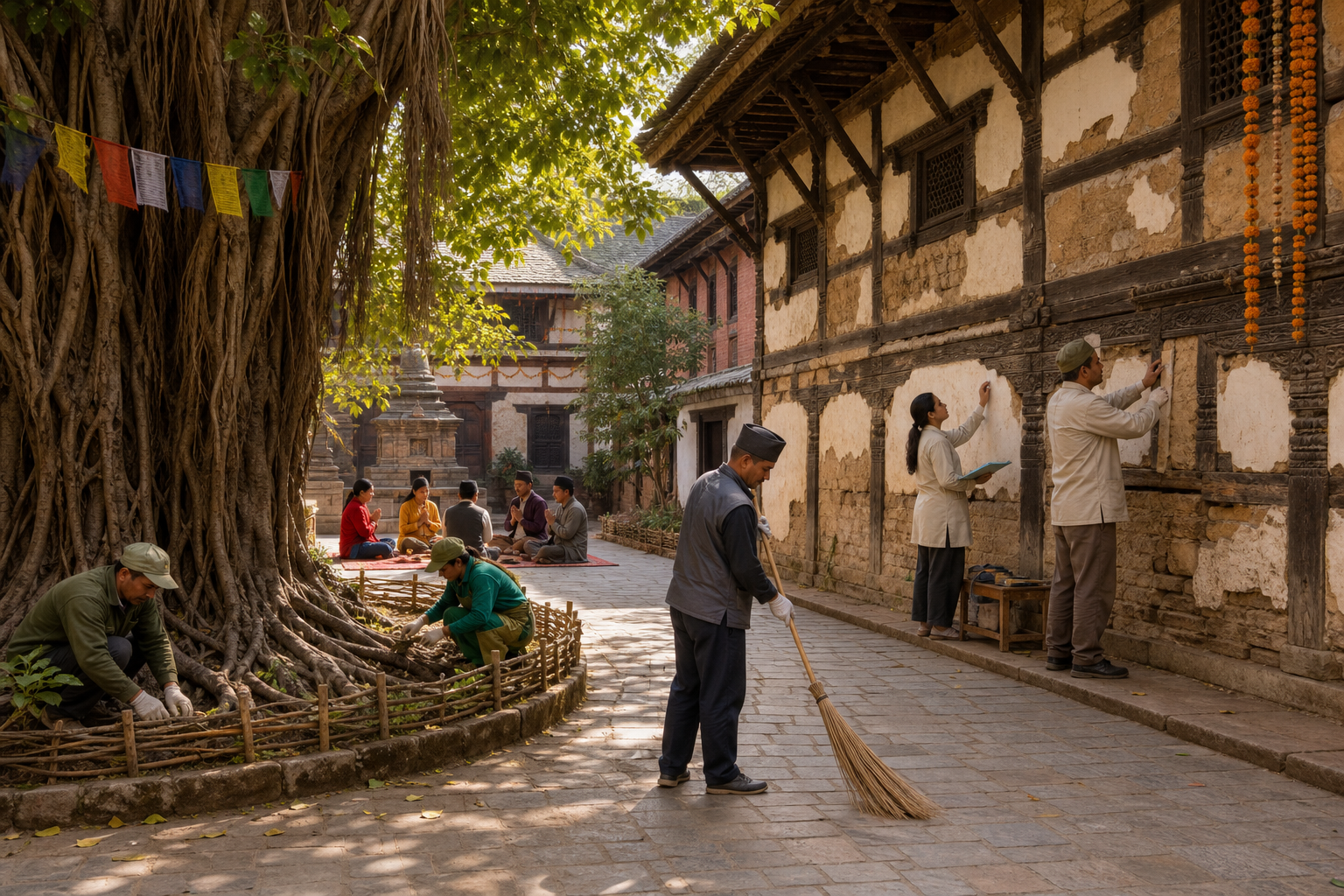
Mahatma Phule Wada is described by the source as a significant place in Pune’s civic and intellectual memory because of its association with Jyotirao Phule. The dispute consequently concerns more than access to an ordinary roadside tree. It involves a heritage setting whose physical fabric, entrances, landscaping and circulation routes may require protection.
The second interest is freedom of religious practice. According to the article, Vatavriksha Pujan commonly involves circumambulating the banyan, tying cotton thread, making modest offerings and reciting a vrata narrative. The source characterises participation as generally decentralised and brief, often involving families or small groups rather than a single continuous assembly. If that description reflects conditions at the site, it is relevant to whether total exclusion is necessary.
The third interest is the health of the banyan itself. A ritual centred on reverence for a tree can still create cumulative physical pressure if many feet compact the soil or if material tied around the trunk and aerial roots becomes constrictive. The source recommends keeping activity away from sensitive roots, using soft cotton rather than synthetic thread, placing lamps at a safe distance and prohibiting nails or other fixtures. These measures connect the ecological meaning of the observance with practical care for the living tree.
The fourth interest is ordinary urban access. Pedestrians, neighbouring residents and visitors to the Wada retain legitimate claims to safe movement and reasonable noise levels. Congestion, litter and blocked entrances are therefore not trivial objections. Yet they are operational problems whose scale should be assessed rather than assumed. The policy choice should follow the demonstrated risk.
The constitutional question is proportionality
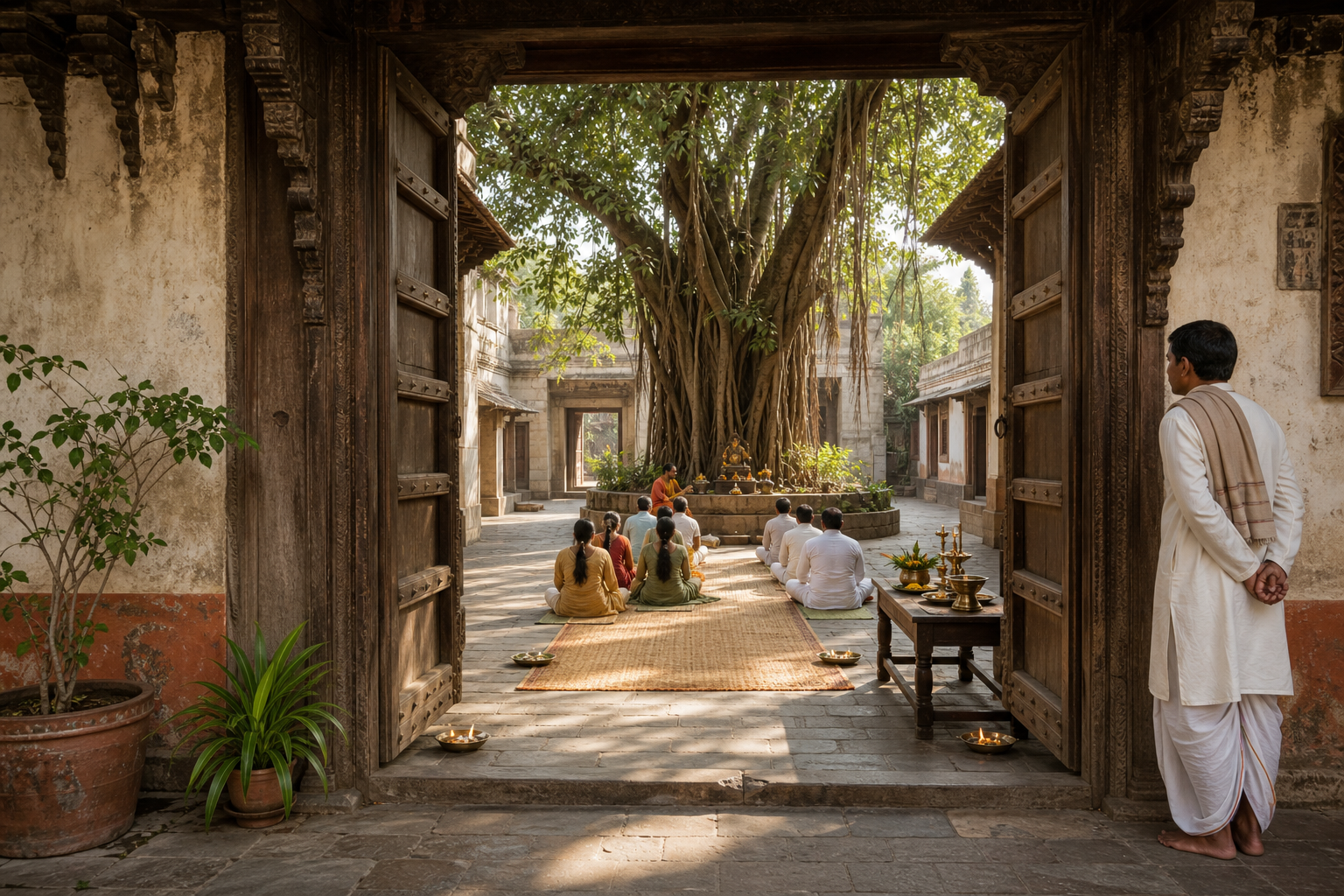
The source invokes Article 25 of the Constitution of India, which protects freedom of conscience and the right to profess, practise and propagate religion while permitting limitations connected with public order, morality and health. This means that neither side of the dispute has an unlimited claim: religious freedom does not erase legitimate site-management duties, but administrative convenience alone does not explain why a complete prohibition would be required.
A proportionate decision begins by identifying the specific harm to be prevented. If the concern is congestion, authorities can consider attendance limits, staggered participation or designated routes. If it is fire risk, lamps can be separated from the tree and historic surfaces. If it is waste, organisers can be assigned clean-up responsibilities. If it is damage to roots or bark, a protected perimeter and approved ritual materials can address that danger directly.
A blanket restriction becomes harder to justify when narrower measures could plausibly protect the same public interest. Conversely, accommodation cannot mean merely opening the site and leaving foreseeable impacts unmanaged. Proportionality requires both sides of that equation: the least intrusive effective restriction and credible compliance by organisers and participants.
Heritage status does not by itself settle the issue. The article advances a living-heritage approach in which compatible, low-impact community practices may continue under conservation safeguards. Whether that approach is suitable at Mahatma Phule Wada ultimately depends on the condition and layout of the actual precinct, matters for qualified heritage and environmental assessment rather than assumption.
Key takeaways
- The source reports opposition to a ban or restriction, but does not provide the official order or the authorities’ full rationale.
- Article 25 supports religious practice subject to public order, morality and health; the central test is whether restrictions are necessary and proportionate.
- Heritage protection, pedestrian access and banyan-tree health present legitimate concerns, but each can be addressed through targeted safeguards if site conditions permit.
- A regulated observance requires reciprocal responsibility: authorities must avoid excessive restrictions, while organisers must accept enforceable conservation and crowd-management duties.
What a workable accommodation could look like
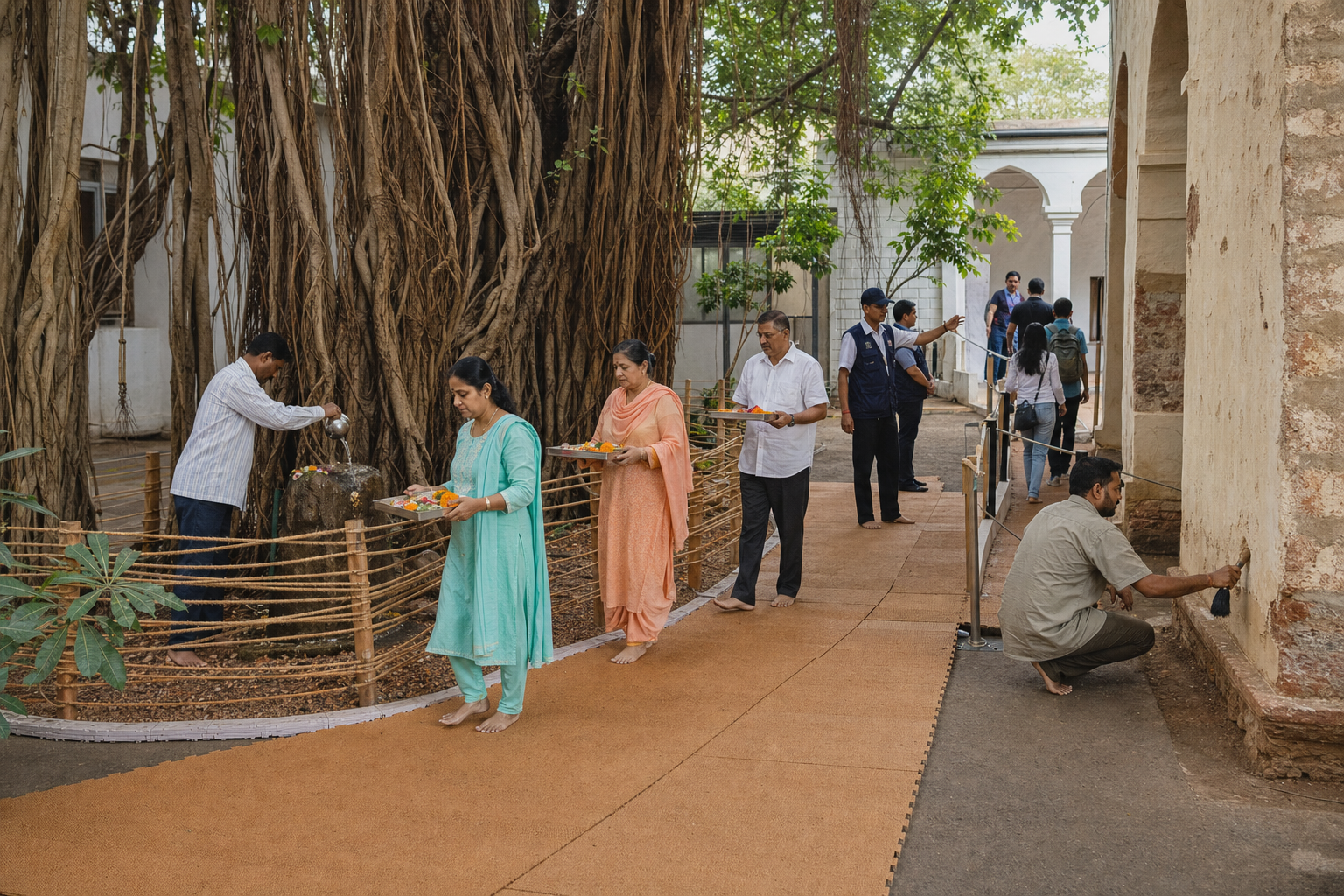
The source proposes a permit-based operating procedure rather than an unrestricted gathering. Its suggested framework includes defined hours, possible limits on simultaneous participation, managed entry and exit paths, volunteer stewards, waste segregation, noise control and coordination with municipal and police authorities. It also calls for measures that protect the tree and historic setting.
For such a framework to be credible, the permission should state the rules in advance and connect every restriction to an identifiable risk. The protected area around the banyan should be determined with suitable technical input. Permitted materials, locations for offerings and lamps, pedestrian routes, organiser responsibilities and clean-up expectations should be unambiguous. Any attendance cap should reflect the site’s safe capacity rather than serve as an unexplained barrier.
Consultation is equally important because the supplied account represents only the case against the restriction. A sound process would hear the organisations seeking permission as well as heritage managers, tree specialists, municipal officials, police and people who regularly use the surrounding space. Their participation would help distinguish demonstrated constraints from speculative ones and make the resulting rules easier to follow.
A limited, monitored observance could also generate evidence for later decisions. Authorities and organisers could review pedestrian obstruction, waste, noise, compliance and any physical effect on the tree or precinct after the event. Rules could then be retained, tightened or relaxed on the basis of recorded conditions. Such review would be more transparent than allowing either a prohibition or a permission to continue without reassessment.
The most durable outcome would be a publicly available protocol that treats worshippers as participants in conservation rather than as an obstacle to it. If consultation confirms that the ritual can occur safely, Pune would have an opportunity to demonstrate how religious liberty, living tradition and responsible stewardship can share a sensitive civic space.