
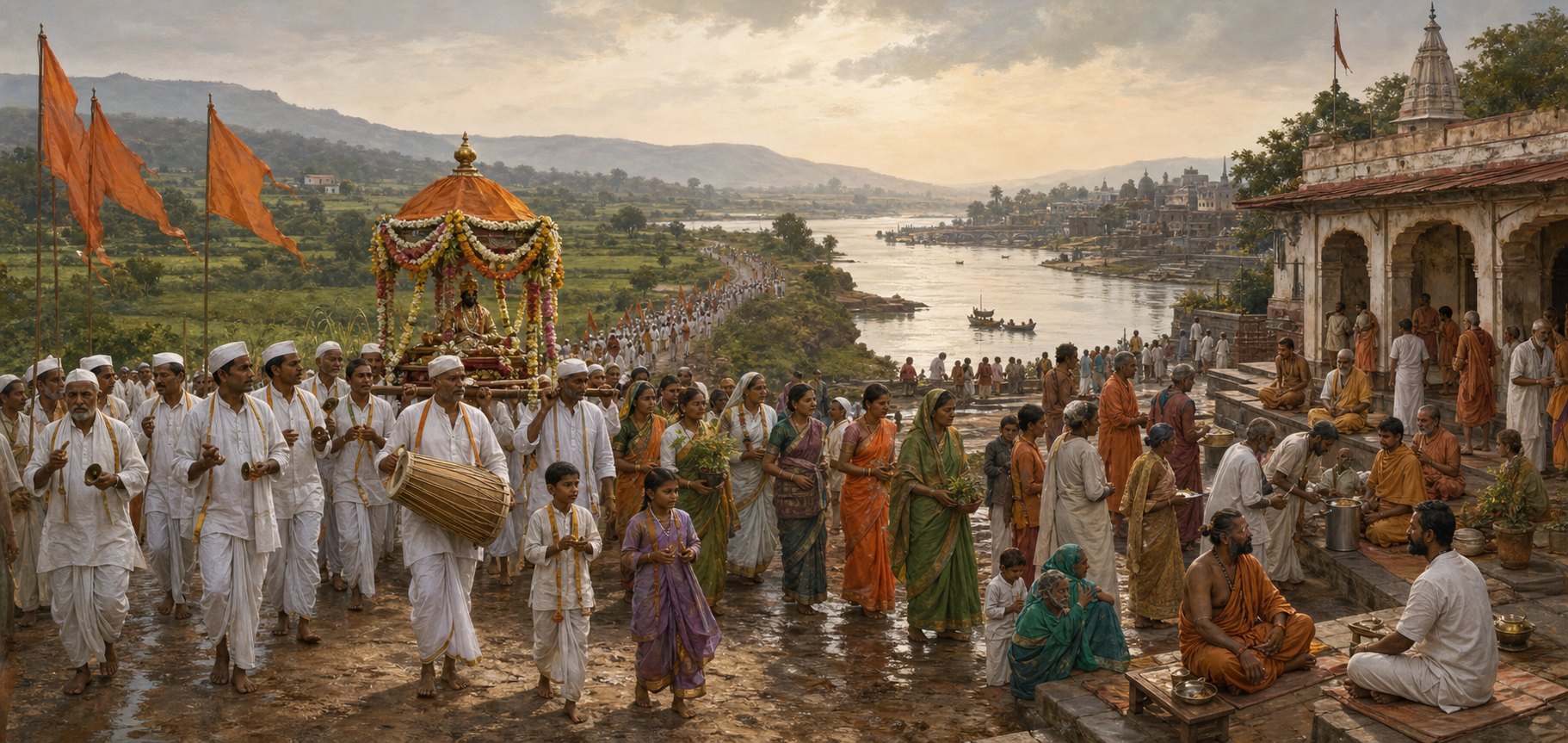
Bhakti lineages remain living when inherited devotion is repeatedly turned into action. The sources considered here illuminate two different but complementary forms of that continuity: the Sant Namdev Maharaj palkhi within Maharashtra’s Wari tradition and the Ramanandi sampradaya of North India.
Viewed together, they show how pilgrimage does more than connect devotees with sacred destinations. Walking, singing, renunciation, hospitality, institutional stewardship and ethical discipline carry teachings across generations while giving ordinary participants a role in preserving them.
Key takeaways
- A bhakti lineage is sustained through recurring practices and communities, not solely through claims of historical succession.
- The Namdev palkhi and Ramanandi sampradaya represent distinct structures: one is centered on a recurring collective procession, while the other includes temples, monasteries, ascetics and pilgrimage networks.
- Vernacular song, divine remembrance and bodily discipline make theology accessible without eliminating the importance of learning or organization.
- Both sources associate bhakti with wider social participation, although inherited accounts of inclusion must be distinguished from historically verified relationships.
Two ways a devotional inheritance becomes public
In general usage, a religious lineage is a chain of transmission involving teachers, teachings, practices, institutions and communities. The two source articles demonstrate that such transmission need not take a single organizational form.
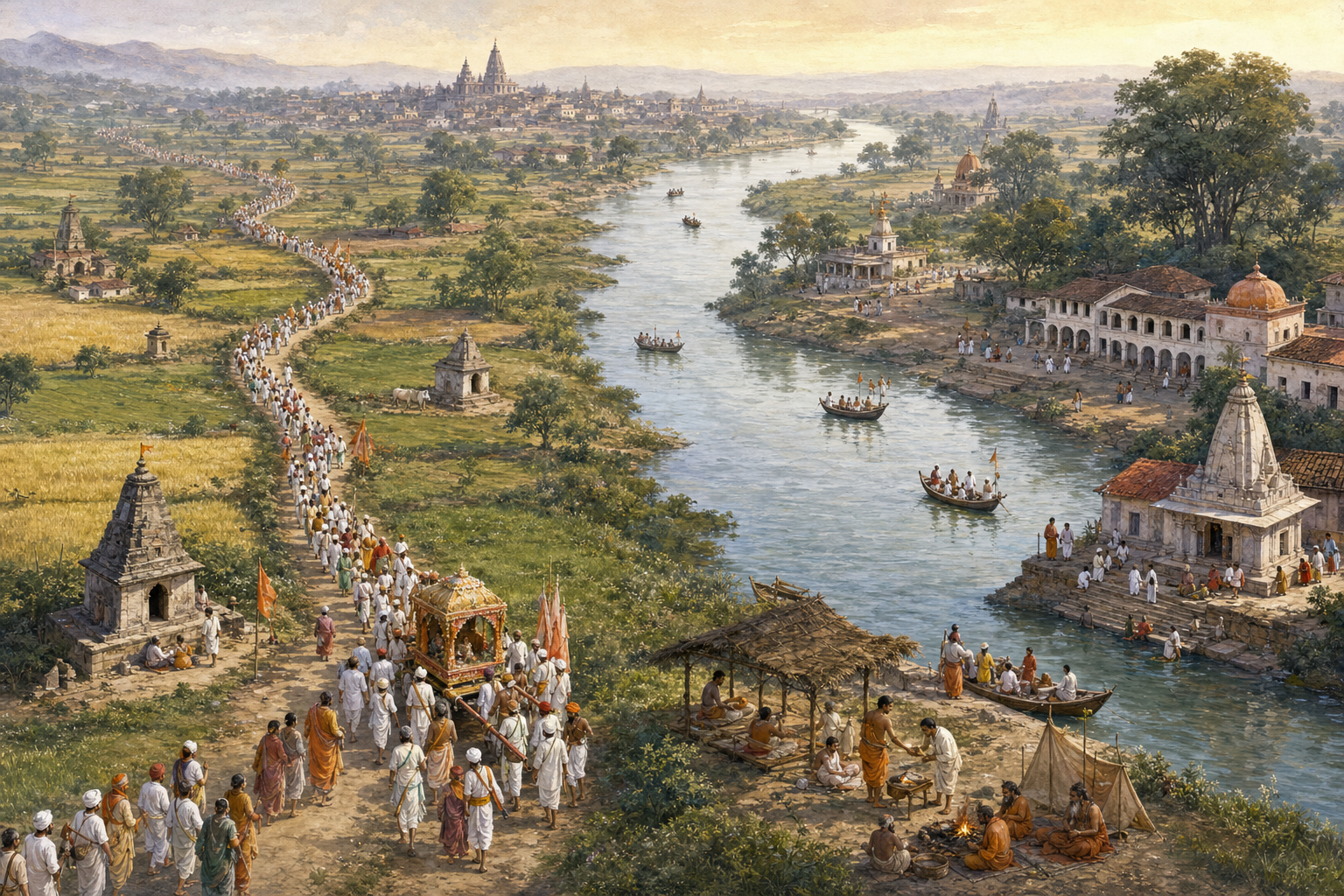
The DharmaRenaissance account of the Sant Namdev Maharaj Palkhi Sohala presents lineage as a recurring movement through space. A sacred representation of Namdev travels from Narsi Namdev, the place associated with the saint’s birth, toward Pandharpur. Varkaris accompany it in organized dindis, sing abhangs and share the disciplines of the road. The procession thus connects the saint’s remembered life with Vithoba, the deity to whom the source says his devotion and poetry were dedicated.
The Ramanandi article describes a more dispersed architecture. Ramananda is traditionally remembered as a medieval North Indian teacher associated especially with Varanasi and the Gangetic region, but the source cautions that his historical profile must be reconstructed from hagiography, sectarian memory, devotional writing and modern scholarship. The sampradaya attributed to his legacy developed through Rama devotion, temples, monasteries, pilgrimage centers, akharas and communities of ascetics commonly called Bairagis or Vairagis.
These are not competing definitions of a living tradition. The palkhi concentrates memory into a periodic journey, whereas the Ramanandi network distributes it among enduring institutions and mobile renunciants. One makes succession visible through the return of a procession; the other makes it visible through sustained worship, teaching, residence, recitation and pilgrimage.
The body and the vernacular become instruments of teaching
Both sources resist the idea that bhakti is only an interior emotion. In the Namdev procession, the body learns through prolonged walking, fatigue, scheduled halts and service. The source describes the journey as lasting roughly twenty-six days and interprets each stage as part of the spiritual practice rather than as an inconvenience before darshan. Its account of the Varkari code also emphasizes simplicity, vegetarian discipline, avoidance of intoxicants, respect for fellow pilgrims and remembrance of the divine name.
The Ramanandi path places comparable weight on disciplined embodiment, although its most demanding model is the renunciant rather than the walking dindi. According to the source, Ramanandi ascetic practice values simplicity, restraint, meditation, mantra, scriptural remembrance, pilgrimage and devotion to Rama. It presents renunciation as the reordering of life around spiritual purpose, not merely withdrawal from society.
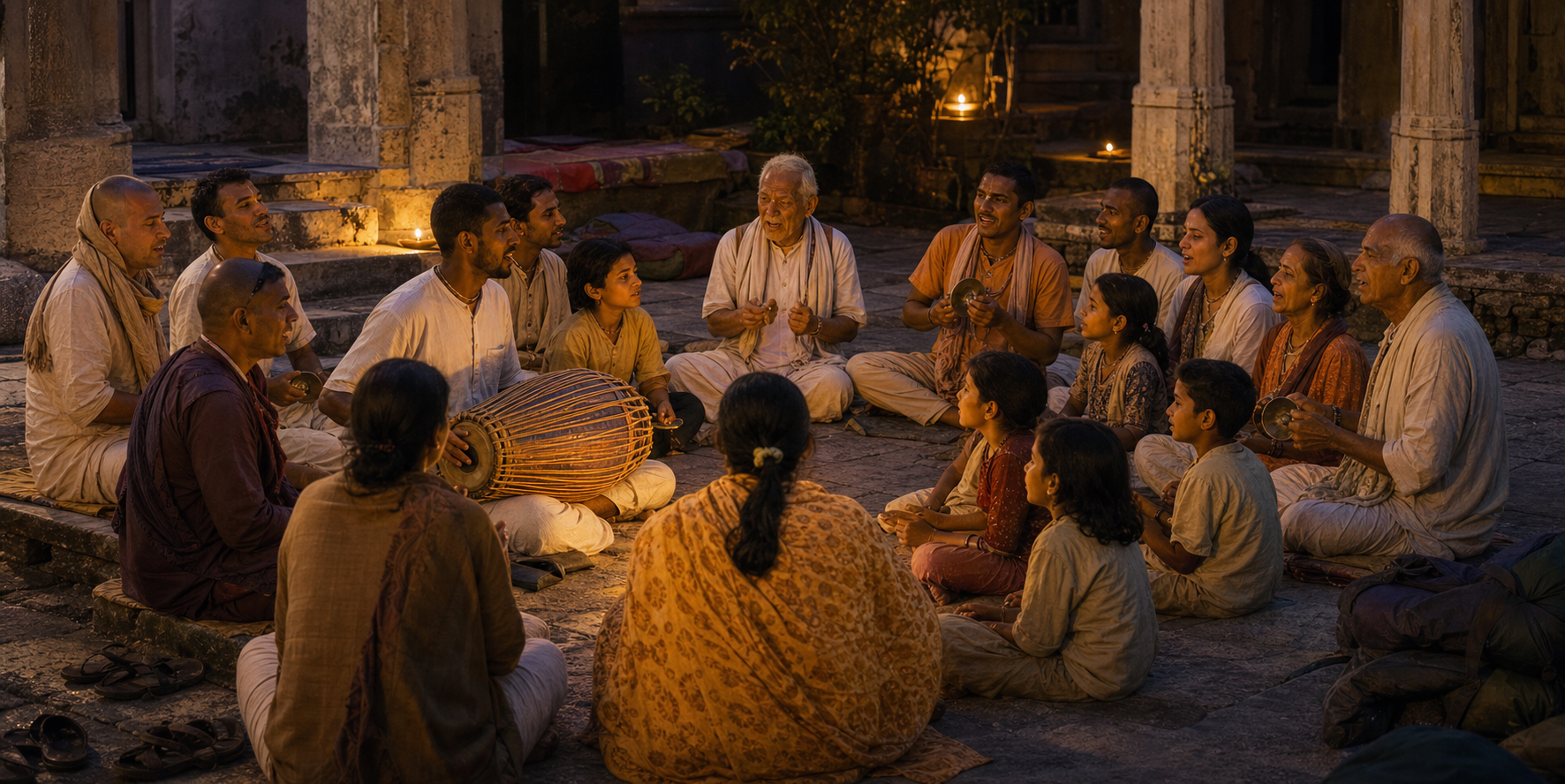
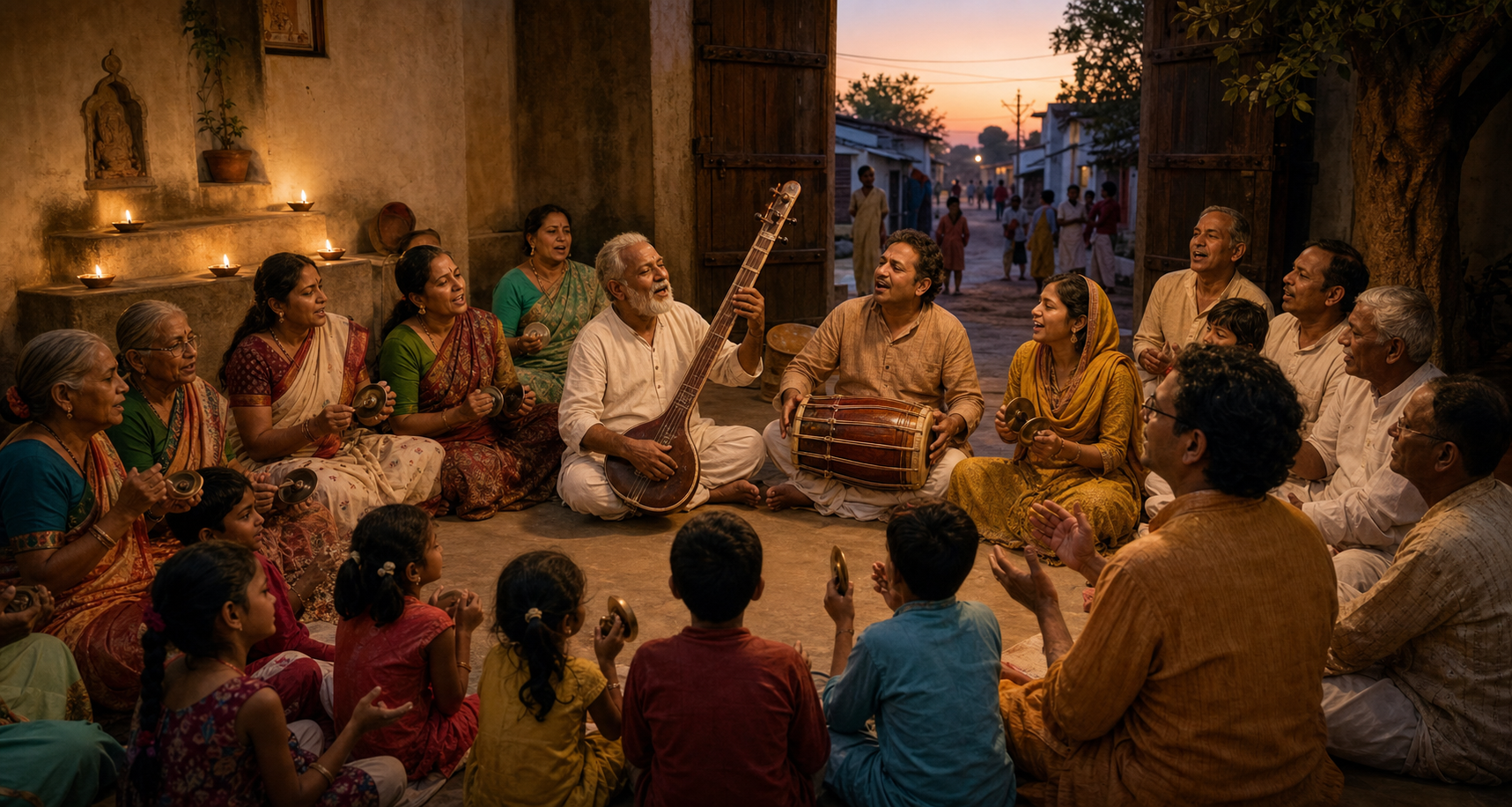
Sound provides another bridge between teaching and participation. The Namdev article portrays abhang singing, accompanied by instruments such as taal, mridang, veena and cymbals, as a form of public theology. The Ramanandi article similarly stresses vernacular devotion and public recitation. It presents Ramananda’s remembered use of accessible language as an expansion of religious communication beyond circles formed by scholastic Sanskrit learning, rather than as a rejection of Sanskrit itself.
Vernacular expression and repeated practice therefore work together. A teaching that can be sung enters collective memory; a teaching enacted through a vow, a journey or a daily discipline becomes harder to separate from conduct. Neither model makes doctrine irrelevant. The Ramanandi source associates the tradition with Ramanuja’s Vishishtadvaita while acknowledging its encounters with both saguna and nirguna currents. The Wari source likewise finds universal insight within Namdev’s intensely personal devotion to Vithoba. In each case, intellectual meaning is carried through forms that do not require every participant to begin as a specialist.
Inclusion is enacted, remembered and sometimes debated
The two articles associate bhakti with expanded religious participation, but they provide different kinds of evidence. The Namdev account emphasizes practices visible within the pilgrimage community: people walk, eat and sing together; villages offer hospitality; and those unable to complete the journey can contribute through seva. It also reports that hymns attributed to Bhagat Namdev appear in the Guru Granth Sahib, giving his devotional memory significance beyond its Marathi setting.
The Ramanandi account works more explicitly through lineage memory. It says Ramananda is traditionally associated with disciples from varied social backgrounds, including Kabir, Ravidas, Dhanna, Pipa and Sena. Crucially, the same source notes continuing scholarly debate over the precise historical relationships. The responsible synthesis is therefore not that every traditional genealogy has been independently established, but that Ramanandi collective memory came to express a powerful principle: access to devotion should not be restricted by birth, occupation, rank or command of an elite language.
This distinction between historical verification and inherited meaning matters. A devotional genealogy can shape institutions and moral expectations even where its details remain contested. Conversely, shared walking or worship should not automatically be treated as proof that every social hierarchy has disappeared. The sources are strongest when read as accounts of practices and ideals that create occasions for equality: common discipline in the dindi, service to pilgrims, vernacular participation and the gathering of devotees around a divine name.
Their cross-regional dimensions also differ. Namdev’s remembrance connects Maharashtra with a wider northern reception, including Sikh scripture as reported by the first source. The Ramanandi article locates its tradition across North Indian sacred geography and notes devotional connections between Ramananda’s remembered circle and Sikh scripture. Together, these accounts suggest that living lineages can cross linguistic and sectarian boundaries without making their distinct deities, practices or institutional identities interchangeable.
Keeping pilgrimage alive requires both care and adaptation
Sacred geography gives each lineage a durable map. For the Namdev palkhi, the road from Narsi Namdev to Pandharpur connects local saintly memory with the shrine of Vitthal-Rakhumai on the Chandrabhaga or Bhima River. For the Ramanandis, the source identifies Ayodhya as a major center of Rama devotion and ascetic residence while also emphasizing Varanasi in Ramananda’s remembered life. Place turns theology into a route, a destination and a recurring field of human relationships.
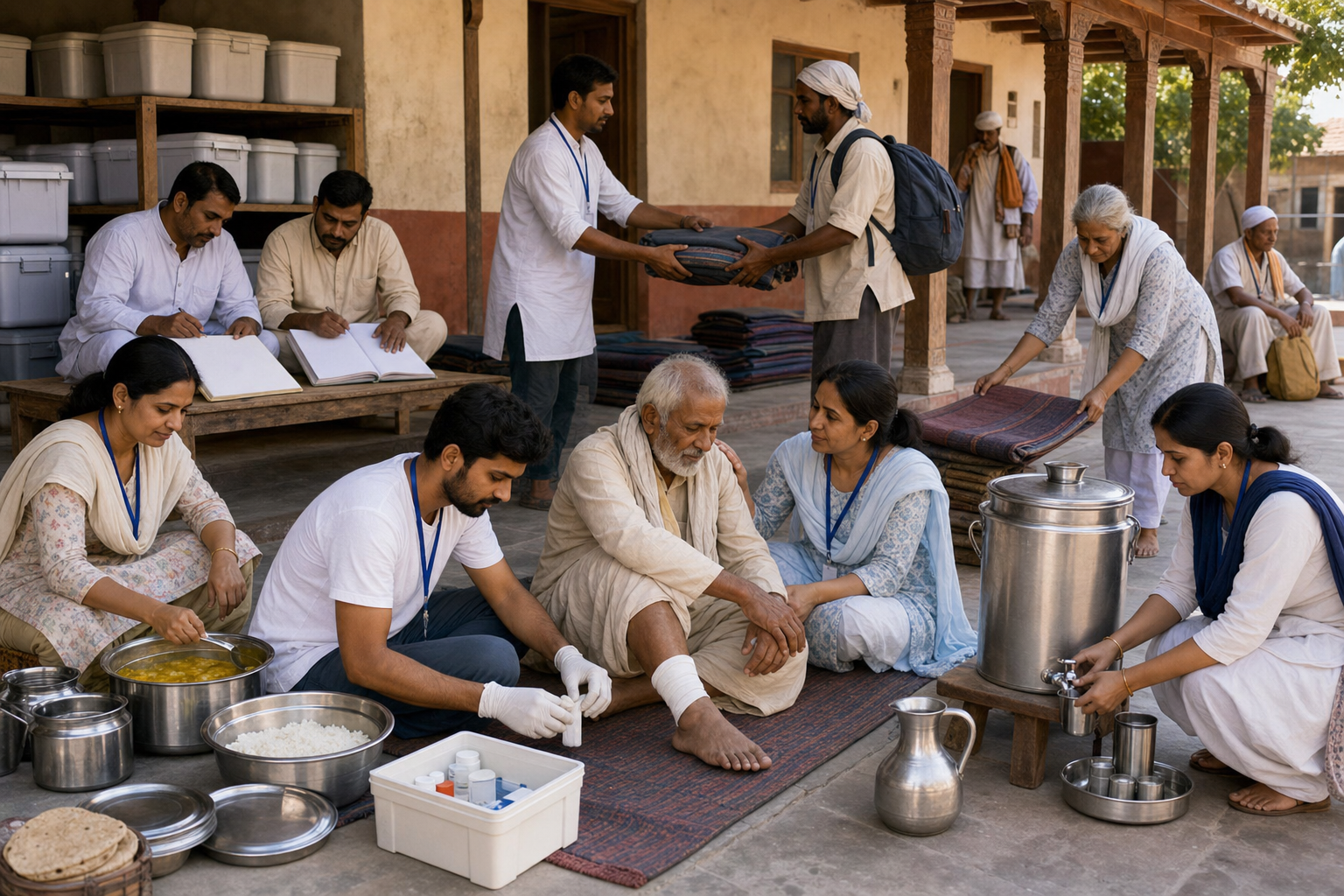
Yet sacred movement depends on practical stewardship. The Namdev article describes the Wari as a decentralized but highly organized civic undertaking involving dindi discipline, scheduled halts, food, water, sanitation, medical assistance, policing, traffic management and village hospitality. It reports that Ashadhi Ekadashi falls on 25 July in 2026 but advises participants to confirm the Namdev palkhi’s final departure details, route and halts with the relevant institutions and authorities. That caution separates the stable meaning of the pilgrimage from logistical information that can change.
The Ramanandi source supplies the longer institutional perspective. Temples, monasteries, mahants, akharas and ascetics have supported worship and pilgrimage over time; it also reports that some ascetic groups historically assumed martial or protective roles when routes and sacred institutions required defense. Whatever form stewardship takes, continuity depends upon people willing to organize material conditions around a spiritual purpose.
The future of these traditions will therefore be decided not only by whether old names are remembered, but by whether their disciplines remain practicable and intelligible. Accurate schedules, safe routes, responsible institutions, intergenerational teaching and meaningful opportunities for seva can allow pilgrimage to adapt without being reduced either to spectacle or to a relic of the past.
References
- DharmaRenaissance Blog — Sant Namdev Maharaj Palkhi Sohala 2026: Sacred Wari, Living Bhakti Legacy
- DharmaRenaissance Blog — Ramanandis in Hinduism: Powerful Bhakti Legacy of Devotion and Social Unity