Security for Shri Amarnath Ji Yatra 2026 is being organised as an interconnected system rather than a collection of isolated checkpoints. The available source reporting describes mandatory pilgrim tracking, digitally verifiable service-provider identities, expanded observation, rehearsed emergency response, coordinated command and restricted airspace along the Pahalgam and Baltal routes.
The practical question is how these measures reinforce one another. Read together, they show a security model designed to establish who may enter the pilgrimage system, monitor movement through difficult terrain, identify anomalies and give multiple agencies a common basis for responding.
Key takeaways
- The source reports that the Yatra is scheduled from 3 July to 28 August 2026 through the traditional Pahalgam and Baltal axes.
- Every registered pilgrim must collect and wear an RFID card before beginning the Yatra; registration by itself is therefore not the final access step.
- Tamper-proof QR-coded identity cards are intended to make pony riders and other authorised service providers quickly verifiable.
- CCTV coverage, electronic monitoring, watch towers, observation posts and mock drills form the detection-and-response layer around the identity systems.
- A no-fly designation covering the Yatra routes means that pilgrim helicopter services are unavailable, increasing the operational importance of regulated ground movement and verified assistance.
Two identity systems address two different security questions
The reported RFID and QR-code arrangements are sometimes grouped together as pilgrimage technology, but they perform distinct functions. RFID concerns the movement and safety of registered pilgrims. QR-coded identification concerns the authenticity of people working inside the pilgrimage support network.
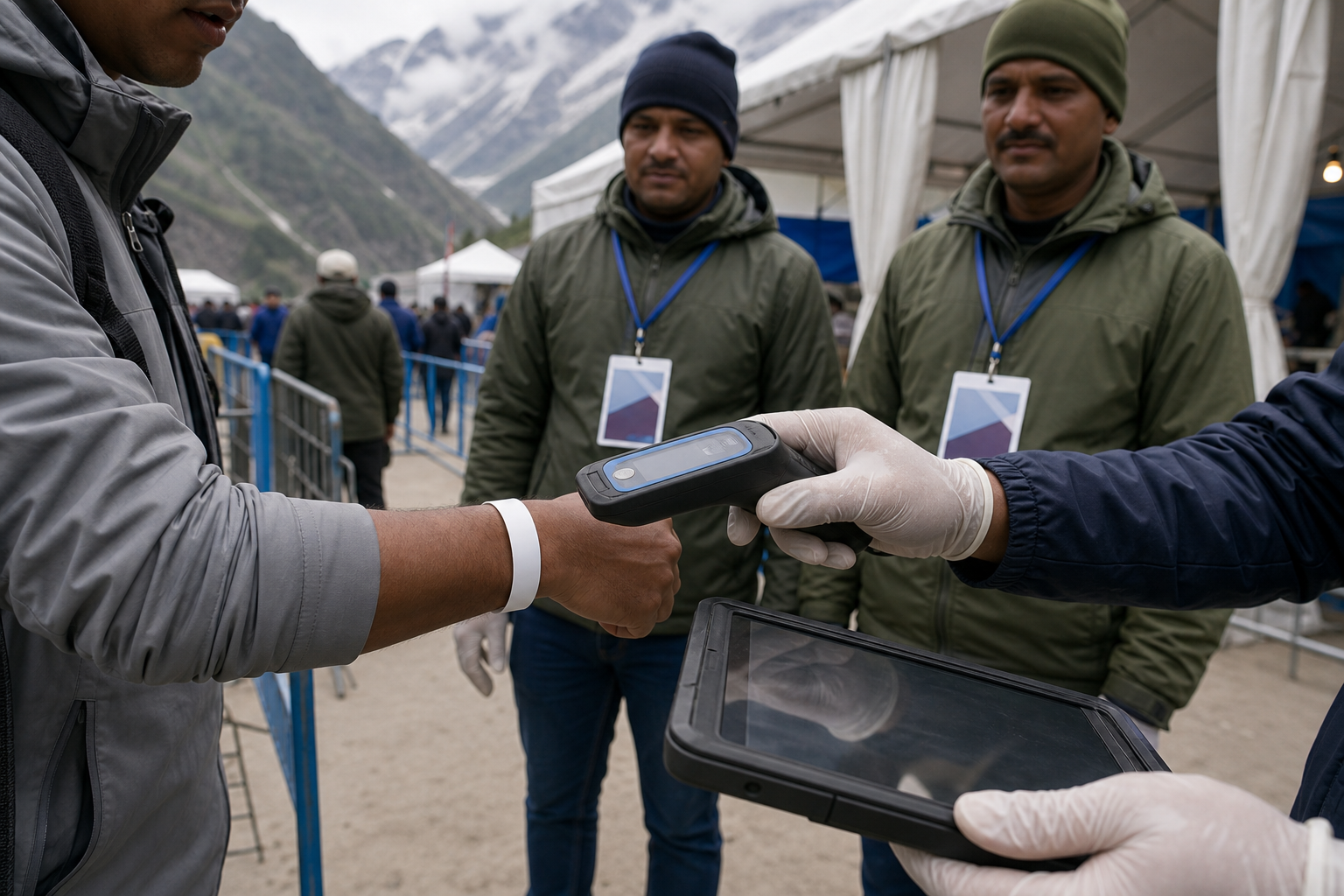
According to the DharmaRenaissance Blog report, every registered Yatri must obtain an RFID card at a designated location in Jammu or Kashmir, provide Aadhaar details for that process and keep the tag around the neck throughout the journey. The report says that a registered pilgrim cannot embark without the card. This creates a clear distinction between advance registration and operational admission to the route.
RFID generally allows a compatible reader to detect a tag without direct physical contact. On a moving pilgrimage spread across base camps, checkpoints, roads and mountain paths, that capability can help reconcile the list of registered participants with actual passage through the managed route. The source presents it as useful for situational awareness, emergency searches and identifying movement that does not match expected patterns. It should therefore be understood as part of a wider control system, not as a stand-alone guarantee of safety.
The QR-code arrangement answers a different question: whether a person offering assistance is an authorised service provider. The report says Jammu and Kashmir Police introduced tamper-proof QR-coded identity cards for pony riders and other providers, with a scan intended to reveal the holder’s verified information. That gives personnel a faster basis for checking an unfamiliar worker than visual recognition or paper credentials alone.
This distinction becomes especially important because the Yatra depends on people who transport, guide, feed and otherwise assist pilgrims. Security must screen that ecosystem without treating every genuine worker as inherently suspect. A scannable credential can support both objectives: detecting unauthorised access while allowing verified providers to establish their status consistently.
Observation becomes useful only when agencies can act on it
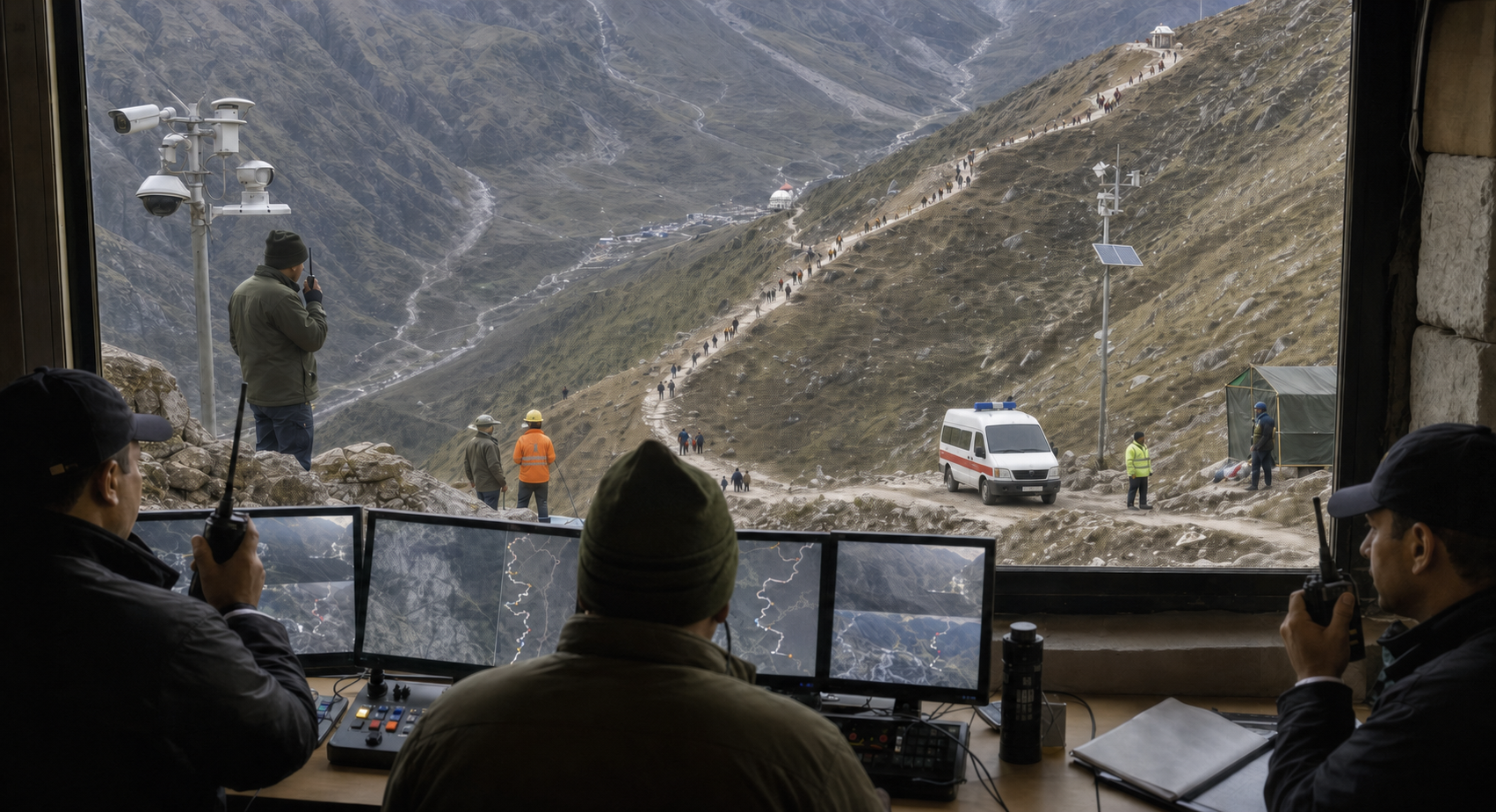
The source also reports CCTV cameras, electronic monitoring, watch towers and observation posts at sensitive locations. These measures extend visibility across terrain where bends, slopes, crowds and changing conditions can limit what personnel see from ground level. High observation points, including the locally described Machan Morchas, complement cameras by placing trained personnel in positions from which they can interpret movement and crowd conditions.
The larger synthesis is that identity and observation provide different kinds of knowledge. RFID can associate a registered pilgrim with movement through the system; a QR scan can help establish a worker’s identity; cameras and observation posts can show what is occurring at a location. None of those inputs, however, decides how to redirect a crowd, investigate an anomaly, organise an evacuation or dispatch assistance. That requires a functioning command structure.
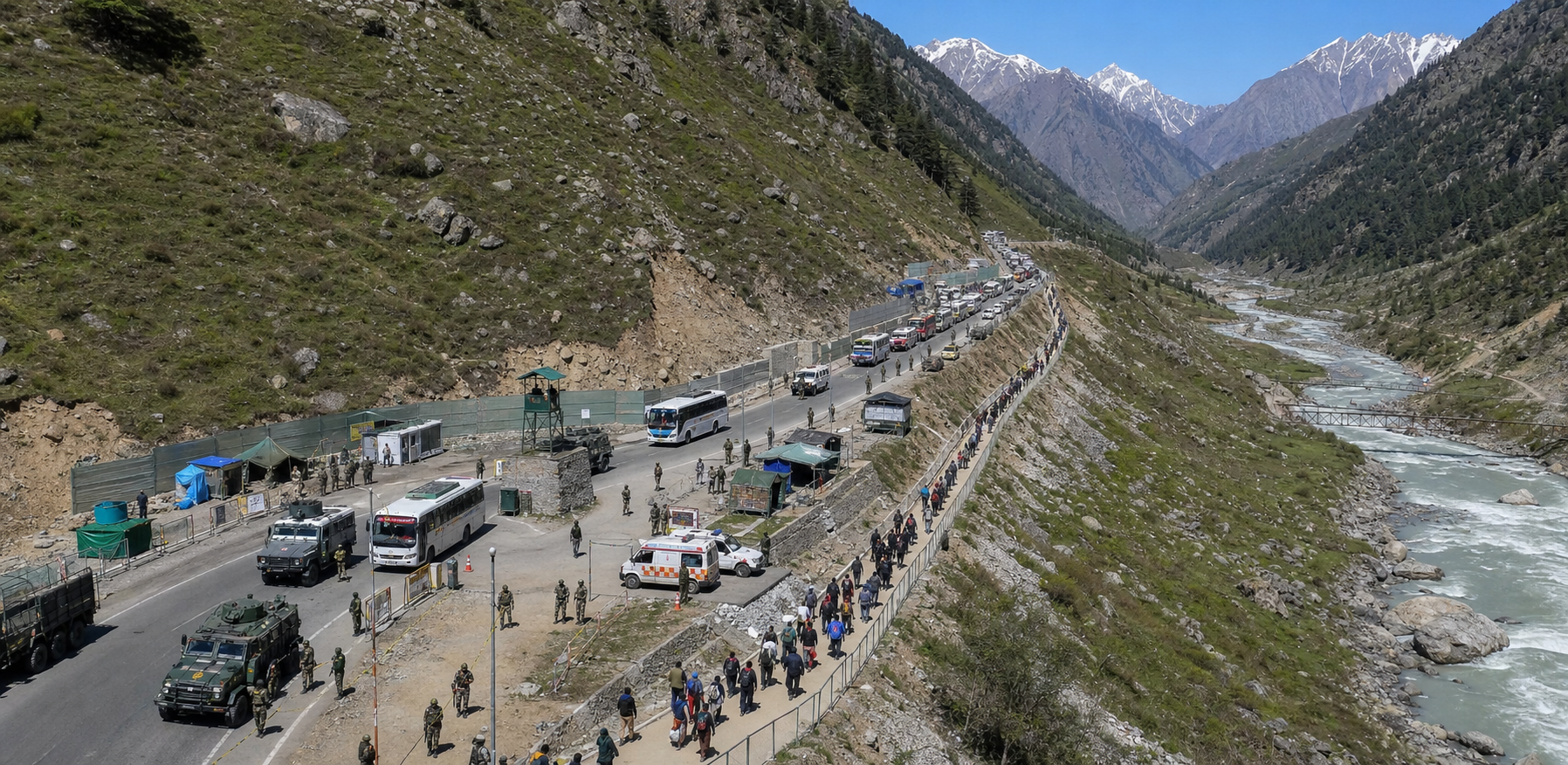
The report says the operation involves civil administration, police, paramilitary forces, intelligence units, transport authorities, health services, disaster-response teams, Shrine Board officials and local providers. It also attributes an emphasis on stronger inter-agency coordination to Director General of Police Nalin Prabhat. The significance is operational: information discovered at one point on a route may affect departures, traffic or pilgrim movement elsewhere, so it must reach the responsible authority quickly and in a usable form.
Reported mock drills are the bridge between a written plan and field performance. The source frames them as opportunities to examine communication, crowd guidance, evacuation, medical coordination, combing activity and reinforcement procedures before those capabilities are needed in a live incident. Their value lies not merely in demonstrating readiness but in exposing unclear responsibilities and weak handoffs between participating organisations.
The no-fly order shifts mobility and scrutiny to the ground
The aerial restriction changes more than the security picture. Citing Government Order No. 321-HOME of 2026 dated 1 June 2026, the report says all Yatra routes, including the Pahalgam and Baltal axes, were designated a no-flying zone from 1 July until completion of the pilgrimage. It consequently states that helicopter services for pilgrim travel are unavailable in the Yatra area during the 2026 season.
From a security perspective, limiting authorised aerial activity reduces the number of airborne movements that agencies must distinguish from a possible anomaly. This is particularly relevant when small unmanned aircraft can create uncertainty even without directly approaching a crowd. That rationale is an analytical inference from the reported restriction; the cited source does not provide a detailed threat assessment behind the order.
The operational trade-off is concentrated on pilgrims who might otherwise have considered helicopter travel because of age, mobility or time constraints. The source says access is to be on foot or through ponies and palkis. Ground-based assistance therefore becomes more consequential, which in turn makes the QR verification of service providers, disciplined route access and monitoring of movement more central to the overall plan.
The airspace decision illustrates how the layers fit together: restricting one channel of movement transfers demand to another, and the receiving channel must then be more carefully authenticated and managed. A no-fly rule cannot be evaluated only as an aviation measure; it also affects service-provider oversight, pedestrian flow and the information pilgrims need before setting out.
What effective implementation will require
For pilgrims, the clearest implication is procedural. Registration does not remove the reported obligation to collect the RFID card, bring the required Aadhaar details for issuance and wear the tag during the Yatra. Nor should travel planning assume that a helicopter option will be restored within the period covered by the reported no-fly order.
For authorities, the design depends on continuity between successive layers. Accurate enrolment must lead to usable RFID records; QR credentials must be checked where verification matters; observation must feed decision-makers; and decisions must reach field personnel, transport managers and emergency services. A failure at any handoff would reduce the value of the technology on either side of it.
The arrangements also require a balance between vigilance and orderly access. Identity tools are most useful when they accelerate legitimate passage while isolating discrepancies for closer examination. If every check produces avoidable delay, crowd pressure can itself become an operational problem; if checking becomes perfunctory, digital credentials lose their protective purpose.
Through the pilgrimage period described in the source, the meaningful test will be whether verified identity, field observation and coordinated response remain connected under changing route conditions. The security architecture is strongest when pilgrims and authorised workers experience clear procedures while agencies retain the awareness needed to respond without confusion.