ISKCON’s sixtieth anniversary brings a large historical question into focus: how did a devotional institution associated with a worldwide community emerge from a small storefront on New York’s Lower East Side?
The reported anniversary plans offer more than a sequence of ceremonies. Read together, their use of sacred place, public chanting, personal testimony, prasadam and volunteer service shows how a religious community can connect its founding memory with responsibility for its future.
Why 26 2nd Avenue remains the anniversary’s center
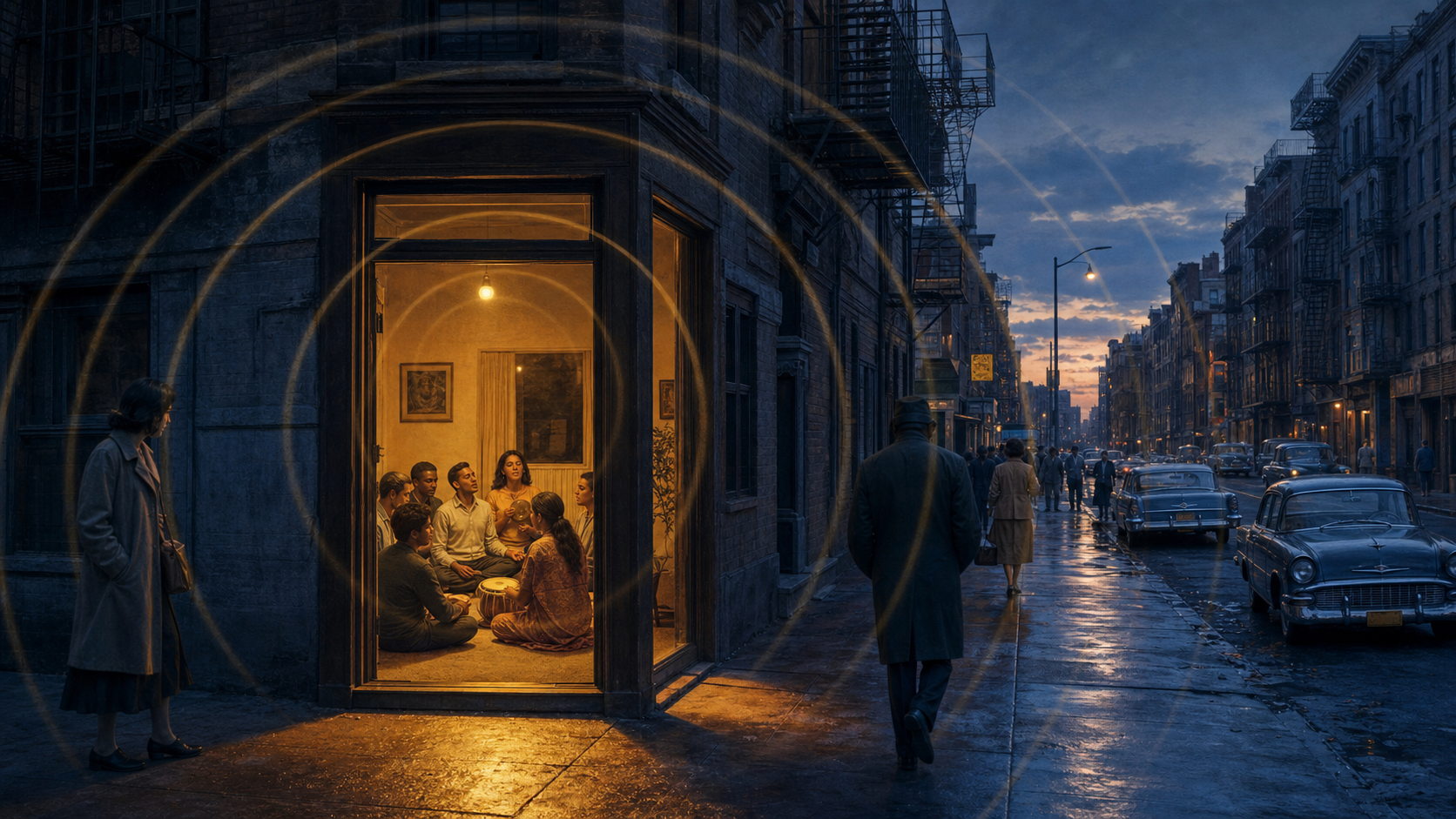
The supplied DharmaRenaissance Blog report identifies July 13, 1966, as the date Srila Prabhupada established the International Society for Krishna Consciousness at 26 2nd Avenue. The premises, remembered as Matchless Gifts, therefore represent ISKCON’s institutional beginning as well as the setting for early teaching, kirtan, scriptural study, prasadam distribution and community formation.
The historical meaning lies partly in the contrast of scale. The storefront was modest, while the devotional movement associated with it became international. Returning attention to that setting resists the temptation to tell institutional history only through later growth. It directs attention instead to the discipline, uncertainty and personal service from which that growth began.
This makes the site more than an anniversary backdrop. In the source’s account, it functions simultaneously as an archive, pilgrimage destination and place of continuing practice. Visitors are not simply shown where something happened; they are invited to hear, chant, serve and reflect within the neighborhood connected to ISKCON’s formative period.
A commemoration structured as lived history
The report set out a planned anniversary week running from Monday, July 6, through Monday, July 13, 2026. Its different activities can be understood as complementary ways of transmitting history rather than as unrelated events.
| Element | Plan reported by the source | Role within the commemoration |
|---|---|---|
| Storefront access | 26 2nd Avenue was scheduled to open from 9:00 a.m. to 6:00 p.m., supported by volunteers working three daily shifts. | Keeping the founding place accessible turns preservation into seva. |
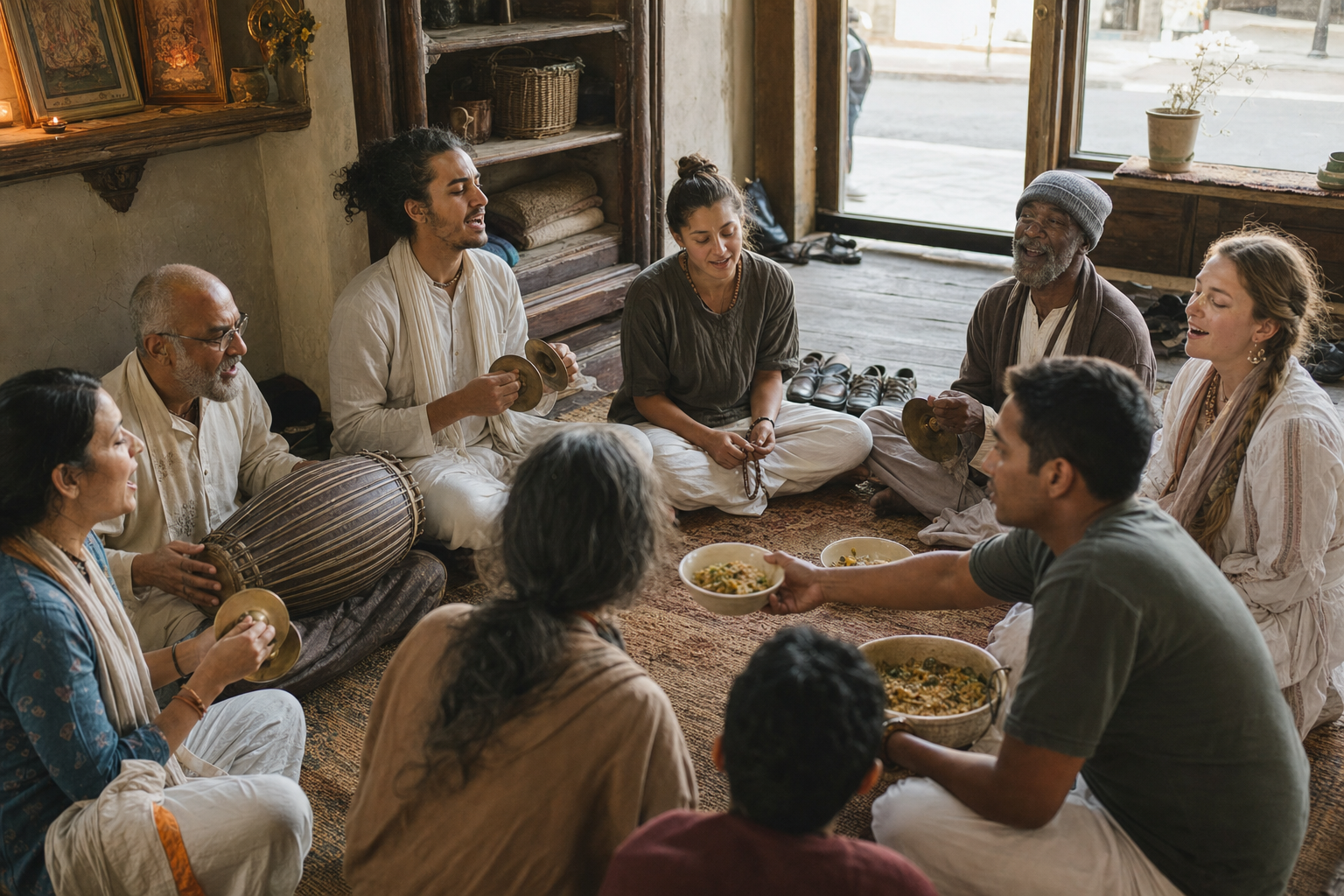
| Public harinam | Daily processions were planned from 3:00 p.m. to 6:00 p.m., travelling from Matchless Gifts to Tompkins Square Park and back with brahmacaris from ISKCON New York. | The route reconnects public chanting with urban places associated with the movement’s early history. |
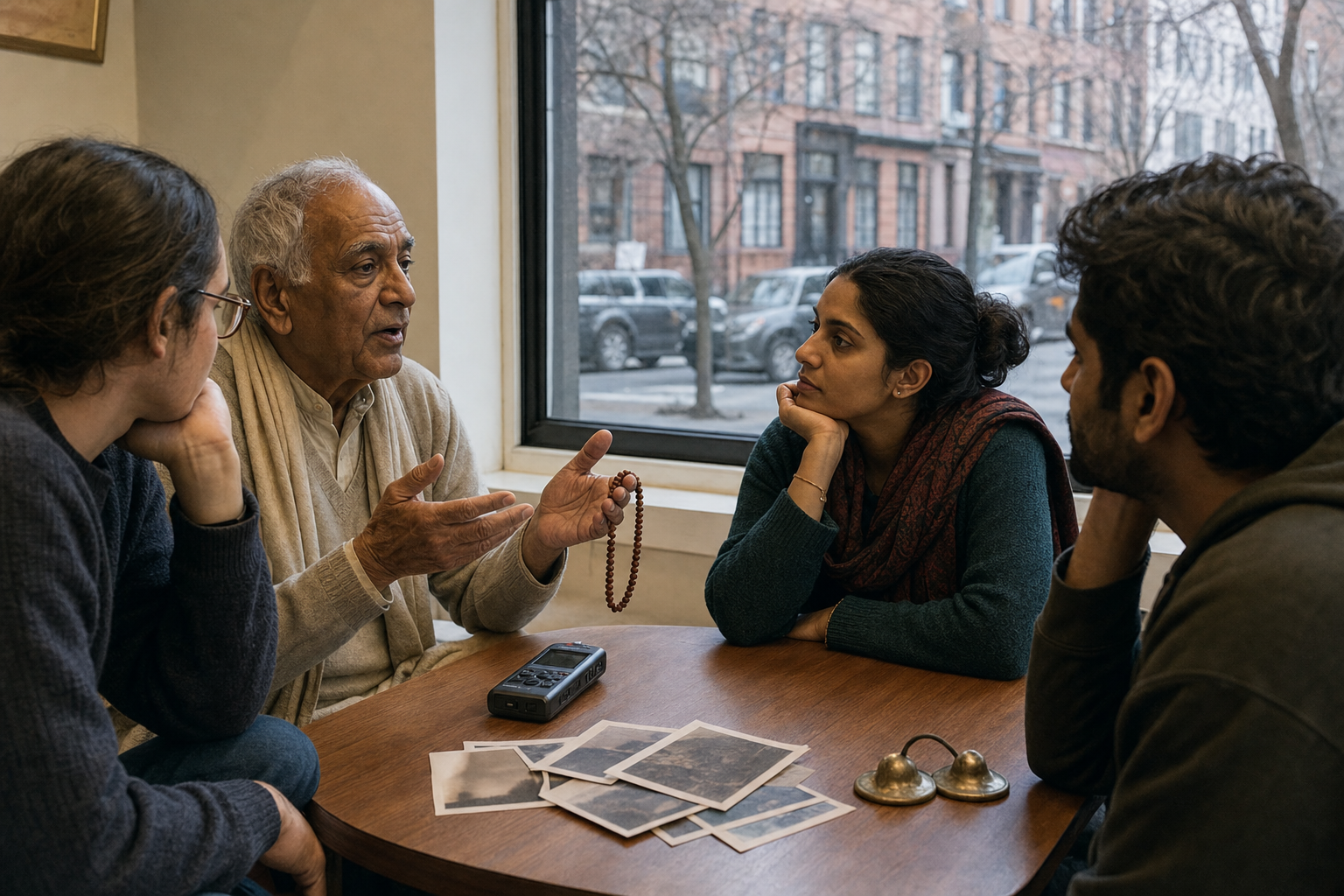
| Evening remembrance | Sessions were scheduled from 6:00 p.m. to 9:00 p.m., with senior devotees speaking in person and other contributors joining through recorded classes. | Personal testimony links later generations to people who remember formative periods directly. |
| Prasadam | The source said prasadam would be served after the programs. | Hospitality and shared sacred food make fellowship part of the historical observance. |
| Sacred Places Bus Tour | A tour was planned for Saturday, July 11, from 10:00 a.m. to 1:00 p.m., with Rama Raya dasa identified as guide and senior devotees among the participants. | The tour interprets the Lower East Side as a landscape of devotion, hardship and spiritual transmission. |
The same report placed the evening program on July 11 at the Bhakti Center, with HH Radhanath Swami and Yadunath das and a play about ISKCON’s incorporation. It also listed a July 13 address by HH Radhanath Swami focused on the future. Together, these elements create a movement from founding place, through remembered experience, toward questions of continuity.
Because the supplied account describes a planned program rather than reporting completed events, its dates, appearances and activities should be read as announced intentions, not as confirmation that every element occurred as scheduled.
Key takeaways
- The reported celebration places ISKCON’s founding location, rather than institutional scale, at the center of the anniversary.
- Harinam and the Sacred Places Bus Tour would reactivate history through movement across the neighborhood, not only through lectures about it.
- In-person recollections and recorded contributions create complementary channels for transferring living memory.
- Volunteer shifts and prasadam frame commemoration as devotional service and hospitality, not merely spectatorship.
How living memory becomes an inheritance
The source’s planned roster brought together Srila Prabhupada disciples, senior teachers and organizational voices. Among those named across the week were HH Candrasekhara Swami, Jadurani devi dasi, HH Jayadvaita Swami, Ramesvara dasa and HH Radhanath Swami. The report also anticipated video contributions from HH Mukunda Swami, Janaki devi and HH Satsvarupa das Goswami for those unable to attend because of distance or health constraints.
This combination matters because a movement’s history passes through more than one medium. A preserved building provides material continuity; recollections convey human experience; processions recover public practice; recordings extend participation beyond physical attendance. None is sufficient by itself, but together they can produce a fuller encounter with the past.
Personal recollection is especially valuable when its character is understood clearly. It can communicate atmosphere, relationships, sacrifice and motivation in ways that a chronology cannot. At the same time, each recollection remains a particular perspective. The anniversary’s long-term educational value would therefore be strengthened when testimony is carefully preserved, identified and placed alongside other historical records.
The planned bus tour applies the same principle to geography. By identifying places connected with Srila Prabhupada’s early New York years, it would make the surrounding city part of the historical narrative. An otherwise ordinary street or park can then be read in relation to teaching, chanting, struggle and community formation.
From remembrance toward responsibility
The report interprets ISKCON’s history as an example of a dharmic tradition entering a new cultural environment while retaining central practices. It specifically emphasizes chanting, worship, scriptural study, guru-shishya transmission, prasadam and service. In that framing, adaptation did not mean abandoning the movement’s devotional center; it meant finding ways for established practices to become intelligible and participatory in a different social setting.
An anniversary, however, cannot answer the future simply by reproducing the past. Its deeper test is whether remembrance renews the qualities associated with the founding story: humility, disciplined practice, scholarship, service and the ability to create community across cultural boundaries. The smallness of Matchless Gifts is relevant here because it suggests that enduring work need not begin with extensive resources or public recognition.
The reported decision to conclude the anniversary week with a discussion of the future is therefore significant. It positions the founding story as a source of criteria rather than an object of nostalgia. If the anniversary’s memories are preserved and translated into thoughtful practice, 26 2nd Avenue can continue to serve not only as the place where ISKCON began, but as a measure of how its next chapter is carried forward.