
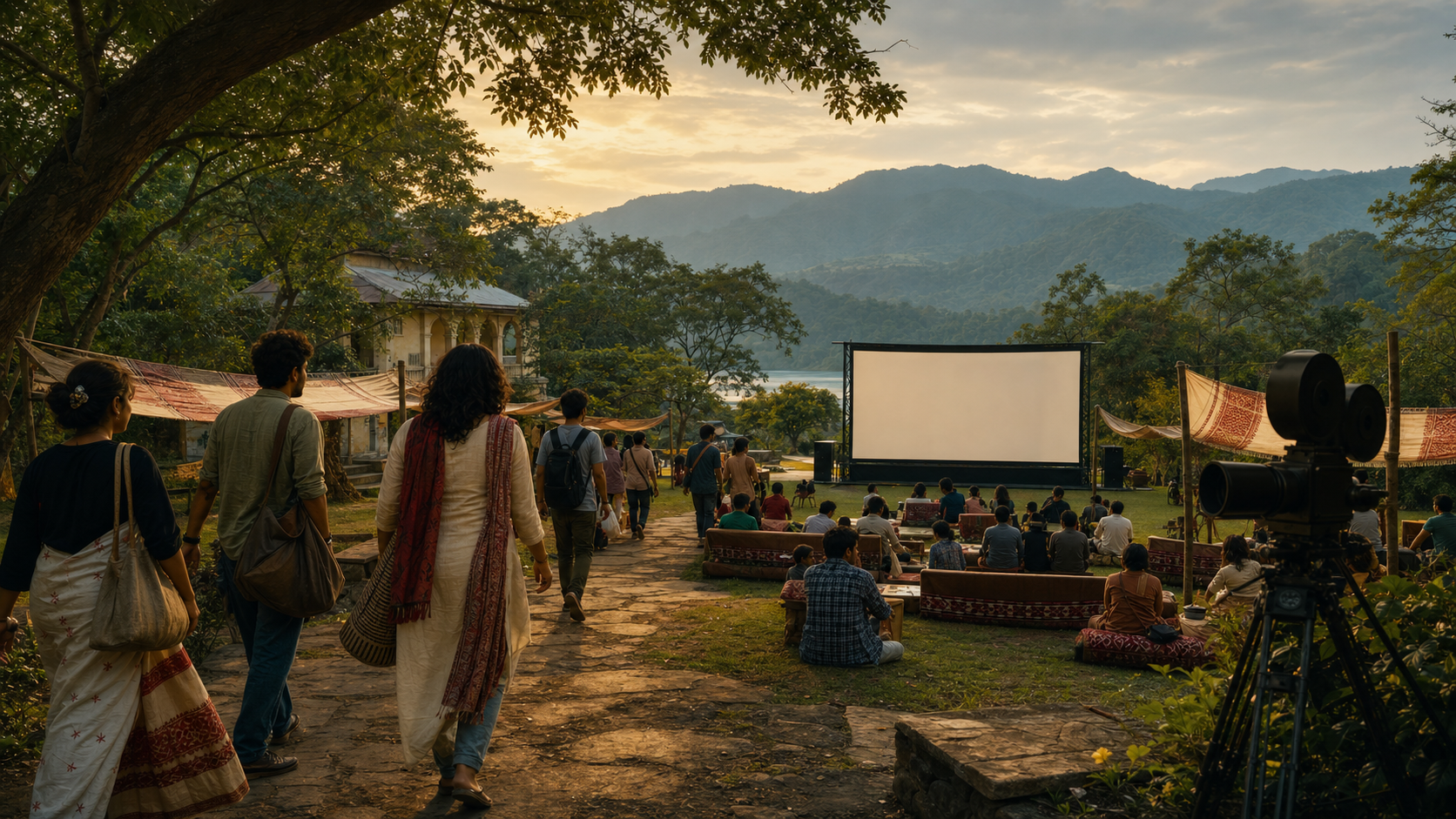
CNFF 2026 is scheduled for 24 and 25 October 2026 at the Jyoti Chitraban Film Society campus in Kahilipara, Guwahati, according to the supplied DharmaRenaissance report. Presented there as the tenth Chalachitram National Film Festival, it is intended to bring short fiction and documentary cinema into conversation with cultural memory, national life and contemporary social concerns.
The useful way to read the announcement is not merely as an event preview. Its history, thematic scope, regional emphasis, awards and eligibility rules together reveal what kind of filmmaking the festival seeks to encourage, while the account of its ninth edition offers clues about how that mandate may work on screen.
A national framework anchored in Guwahati
The source traces the festival to 2017, when it began as the Guwahati Film Festival under the guidance of Bharatiya Chitra Sadhana. It reportedly adopted the Chalachitram National Film Festival name in 2019 and expanded its national profile around the theme Our Heritage Our Pride. That progression indicates a shift from a venue-defined festival to one organised around a particular cultural proposition.
Guwahati nevertheless remains integral to that proposition. The report treats the North-East not as a peripheral setting but as a cultural landscape shaped by oral traditions, music, tribal communities, textiles, handicrafts, the tea economy and other distinctive forms of social memory. Locating a national festival there can place regional experience inside the wider account of Indian life without requiring it to shed its local character.
The award structure reinforces this relationship between region and nation. The report identifies a dedicated North-East India category alongside an All India category. This design gives films rooted in the region a defined competitive space while also connecting the festival to filmmakers and subjects from across the country.
A broad idea of heritage that includes present-day questions
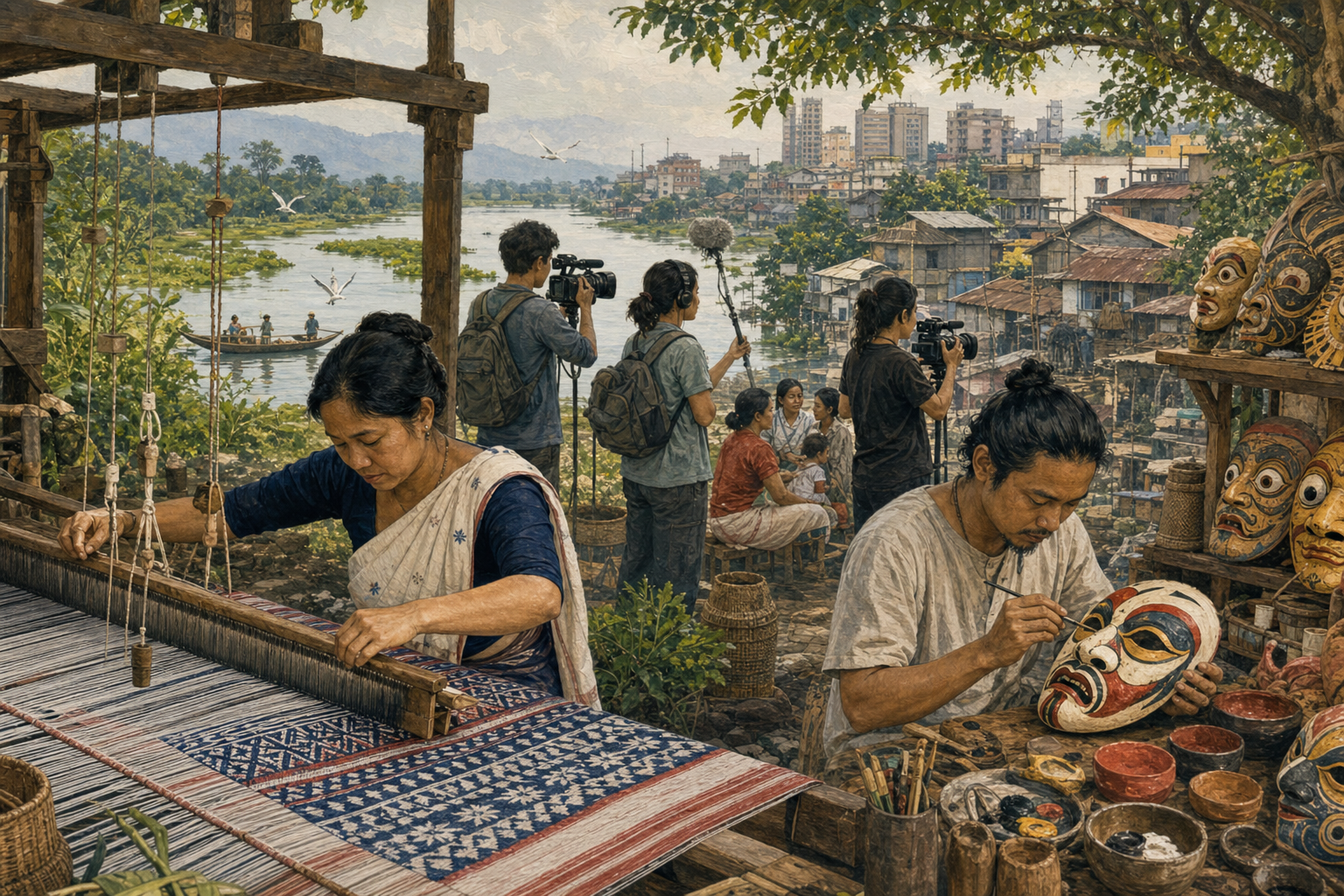
The festival’s reported subject range is unusually expansive. Civilisational memory appears through themes such as independence heroes, epics, mythology, manuscripts, monuments and historic sites. Living culture enters through music, festivals, traditional sports, painting, textiles, wood carving and other crafts. Yoga, meditation, Ayurveda and family values extend the framework into practices of wellbeing and social life.
The same framework also encompasses women’s empowerment, environmental questions, land and livelihoods, social reform, tourism, and the tea and oil industries, according to the source. This is an important editorial choice: heritage is treated not only as something inherited but also as something negotiated through work, family, ecology, technology and unequal access to dignity.
Such breadth creates both opportunity and a curatorial challenge. It allows filmmakers to approach culture through intimate human stories rather than ceremonial imagery alone. At the same time, the eventual selection will need to show how individual films connect their subjects to the festival’s central purpose; a long catalogue of eligible themes does not by itself produce a coherent programme.
Entry rules connect accessibility with technical evaluation
The supplied report says that the competition is open to both newcomers and professional filmmakers. Eligible films must run from one to 25 minutes, including credits, and must have been produced between 1 September 2025 and 1 September 2026. These limits favour concise work while leaving room for both short narrative films and focused documentaries.
| Submission phase | Dates reported | Fee reported |
|---|---|---|
| Early bird | 10-30 June 2026 | No fee |
| Regular | 1-20 July 2026 | Rs 500 |
| Final | 20 July-2 September 2026 | Rs 1,000 |
The regular period ends on 20 July and the final period begins on the same date in the source’s schedule. Entrants should therefore confirm how that boundary date is handled before paying or submitting. The report directs filmmakers to FilmFreeway or the festival email address, chalachitramne@gmail.com; because the event is prospective, applicants should verify the current rules through those channels before acting.
For the North-East India category, the report lists awards for best short feature, documentary, director, screenplay, cinematography and editing. In the All India category, it lists best short feature and best documentary. Winners are expected to receive trophies, certificates and cash prizes, although the supplied report does not specify the cash amounts. The combination of subject-led programming and craft awards suggests that cultural relevance is not intended to substitute for accomplished direction, writing, imagery or editing.
What the ninth edition suggests about the screen agenda

The source uses the ninth edition as evidence of the festival’s working priorities, reporting that more than 30 short features and documentaries were shown across competitive and non-competitive sections. The subjects described there can be read as a set of tensions that the tenth edition may continue to explore.
One tension lies between changing family structures and the need for emotional belonging. Films reportedly considered loneliness among older urban professionals, younger people’s growing distance from family and relationships, and the search for meaning or a peaceful life. The account also notes stories in which folklore and folk songs provide psychological support, presenting oral culture as a resource used in the present rather than a remnant displayed from the past.
A second tension concerns recognition and dignity. The previous programme reportedly included work about caste-based social structures, marginalised communities seeking a dignified life, and the experiences of slow-learning and disabled children. Placed within a heritage festival, such subjects imply that cultural reflection can include social criticism and practical responsibility, not only celebration.
A third tension connects continuity with adaptation. Films described in the report addressed marriage customs in a matrilineal society, beliefs involving witchcraft or malevolent spirits, Assam’s traditional string puppetry and the technological pressures facing an old textile tradition. These were subjects represented in films, not independently verified findings about the communities concerned. Their inclusion nevertheless shows how short cinema can bring anthropology, history and technological change into the same frame.
Key takeaways
- The supplied report positions CNFF as a national festival with a distinct focus on Indian heritage, social responsibility and the cultural life of the North-East.
- Its two-tier award design gives North-East entries six reported craft and film categories, while the All India section has reported awards for short fiction and documentary.
- Films must reportedly be one to 25 minutes long and fall within the specified production window; fees vary by submission phase.
- The ninth-edition account suggests that heritage at CNFF can encompass family change, disability, social dignity, folklore, traditional arts and the pressures of modern technology.
Before the October festival, the most consequential additions will be the selected-film slate, screening schedule, final jury details and prize amounts, none of which appears in the supplied account. Those disclosures will show whether the tenth edition can turn an exceptionally broad cultural mandate into a focused programme in which regional specificity, social inquiry and film craft strengthen one another.