
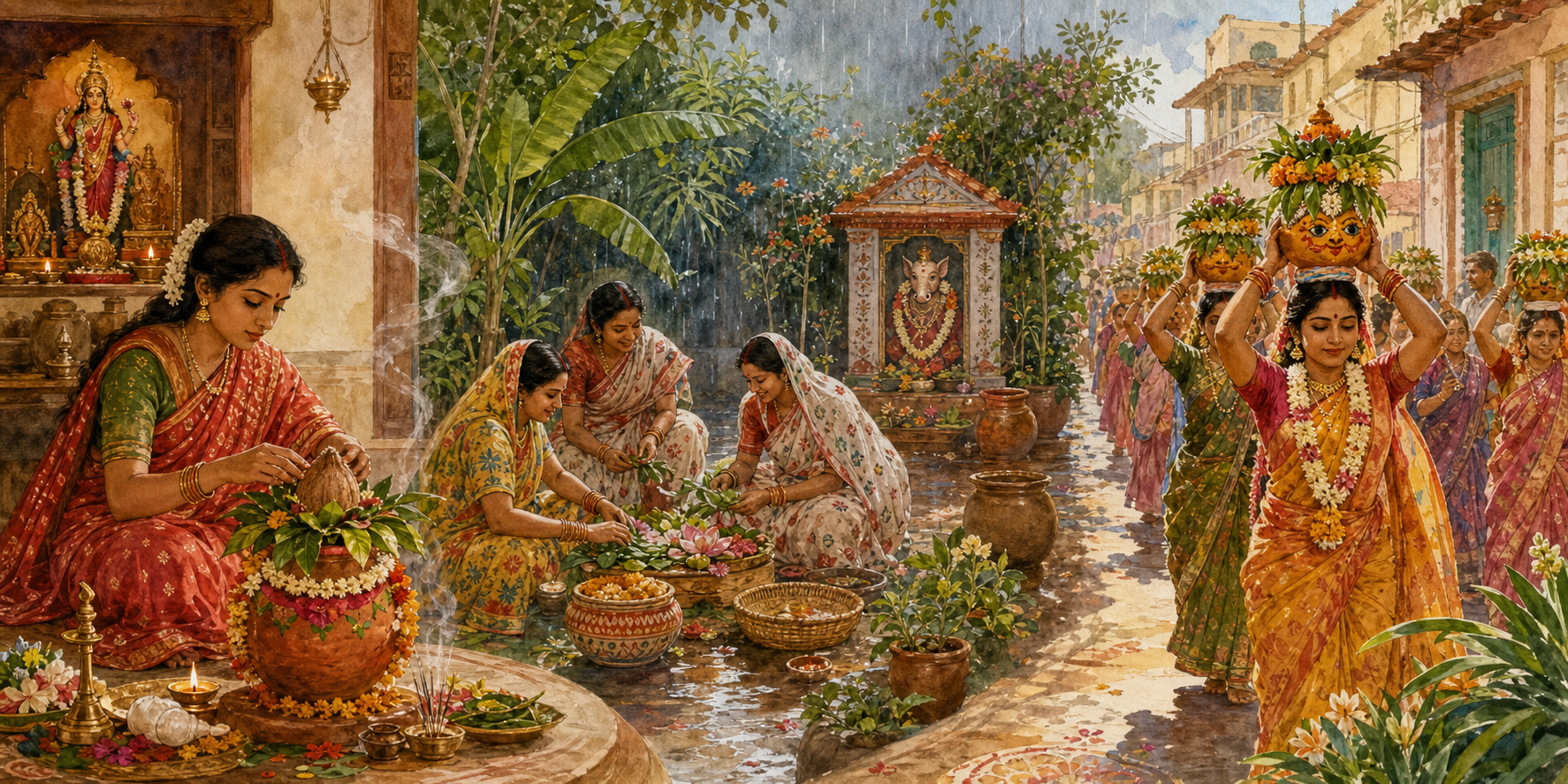
Goddess-centered Hindu traditions do more than attach a divine name to a local custom. They place sacred power within seasonal rhythms, family relationships, food preparation, storytelling, processional routes and community ideas of protection.
Read together, accounts of Varahi, Mithila’s Madhushravani and Telangana’s Bonalu reveal a continuum between theology and lived religion. Varahi supplies a language for understanding the fierce and plural forms of Shakti; Madhushravani locates devotion within monsoon ecology and kinship; Bonalu carries the Goddess from household kitchens into the streets and temples of a modern metropolis.
Many goddesses, one sacred power
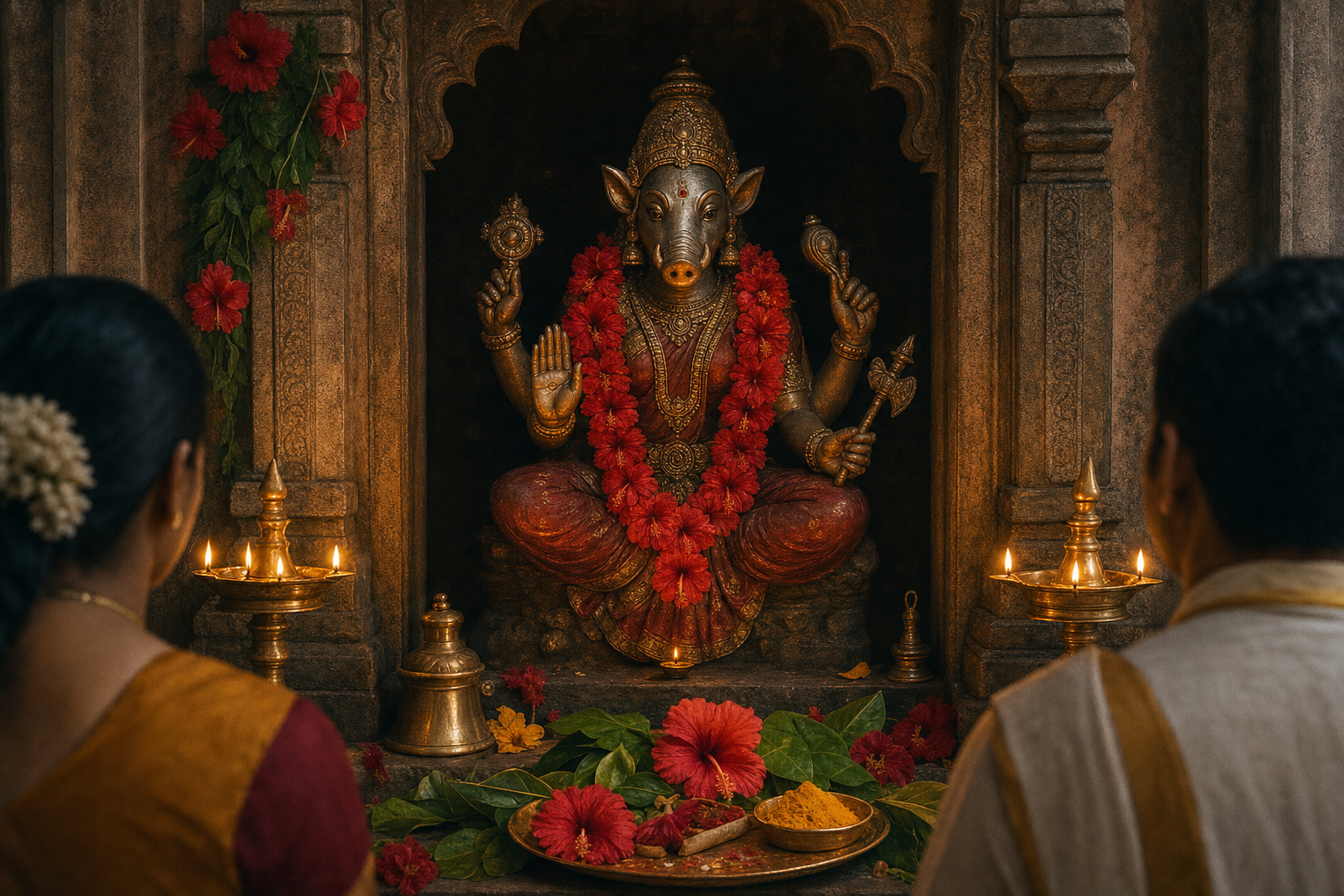
The relationship between divine unity and regional plurality is central to these traditions. The Varahi account identifies the boar-faced goddess as one of the Sapta Matrikas and as the Shakti associated with Vishnu’s Varaha incarnation. It reports that, in one strand of the Devi Mahatmya narrative, the Matrikas emerge as distinct powers during the conflict with demonic forces and are later absorbed back into the Goddess. Their plurality is therefore presented as differentiated action within an underlying divine unity.
The regional reports express a similar theological logic without making their goddesses interchangeable. The Bonalu guide describes Telangana devotion directed toward Mahankali and locally rooted forms including Yellamma, Pochamma, Maisamma, Muthyalamma and Peddamma. The Madhushravani report, by contrast, places Parvati at the center of a Maithil observance concerned with devotion, discipline and married life, while also incorporating reverence for Nag Devata and, in some local practices, Bishari Mata.
The comparison does not erase the distinctive identities of Varahi, Parvati, Mahankali or the local goddesses of Telangana. It shows instead how goddess-centered traditions can hold two ideas together: the Divine Mother exceeds any one form, yet a particular form acquires meaning through a community’s landscape, needs, stories and inherited relationships.
Story, food and movement make theology tangible
Each tradition gives sacred ideas a different ritual medium. Varahi is encountered primarily through narratives and symbols of protective force. The source connects her boar features with Varaha’s rescue of the earth and interprets her weapons and tusks as signs of discernment, the removal of confusion and direct resistance to hardened negativity. Its discussion of Raktabija and Andhakasura emphasizes a recurring problem: destructive forces can reproduce when their roots are not contained.
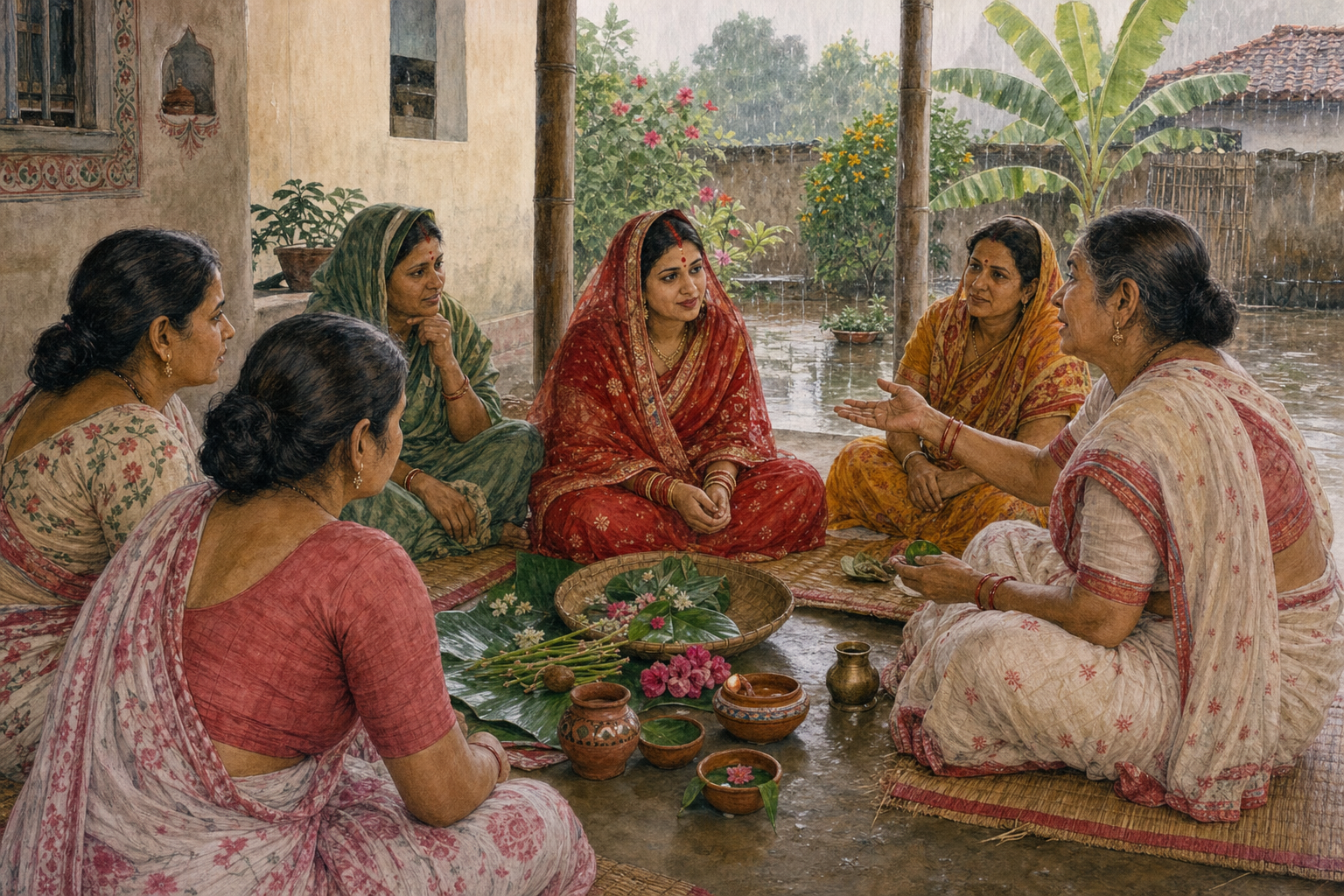
In Madhushravani, oral narration becomes a form of domestic religious education. The report says that vrat stories commonly address Shiva’s marriage, Gauri’s tapas, Nag worship, household conduct and auspicious married life. Songs, collective recitation and the participation of elders allow ethical and devotional knowledge to pass through intimate gatherings rather than through text alone. Dietary restraint, offerings and the preparation of prasad make the household kitchen part of the observance.
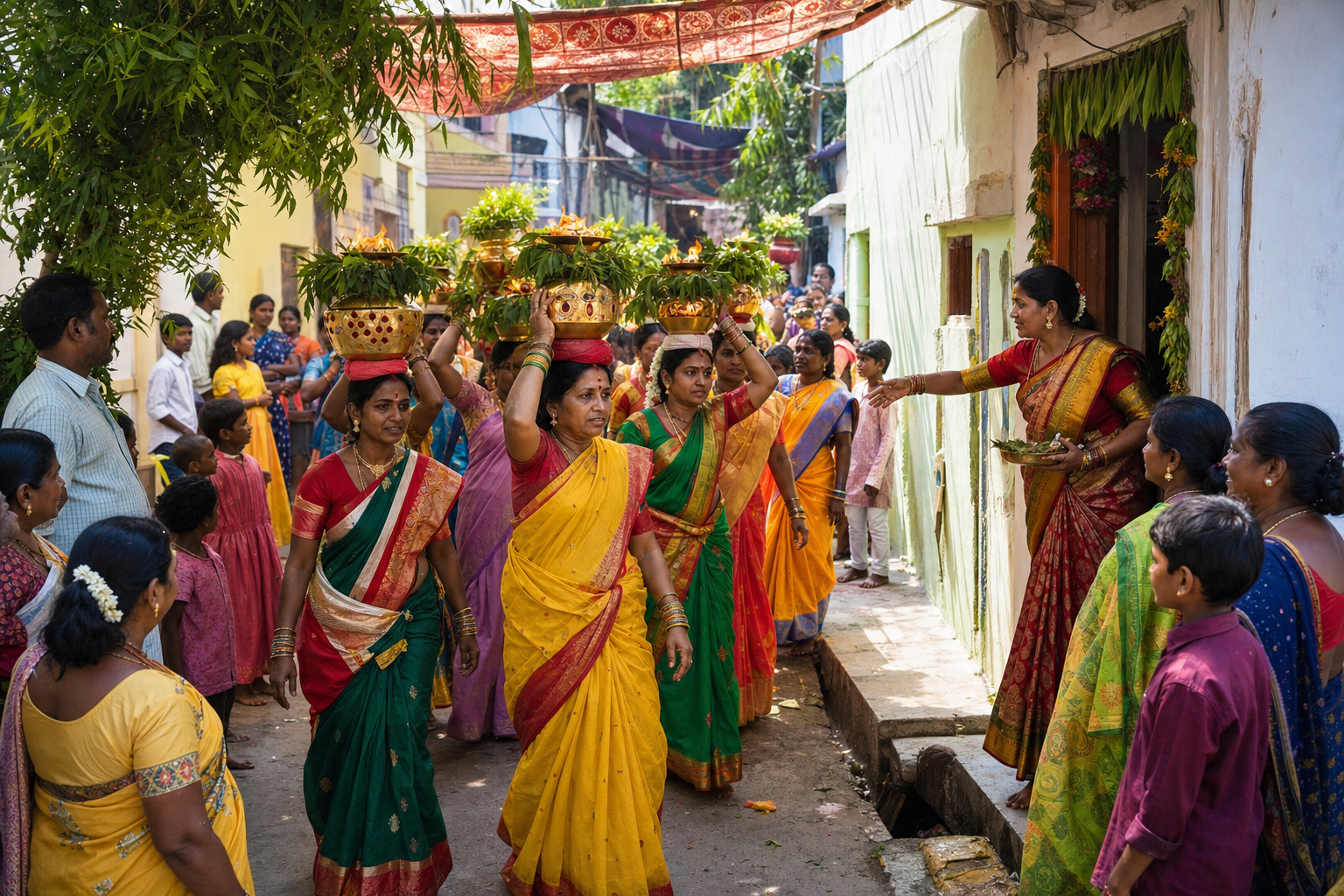
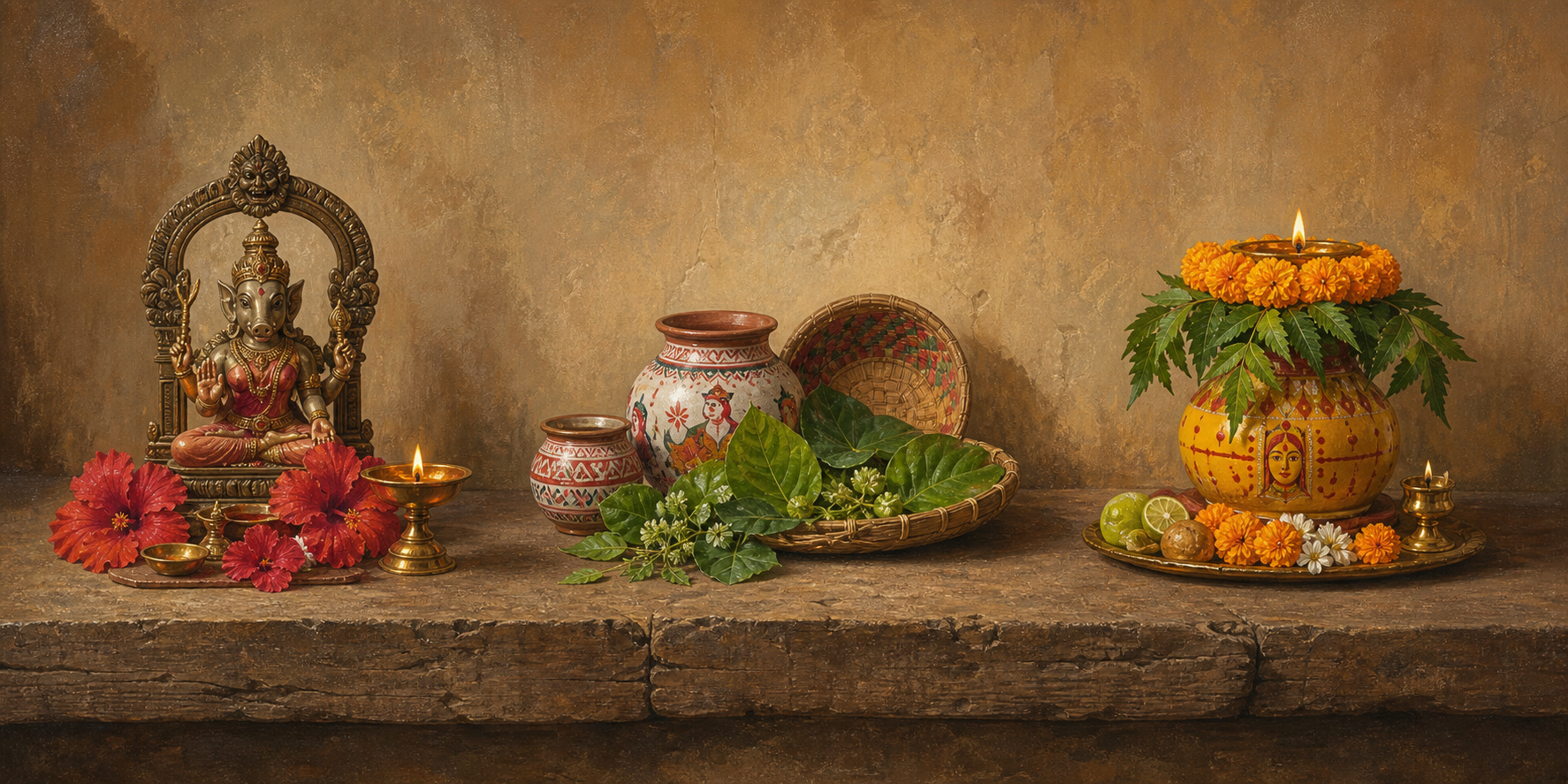
Bonalu gives food an especially visible public role. According to the guide, a Bonam generally contains rice cooked with milk and jaggery in a new brass or earthen pot decorated with turmeric, vermilion, neem leaves and often a lamp. Women carry the offering from home through crowded streets to a Mahankali temple. The Ghatam procession similarly represents the Goddess through a decorated vessel, while drums and Pothuraju’s energetic performance give protective devotion a collective rhythm. Rangam, reported as an oracular observance involving a woman associated with the temple tradition, introduces another medium through which devotees receive the Mother’s guidance.
These practices also organize three different kinds of sacred space. Varahi’s imagery operates at a cosmic scale through earth protection and the restoration of order. Madhushravani joins the household to Mithila’s monsoon landscape through reverence for serpents, subterranean water, fertility and non-human life. Bonalu creates an urban sacred map across Golconda, Secunderabad, Hyderabad’s Old City and numerous neighborhood shrines. Regionality is therefore not decorative background; it shapes how protection is imagined and enacted.
Women’s ritual agency takes more than one form
The three accounts resist a narrow picture of divine motherhood as passive gentleness. Varahi is a combatant and guardian whose fierceness is directed against adharma. Madhushravani invokes Parvati not only as a wife but as a figure of tapas, steadiness and conscious resolve. Bonalu places women’s embodied labor and devotion at the center of a major public festival.
That agency operates differently in each setting. The Madhushravani report associates the observance especially with newly married Maithil women, often during a stay at the parental home. Gifts and ritual materials sent from the marital family connect two households, while mothers, daughters, sisters and elders sustain songs and stories. The bride’s vrata is personal, but its performance creates a wider network of kinship and memory.
Bonalu moves women’s devotion into public space. The guide presents the balancing and carrying of the Bonam as the theological center of the festival rather than as a decorative contribution. Household preparation reaches fulfillment through procession, temple offering and darshan. The reported role of a woman in Rangam adds an oracular dimension alongside the protective, masculine performance of Pothuraju.
These roles should not be collapsed into a single model of empowerment, nor does goddess worship by itself establish one uniform social arrangement. What the sources do demonstrate is that women act as vow keepers, storytellers, singers, bearers of offerings and, in some settings, voices of sacred counsel. Their participation connects domestic continuity with public religious life.
Key takeaways
- Regional goddess traditions combine divine plurality with an underlying language of Shakti; local distinctiveness and theological unity need not cancel each other.
- Protection changes scale across the traditions, from Varahi’s defense of cosmic order to monsoon-centered household reverence in Mithila and neighborhood guardianship in Telangana.
- Stories, food vessels, songs, vows, processions and oracular performance are not secondary embellishments; they are the means through which theology becomes socially present.
- Women sustain these traditions through several forms of ritual authority, including household discipline, oral transmission, public offering and sacred speech.
- Differences among textual versions, family customs and local schedules are important evidence about living transmission rather than defects to be silently standardized.
Preservation should retain variation, not flatten it
Each source contains multiple layers of memory. The Varahi article places accounts from the Devi Mahatmya, Vamana Purana, Varaha Purana and Matsya Purana beside one another, noting variations in origins, battles and vehicles. The Madhushravani report describes differing durations for the vrata and advises attention to local panchang, calendar reckoning, family tradition and temple custom. The Bonalu guide preserves a popular nineteenth-century epidemic narrative while also reporting discussion of a Vijayanagara-period Telugu inscription that may point to related practice in Telangana by at least the sixteenth century.
Taken together, these cases suggest a practical approach to cultural documentation. A useful record should identify the locality, narrator or performer, ritual sequence, calendar basis and practitioners’ interpretation instead of forcing every account into one authorized chronology. Textual history, oral memory and contemporary observance answer different questions and can be preserved side by side.
Future documentation will be strongest when it keeps theology, women’s voices, ecological setting and local performance together. That approach can help regional traditions remain intelligible across generations without freezing them into a uniform script.
References
- DharmaRenaissance Blog – Varahi Devi Katha: Powerful Story, Symbolism, and Sacred Lessons of Varahi Mata
- DharmaRenaissance Blog – Madhushravani Tritiya 2026: Powerful Date, Rituals, and Sacred Mithila Meaning
- DharmaRenaissance Blog – Bonalu 2026 Guide: Powerful Mahankali Jatara Dates, Rituals and Heritage