

Disputes over the Indus Waters Treaty are often presented as arguments about water allocation. The supplied account describes a more complicated contest in which treaty language, Himalayan engineering and dispute procedure determine whether a formally permitted hydropower project can be built on predictable terms.
Reading the reported cases together clarifies the central issue: a favourable ruling does not erase the cost of prolonged uncertainty, while a technical objection can raise legitimate safety or ecological questions and still have strategic consequences. Because the supplied material consists of one publication’s analysis, its descriptions are attributed below and should not be treated as independently corroborated reporting.
Key takeaways
- The source reports that the 1960 treaty assigned India unrestricted use of the Ravi, Beas and Sutlej, while giving Pakistan priority over the Indus, Jhelum and Chenab subject to specified Indian uses.
- The route chosen for resolving an objection matters: technical differences can go to a Neutral Expert, whereas broader legal disputes can reach a Court of Arbitration.
- In the reported Baglihar determination, India’s basic design position survived review, although particular features had to be modified.
- In the reported Kishanganga award, India retained the right to proceed with diversion for hydropower, but became subject to downstream-flow and operational restrictions.
A river allocation became an engineering rulebook
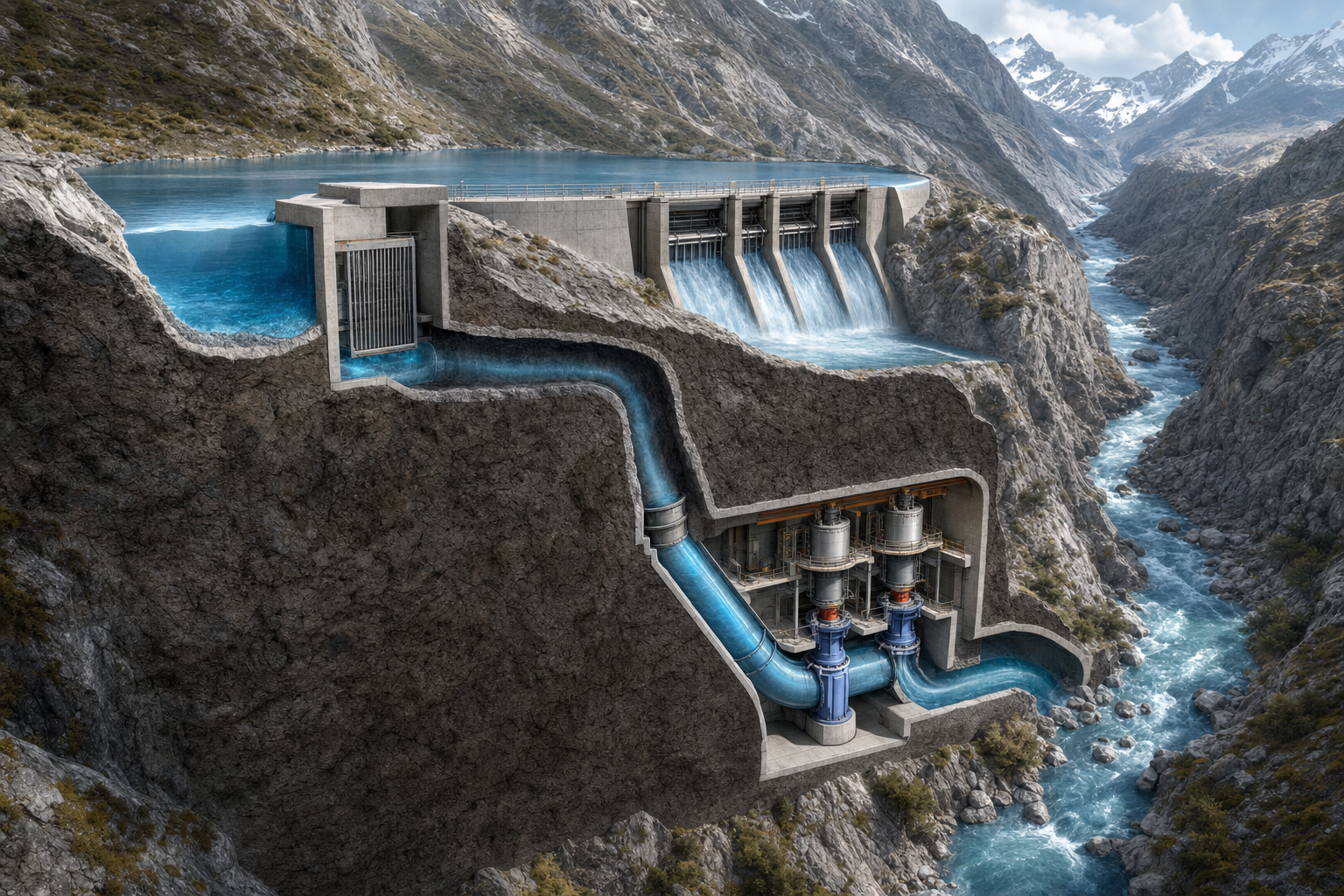
According to the source article, the treaty was signed in 1960 after Partition had divided a connected river and canal system between India and Pakistan. India received unrestricted use of the three eastern rivers. Pakistan received priority over the three western rivers, while India retained carefully defined rights that included non-consumptive uses, run-of-the-river hydropower and limited irrigation.
This allocation did not make infrastructure politically neutral. Rivers carry glacial melt, sediment and seasonal flood pulses across borders, while dams and power stations depend on such details as intake elevation, spillway configuration, freeboard and pondage. A feature that an engineer regards as necessary for safety or sediment management may be viewed downstream as creating prohibited control over water. The legal dispute therefore begins inside the design drawing rather than only in diplomatic statements.
The treaty’s institutional structure is consequently as important as its river allocation. The supplied article identifies the Permanent Indus Commission as the first forum for technical engagement and describes escalation routes for unresolved questions, differences and disputes. A Neutral Expert is intended to address technical differences, particularly engineering specifications. A Court of Arbitration deals with wider legal disputes. How an objection is classified can affect the scope, duration and uncertainty of the resulting proceeding.
Why procedure can acquire strategic value

The article’s principal argument is that delay can function as leverage even when India ultimately retains its central legal entitlement. As the upper riparian on the western rivers within Jammu and Kashmir, India must fit projects within treaty restrictions and provide design information. Pakistan, as the downstream beneficiary of those rivers, can challenge features and seek international review. The source characterises the resulting burdens as asymmetric: India can face construction delays, cost escalation, deferred electricity generation and regional-development consequences, while the cost to Pakistan of an unsuccessful objection may be more limited.
That argument requires an important distinction between procedural effect and demonstrated motive. The reported proceedings show that objections can prolong uncertainty and alter projects. The supplied excerpt does not independently establish that every objection was brought in bad faith, quantify the total cost attributable to each proceeding or prove what the construction schedule would have been without a challenge. Legitimate review and strategic use of procedure are not mutually exclusive possibilities, but they should not be treated as identical claims.
For infrastructure, the practical result of a case depends on more than its final ruling. Surveys, financing, tunnelling, civil construction, equipment installation, commissioning and grid integration form an interdependent sequence. Uncertainty at one stage can affect the rest. A state may therefore prevail on treaty interpretation yet still bear substantial developmental consequences before that interpretation becomes settled.
Baglihar and Kishanganga tested different boundaries
| Project | Reported procedure | Central outcome reported by the source | Reported limits or changes |
|---|---|---|---|
| Baglihar, a 450 MW run-of-the-river project on the Chenab | Neutral Expert; Professor Raymond Lafitte was appointed in 2005 and issued his determination in 2007 | The overall design and India’s use of modern engineering were upheld | Freeboard and pondage were reduced, and the power intakes were raised |
| Kishanganga, a 330 MW project involving the Kishanganga or Neelum and release into the Jhelum system | Court of Arbitration; the source cites the 2013 final award | India was allowed to proceed with the project and its hydropower diversion | A minimum downstream flow was required, and depletion below dead storage for sediment flushing was restricted |
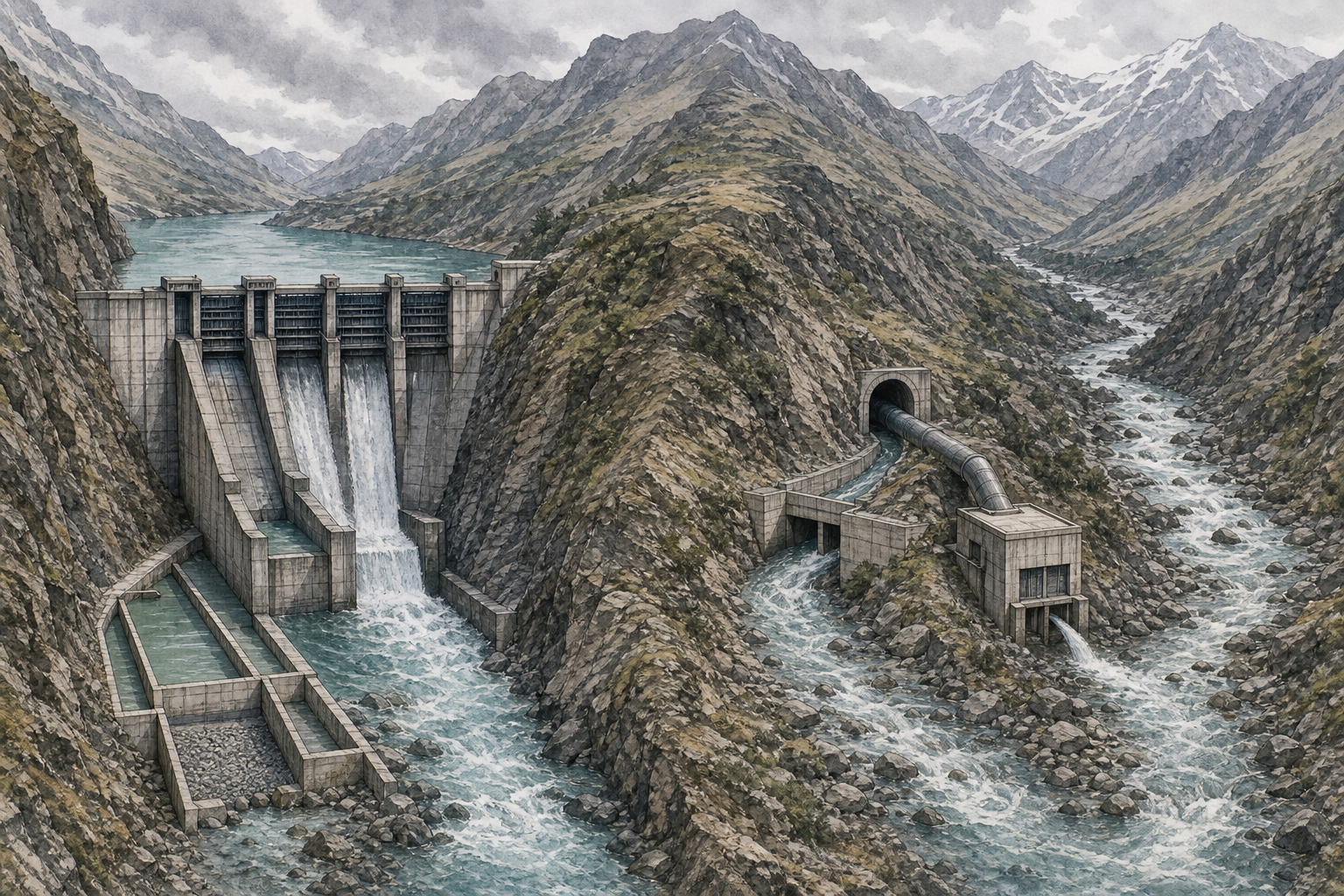
Baglihar centred on design questions including spillway gates, pondage, freeboard and the height of power intakes. The source reports that the Neutral Expert upheld the project’s essential design while requiring limited adjustments. It interprets that determination as recognition that a treaty drafted in 1960 cannot be applied without regard to modern dam safety, sediment control and the demanding conditions of Himalayan rivers.
The precedent was nevertheless mixed in strategic terms. India preserved the core of its project, but only after an international technical proceeding. The case showed that expert review could validate treaty-compliant development; it also demonstrated that a project could remain exposed to delay even when the principal challenge did not succeed.
Kishanganga moved the disagreement beyond individual design specifications. Pakistan challenged both the diversion of water for power generation and aspects of project operation. According to the supplied account, the Court of Arbitration allowed India to proceed and accepted the diversion, while also requiring a minimum downstream flow and limiting drawdown below dead storage for sediment flushing.
The two cases therefore illuminate different treaty boundaries. Baglihar concerned how permitted hydropower may be engineered safely. Kishanganga addressed what a permitted project may do to river flow and how it may be operated. Together, they show that neither a simple Indian victory nor a simple Pakistani victory adequately describes the reported outcomes: substantive construction rights survived, but design or operational discretion was constrained.
Separating entitlement, compliance and process effects

A clearer reading of future disputes requires three distinct questions. The first is entitlement: whether the treaty permits the proposed use, construction or diversion. The second is compliance: whether the project’s particular dimensions and operating rules satisfy treaty conditions. The third is procedural effect: how long review takes, what uncertainty it creates and whether the eventual remedy is proportionate to the issue raised.
Collapsing these questions produces misleading political conclusions. A required design change does not necessarily invalidate the underlying project. Permission to construct does not mean every proposed feature is lawful. Nor does an unsuccessful objection prove that scrutiny itself was unnecessary. Baglihar and Kishanganga, as presented by the source, are best understood as mixed determinations that preserved important Indian rights while defining limits around their exercise.
This framework also helps identify the source article’s wider strategic concern without adopting its thesis uncritically. If objections routinely migrate from focused engineering review into expansive legal proceedings, procedure may deter or slow otherwise permitted development. If review is too narrow or hurried, however, it may fail to address genuine downstream, ecological or safety concerns. The durable objective is not the absence of scrutiny but scrutiny that is technically credible, properly classified and capable of reaching closure.
Making dispute resolution exacting but finite
As a policy inference rather than a description of an existing treaty rule, a more resilient system would isolate technical questions early, define the scope of review precisely and record the time and development costs associated with each contested feature. Safety, sediment management, environmental flow and legal entitlement require different evidence; treating them as one undifferentiated sovereignty dispute invites escalation.
Greater procedural discipline would not decide substantive questions in India’s or Pakistan’s favour. It would make the consequences of an objection more proportionate and transparent while preserving downstream review. The next test of the treaty’s durability is therefore whether it can accommodate modern engineering and ecological concerns without turning every project into an open-ended legal contest.