
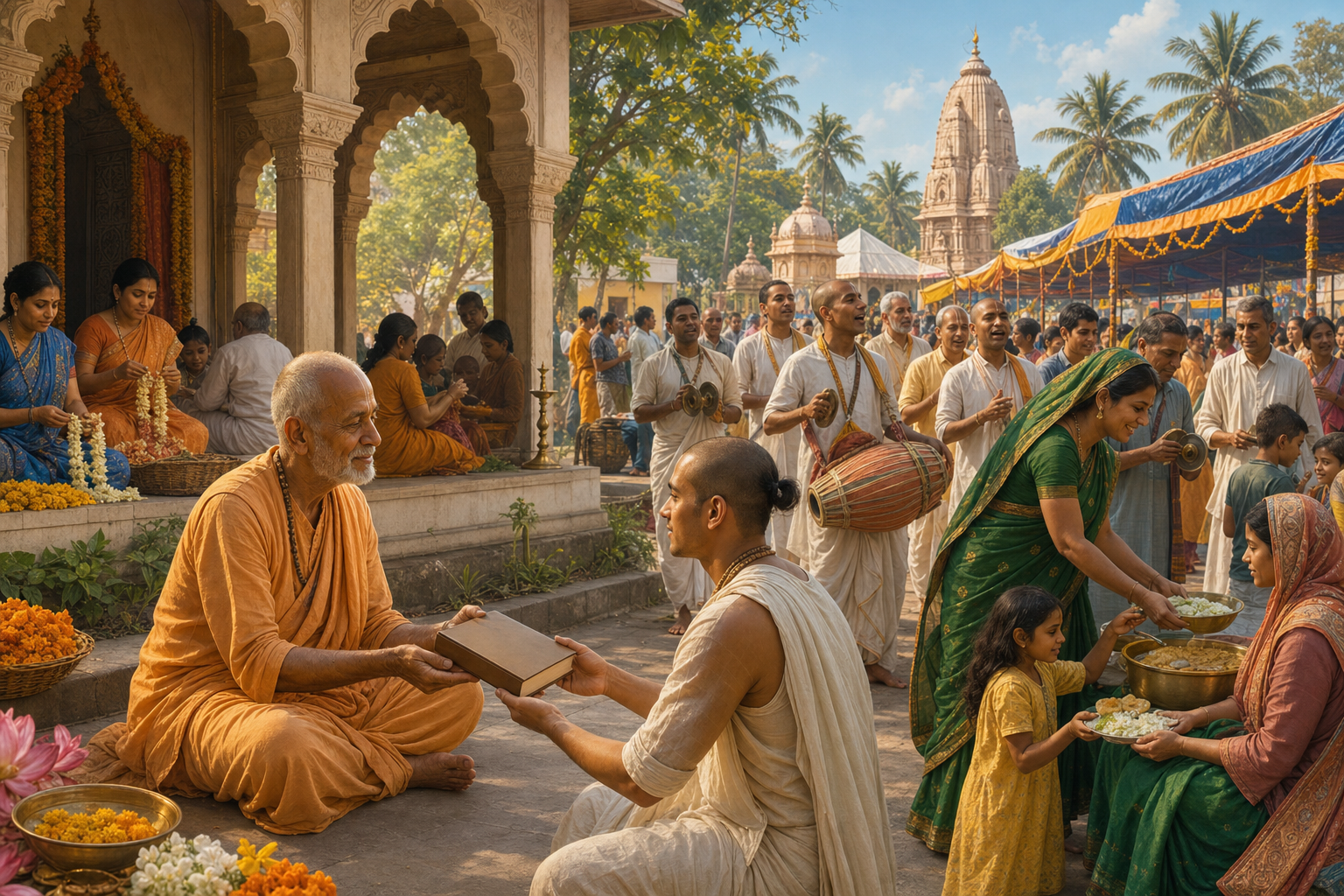
Two commemorations illuminate ISKCON’s legacy at very different scales. An 80th Vyasa Puja observance for Tamal Krishna Goswami in Mayapur centers on the bond between teacher, disciple, and disciplic succession; a festival announced for Guyana gathers several institutional and community anniversaries into a public account of continuity.
Read together, the sources show that lineage is not preserved by names and anniversaries alone. It remains credible when received teachings become disciplined service, durable institutions, shared rituals, honest historical memory, and opportunities for a new generation to participate.
Lineage is a relationship of transmission and responsibility
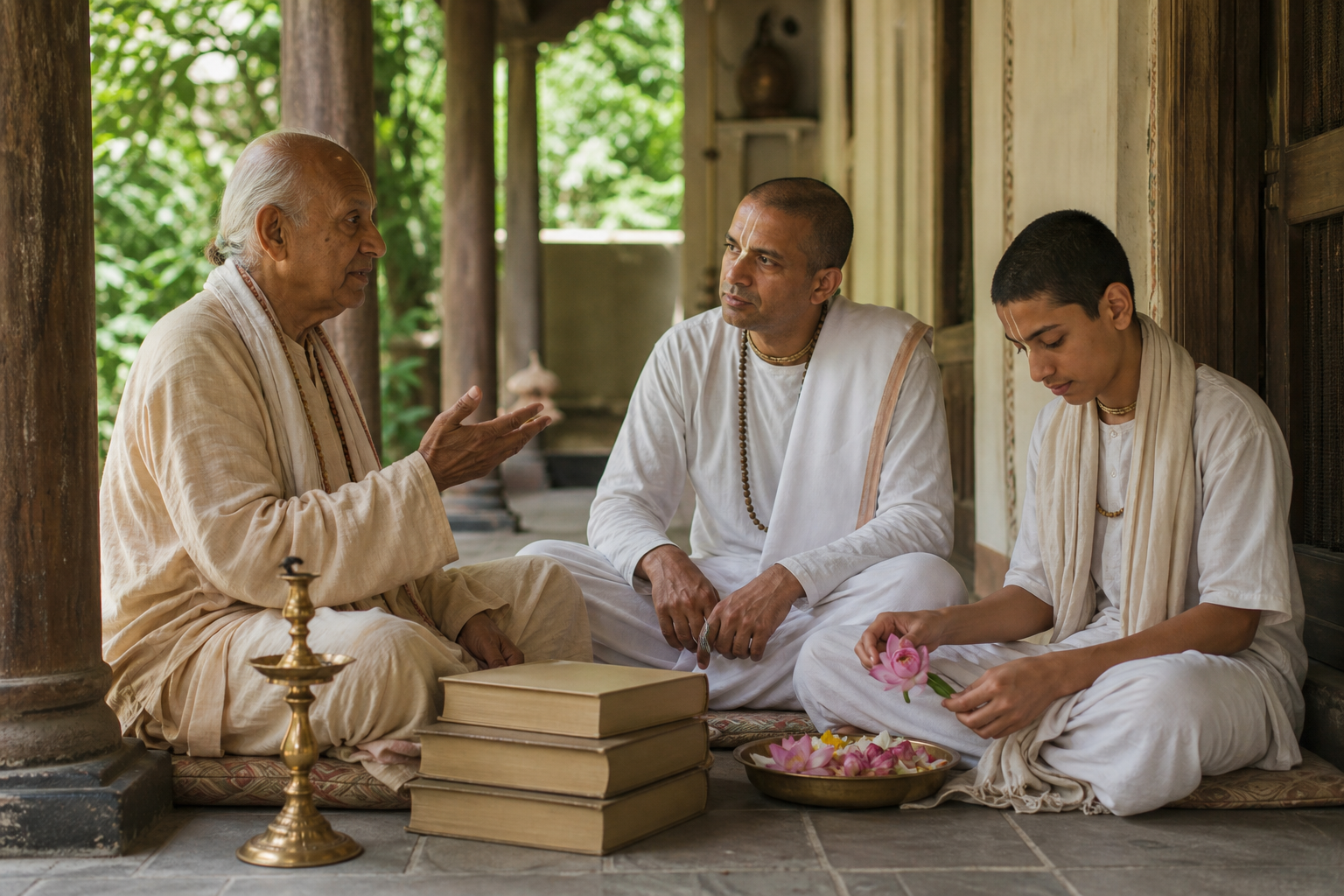
The Mayapur reflection on Tamal Krishna Goswami’s Vyasa Puja explains lineage through the Gaudiya Vaishnava idea of parampara. In that framework, the spiritual master is honored as a representative in a disciplic succession associated with Vyasadeva, rather than as an isolated celebrity. The observance therefore directs attention beyond the teacher’s personality to the knowledge received, practiced, and passed forward.
The Guyana festival report approaches the same inheritance institutionally. It locates A.C. Bhaktivedanta Swami Prabhupada’s founding of ISKCON in New York City in 1966 at the beginning of a global movement sustained through scriptural teaching, chanting, temple worship, book distribution, prasadam, festivals, and community service. Both accounts thus present Prabhupada’s mission as the common reference point and connect continuity with the Bhagavad Gita, Srimad Bhagavatam, devotional practice, and education.
This convergence clarifies what lineage means in practice. The theological chain establishes the source and orientation of teaching, while institutional life provides the settings in which people can hear, test, embody, and transmit it. Without the former, an institution can lose its spiritual center; without the latter, lineage may remain an honored idea without a dependable social form.
One disciple’s service and one community’s growth
The Mayapur article presents Tamal Krishna Goswami as a close disciple of Prabhupada who undertook institutional, pastoral, scholarly, and missionary responsibilities. It gives particular weight to his service during Prabhupada’s later years and portrays that relationship as disciplined work under instruction. Administration, travel, correspondence, teaching, study, correction, and perseverance all become expressions of bhakti rather than distractions from it.
The Guyana report follows a different unit of history: the local community across several generations. It announced a July 8-12, 2026 festival intended to mark 60 years of ISKCON, 50 years of ISKCON in Guyana, 20 years of organized preaching service in Georgetown, East Coast Demerara, and East Bank Demerara, 20 years of regional Ratha-yatra celebrations, and 10 years since the Hare Krishna Study Centre’s inauguration. These are milestones reported by the source as part of the festival program, not independently verified findings.
The two perspectives are complementary. The account of Tamal Krishna Goswami illustrates how a disciple receives responsibility and helps carry a founder’s mission. The Guyana account illustrates what happens when such a mission acquires local roots through families, volunteers, teachers, youth, worshippers, and congregational care. One emphasizes personal stewardship within a vertical lineage; the other reveals the horizontal relationships required to make that inheritance durable.
Guyana also adds a diaspora dimension. The festival report describes Hindu continuity there through temple life as well as food, music, family observance, sacred narrative, village experience, and public celebration. Its account suggests that ISKCON’s global identity does not eliminate local culture. Transmission instead involves adaptation: inherited Vaishnava practices become rooted in a particular community while remaining connected to a transnational institution.
Ritual turns institutional history into shared memory
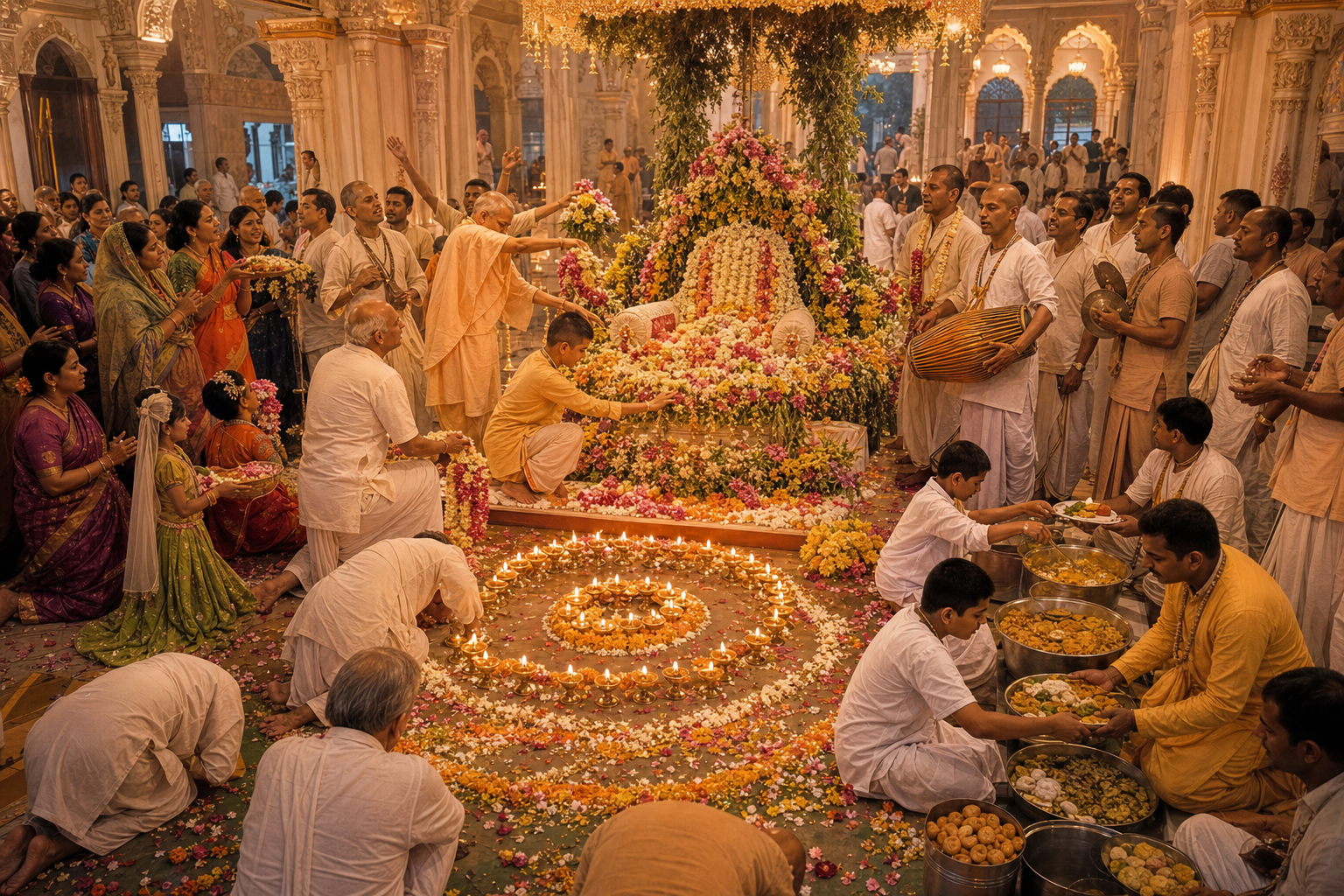
Neither source treats commemoration as the passive preservation of information. At Vyasa Puja, offerings, testimony, listening, chanting, and collective remembrance make biography part of devotional formation. Participants learn what the community honors by hearing how a teacher served and by considering how that example should affect their own conduct.
The Guyana report describes a more outward-facing form of memory. Its planned program included a 20th annual local Ratha-yatra on July 11, with the deities Jagannatha, Baladeva, and Subhadra brought into public space amid kirtan, dancing, and communal participation. The source also connects ISKCON’s international Ratha-yatra tradition to a festival introduced outside India by Prabhupada in San Francisco in 1967. In this setting, a global institutional history is retold through a locally organized procession.
These observances teach through different forms. Vyasa Puja organizes memory around gratitude to a teacher and fidelity to parampara. Ratha-yatra communicates through sacred image, sound, movement, hospitality, and access to public space. The Study Centre, which the Guyana article says was inaugurated in July 2016, adds regular worship, learning, youth activity, cultural education, congregational care, and prasadam distribution between major festivals.
The contrast between Mayapur and Guyana is especially instructive. The Mayapur observance circulates through a live digital broadcast, allowing remembrance to cross geographical distance. The Guyana procession carries devotion through streets and community gathering places. One extends sacred memory through media; the other gives it public, physical form. Both depend on active participation if commemoration is to become practice rather than religious content consumed at a distance.
Key takeaways
- ISKCON’s lineage joins theological succession to practical responsibility: teachings are preserved by being studied, embodied, served, and transmitted.
- Tamal Krishna Goswami’s reported roles show the personal demands of stewardship, while Guyana’s milestones show how that service becomes multigenerational community life.
- Vyasa Puja, Ratha-yatra, temple education, prasadam, and kirtan function as forms of institutional memory as well as devotional practice.
- Anniversaries indicate endurance, but the deeper tests of legacy are accountability, truthful remembrance, trained service, and meaningful participation by future generations.
Institutional continuity requires more than celebration
The Mayapur article explicitly cautions against reducing spiritual biography to uncritical legend. Its argument for honest and textured remembrance is important for any institution shaped by revered founders and influential disciples. Respect for lineage need not exclude examination of historical pressures, difficult responsibilities, personal sacrifice, or the consequences of leadership decisions. Indeed, accountability helps distinguish fidelity to a tradition from loyalty to an idealized image.
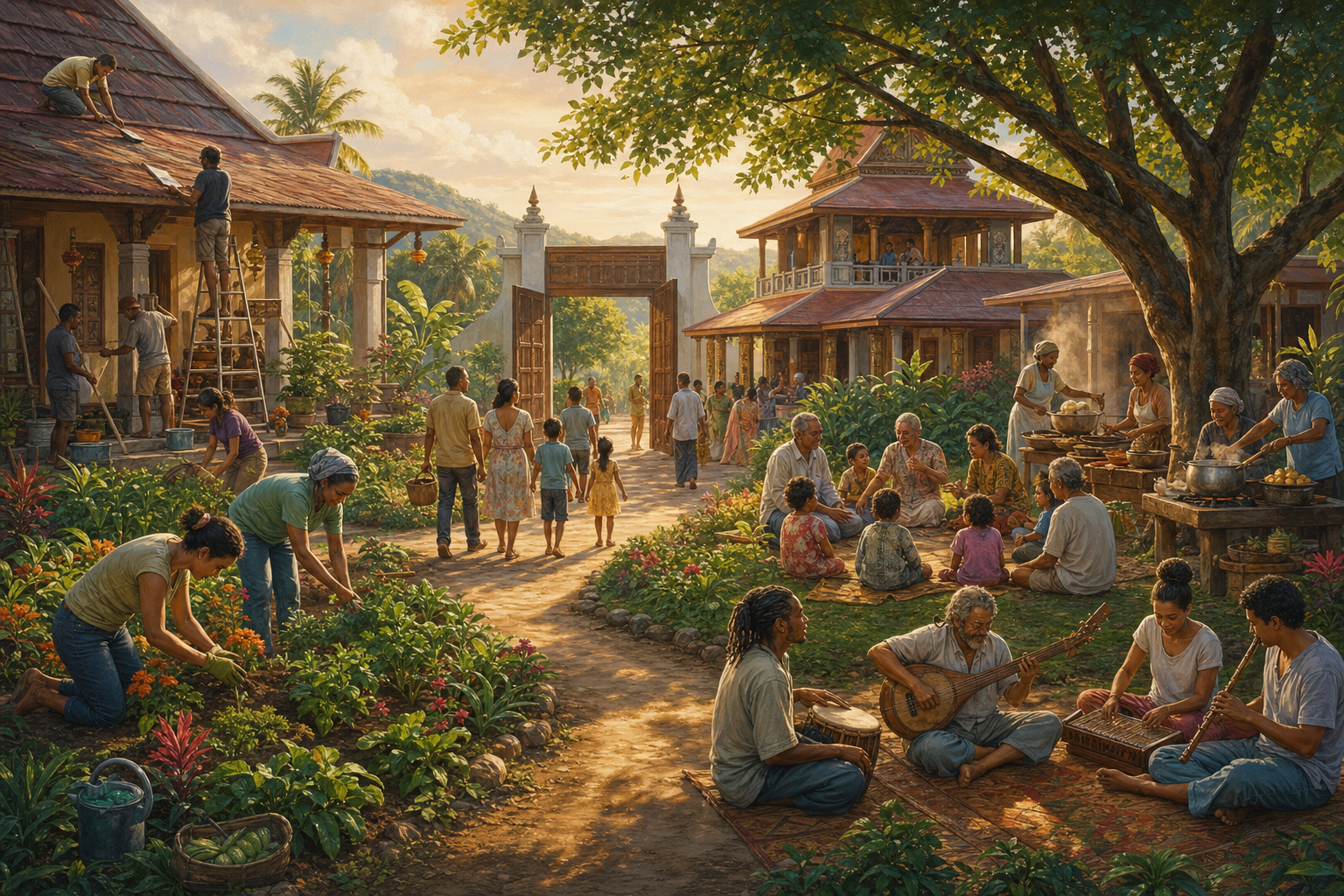
The Guyana report supplies the corresponding lesson at the community level: buildings alone do not make a religious institution meaningful. Its account credits patient teaching, regular worship, home programs, pastoral care, children’s activities, youth mentorship, volunteering, and service maintained despite limited resources. A centre becomes a spiritual home only when a community repeatedly animates it.
Scholarship is another part of this responsibility. The Mayapur source resists a separation between intellectual rigor and devotion, while the Guyana source portrays the Study Centre as both a place of worship and a classroom. Together they imply that institutional maturity requires communities able to explain their teachings, examine their history, form responsible leaders, and connect knowledge with conduct.
ISKCON’s next chapter will depend on whether commemorative energy can continue to produce those capacities. Digital access can widen the circle of memory, and public festivals can welcome new participants, but enduring lineage will be measured by the quality of teaching, service, governance, and community relationships carried forward after the anniversary programs end.
References
- DharmaRenaissance Blog – Tamal Krishna Goswami at 80: Powerful Vyasa Puja Lessons from Sacred Mayapur
- DharmaRenaissance Blog – Hare Krishna Legacy Festival 2026: Powerful ISKCON Milestones in Guyana