
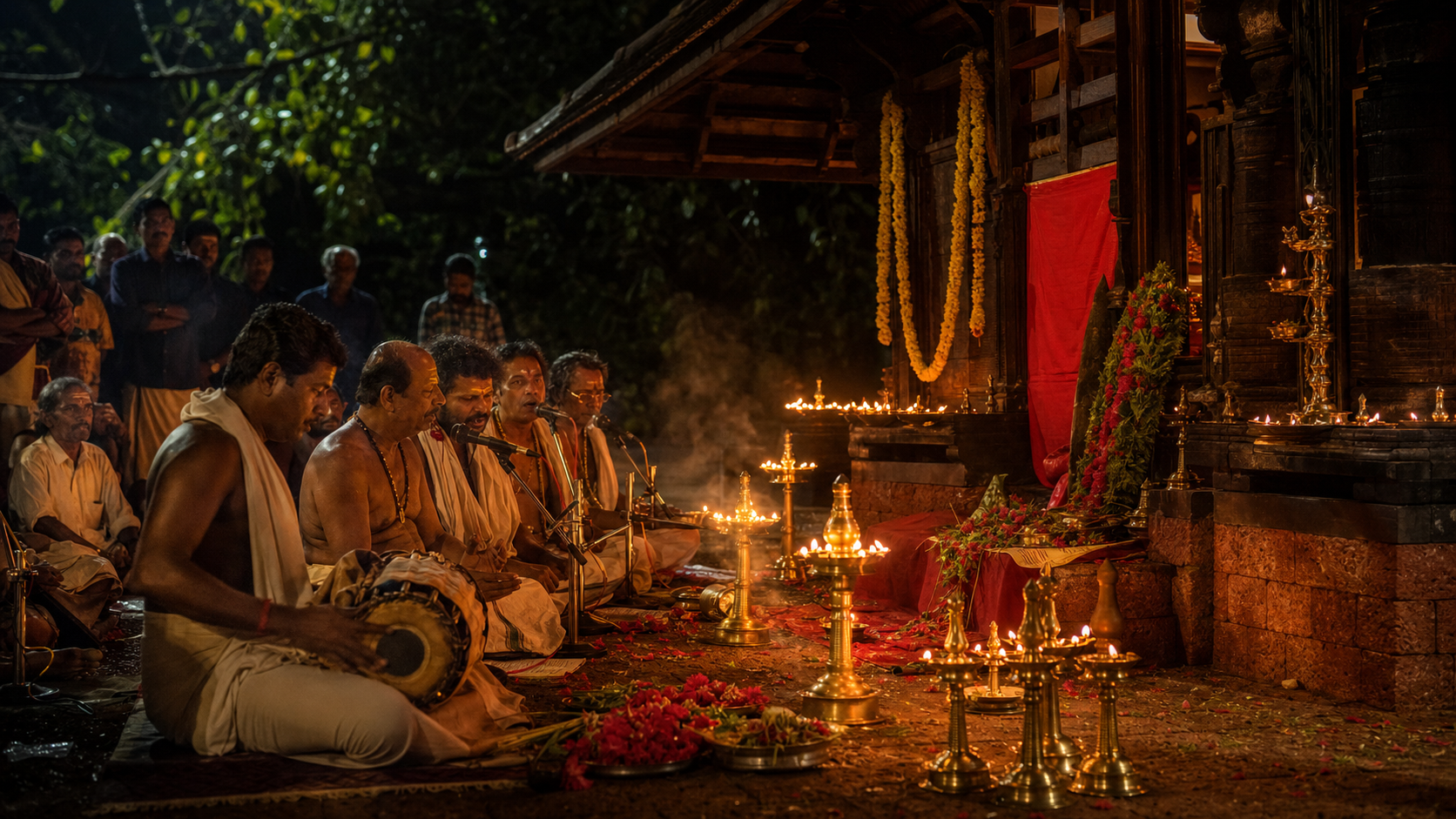
Thottampattu is best understood not as a devotional song placed inside a ritual, but as a form of singing that helps the ritual do its work. Through sacred narrative, rhythm, remembrance, and praise, it identifies the deity and prepares a community to encounter Bhagavathi, particularly Bhadrakali, within a specific ceremonial setting.
This distinction explains why Thottampattu can belong to several Kerala traditions without performing exactly the same role in each. Its significance lies in the relationship among word, performer, place, inherited memory, and ritual sequence.
From a hymn of praise to an invocation of presence
The supplied DharmaRenaissance account notes a local explanation connecting the word Thottam with the Sanskrit term Stothram, or hymn of praise. That association is useful as an introduction, but the article also makes clear that praise alone does not exhaust the form’s meaning. A Thottampattu may recount divine origins, journeys, conflicts, protective acts, local legends, and the relationship between a deity and the community attached to her shrine.
The crucial movement is from description toward invocation. The song first tells listeners who the deity is and what she has done. As the ceremony develops, the same narrative helps change the status of the ritual space: remembered divinity becomes ritually present divinity within the community’s devotional understanding. Thottampattu is therefore simultaneously narrative, offering, preparation, and an interpretive guide to what participants are about to witness.
Bhadrakali’s character gives this movement particular emotional force. The source presents her as both formidable Shakti and intimate Amma. Her fierceness answers disorder and adharma, while her maternal aspect protects households, children, fields, village boundaries, ancestors, and communal order. The frequently recalled conflict with Darika expresses that relationship in dramatic form: destructive force is met by divine power acting protectively rather than arbitrarily.
This theology is communicated through action and sound instead of abstract exposition. Birth, anger, battle, compassion, protection, and blessing allow listeners to understand the goddess through a narrated life. The result is a theology made audible and emotionally accessible.
Regional ritual settings give the song different work
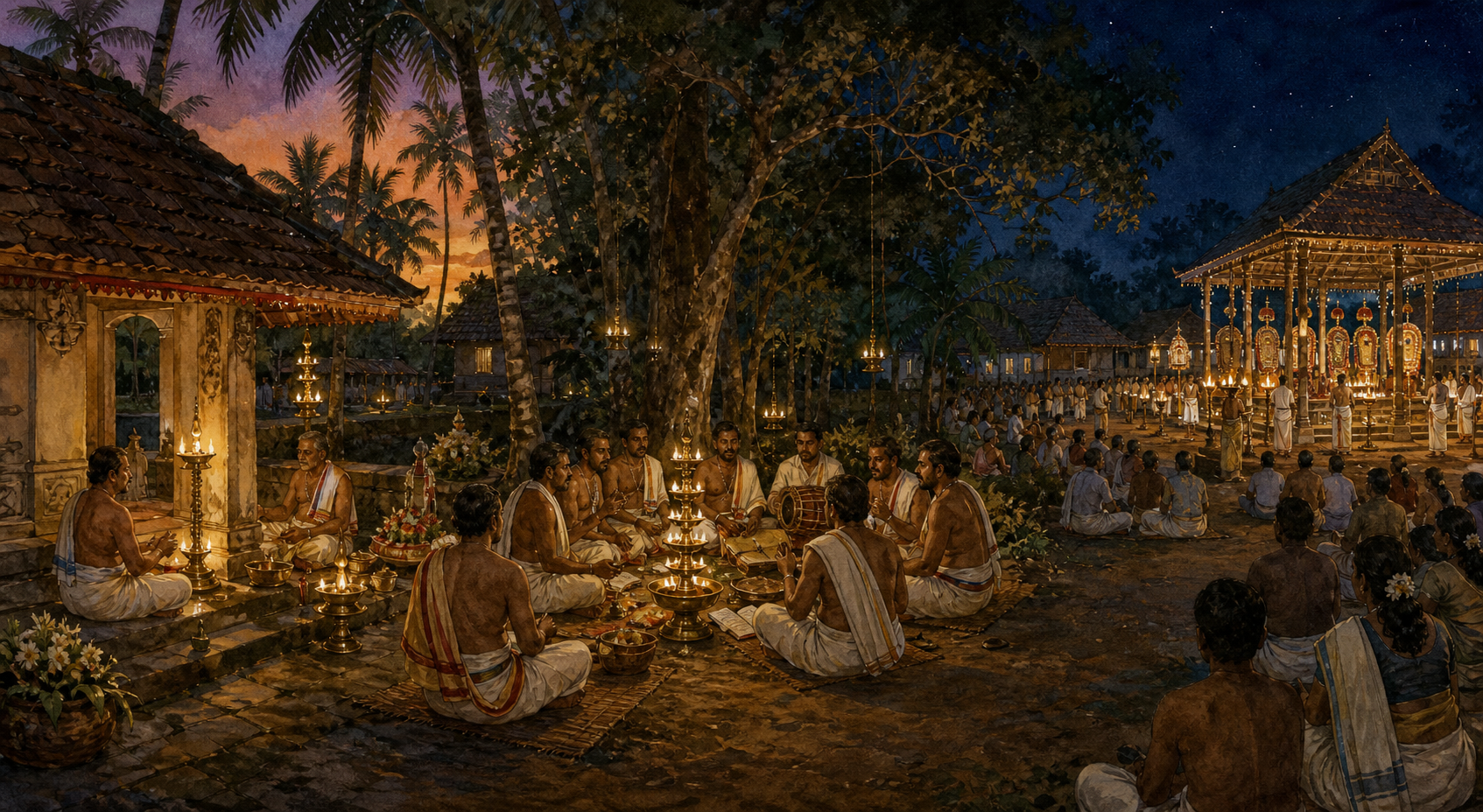
The source situates Thottampattu within a wider Kerala landscape that includes Theyyam, Mudiyettu, and Kaliyoottu. These traditions should not be treated as interchangeable versions of one performance. They share elements of Bhagavathi devotion and sacred narration, but each arranges song, drama, embodiment, and ceremonial time differently.
In North Malabar Theyyam, the article describes Thottam Pattu as preceding the deity’s fully manifested performance. While the performer is being prepared through costume, facial painting, headgear, and bodily discipline, the song identifies the divine figure and establishes the story through which that figure can be recognized. Calling it a preliminary would therefore be misleading if preliminary is taken to mean optional or secondary. It supplies the verbal foundation for the visible transformation.
Mudiyettu, which the source associates particularly with Bhagavathi or Bhadrakali temples in central Kerala districts such as Thrissur, Ernakulam, and Kottayam, organizes the Kali-Darika conflict as ritual theatre. Related songs praising and describing Bhadrakali prepare the dramatic action and give it sacred meaning. Here, narration and enactment operate together: the performance shows a conflict that song has already placed within a devotional framework.
In southern Kerala’s Kaliyoottu traditions, the article reports that Bhadrakalithottam may unfold across a prolonged ceremonial period. Duration is part of the ritual logic. The divine narrative is developed through patience, repetition, and collective attention rather than compressed into a short explanation before the principal event.
Musical details likewise vary by region and custom. The source mentions chenda, thudi, elathalam, and other local instruments as possible accompaniment rather than a universal ensemble. Their rhythm is not merely ornamentation: it coordinates attention, marks ritual progression, and intensifies the relationship among voice, body, and sacred action.
Oral memory preserves theology, locality, and obligation
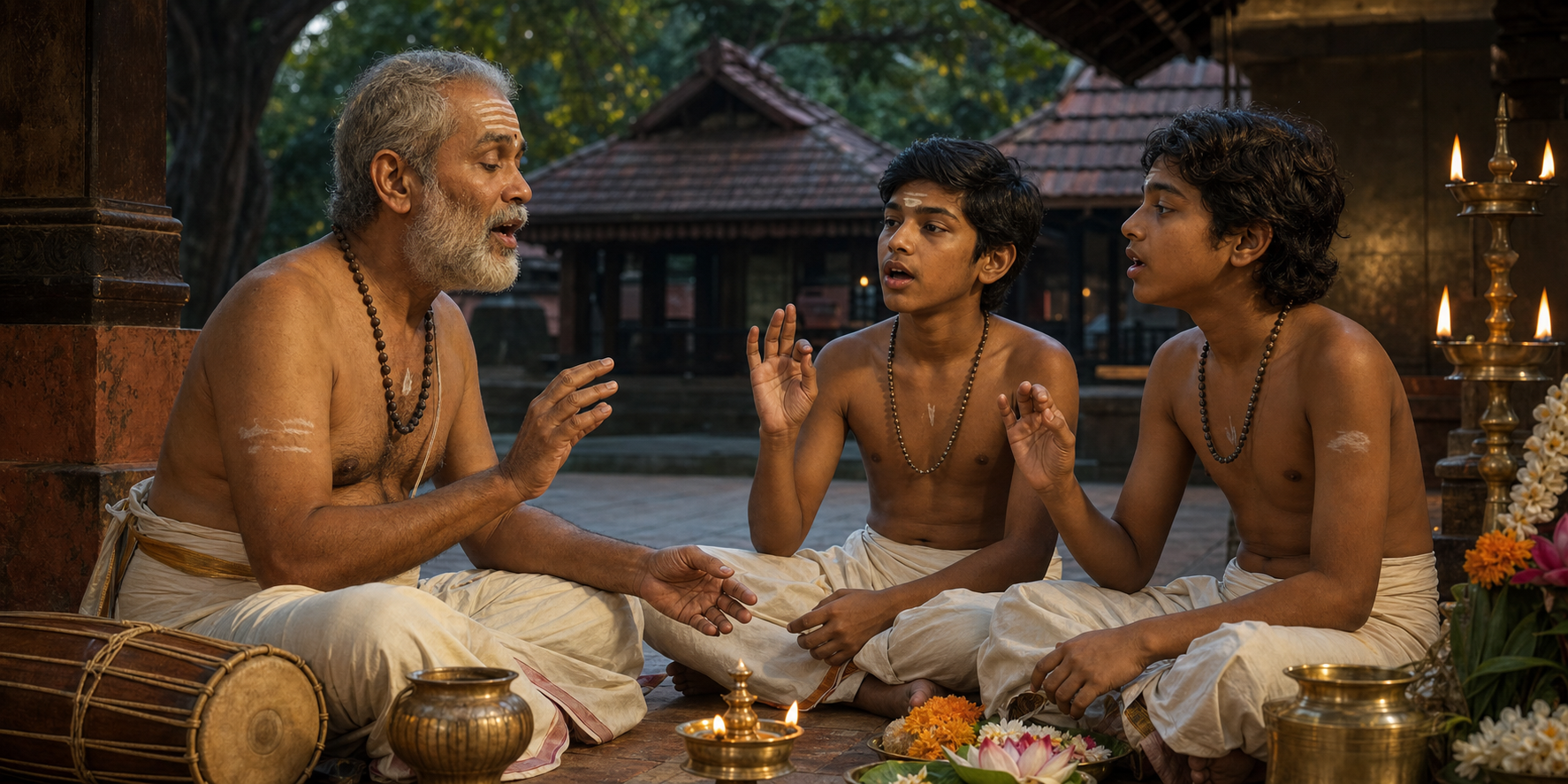
Thottampattu also functions as an oral archive. According to the source, its language may combine older Malayalam usage, Sanskritic devotional vocabulary, Dravidian ritual idioms, local place names, clan memories, and legends associated with particular temples. These layers preserve more than a mythic plot. They record ways in which communities have understood land, kinship, protection, justice, disease, fertility, authority, and social duty.
The local kavu gives these memories a physical setting. The article describes the kavu not simply as a shrine but as a ritual environment shaped by trees, serpent groves, lamps, drums, seasonal observances, and inherited responsibilities. The goddess addressed may be understood in the broad language of Devi, Shakti, Kali, Durga, or Bhadrakali, yet she is encountered through the name, history, and ceremonial practices of a particular place.
This is not a contradiction between universal theology and local devotion. Thottampattu demonstrates how a widely recognized divine power can become accessible through highly particular memories. Locality supplies intimacy and responsibility, while the wider Shakta framework supplies a larger theological horizon.
Such knowledge depends on disciplined transmission. The source emphasizes narrative order, melodic contour, ritual timing, memory, breath control, familiarity with temple custom, and sensitivity to ceremonial sequence. A written transcription may preserve words, but it cannot by itself reproduce the timing, vocal practice, bodily preparation, relationships, and place-based knowledge through which the song acquires ritual meaning.
Repetition is equally important. Recurring names, epithets, episodes, and rhythmic phrases do not merely duplicate information already known to the audience. As the article explains through comparison with mantra, japa, kirtan, and recitation, recurrence enables internalization. Sacred memory is renewed by being performed again.
Preserving the tradition requires more than recording lyrics
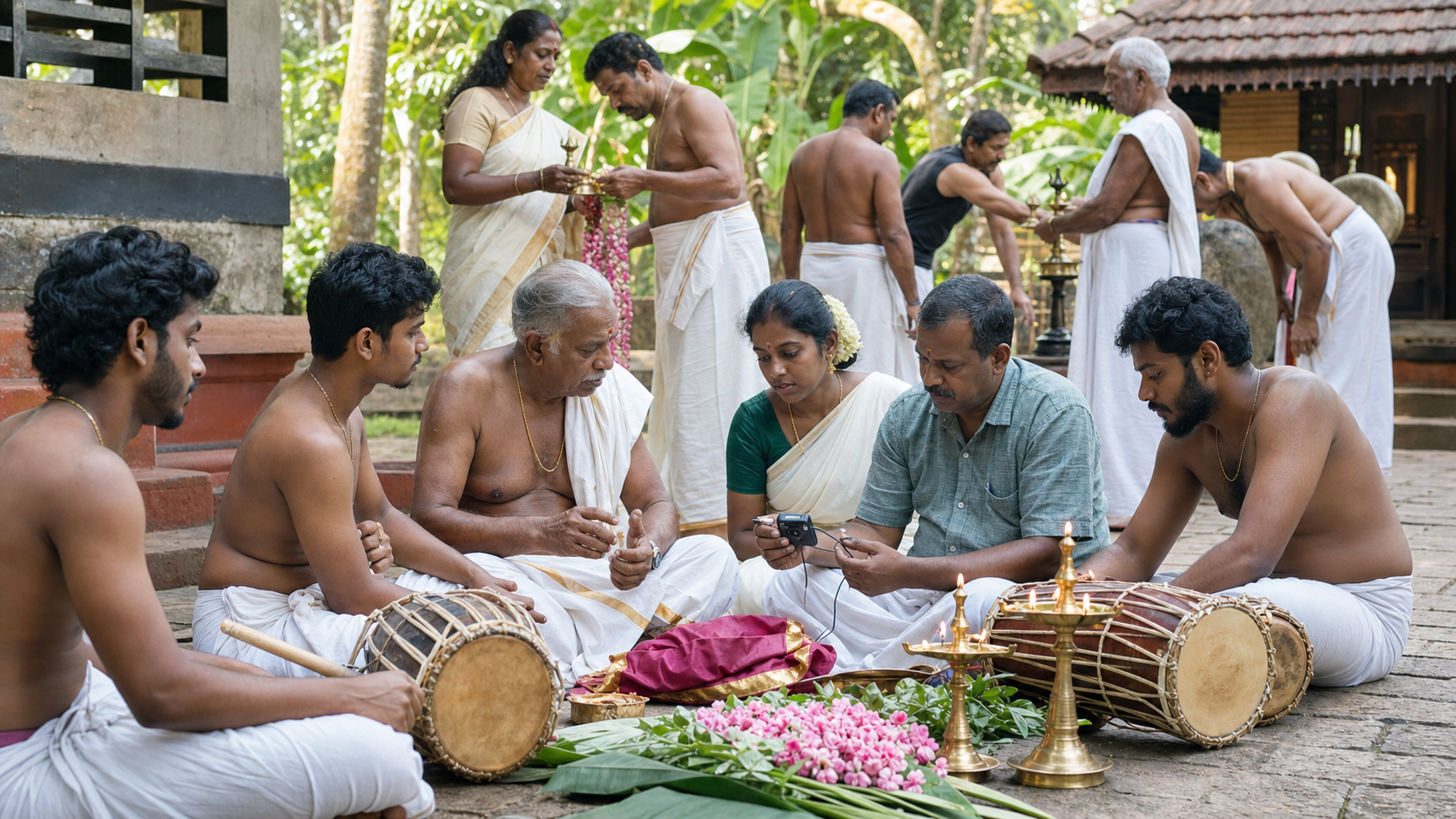
The source characterizes oral transmission as both vulnerable and resilient. From its account, an important preservation principle follows: Thottampattu cannot be adequately documented as text alone. Words must be understood alongside melody, rhythm, pronunciation, sequence, ritual purpose, performance setting, and the knowledge of the people who maintain the tradition.
Documentation should also retain regional distinctions. A song connected with Theyyam should not be interpreted automatically through the dramatic structure of Mudiyettu, while an extended Kaliyoottu cycle should not be reduced to the function of a brief invocation. Comparative study becomes most useful when it identifies shared themes without erasing differences in ceremonial role.
The supplied article is an interpretive overview rather than a temple-by-temple field study. It does not establish that every community uses identical terminology, instruments, narratives, or procedures. Responsible discussion should therefore distinguish between patterns reported across the broader tradition and practices documented for a particular shrine, region, or ritual lineage.
That caution also changes what cultural preservation means. Sustaining the tradition involves supporting living transmission, contextual knowledge, and ritual competence, not merely extracting a song from its setting for archival storage or stage presentation.
Frequently asked questions about Thottampattu
Is Thottampattu simply a devotional hymn?
No. Praise is central, but the source describes a wider ritual function. The song can narrate the deity’s origin and deeds, preserve local sacred history, prepare a performer and audience, and help move a ceremony toward an experienced sense of divine presence.
Is it performed identically throughout Kerala?
No uniform procedure is established by the supplied account. It associates Thottampattu with different ritual environments, including Theyyam in North Malabar, Mudiyettu in central Kerala, and Kaliyoottu in southern Kerala. Narrative emphasis, duration, instrumentation, and position within the ceremony can vary.
Why is repetition important to the tradition?
Repetition builds attention and renews sacred memory. Familiar names and episodes acquire ritual force through patterned recurrence, allowing participants to internalize the narrative rather than receive it only as new information.
Future work on Thottampattu will be strongest when textual study, performance documentation, and the knowledge of practicing communities remain connected. That approach can preserve regional complexity while allowing the tradition to continue as worship rather than survive only as a cultural record.