

The Indus Waters Treaty controversy now turns on a question that precedes the merits of any hydroelectric design: was the Hague-based Court of Arbitration validly empowered to decide the issues placed before it? The supplied DharmaRenaissance article reports that India says it was not, because arbitration proceeded alongside a Neutral Expert process intended for technical questions.
This jurisdictional objection connects several otherwise separate debates – treaty procedure, hydropower engineering, development in Jammu and Kashmir, and national security. The available source, however, presents India’s case rather than a multi-source record of the parties’ competing submissions. Its claims therefore require attribution, while the unanswered questions are as important as the arguments it advances.
The threshold question is authority, not project design
According to the supplied article, the 1960 treaty assigned the Ravi, Beas, and Sutlej to India, while the Indus, Jhelum, and Chenab were allocated primarily to Pakistan subject to specified Indian uses. Those permitted uses reportedly include run-of-the-river hydropower, limited irrigation, and other activities defined by the agreement.
The immediate disagreement concerns Indian hydroelectric projects on the western rivers, but India’s stated objection is jurisdictional rather than merely technical. As the article presents it, the treaty distinguishes a qualifying technical “difference,” which may be examined by a Neutral Expert, from a legal “dispute” capable of going to a Court of Arbitration once the relevant treaty conditions have been met.
This distinction matters because jurisdiction and merits answer different questions. Jurisdiction asks whether a decision-maker acquired authority through the parties’ agreement. The merits ask whether a project or design feature complies with that agreement. India’s position, as reported, is that an adverse ruling cannot bind it if the tribunal was constituted through a process the treaty did not authorize. That argument does not itself establish that India’s project designs are compliant; it says the compliance question was placed before the wrong forum.
Parallel proceedings created the central procedural collision

The article describes the treaty’s mechanisms as structured and sequential. It reports that India supported examination of the technical objections by a Neutral Expert in 2023, while Pakistan pursued the Court of Arbitration route. The resulting parallel tracks are the foundation of India’s challenge to the arbitration process.
Concurrent proceedings can create more than administrative duplication. If two forums classify overlapping questions differently, one may treat an engineering issue as a technical difference while the other treats it as a legal dispute. Their conclusions could then affect the same project even though the forums exercise different functions. India’s case, as conveyed by the source, is that permitting such overlap alters the negotiated balance of the treaty and encourages forum selection before technical issues have been settled.
The World Bank’s place in this controversy is narrower than that of a general international adjudicator. The article characterizes the Bank as a facilitator with specified appointment-related responsibilities when the parties cannot agree. It argues that those functions do not authorize the Bank to redesign the dispute-resolution system or confer jurisdiction beyond the treaty.
A complete assessment would also require Pakistan’s explanation for invoking arbitration, the World Bank’s account of its treaty responsibilities, and the Court of Arbitration’s own jurisdictional reasoning. None is independently presented in the supplied material. The source therefore establishes what India’s objection is and why it matters, but it does not by itself resolve the legal contest.
Pondage connects legal procedure to electricity and development
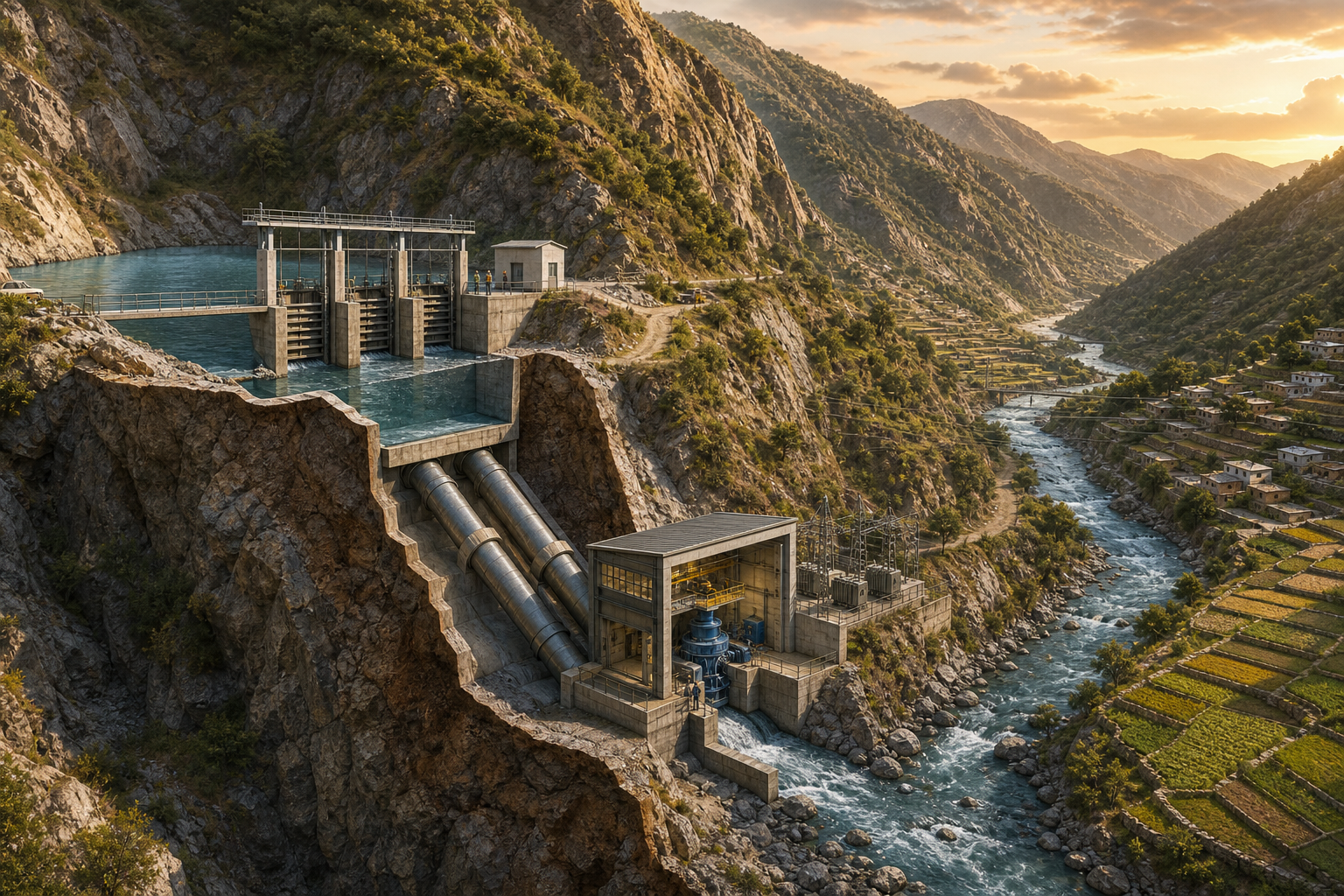
The disputed rulings are consequential because pondage is not merely an abstract design variable. The article defines it as limited storage used by a run-of-the-river project to regulate flows over short periods for electricity generation, distinguishing it from a large reservoir intended for long-term storage or diversion.
On that account, restrictions on maximum pondage may affect a project’s operating flexibility, economic viability, and capacity to provide electricity during periods of higher demand. The Kishanganga and Ratle projects are identified as prominent examples: Pakistan has reportedly objected to design features, while India maintains that the projects fall within its permitted treaty uses.
The broader development argument is especially relevant to Jammu and Kashmir. The source links hydropower development there with electricity, employment, infrastructure, and public revenue. That does not predetermine the correct interpretation of the treaty, but it explains why forum and design decisions have consequences outside the hearing room. A restrictive technical interpretation may shape whether projects can be built and operated efficiently; an overly permissive interpretation could, from a lower-riparian perspective, weaken protections negotiated into the agreement.
The core balance is therefore not simply India versus Pakistan or development versus restraint. It is the distinction between Pakistan’s protection against impermissible interference and India’s retained right to undertake defined activities on the western rivers. The procedural dispute matters because the forum interpreting that balance can influence its practical meaning.
Security-driven abeyance raises a separate legal question

The article reports that India placed the treaty in abeyance after the Pahalgam terrorist attack, presenting the step as part of a wider security reassessment amid cross-border terrorism and hostile conduct. This development intensifies the controversy, but it should not be treated as an automatic answer to the jurisdiction dispute.
Whether the Court of Arbitration was validly constituted concerns the treaty’s dispute-resolution architecture. Abeyance concerns the status of treaty cooperation in a changed political and security context. The supplied source does not provide enough competing legal material to determine how the latter affects proceedings already initiated, what obligations India regards as suspended, or how the other treaty participants characterize the measure.
Keeping these questions separate prevents political urgency from substituting for legal analysis. Security concerns may explain why India is reconsidering cooperation, while the validity of a tribunal still depends on the authority conferred by the treaty and the process used to invoke it.
Key takeaways
- India’s reported objection challenges the Court of Arbitration’s authority, not only the substance of its pondage ruling.
- The alleged overlap between the Neutral Expert and arbitration tracks is the central procedural issue.
- Pondage affects short-term hydropower operation, giving the jurisdiction dispute practical energy and development consequences.
- The World Bank’s role is described by the source as limited and facilitative rather than a power to rewrite the treaty process.
- The treaty’s reported abeyance after the Pahalgam attack introduces a security dimension but does not, on the available material, settle the earlier jurisdiction question.
A durable path forward will require the parties and relevant institutions to clarify the relationship between the treaty’s forums before overlapping proceedings harden into conflicting legal realities. Close examination of the treaty text, the documents initiating each process, the jurisdictional reasoning, and the technical findings will be essential if lawful water use and lower-riparian protections are to remain part of the same workable system.