
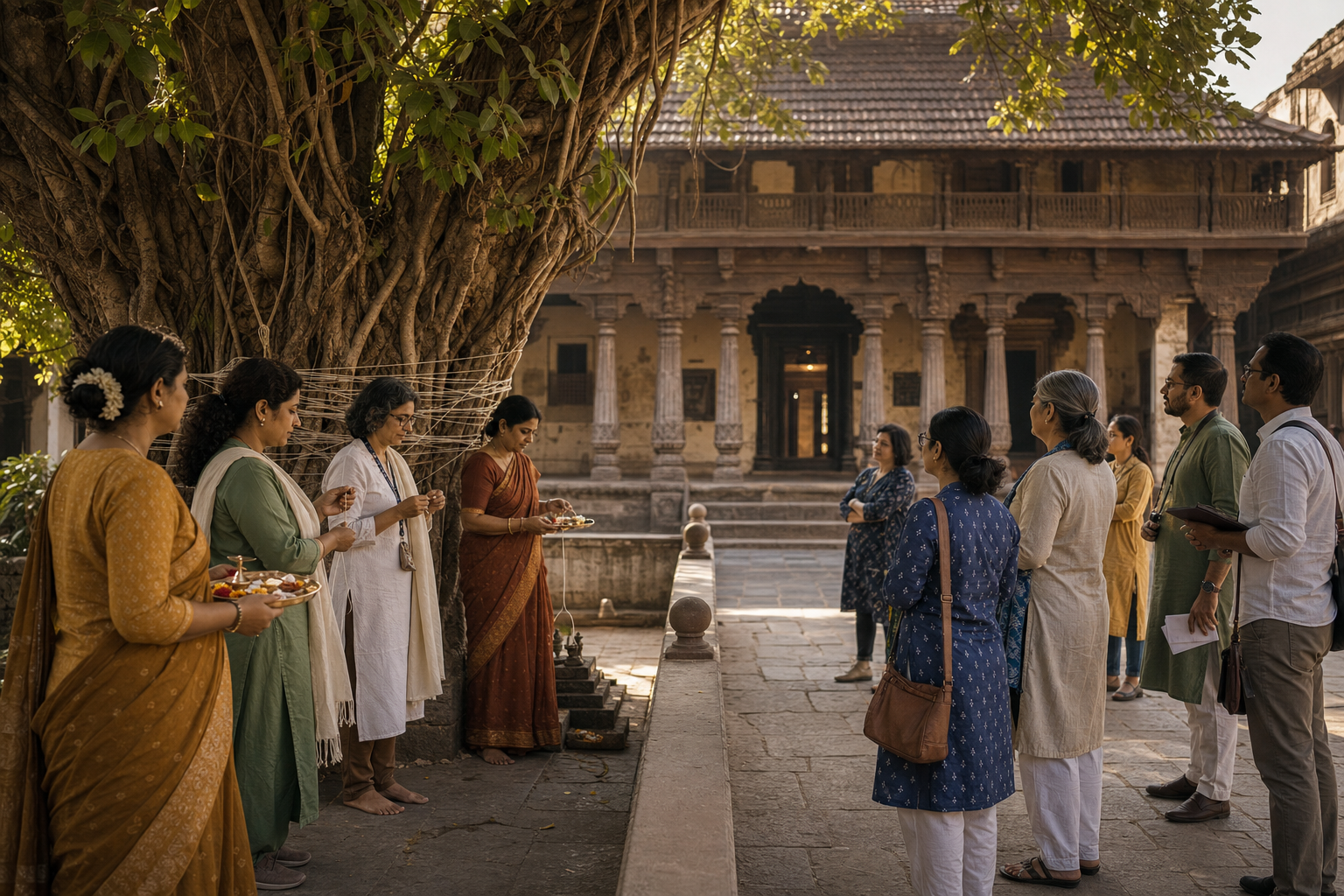
The dispute over Vat Purnima observances near Pune’s Mahatma Phule Wada brings several legitimate concerns into the same space: religious practice, heritage administration, the memory of social reformers, caste politics and women’s agency. Treating any one of those concerns as automatically decisive obscures the questions that public authorities and citizens actually need to resolve.
The available evidence also requires care. The supplied source is a commentary article that relays claims attributed to an OpIndia report; the underlying report was not provided as a separate member source. The reported sequence can therefore be examined, but it cannot be described as independently corroborated across publications.
What the supplied account says happened
According to the supplied article’s summary of an OpIndia report published on 2 July 2026, objections were raised to Vat Purnima rituals near the historic site associated with Mahatma Jyotirao Phule and Savitribai Phule. BJP Rajya Sabha MP Medha Kulkarni’s participation became a focal point, with critics reportedly presenting the observance as incompatible with the Phules’ reformist legacy.
The article further reports that the Maharashtra Archaeology Department initially moved to prevent the ritual, invoking that legacy. It says the position was subsequently revised after objections from Hindu organisations, local devotees and women who maintained that the practice had continued there for years. Earlier customary observances were reportedly allowed to continue, with authorities asked to preserve law and order.
Several details remain unverified within the supplied material: the precise administrative language, the formal status and boundaries of the ritual location, the documented duration of the custom, and whether conservation or access concerns were recorded. The account therefore supports analysis of the competing principles, but not a definitive reconstruction of every official action.
Religious liberty, heritage protection and public memory
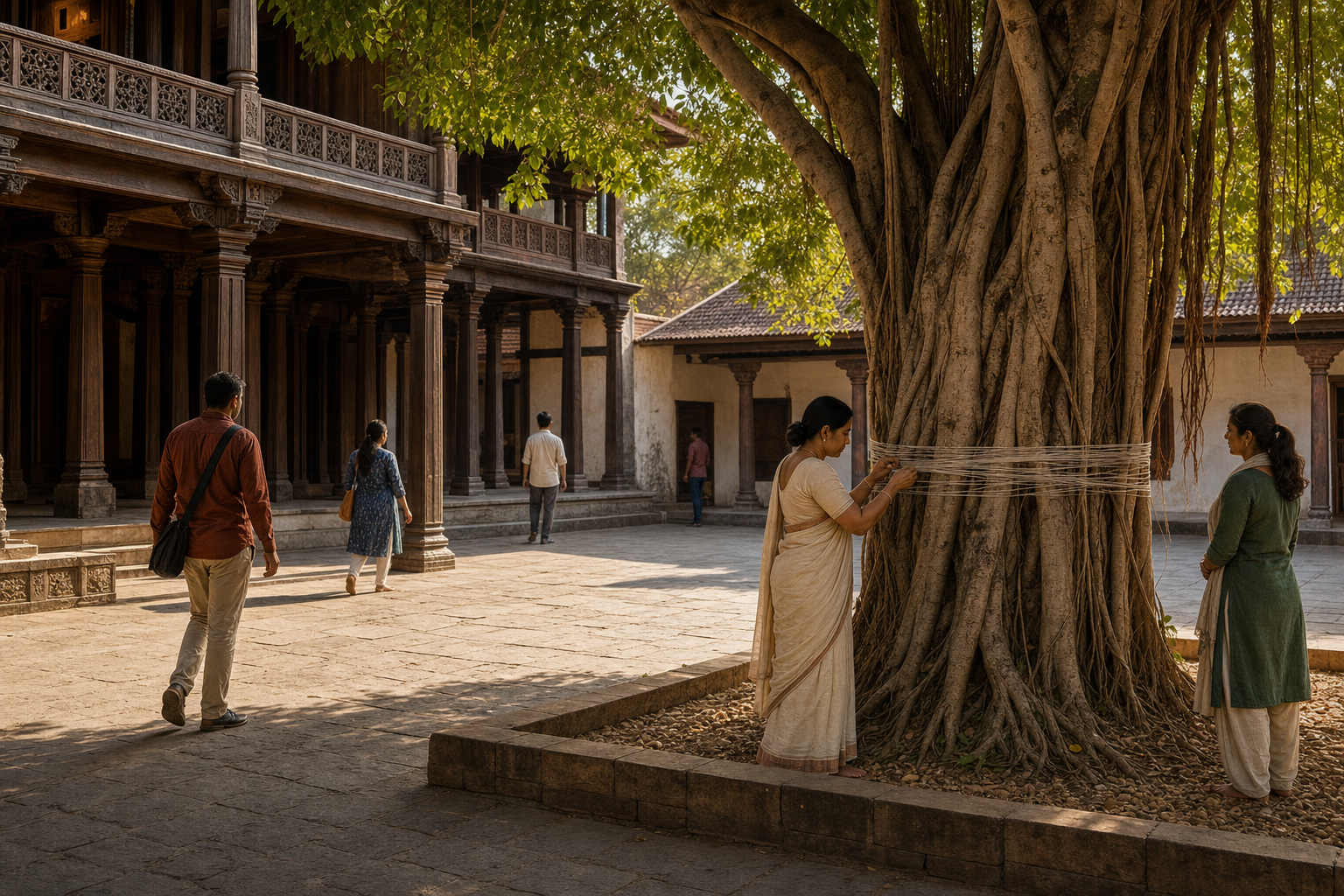
The source invokes Article 25 of the Constitution, describing freedom of conscience and religious practice as rights subject to public order, morality and health. That argument establishes an important presumption in favour of peaceful observance, but it does not by itself answer every question involving a protected heritage site. Authorities may have legitimate reasons to regulate access, crowding, fire, physical contact with structures or potential damage. Such reasons need evidence and rules applied without discrimination.
A philosophical objection is different from a conservation restriction. If a practice is opposed solely because officials or activists believe it contradicts a historical figure’s ideas, the state risks turning one interpretation of public memory into an informal eligibility test for constitutional freedom. If a restriction instead protects a monument through neutral and proportionate conditions, religious liberty does not necessarily require unrestricted access.
The Phules’ historical association with education, dignity and opposition to social exclusion gives the site profound symbolic meaning. Yet commemoration does not confer exclusive ownership of that meaning on any present-day faction. Reformers can inspire criticism of custom without every place linked to them becoming a zone in which peaceful religious expression is presumptively forbidden.
The same distinction applies to Kulkarni’s public position. The supplied article argues that elected representatives retain personal religious rights. That is persuasive as a general principle, while public participation by a politician may still attract political scrutiny. The relevant questions are whether she acted in a personal or official capacity, whether state resources or authority were involved, and whether other citizens would receive equal treatment. The source does not provide enough information to settle those contextual questions.
Women’s choice and caste politics resist simple binaries
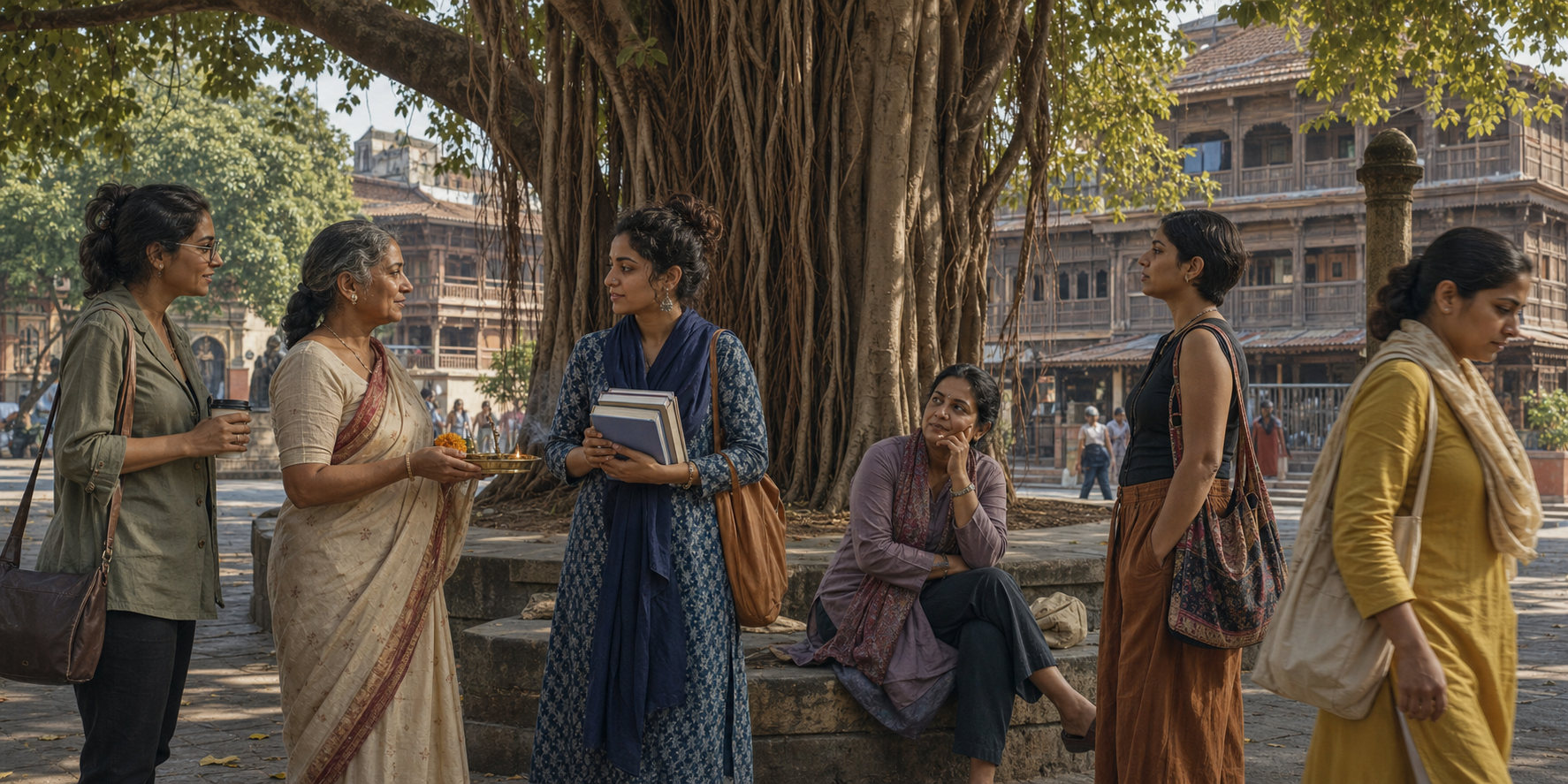
The article presents Vat Purnima as a voluntary observance through which many Hindu women express devotion, familial concern and cultural continuity. It also argues that dismissing an educated woman’s participation as false consciousness conflicts with the language of women’s autonomy associated with Savitribai Phule’s legacy.
Agency, however, should be applied consistently rather than selectively. A woman’s voluntary decision to perform a ritual deserves respect, but that decision does not establish that every participant experiences the custom in the same way or that the ritual is beyond criticism. Conversely, the existence of feminist or reformist criticism does not prove that a participant lacks judgment. A plural account must leave room for observance, refusal and debate without assigning women a single approved choice.
The caste framing needs similar care. The supplied article challenges attempts to position Hindu observance and Bahujan dignity as automatic opposites, noting that Hindu devotional life crosses caste and community boundaries. Because the source supplies no demographic evidence, that observation should not be converted into a statistical claim. Its analytical value lies elsewhere: broad labels cannot reveal who participated, who objected, who felt excluded or how local relationships shaped the dispute.
Invoking the Phules should sharpen questions about equal access and dignity rather than end the conversation. A serious assessment would examine whether the observance excludes anyone, whether participants are subject to unequal restrictions, and whether the site’s administration accommodates comparable peaceful activities on consistent terms. Those questions connect social reform to religious freedom without presuming that one must defeat the other.
Key takeaways
- The reported controversy concerns a religious observance near a heritage site; the supplied material does not document physical damage to the monument.
- The reported administrative reversal suggests an attempt to preserve customary practice alongside law-and-order requirements, although the underlying orders were not supplied.
- Respect for the Phules’ reformist legacy and protection of peaceful religious practice are not inherently incompatible.
- Women’s agency includes the freedom to observe, reject or criticise a ritual without ideological gatekeeping.
- Any restriction is most defensible when it rests on published, evidence-based and consistently applied heritage or safety rules.
A workable standard for future heritage-site disputes
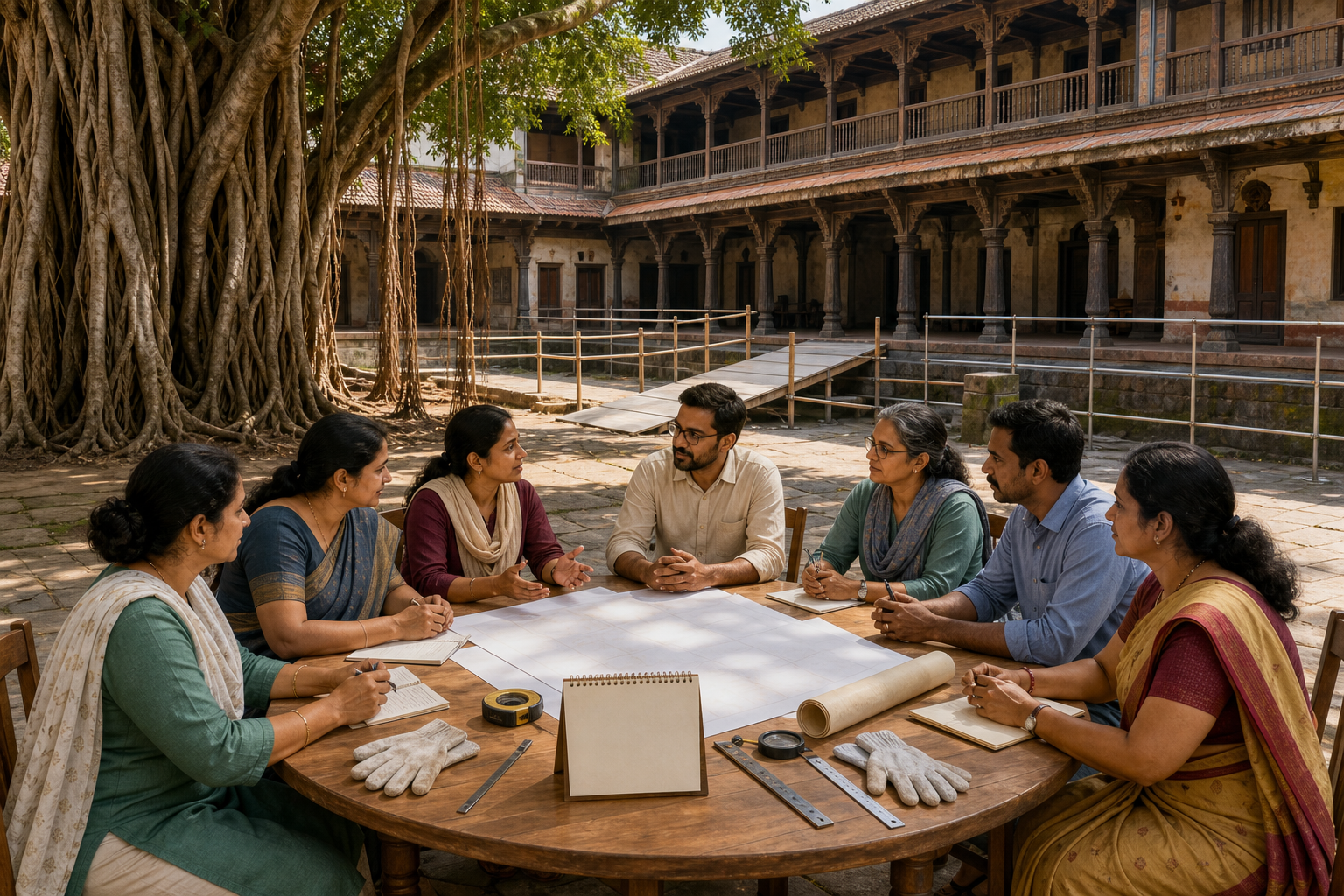
Future disputes would be less vulnerable to political escalation if heritage authorities published clear conditions before an event: where an activity may occur, what conservation limits apply, how attendance is managed and which conduct is prohibited. Written reasons would help distinguish genuine site protection from viewpoint-based exclusion.
Consultation should include conservation specialists, regular users of the space and people concerned with the reformer’s legacy. Consultation need not grant any group a veto; its purpose is to identify practical risks, avoid symbolic provocation and find proportionate accommodations. The same standards should govern religious, political and commemorative activities.
The most durable response will preserve both the material heritage of Phule Wada and the civic freedom surrounding it. Transparent rules, equal treatment and space for peaceful disagreement can keep future observances from becoming tests of whether reform or faith is entitled to exist.