
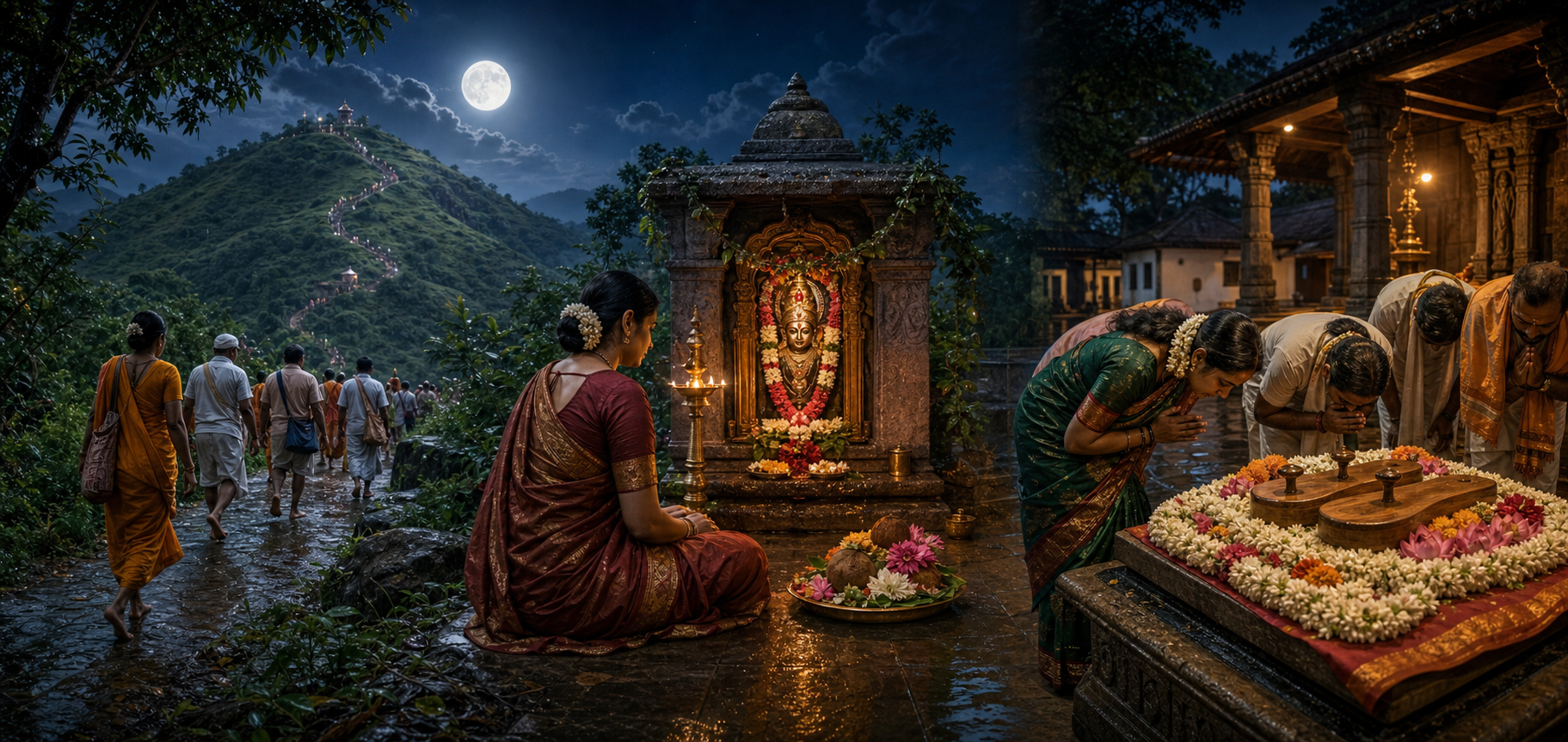
Ashada Purnima is expressed through more than one kind of sacred practice. Reports on Simhachalam Giri Pradakshina, Kokila Vrat and Guru Purnima at Gangapur describe a shared full-moon setting, but they lead devotees into distinctly different disciplines: walking around a sacred hill, regulating desire through a Shakti vrata, and honoring the Guru through Paduka worship.
Reading these observances together clarifies both their common spiritual grammar and their local integrity. The comparison also offers a practical way to approach pilgrimage or vrata without treating regional variation as an error, physical hardship as the only measure of devotion, or a traditional prayer as a transaction for a promised result.
One full moon, three distinct devotional paths
All three source articles place their respective observances at or around Ashada Purnima. The Simhachalam and Gangapur accounts explicitly connect the full moon with Guru Purnima or Vyasa Purnima, while the Kokila Vrat account situates its Shakti observance within the same sacred atmosphere. The two sources focused on 2026 list July 29 for Kokila Vrat and Guru Purnima at Gangapur, but both advise readers to confirm local calendrical or temple details rather than treating a general listing as a universal schedule.
| Observance | Devotional center | Primary form | Emphasis reported by the source |
|---|---|---|---|
| Simhachalam Giri Pradakshina | Sri Varaha Lakshmi Narasimha and Simhagiri | Clockwise circumambulation of the sacred hill | Endurance, surrender, protection, sacred geography and collective participation |
| Kokila Vrat | Kokila Devi, understood as a form of Adishakti and symbolized by the koel | Fasting, worship, katha and regulation of food, speech and conduct | Transformation of longing, preparation for a dharmic partnership and disciplined Shakti devotion |
| Guru Purnima at Gangapur | The Nirguna Paduka associated with Shri Narasimha Saraswati | Paduka darshan, Guru Puja, parayana, chanting, pradakshina and visits within the sacred circuit | Gratitude, humility, lineage, spiritual learning and renewed sadhana |
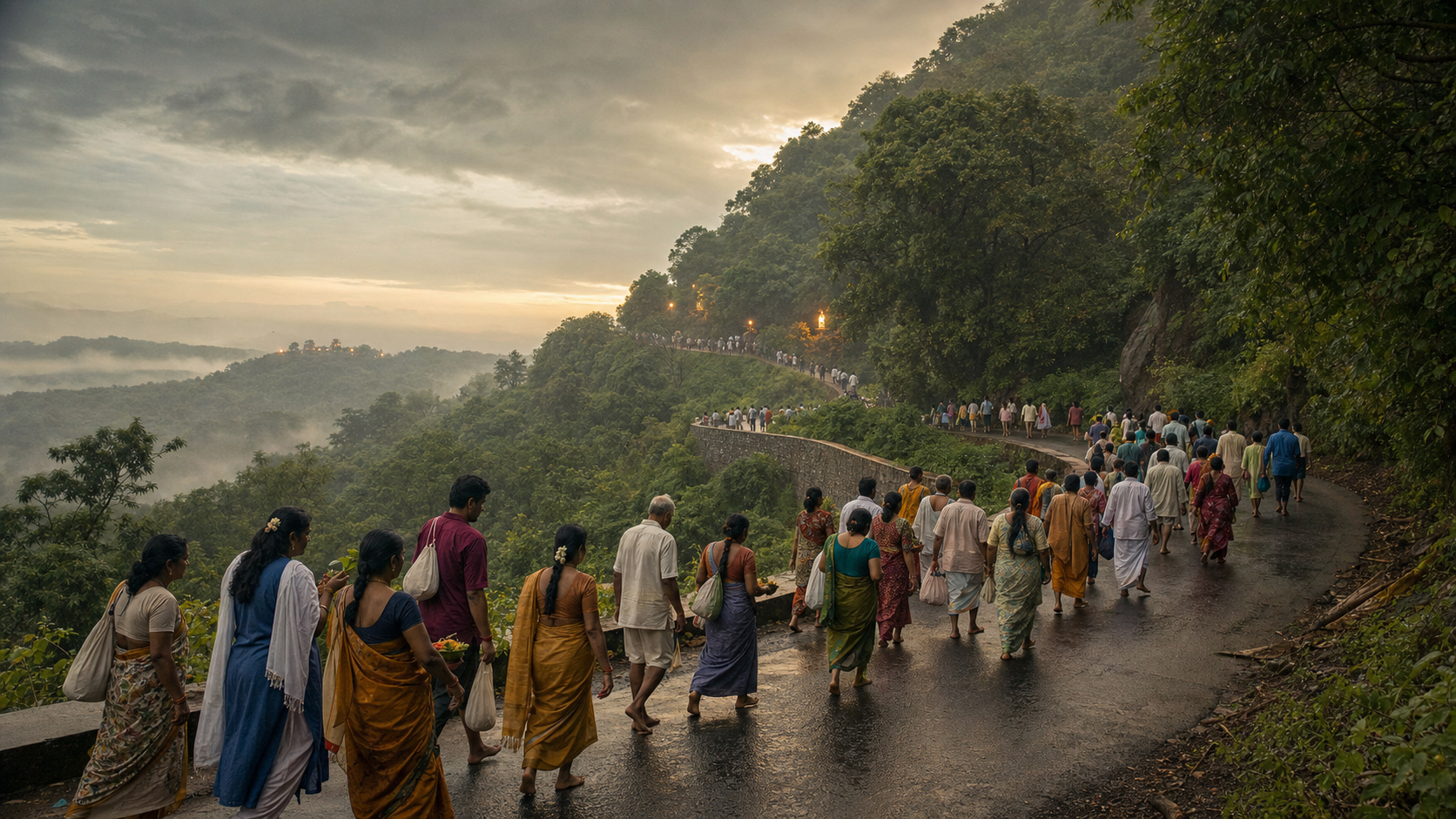
The distinctions are substantial. The Simhachalam report describes a public pilgrimage whose commonly reported route is approximately 32 kilometers and treats the whole hill as an expansive form of sacred presence. The Kokila account presents a vrata that can be practiced within a household and that, in some traditions, continues from Ashada Purnima into Shravan. The Gangapur report centers on a temple town, the Guru’s Padukas and a wider circuit that includes the Bhima-Amarja Sangam and other locally revered places.
These are therefore not interchangeable versions of one ritual. Their shared date creates a relationship among them, but each retains its own deity, story, ritual authority and regional practice.
The common grammar of movement, restraint and reverence
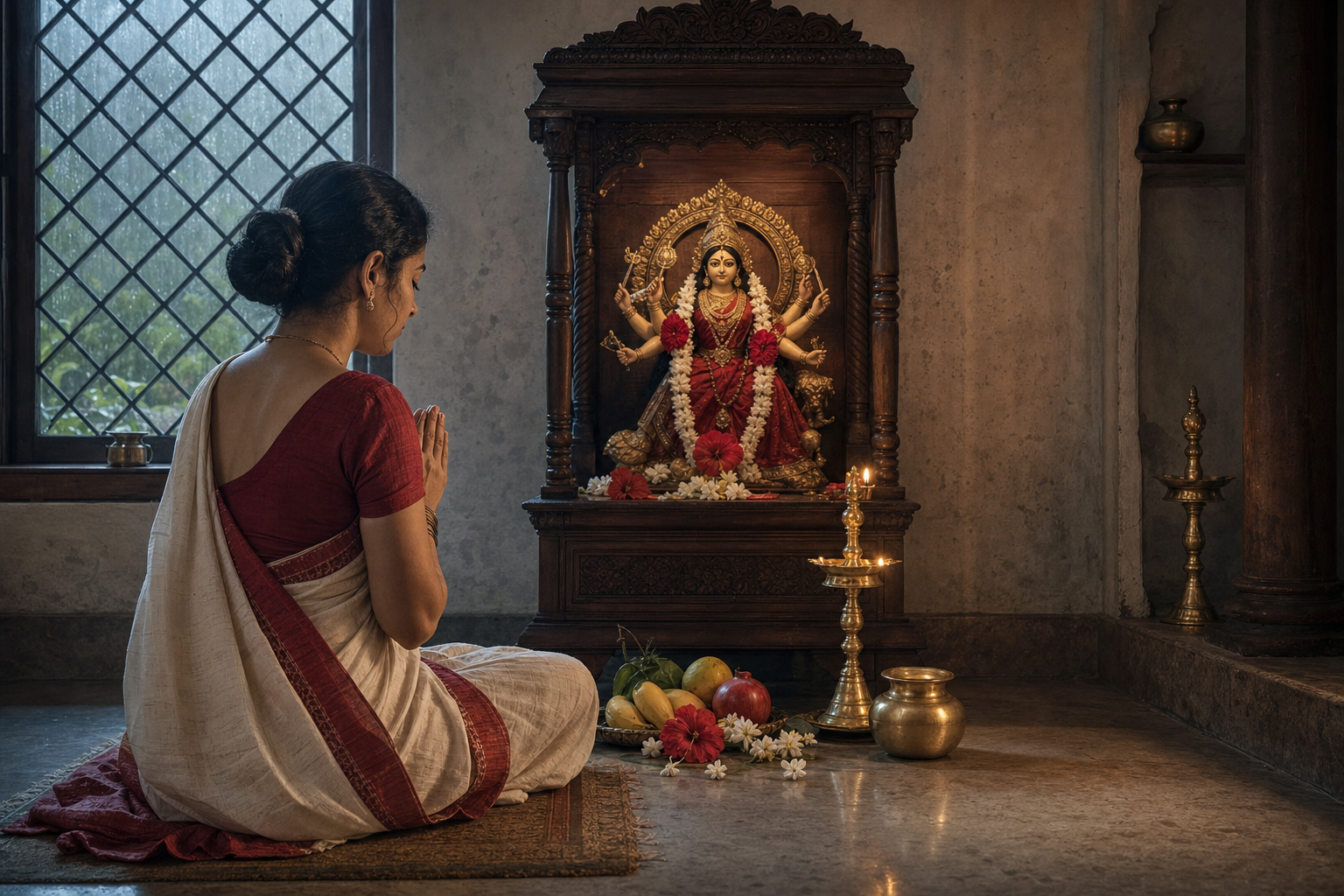
The first connecting principle is the displacement of the ordinary self from the center. In pradakshina at Simhachalam, the devotee moves around Simhagiri while keeping the sacred center to the right. In Kokila Vrat, personal longing is placed under the discipline of Shakti worship rather than allowed to dictate conduct. At Gangapur, bowing before the Guru’s Padukas expresses receptivity to a source of guidance beyond personal pride.
The second connection is embodied practice. The Simhachalam account presents the feet, the long route and the acceptance of discomfort as parts of the offering. The Kokila source broadens fasting beyond food avoidance: it describes restraint of speech and thought, simple living, prayer and compassion, with stricter regimens appearing in some regional traditions. The Gangapur account joins darshan to bathing, recitation, chanting, service and movement through a sacred landscape. Across all three, knowledge is not merely contemplated; it is enacted through the body.
A third connection is the refinement of desire. The Simhachalam report associates Narasimha devotion with prayers for courage, protection and steadiness in dharma. Kokila Vrat is popularly connected with finding a suitable spouse, yet its source interprets that aspiration as preparation for a responsible, compatible and stable partnership. The Gangapur observance directs the seeker’s attention toward clarity, humility and the ethical demands of learning from a Guru. Each practice begins with a recognizable human need but asks the devotee to place that need within a larger moral discipline.
The scale of participation differs as well. Simhachalam temporarily turns an urban route into a sacred pathway and depends on water stations, medical support, traffic arrangements, volunteers and crowd management, according to its source. Kokila Vrat can transmit tradition quietly within a family through fasting, worship and narration. Gangapur combines concentrated temple crowds with the slower experience of a pilgrimage circuit. Together, these forms show how Ashada Purnima can organize a city, a household or a temple town around sacred attention.
Preparing without flattening local practice
Calendar preparation comes first. The Kokila Vrat source notes differences in the starting day and duration of the observance, while the Gangapur account explains that a tithi may extend across civil dates and that a sunrise rule can determine the festival day. The Simhachalam route and public arrangements may also depend on the year. A published date is useful for initial planning, but the relevant local panchang, family lineage or temple schedule remains the appropriate guide for the final form and timing.
Ritual preparation should preserve the purpose of the practice. The Kokila source describes several possible forms, including worship of an image or drawing of the bird, offerings such as sesame and flowers, recitation of the katha, fasting and ethical restraint. Its variations suggest that the devotional core matters more than uniform performance. A household need not combine every reported custom or assume that a practice from one regional account overrides its inherited tradition.
Physical capacity should be considered without turning it into a judgment about sincerity. The Simhachalam source reports that devotees unable to undertake the complete hill route may perform 108 circumambulations within the temple precincts. This is not presented as a mathematical replacement for the longer pilgrimage; it illustrates how disciplined repetition and devotional intention can provide another recognized form of participation.
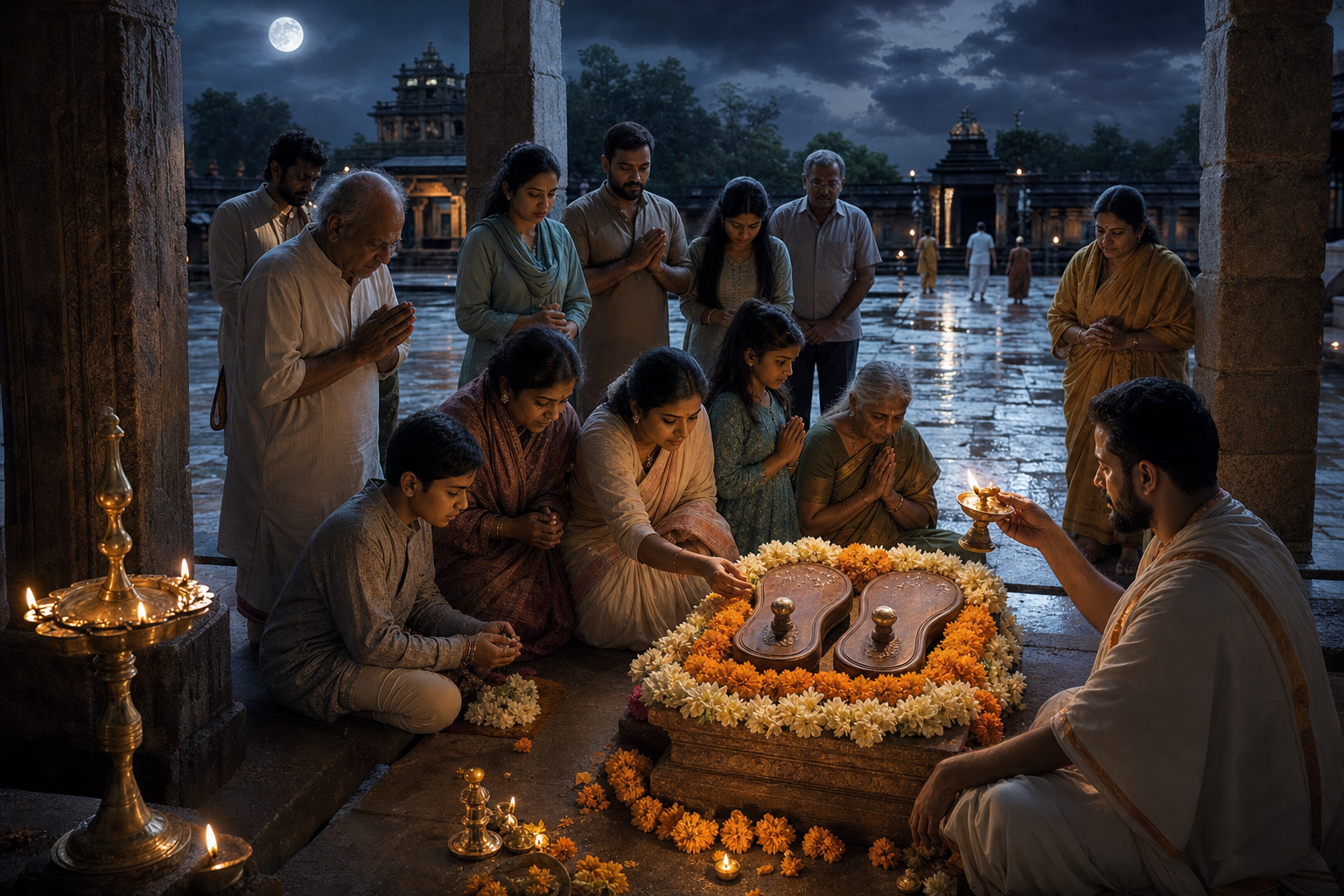
Traveling pilgrims also face practical obligations. The Gangapur source anticipates heavy Guru Purnima crowds and advises early planning, sufficient time, water and necessary medicines, especially where elderly people, children or those with health concerns are involved. Both major pilgrimage settings make civic conduct part of sacred conduct: queues, shared water, sanitation, riverbanks, streets and temple approaches remain common spaces rather than disposable festival infrastructure.
Finally, expectations should remain proportionate to what the sources actually claim. The Kokila article reports traditional beliefs concerning marriage and household harmony, but interprets them through character and mutual responsibility. The Simhachalam and Gangapur accounts likewise present devotional hopes within the disciplines of surrender and learning. None of these practices is best understood as a technique that mechanically guarantees a private outcome.
Key takeaways
- Ashada Purnima connects the three observances through sacred time, but it does not erase their different deities, narratives or ritual authorities.
- Simhachalam emphasizes circumambulation and sacred geography; Kokila Vrat emphasizes Shakti, restraint and refined longing; Gangapur emphasizes the Guru, Paduka worship and transmission.
- The 2026 date of July 29 is reported by the Kokila Vrat and Gangapur sources, subject to local panchang rules and temple arrangements.
- Devotional intention is expressed through practical responsibility: choosing a suitable form, respecting physical capacity, preparing for crowds and caring for shared sacred spaces.
From a festival day to a season of practice
The sources frame Ashada Purnima as a threshold rather than an isolated appointment. The Gangapur account connects it with entry into the rainy-season discipline of Chaturmasya, while the Kokila source records traditions in which the vrata continues into Shravan. Even Simhachalam’s concentrated pilgrimage points beyond a single completed circuit: its symbolism asks what will occupy the center of life after the walker returns home.
Future observance can preserve that longer horizon by allowing the chosen pilgrimage or vrata to mature into study, careful speech, service, ecological responsibility and steadier relationships. In that form, Ashada Purnima remains not only a day to mark but a discipline capable of shaping the season that follows.
References
- DharmaRenaissance Blog — Powerful Simhachalam Giri Pradakshina: Ashada Pournami Pilgrimage Explained
- DharmaRenaissance Blog — Kokila Vrat 2026: Powerful Ashad Purnima Ritual for Devotion and Marriage
- DharmaRenaissance Blog — Guru Purnima 2026 at Gangapur: Powerful Datta Paduka Darshan Guide