
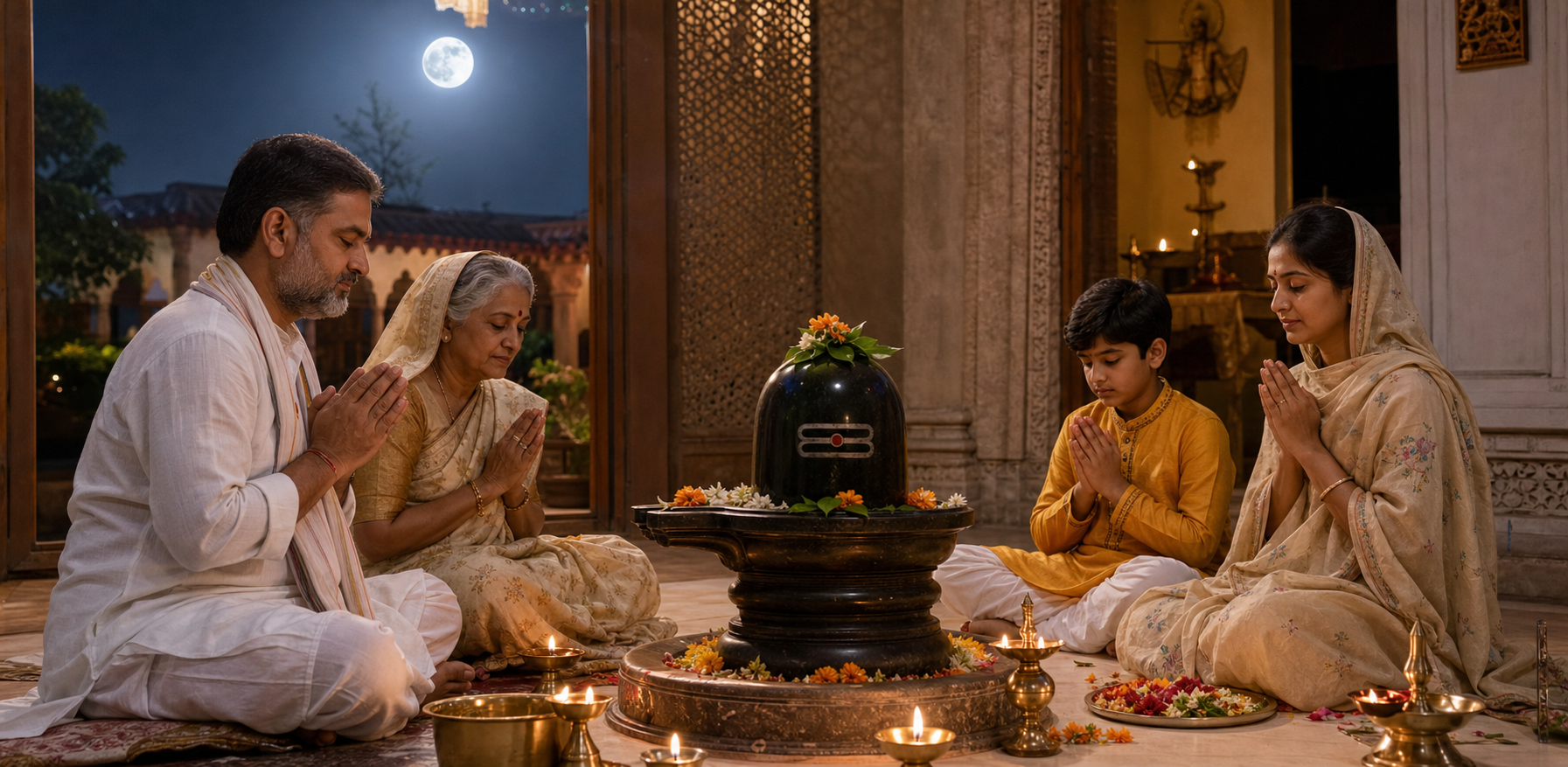
Pavitropana places a distinct Gujarati observance within the sacred setting of Shravan Purnima. Hindu Pad reports that the festival will fall on August 28 in 2026 and that devotees honor Lord Shiva through Shivalinga Puja at home or in a nearby temple.
The available source is brief, so this guide separates its limited reported details from general planning advice. It explains what is known about the date and form of worship without assigning mantras, offerings, or ritual steps that the source does not provide.
What Hindu Pad reports about Pavitropana
The source establishes three essentials. Pavitropana is observed in Gujarat on Rakhi Purnima, also identified there as Shravan Poornima. Lord Shiva is the focus of devotion, and worship takes the form of Shivling or Shivalinga Puja. Devotees may participate at a temple or conduct the observance at home.
Those details identify the occasion, its regional setting, and its devotional center. The supplied material does not explain an origin narrative, prescribe particular offerings, name a mantra, or provide a muhurta. It therefore cannot support a single authoritative ritual procedure for every household or sampradaya.
How devotees should approach the August 28 date
Hindu Pad gives August 28 as the Pavitropana date for 2026. Since Purnima observances follow a lunar tithi, local timing and established community practice can matter when translating a reported date into a worship schedule. A family planning temple attendance or home puja can use August 28 as the source-reported date while also consulting its local panchang or temple calendar.
This distinction is especially useful for devotees living outside Gujarat. Confirming the local observance does not diminish the festival’s regional identity; it helps ensure that practice remains aligned with the calendar and guidance followed by the devotee’s own community.
Temple worship and home puja serve different settings
The source explicitly recognizes both temple and household worship. A temple observance allows devotees to follow the customary order maintained by the local religious community. A home puja can sustain family participation and transmit a Gujarati tradition to younger generations. The source does not rank one setting above the other.
Because no detailed vidhi appears in the supplied account, devotees should avoid treating an improvised online checklist as universally binding. The sounder approach is to follow an inherited household practice or seek guidance from a trusted temple or knowledgeable practitioner. This respects the diversity of Shaiva customs while keeping Lord Shiva at the center of the observance.
Key takeaways
- Hindu Pad reports August 28 as the date of Pavitropana in 2026.
- The festival is observed in Gujarat on Rakhi Purnima or Shravan Poornima.
- Lord Shiva is worshipped through Shivalinga Puja.
- The puja may be observed at home or in a nearby temple.
- Local panchang or temple guidance can clarify timing and customary procedure.
A Gujarati tradition within the wider Dharmic family
Pavitropana illustrates how a regional practice can strengthen the broader fabric of Sanatana Dharma. Hindu traditions preserve unity without requiring every region, family, or sect to worship in an identical manner. A Gujarati Shaiva observance can therefore remain locally rooted while contributing to a shared Hindu civilizational inheritance.
At a wider Dharmic level, Hindu, Buddhist, Jain, and Sikh communities express disciplined remembrance, ethical self-cultivation, and communal continuity in their own distinct ways. Recognizing those common threads does not erase theological differences or turn Pavitropana into a festival of other traditions. It affirms that diversity of practice can coexist with mutual respect and a shared commitment to preserving living paths of dharma.
As the 2026 observance approaches, families can protect Pavitropana’s integrity by confirming the calendar locally, following received guidance, and helping the next generation understand why this Gujarati expression of devotion to Shiva continues to matter.
Inspired by this post on Hindu Pad.
