
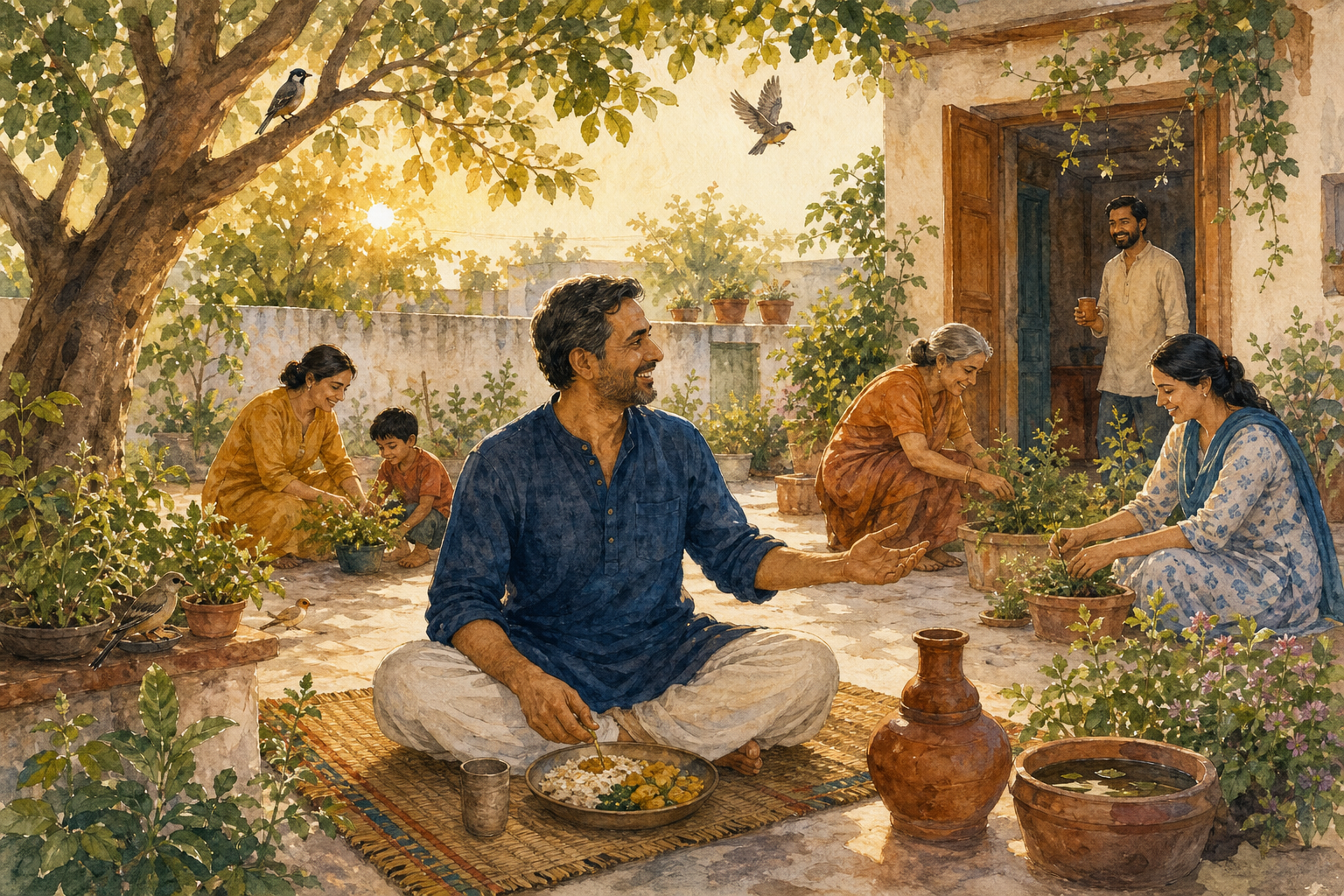
A dharmic view of wellbeing changes the central question from whether disease has been diagnosed to whether a person is living in balanced relationship with body, mind, community and surroundings. Its practical value lies in connecting inner equilibrium, daily discipline, social responsibility and careful judgment.
The available source is a single recap of a multidisciplinary panel, not independent confirmation of its health claims. The synthesis below therefore connects the Ayurvedic, clinical, public-health and economic perspectives reported in that account while distinguishing a useful framework from medical evidence.
A whole-person standard changes what counts as health
The DharmaRenaissance Blog recap of a June 2026 DDA ’26 panel reports that Ayurvedic practitioner Anand Yadav described swastha as harmony among bodily tissues, digestion, elimination, mind, senses and inner life. This standard is wider than a symptom inventory or laboratory result: it asks how well the different dimensions of a person function together.
That definition need not displace biomedical measures. It can instead expose what those measures do not fully capture, such as the quality of attention, the steadiness of habits or the relationship between physical condition and mental state. Cardiologist Devraj Nayak’s reported emphasis on training the faculty that makes choices helps connect the two levels. Clinical information can identify risks, while disciplined awareness influences what a person repeatedly does with that information.
The recap also places this discussion in a wider dharmic setting. Hindu, Buddhist, Jain and Sikh traditions remain distinct, but disciplined conduct, restraint, compassion and responsibility toward others provide points of contact. Holistic wellbeing, on this reading, is not one uniform doctrine; it is a family of approaches that treats character and relationship as relevant to health.
Daily routines work by educating attention
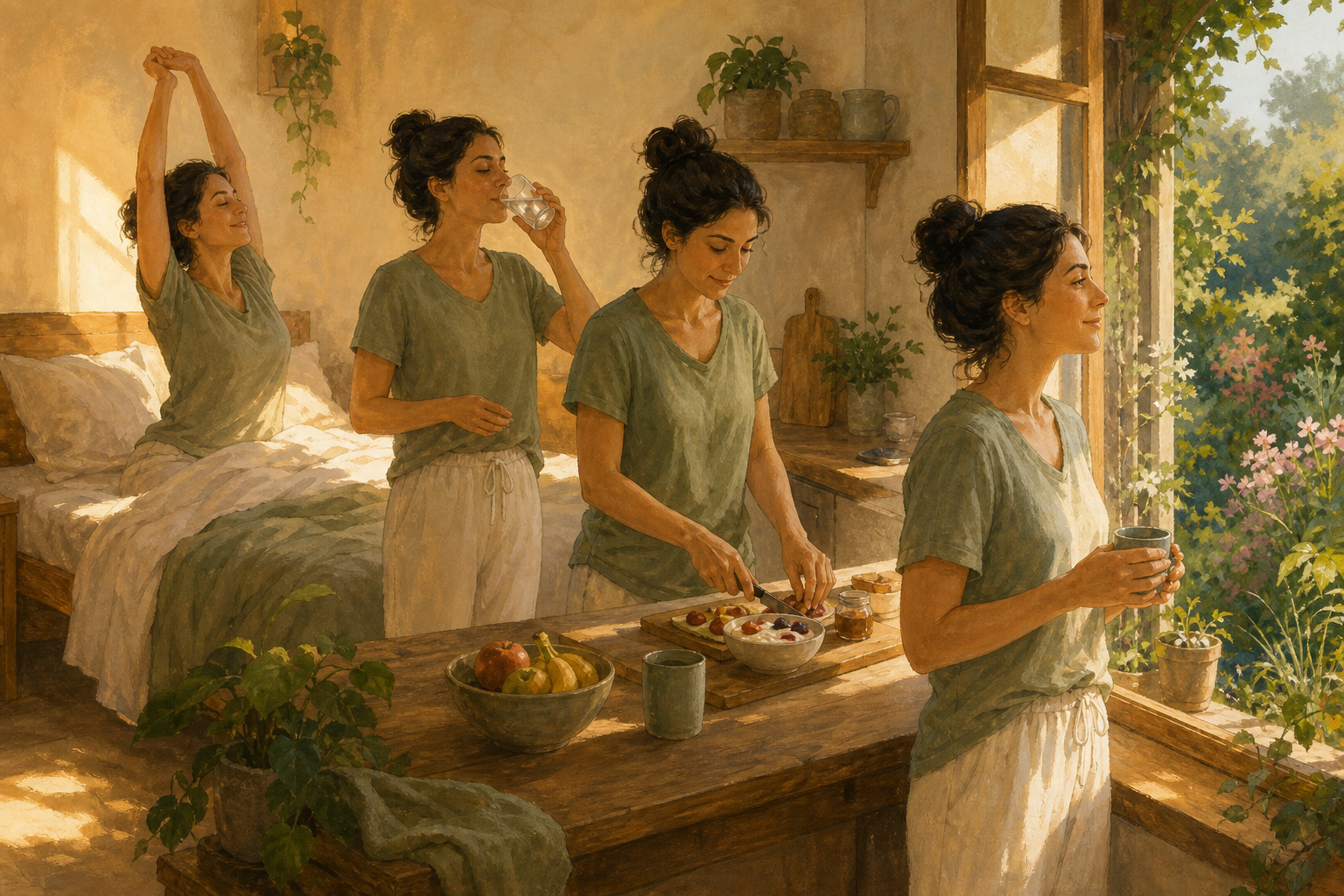
The panel account organizes Ayurvedic practice around ahara, or food; nidra, or restorative sleep; and brahmacharya, presented in this context as a regulated way of life. Yadav reportedly distinguished household discipline from lifelong celibacy, making moderation within ordinary responsibilities the applicable principle for most people.
The connecting mechanism is attention. Observing food before eating, reducing distraction during meals, reflecting without self-condemnation before sleep, moving without making exhaustion the goal, and pausing to breathe before reacting to a digital stimulus all insert awareness between impulse and action. Their significance is therefore not limited to isolated wellness techniques. Each routine rehearses the capacity to choose deliberately.
This also clarifies the relationship between yoga and everyday conduct. If yoga is understood only as physical posture, the decisive moment may be missed. In the framework reported by the panel, practice begins earlier: at the point where appetite, agitation or habit is noticed before it becomes behavior.
Personal discipline depends on social possibility
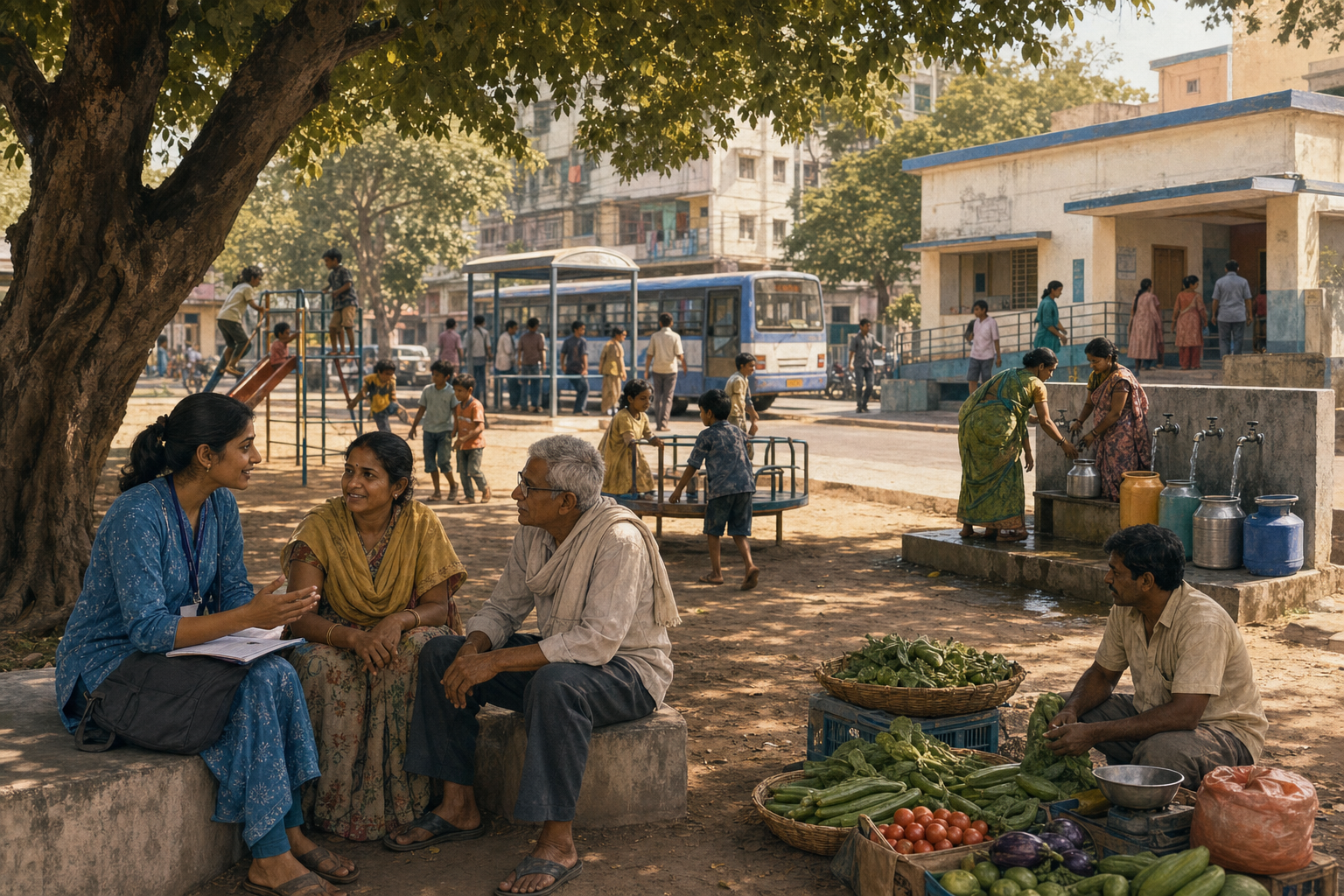
A whole-person model becomes incomplete if it places every outcome on individual will. The recap reports that nutritional epidemiologist Shreela Sharma cited a 22-year life-expectancy difference between Houston’s Sunnyside and River Oaks neighborhoods. The figure is reported here as part of her panel presentation and has not been independently verified, but the underlying analytical point is clear: safe surroundings, nourishing food, reliable information and preventive support affect the choices available to people.
The source also says Sharma discussed food-prescription programs reimbursed in 22 US states, while health economist Koustuv Dalal emphasized health literacy and the difficulty of navigating conflicting advice. These perspectives expand the scale of intervention. A meal practice concerns the individual; food access and understandable guidance concern institutions and communities. Neither scale makes the other unnecessary.
Here, seva gives social policy and voluntary action an ethical dimension. Helping another person obtain food, companionship or trustworthy knowledge is not separate from wellbeing. It strengthens the conditions under which disciplined living becomes realistic, turning care of the self and service to others into mutually supporting responsibilities.
Discernment is the bridge between tradition and medicine
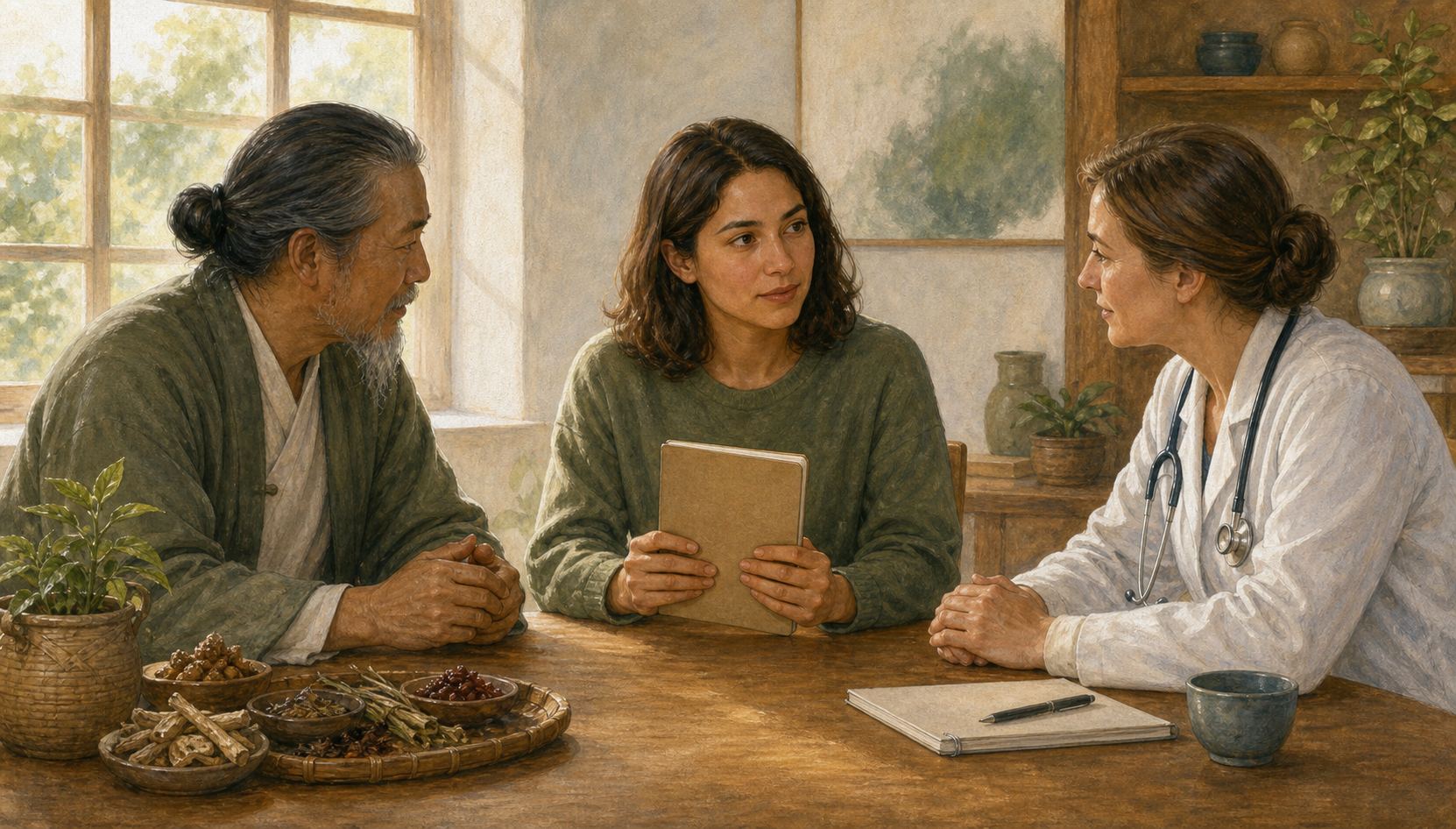
The source includes claims about diet, protein, sleep, attention and public-health outcomes, but a panel recap cannot by itself establish their scientific validity. Traditional teaching, professional interpretation, personal experience and independently tested evidence are different kinds of support. Responsible synthesis preserves those distinctions instead of treating every statement as equally proven.
A dharmic approach can make discernment part of the practice itself. A health recommendation should be examined for the kind of evidence behind it, its relevance to an individual’s circumstances, its possible risks and its compatibility with competent clinical care. This is especially important when advice would require restrictive eating, changes to medication or departure from an established treatment plan.
Tradition and modern medicine therefore need not be framed as rivals. The strongest division of labor is complementary: inherited frameworks can broaden the questions asked about a life, while qualified clinical evaluation can diagnose conditions, assess risk and guide treatment. Neither cultural authority nor personal testimony should be used as a substitute for medical assessment.
Key takeaways
- Use swastha as a whole-person question about balance, not as a replacement for diagnosis.
- Treat food, sleep, movement and moderation as recurring opportunities to train attention.
- Consider access, neighborhood conditions and health literacy alongside personal responsibility.
- Express wellbeing socially through compassion, service and the sharing of reliable knowledge.
- Separate traditional interpretation, professional opinion, personal experience and independently established evidence before acting on a health claim.
The recap says the panel agreed to develop a white paper following an audience request for clearer guidance. Its greatest potential would lie in identifying which recommendations arise from textual tradition, clinical evidence or experience, allowing families and communities to engage dharmic wellbeing with both openness and care.