

The controversy over remarks attributed to Sharad Pawar about Sant Tukaram Maharaj’s Vaikunthgaman brings three sensitive questions together: how a sacred tradition understands a saint’s departure, what responsibility accompanies political speech, and how allegations should be assessed when the primary words and context are unavailable.
The sole supplied report describes a Hindu Janajagruti Samiti memorandum seeking action over an alleged statement, but it does not reproduce that statement or document a response from Pawar. A careful reading must therefore distinguish the devotional meaning at stake from the claims that remain unverified in the available record.
Key takeaways
- For devotees, Vaikunthgaman is a living sacred belief about Sant Tukaram Maharaj’s ascent to Vaikuntha, not merely an incidental detail in a historical biography.
- The supplied article reports an allegation and a demand for official action; without the exact remark and its context, it cannot establish precisely what was said or intended.
- Historical inquiry, theological interpretation and mockery are different forms of speech. A fair assessment depends on identifying which one the disputed comment actually represented.
- Clarification, complete evidence, proportionality and due process offer a more credible response than either dismissing devotional hurt or presuming guilt from a characterization alone.
Why Vaikunthgaman carries more than historical meaning
The supplied article presents Vaikunthgaman as the devotional account of Sant Tukaram Maharaj ascending to Vaikuntha, the divine abode of Bhagwan Vishnu. Within this understanding, the account is inseparable from reverence for a saint whose abhangs and devotion to Bhagwan Vitthal continue to shape religious life.
The report places that memory within the Varkari Sampradaya’s practices of naam, kirtan, pilgrimage and service. It also emphasizes the accessibility of Tukaram Maharaj’s teachings on humility, surrender, moral conduct and sincere bhakti. This context explains why a remark about his departure may be heard by devotees not as an abstract proposition about the past, but as a judgment on a continuing relationship between saint, teaching and community.
Sacred narratives can operate on several levels at once. They may affirm theological truth, sustain ritual remembrance, express the spiritual stature attributed to a revered person and transmit a community’s moral imagination. Recognizing these functions does not settle every historical question, but it prevents a category error: evaluating a living devotional account as though its only significance were a claim awaiting secular verification.
The reverse distinction also matters. Respect for devotional meaning need not require every citizen, historian or political speaker to adopt the same theological interpretation. The central public question is therefore not simply whether different readings may exist, but whether a particular speaker expressed disagreement responsibly or treated a revered tradition with contempt.
What the supplied report establishes and leaves unresolved

According to the supplied article, the Hindu Janajagruti Samiti submitted a memorandum to Maharashtra’s Chief Minister demanding strict action against Sharad Pawar. The organization reportedly characterized a statement attributed to the senior political figure as controversial and disrespectful toward Sant Tukaram Maharaj’s Vaikunthgaman. The article interprets the memorandum as an appeal for accountability in speech concerning saints and sacred traditions.
That is the extent of the concrete controversy documented in the source provided for this synthesis. The article does not reproduce Pawar’s alleged words, identify their immediate context, supply a complete recording or transcript, describe his explanation, or report a concluded official finding. It also does not specify in the supplied text which legal provision, if any, authorities were asked to apply.
Those omissions are decisive rather than technical. Exact wording could show whether the comment was a historical hypothesis, a theological disagreement, a rhetorical provocation, a quotation of someone else’s position or an insult. Surrounding remarks could alter its apparent meaning, while a response from the speaker could confirm, qualify or dispute the circulated interpretation.
Consequently, the available material supports reporting that an objection and demand for action were made. It does not, by itself, support a definitive judgment about the content, intent or legal character of the alleged remark. The distinction protects both sides: devotees’ concerns need not be trivialized, and an accusation need not be treated as an adjudicated fact.
How faith, inquiry and public responsibility can coexist
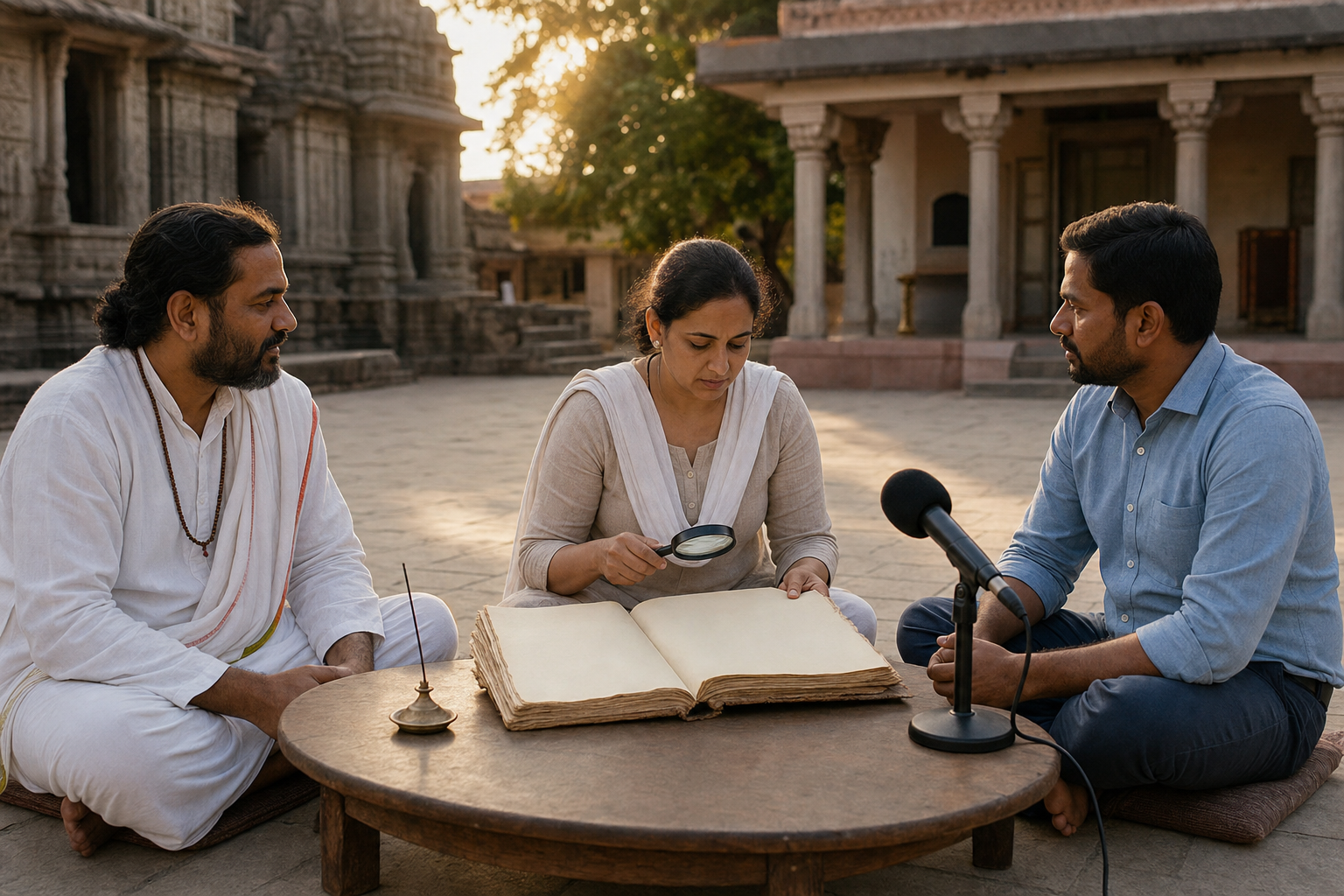
The supplied article argues that historical analysis has a legitimate place while insisting that language about revered figures matters. That principle becomes most useful when applied symmetrically. Devotional communities should be represented accurately rather than caricatured, and contentious speech should be evaluated from primary evidence rather than partisan summaries.
Interpretive precision is essential. A historian asking what contemporary records can demonstrate is addressing a different question from a theologian explaining what Vaikunthgaman means within bhakti. A devotee testifying to a sacred truth is likewise doing something different from a public official deciding whether legal action is warranted. Conflict intensifies when one mode of reasoning is presented as though it automatically invalidates all the others.
Influence adds responsibility but does not remove freedom of inquiry. Political leaders know that short remarks can circulate apart from their original setting and acquire partisan meanings. They can reduce avoidable harm by speaking precisely, distinguishing analysis from derision and clarifying disputed comments promptly. Media and advocacy organizations have a corresponding obligation to publish the relevant words and context whenever available.
Institutional responses should then be proportionate to verified conduct. Authorities can receive a memorandum and acknowledge the seriousness of the concern without presuming that its characterization has already been proved. Any administrative or legal assessment should depend on authentic evidence, the applicable law and constitutional standards. Public dialogue can address insensitivity or misunderstanding even where coercive action is neither justified nor established.
Moving the controversy toward a verifiable conversation

The dispute illustrates why sacred-memory controversies are rarely resolved by choosing between unrestricted provocation and unquestioning silence. A healthier public culture permits historical questions, protects theological expression and expects restraint when influential speakers discuss traditions that remain central to community life.
For Sant Tukaram Maharaj’s legacy, the most meaningful response is not to let a disputed political remark eclipse the devotional and ethical teachings described by the source. The controversy can instead encourage better public understanding of why Vaikunthgaman matters to Varkari devotees and why disagreement must be expressed without reducing faith to an object of ridicule.
The next constructive step would be disclosure of the complete remark, its setting and any clarification or response, followed by an assessment grounded in evidence rather than fragments. That approach would take devotional hurt seriously while preserving fairness, lawful inquiry and the possibility of genuine understanding.