
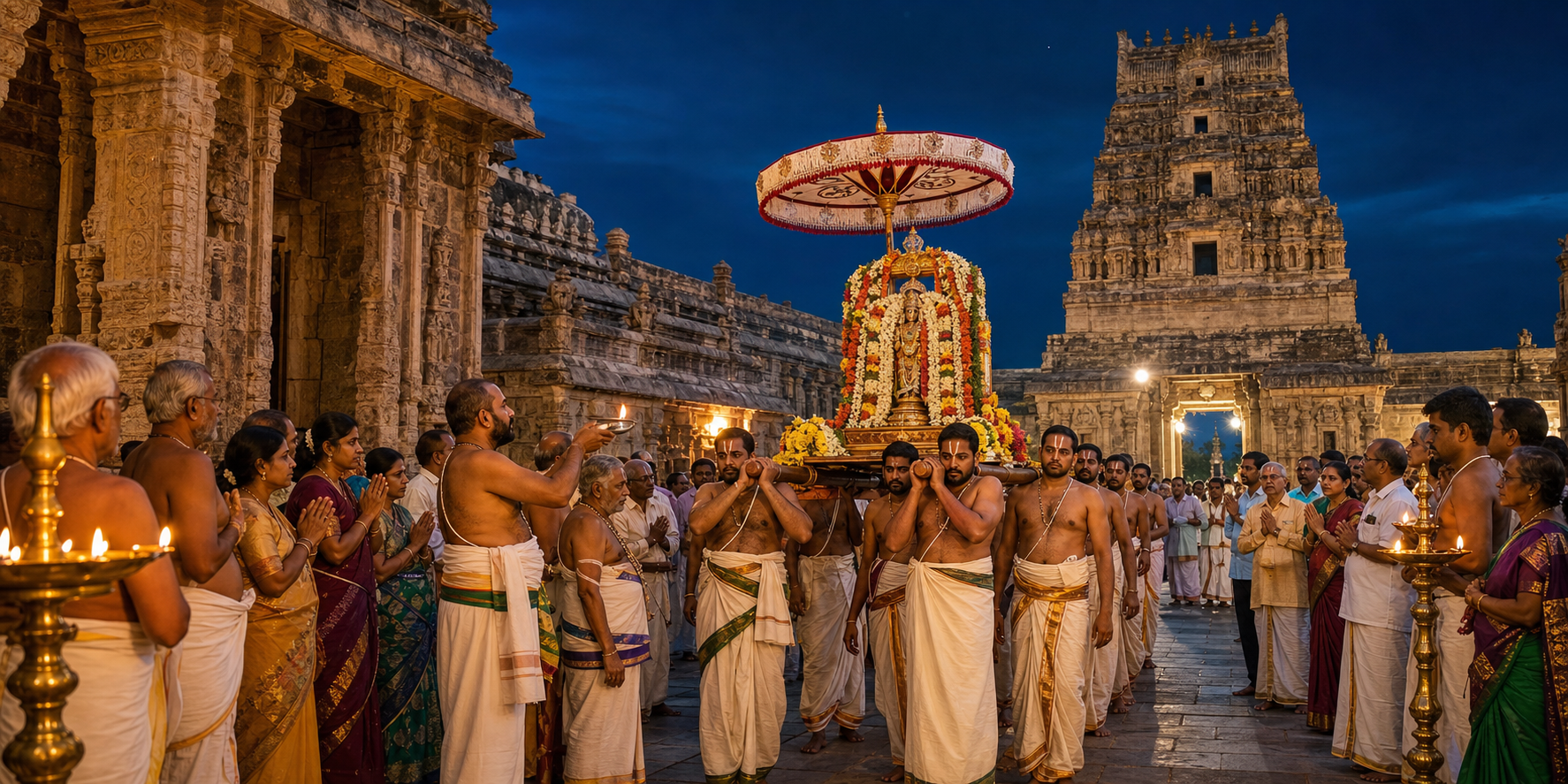
The Salakatla Sakshatkara Vaibhavotsavams at Sri Kalyana Venkateswara Swamy Temple are reported for July 17-19, 2026. The three-day observance at Srinivasa Mangapuram brings sacred bathing, the swing service, and processional darshan into one devotional sequence.
The available account supplies a useful festival outline, but not a complete operational schedule. Distinguishing what it confirms from what remains unspecified helps devotees understand the celebration without turning gaps in the report into assumptions.
What the reported festival schedule establishes
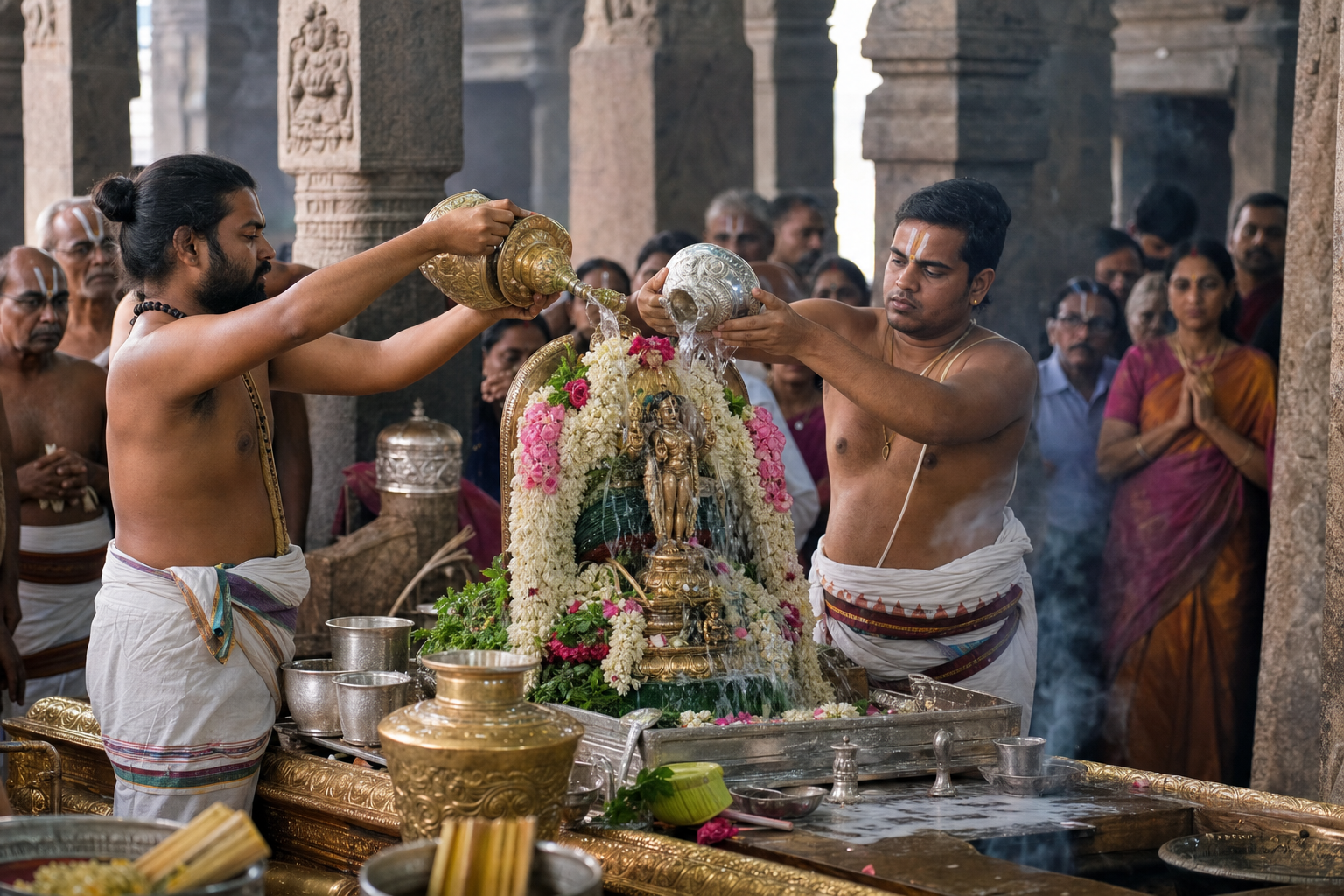
According to the DharmaRenaissance Blog report, the annual festival will be observed for three days at the historic Sri Kalyana Venkateswara Swamy Temple in Srinivasa Mangapuram. Special Snapana Tirumanjanam, Unjal Seva, and Vahana Sevas are reported as daily features of the observance.
The account identifies one processional vehicle by name: Lord Kalyana Venkateswara is scheduled to grant darshan on Pedda Sesha Vahanam on July 17. It says that special vahana processions continue on the remaining festival days, but it does not name those vehicles or provide service times. The published information should therefore be read as a festival framework rather than a complete day-by-day timetable.
How three services create a devotional progression
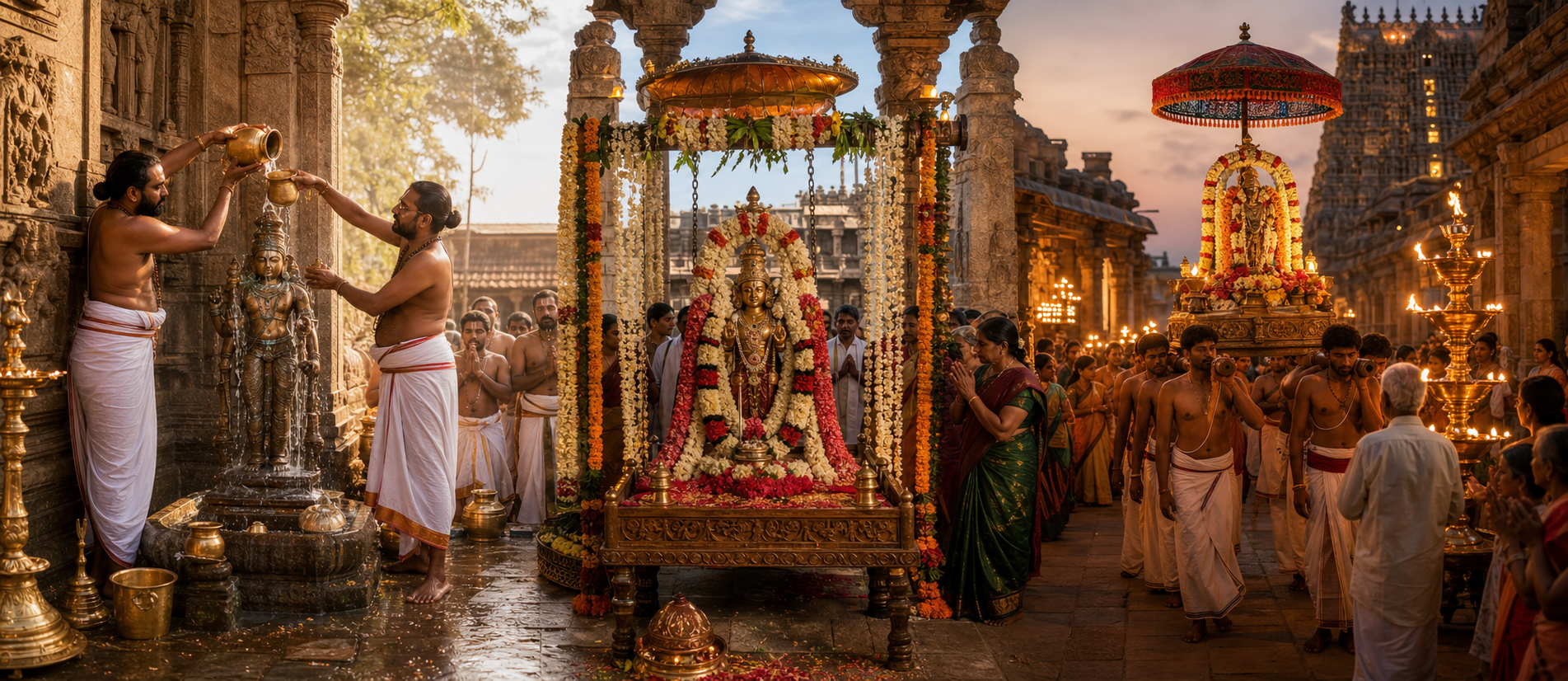
Read together, the reported rituals form a movement from intimate temple service to public encounter. Snapana Tirumanjanam centres on ceremonial bathing; Unjal Seva presents the deity in a tender setting of music and gentle movement; and the Vahana Sevas carry divine darshan into a more visibly processional setting. Their importance lies not only in their individual forms but also in the change of devotional mood across the sequence.
Snapana Tirumanjanam as service and renewal
The source describes the utsava murti as being ceremonially bathed with sanctified offerings including water, milk, sandal, turmeric, and flowers. It interprets this act through purity, renewal, and surrender. The ritual also engages more than sight: mantra, fragrance, offerings, and collective reverence make the bathing a participatory form of worship rather than a spectacle viewed at a distance.
Unjal Seva and devotional intimacy
During Unjal Seva, the Lord is placed on a decorated swing and worshipped with prayers, music, and offerings, according to the report. The service holds majesty and affection together. Lord Venkateswara remains the supreme divine presence while also being approached with the loving attention given to a deity welcomed into the devotional life of a household.
Vahana darshan as public theology
A vahanam is more than a ceremonial carrier because its imagery communicates a theological relationship. The report connects Pedda Sesha Vahanam with Sesha, the great serpent associated with Lord Vishnu, and interprets it through cosmic support, surrender, and eternal service. It also notes the sacred association between Sesha and the Seshachalam hills. In this reading, the July 17 procession makes an idea about divine order accessible through a visible form of darshan.
Why Srinivasa Mangapuram gives the festival its character
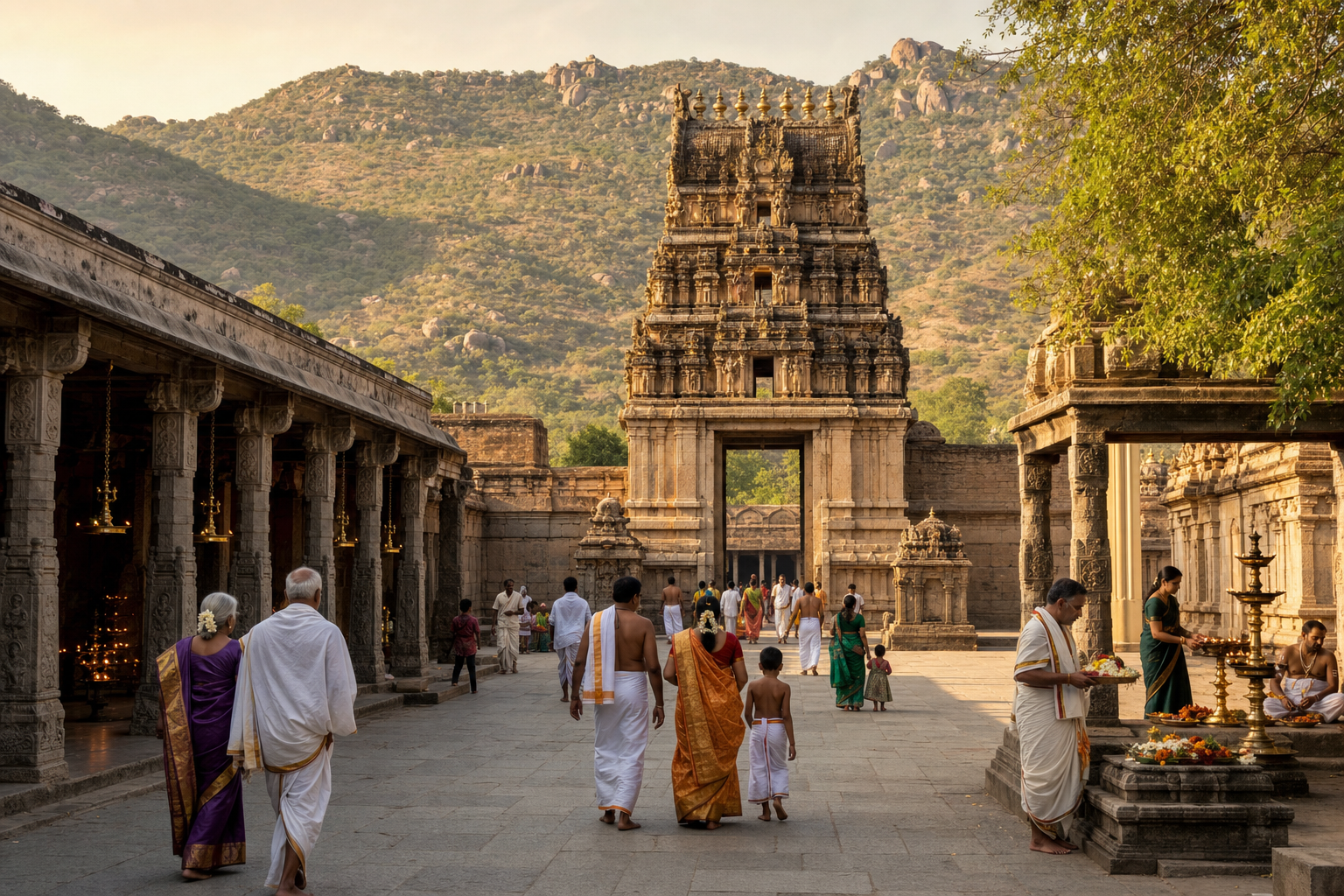
The setting is central to the observance. The source presents Sri Kalyana Venkateswara as a form of Lord Venkateswara especially associated with auspicious marriage, household harmony, and divine protection. This helps explain the temple’s particular importance for newly married couples and families seeking blessings.
The account carefully frames the temple’s connection with the divine wedding as tradition: Lord Srinivasa and Goddess Padmavathi are believed to have stayed at Srinivasa Mangapuram after their marriage and before proceeding to Tirumala. That narrative makes the temple more than a secondary pilgrimage stop. It gives the shrine a distinct devotional identity centred on the transition from sacred marriage to dharmic household life.
The festival’s name deepens this connection between place and experience. The report explains Sakshatkara in terms of direct experience or realization and Vaibhavotsavam as a celebration of divine splendour. The resulting emphasis is not merely on seeing an elaborate event, but on entering an ordered atmosphere of darshan, seva, memory, and reflection.
Key takeaways
- The reported dates are July 17-19, 2026, at Sri Kalyana Venkateswara Swamy Temple in Srinivasa Mangapuram.
- Snapana Tirumanjanam, Unjal Seva, and Vahana Sevas are identified as daily elements of the three-day celebration.
- Pedda Sesha Vahanam is specifically reported for July 17; the supplied account does not identify the vehicles for the other two days.
- The ritual sequence can be understood as a progression from sacred bathing and intimate service to public processional darshan.
- The temple’s marriage tradition gives the festival particular significance for couples, families, and devotees reflecting on household dharma.
What prospective visitors still need to confirm
The source does not provide exact service times, access arrangements, procession routes, or a complete vahana schedule. Those details should not be inferred from the general announcement. Anyone planning a visit should confirm the final programme and practical arrangements through authoritative temple communications.
As further scheduling information becomes available, it can complete the practical picture. The published outline already clarifies the festival’s devotional centre: a carefully ordered encounter with Sri Kalyana Venkateswara in which ritual service, sacred imagery, temple memory, and community participation meet.