
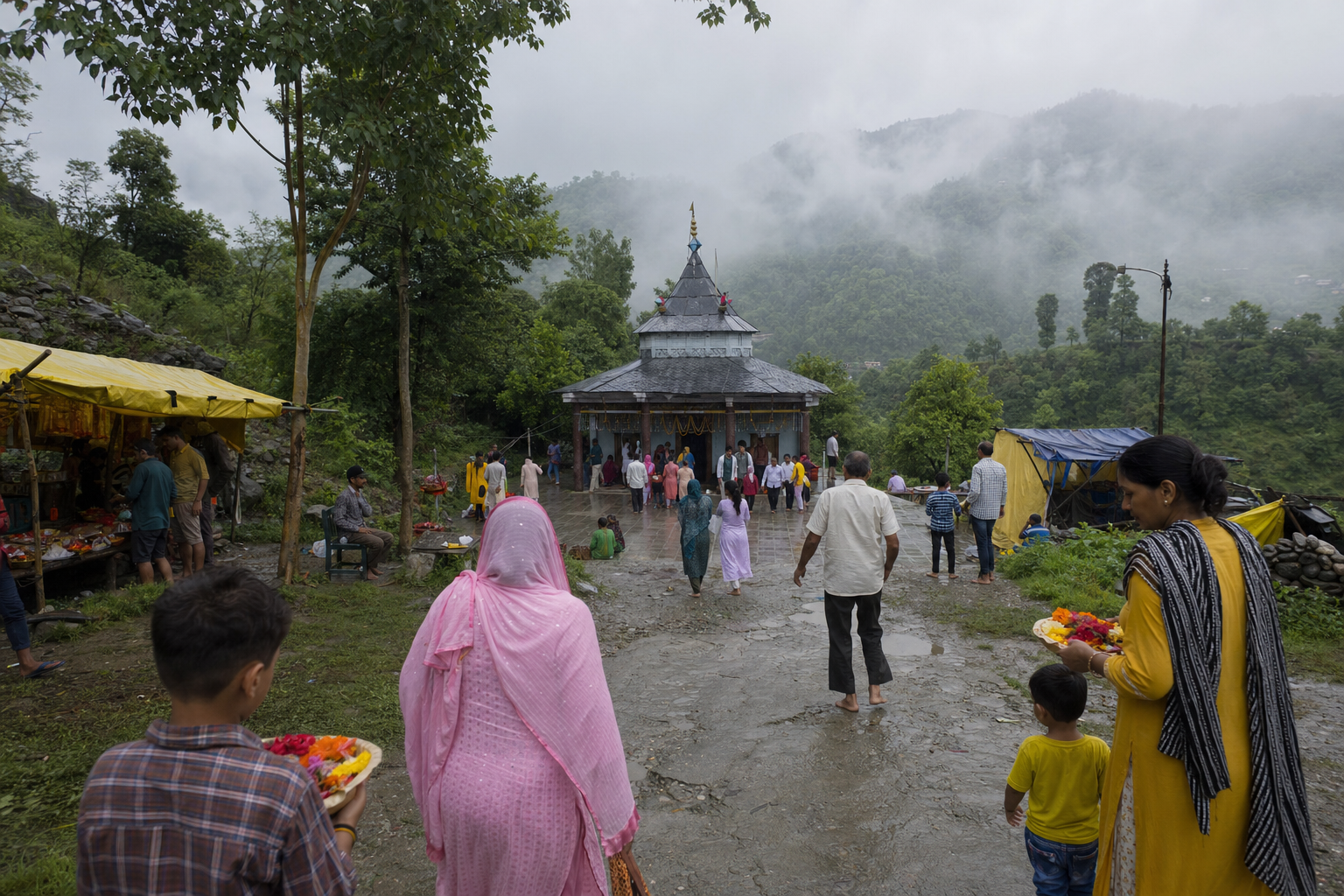
The Nagni Mata Fair near Nurpur brings temple worship, the monsoon landscape, regional travel and small-scale commerce into one seasonal gathering. An existing DharmaRenaissance Blog report places the opening observance for 2026 on Saturday, August 1, while describing Saturdays in the Hindu months of Shravan and Bhadrapad as the fair’s traditional rhythm.
This guide connects the report’s ritual, ecological, social and practical details so that readers can understand both the fair’s meaning and the responsibilities of attending it. Because the available source is a single published account, its date and logistical details are reported here without implying independent corroboration.
Key takeaways
- DharmaRenaissance Blog reports that the 2026 fair begins on Saturday, August 1, with observances traditionally associated with Saturdays in Shravan and Bhadrapad.
- The same account places the shrine about 6 kilometres from Nurpur, near the Bhadwar and Kandwal area along the Pathankot-Kullu highway.
- The fair connects devotion to Nagni Mata with serpent symbolism, water, earth and the seasonal transformation produced by the monsoon.
- Beliefs concerning temple water and soil must remain distinct from medical treatment: a suspected snakebite requires immediate professional emergency care.
A Saturday observance at a regional crossroads
The report presents Mela Nagni as a recurring seasonal observance rather than merely a single festival date. It identifies August 1 as the first Saturday observance in 2026 and suggests that the fair atmosphere may continue on later Saturdays during Shravan and Bhadrapad. It does not, however, supply a complete confirmed calendar for every fair day. Temple timings, traffic plans and subsequent dates should therefore be checked with local temple authorities or the district administration before departure.
Geography helps explain the fair’s reach. According to the report, the temple stands roughly 6 kilometres from Nurpur near Bhadwar and Kandwal, on a route connecting the Himachal hills with Pathankot and surrounding areas. The source says visitors come from a wider region that includes parts of Himachal Pradesh, Punjab and Jammu and Kashmir. The fair consequently retains a distinctly Nurpur identity while participating in a broader network of pilgrimage, trade and family movement.
This combination of a recurring sacred calendar and an accessible interregional route gives the gathering two scales at once. For nearby communities, it is part of the year’s familiar religious rhythm. For visitors travelling from farther away, it is a destination pilgrimage whose experience includes the road journey, changing hill weather and the collective approach to the shrine.
Serpent, water and monsoon form one sacred vocabulary
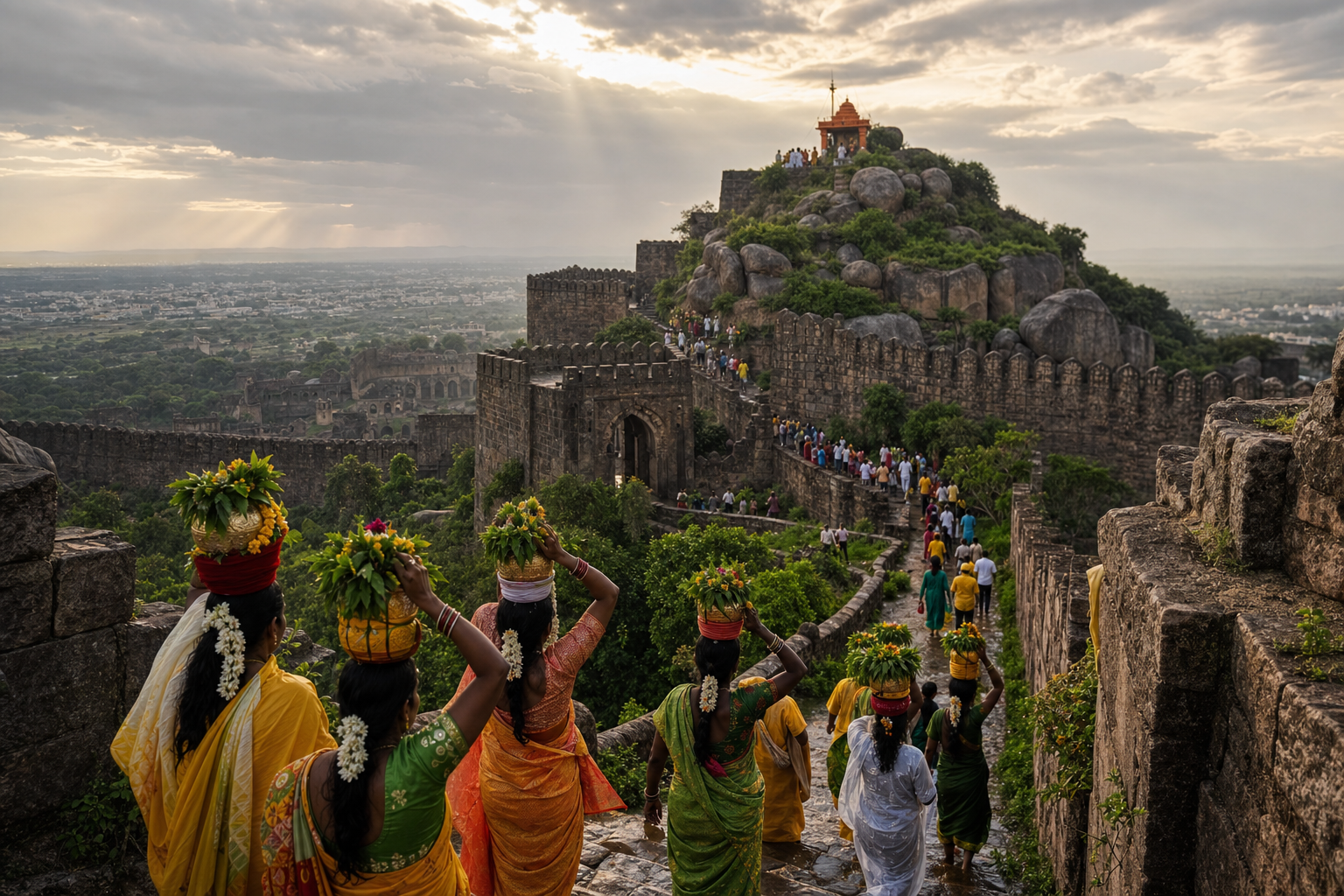
Nagni Mata is described in the source as a local expression of the sacred feminine associated with serpent imagery. Within the interpretive tradition outlined by the report, the serpent can signify protection, fertility, water beneath the earth, ancestral memory, yogic energy and ecological balance. These meanings place the shrine within the wider diversity of Indic Naga reverence while preserving its local character.
The monsoon setting makes those associations especially coherent. Shravan and Bhadrapad fall in a season when rain, flowing water, cultivated land and the risks of hill travel become immediately visible. Water, soil and serpents are therefore not isolated symbols at this fair. Together, they express a religious understanding of a landscape that can sustain life while also demanding caution and respect.
The DharmaRenaissance account reports a belief that water emerges beneath the temple near the place where the image of Nagni Mata is situated. It also records devotional traditions involving temple water and mitti, or soil, in relation to snakebite. These are reports of religious belief, not evidence of a clinical remedy. Their cultural importance lies in how worshippers interpret protection, healing and the sanctity of place; they should not be converted into medical advice.
Seen in this light, the fair offers a form of sacred ecology: natural features acquire moral and devotional significance, while the monsoon supplies the setting in which those meanings become tangible. That interpretation does not require romanticising environmental danger. It instead shows how local worship can hold reverence for nature together with awareness of its power.
The fair functions as a community institution
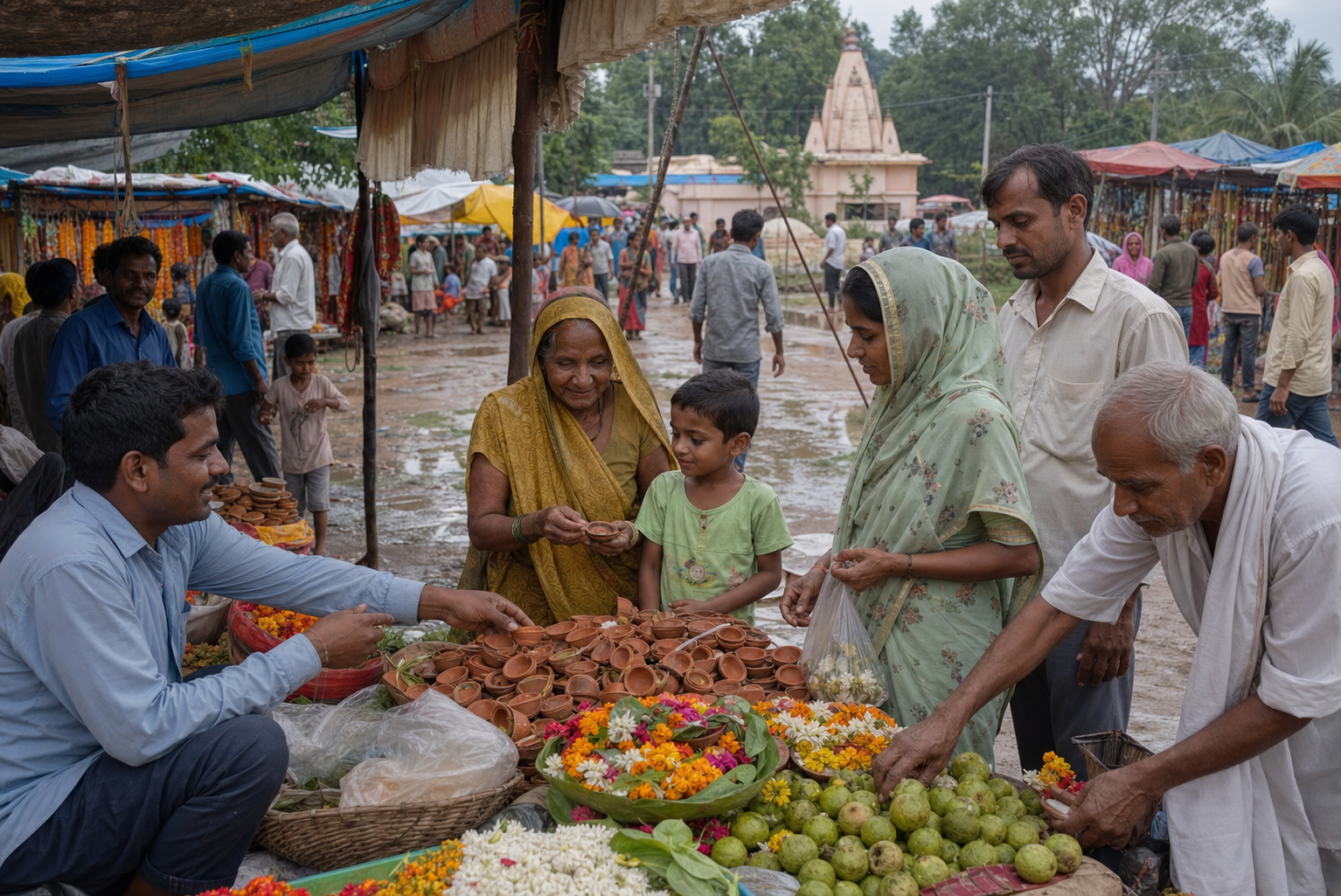
The temple ritual is central, but the source depicts the gathering as more than a queue for darshan. Families carry offerings, elders revisit memories of previous journeys, children encounter the customs of a hill fair, and vendors serve the seasonal movement of pilgrims. Roads and spaces around the shrine temporarily become places of worship, waiting, exchange and shared public life.
This helps explain how the fair preserves culture without relying on formal instruction. Younger participants learn by observing how relatives prepare offerings, approach the deity and behave in a crowded sacred space. Stories of vows, protection and healing move between generations through conversation and repeated participation. The fair thus acts as a living repository of local memory.
There is an economic dimension as well. The report identifies opportunities for food and flower sellers, transport workers, small traders and households serving visitors. Such activity should not be treated as separate from the religious occasion: pilgrimage creates temporary demand, and local services make pilgrimage possible. The relationship is reciprocal, although congestion, waste and pressure on limited space can test it when attendance rises.
Responsible pilgrimage requires preparation and restraint
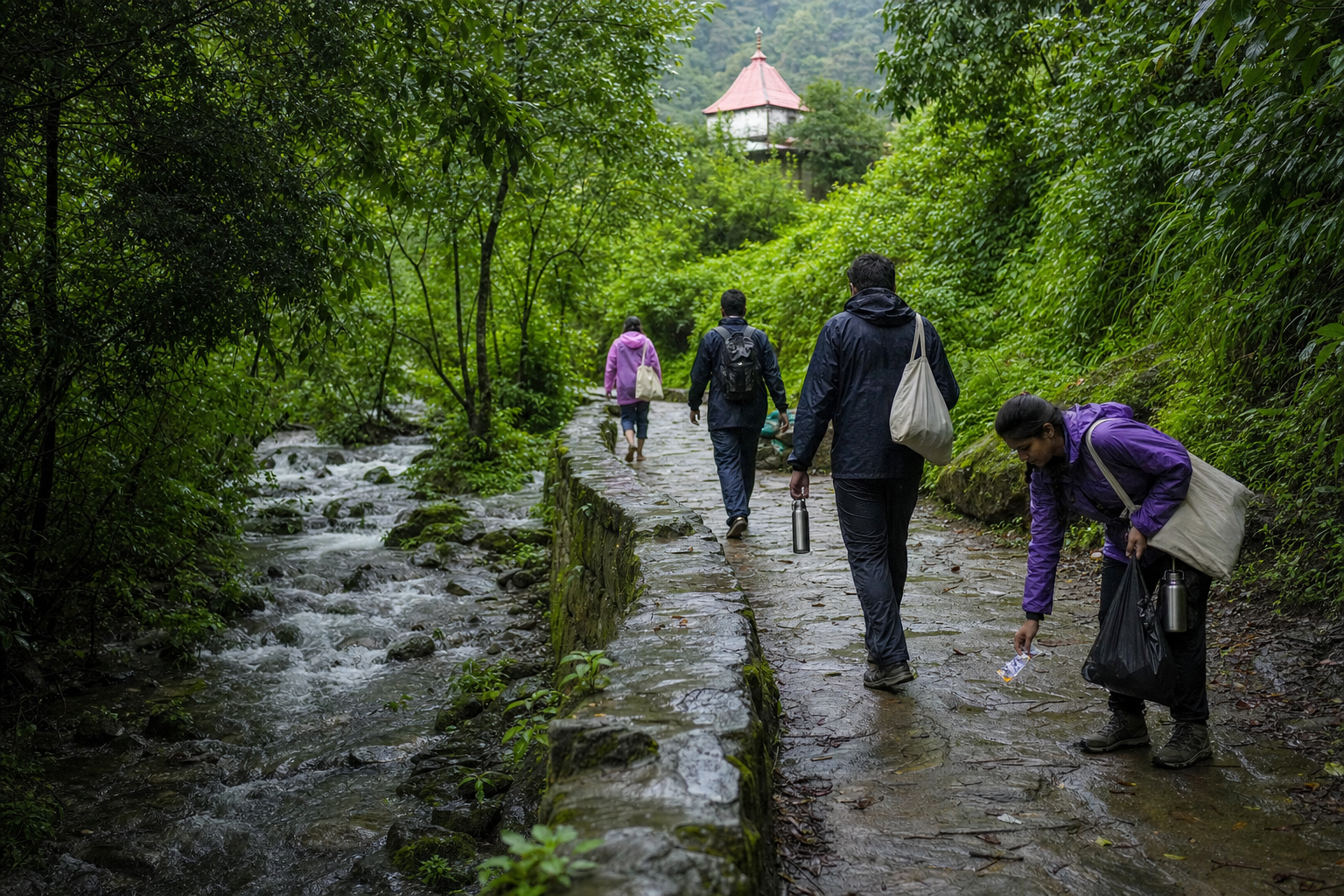
August and September can bring heavy rain to Himachal Pradesh, according to the source, so a fair visit should also be planned as monsoon hill travel. Its practical guidance includes checking weather forecasts, road conditions, landslide advisories, parking arrangements and local traffic instructions. Rain protection, suitable footwear, drinking water and essential medicines are presented as sensible preparations, particularly for families travelling with children or older relatives.
The report says visitors may approach from Pathankot, Nurpur, Kangra-side towns and nearby areas of Punjab and Jammu. Both public transport and private vehicles may be used, but fair-day congestion can affect the final approach. Travelling early and allowing extra time can reduce pressure without assuming that ordinary journey times will apply during a major gathering.
Health caution is especially important because of the shrine’s snakebite traditions. Devotion may offer reassurance to a frightened patient or family, but it cannot determine the severity of envenomation or replace antivenom and hospital care. Any suspected snakebite calls for immediate attention from trained medical professionals; a temple visit or traditional substance must never delay that response.
As the 2026 observance approaches, its continuity will depend on visitors and organisers treating patience, medical responsibility, weather awareness and care for the temple surroundings as part of the pilgrimage itself. That approach can protect both the fair’s inherited meaning and the people who gather to sustain it.