
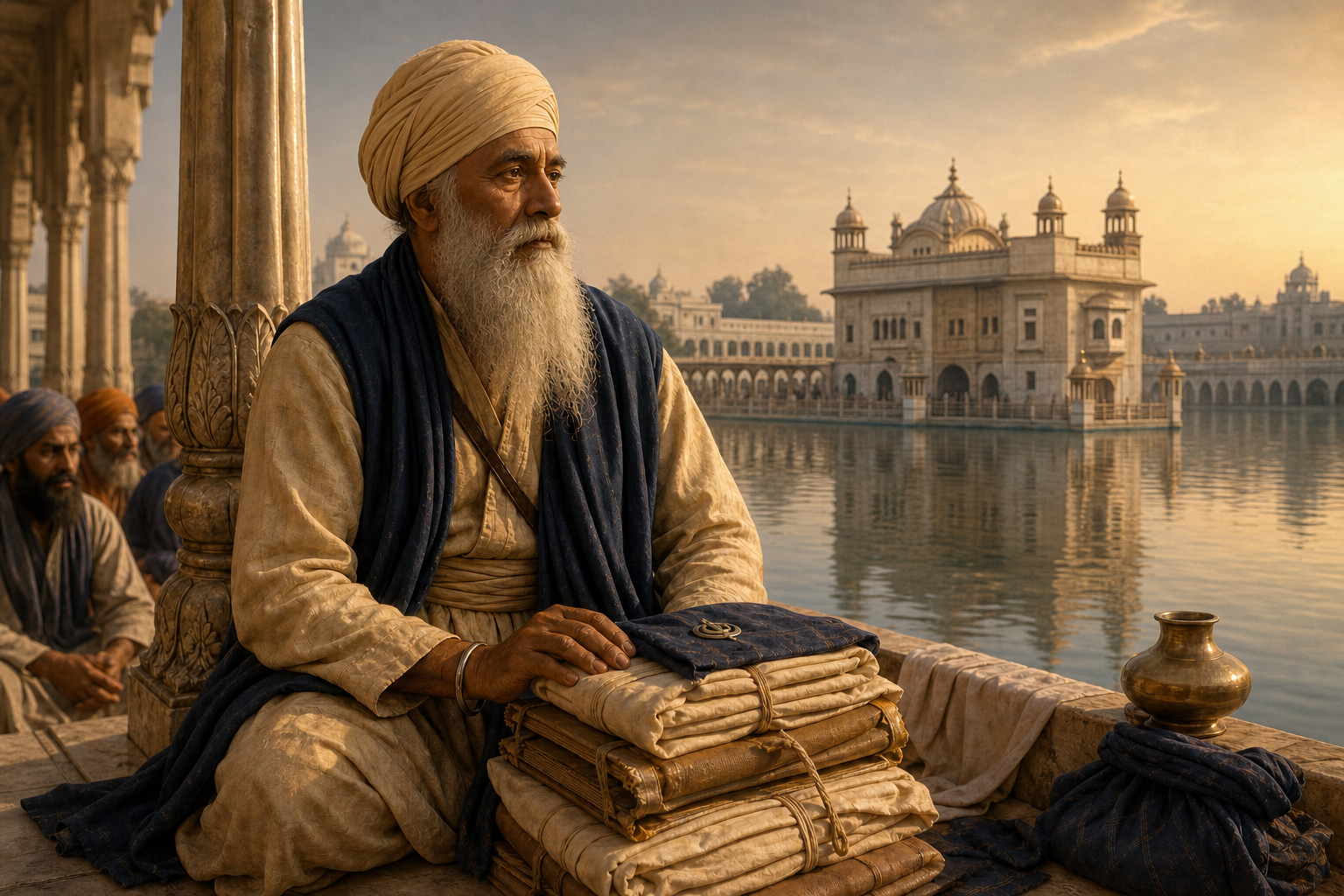
Bhai Mani Singh is often approached through the terrible manner of his death. Yet the supplied account presents a much broader figure: a scholar who transmitted sacred learning, an organizer who sustained communal institutions, a servant associated with Guru Gobind Singh, and a steward of Sri Harmandir Sahib.
Reading these roles together reveals why his legacy has endured. His martyrdom gave dramatic expression to convictions already visible in a life devoted to Gurbani, seva, institutional responsibility, and the cohesion of the Sikh Panth.
A life defined by service before sacrifice
The DharmaRenaissance account situates Bhai Mani Singh in a period of political pressure and social disruption for the Sikh community. It remembers him as a close Sikh of the Guru tradition, associates him with the court and service of Guru Gobind Singh, and later places him in a position of responsibility at Sri Harmandir Sahib in Amritsar.
That sequence matters because it changes the meaning of his final sacrifice. Martyrdom was not an isolated act performed by someone previously removed from public responsibility. In the source’s portrayal, it was the last expression of a settled discipline: learning, teaching, administering, serving the sangat, and preserving the community’s moral centre under pressure.
This also explains the character of his authority. It did not rest primarily on office, visibility, or self-promotion. It arose from competence joined to seva. His life therefore offers a Sikh model of leadership in which trust is earned through the patient maintenance of sacred and communal life.
Scholarship and stewardship as forms of resilience
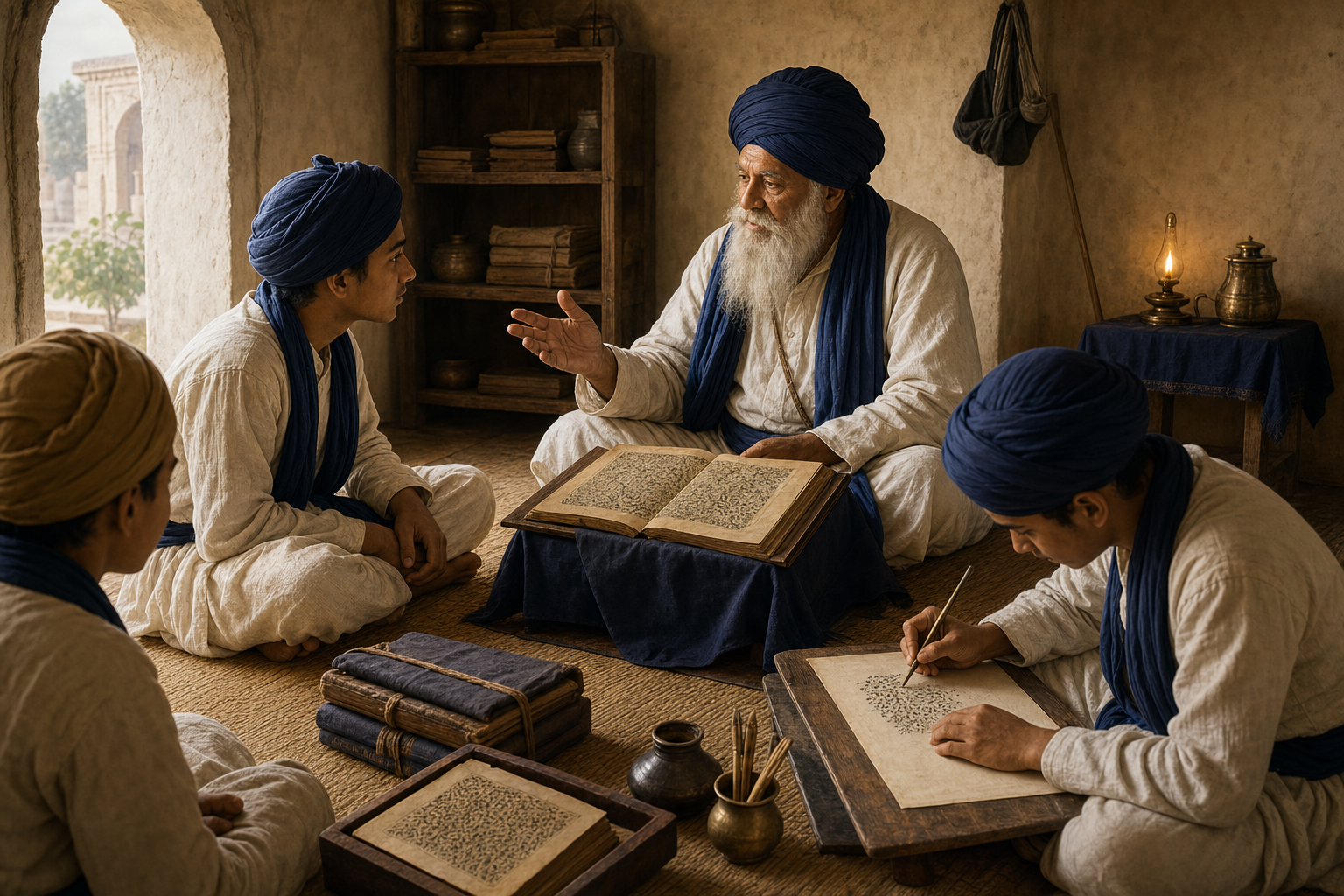
The source remembers Bhai Mani Singh as a learned interpreter of Gurbani and associates him with the compilation, organization, teaching, and transmission of sacred texts. It appropriately notes that devotional memory and academic inquiry may approach such traditions differently. What remains clear within the account is the importance assigned to his work as a custodian of learning.
Textual preservation can sound removed from political struggle, but the two are closely connected. A community facing disruption needs more than physical survival. It needs the language through which it recognizes its duties, recalls its history, teaches its young, and understands suffering without being consumed by it. Sacred learning supplies that continuity.
His association with Sri Harmandir Sahib adds an institutional dimension to the same work. A sacred centre depends upon devotion, but also upon teaching, administration, custodianship, collective participation, and orderly practice. The portrait that emerges is therefore not of scholarship on one side and organization on the other. Both serve the same purpose: enabling a dispersed or pressured community to remain spiritually intelligible to itself.
This relationship between memory and institution is central to Bhai Mani Singh’s legacy. Texts without living communities can become inaccessible objects, while institutions without sacred literacy can lose their purpose. His remembered service holds the two together.
What his martyrdom testifies to
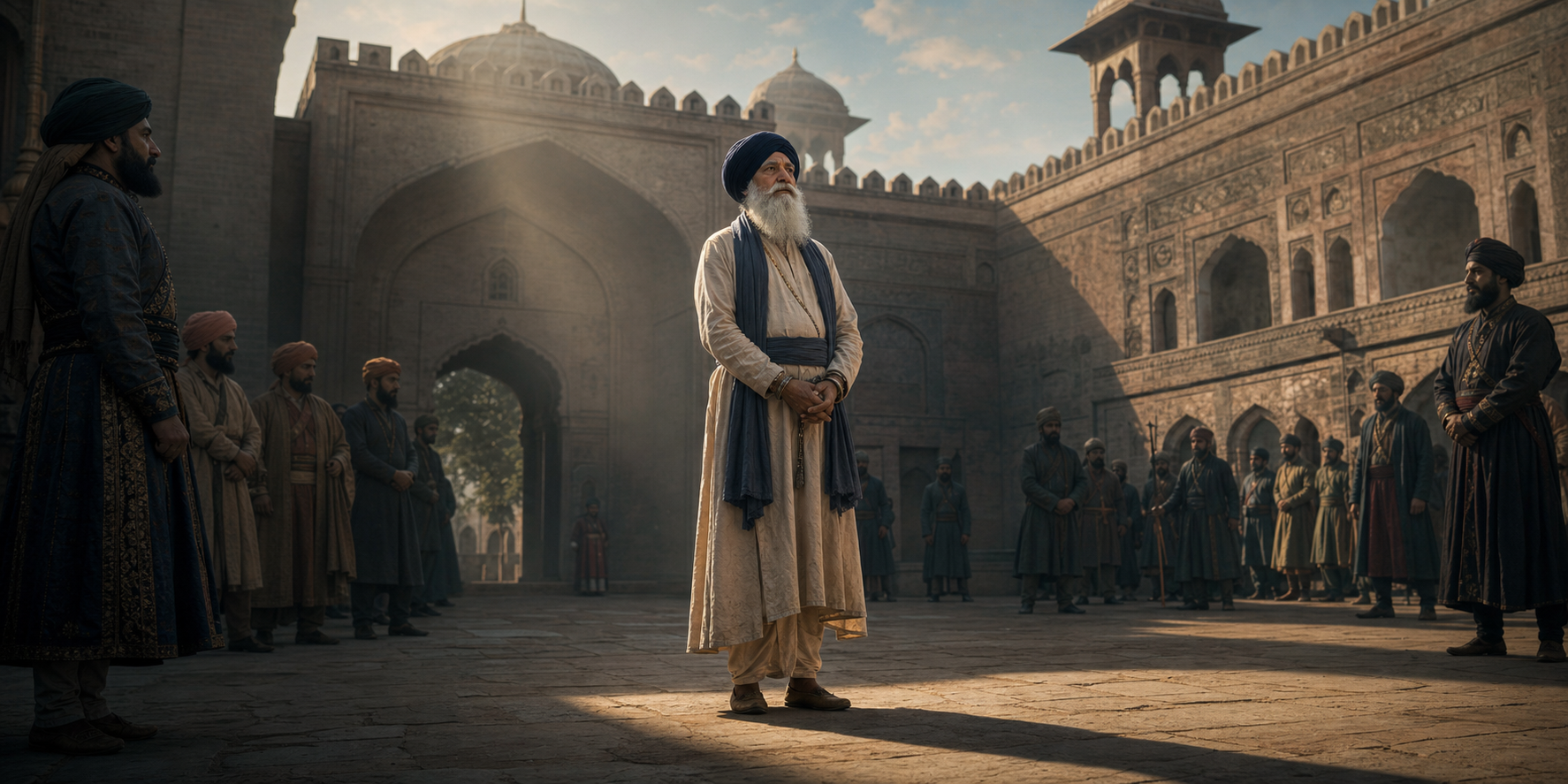
According to the supplied article, Bhai Mani Singh was martyred in Lahore in 1738. It describes the event, in traditional terms, as death by dismemberment under Mughal authority following a dispute connected with a religious gathering and a punitive demand. Because the account itself presents elements of the episode through tradition, those details are best retained with that attribution rather than treated as independently verified here.
The ethical significance of the episode does not lie in pain for its own sake. The source interprets his death as a refusal to trade conscience and the dignity of faith for physical survival. On this reading, martyrdom is moral testimony: coercive power can injure the body, but it cannot manufacture sincere assent.
That distinction guards remembrance against two distortions. One is to reduce Bhai Mani Singh to a passive victim, overlooking the constructive work that preceded his death. The other is to romanticize suffering, as though cruelty itself conferred meaning. His remembered sacrifice matters because it was anchored in a life of responsibility and directed toward fidelity rather than vengeance.
His courage is consequently better understood as disciplined firmness than as fearlessness or aggression. The example joins conviction to wisdom: principle without needless provocation, sacrifice without a cult of victimhood, and historical memory without an obligation to inherit hatred.
Key takeaways
- His legacy is larger than his martyrdom: scholarship, seva, teaching, and institutional stewardship explain the character of his final stand.
- Knowledge preservation is communal infrastructure: sacred texts and their interpretation help a community maintain continuity during political and social disruption.
- Devotion requires capable institutions: sacred centres endure through administration, education, custodianship, and shared discipline as well as reverence.
- Moral courage is governed by conscience: the relevant lesson is principled steadfastness, not recklessness or aggression.
- Martyrdom should produce responsibility: mature remembrance turns suffering into a commitment to truth and justice rather than resentment.
A living legacy for communities under pressure
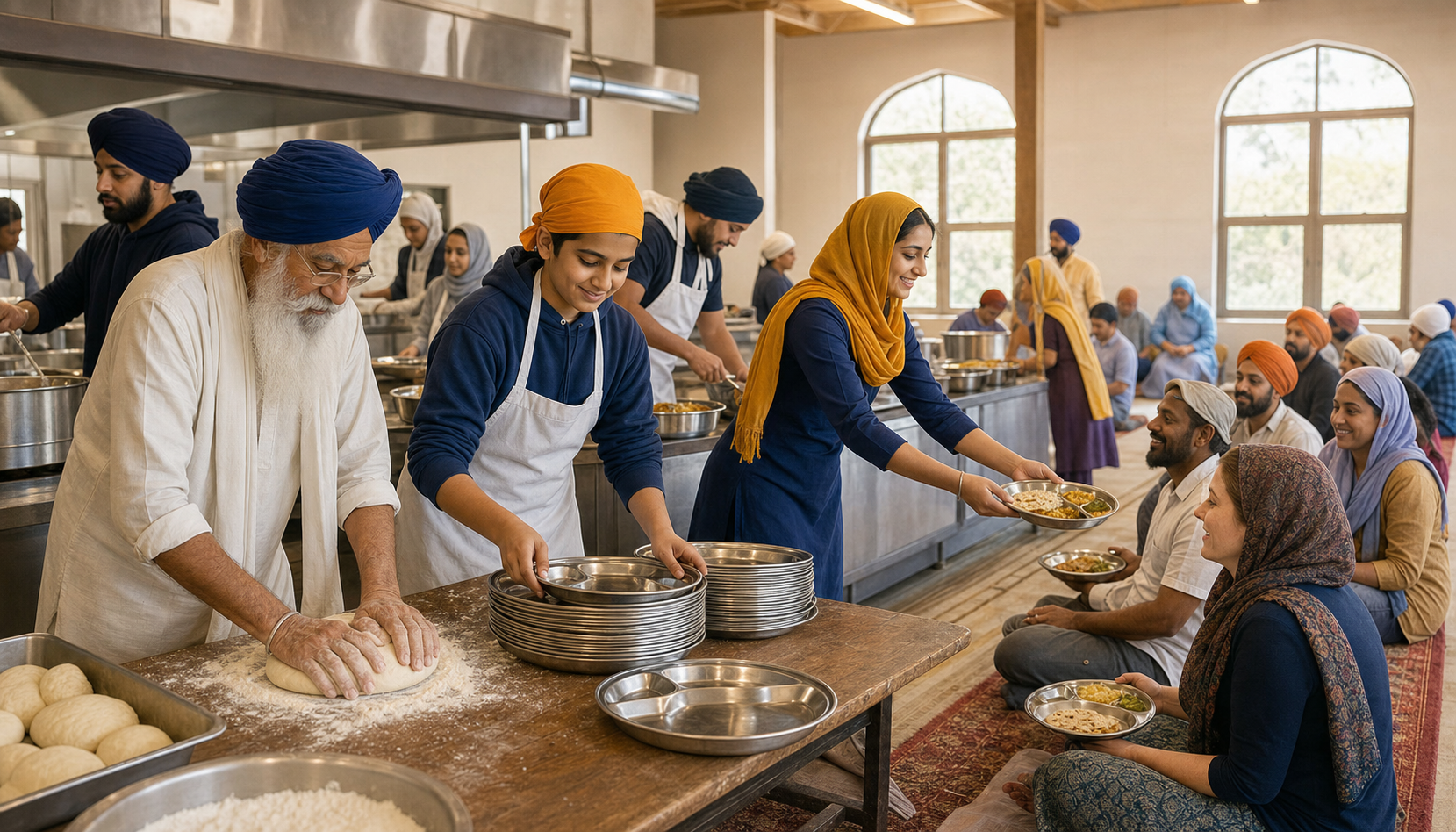
The source extends Bhai Mani Singh’s example into a wider dharmic discussion of learning, courage, service, and civilizational continuity. That comparison is most useful when it preserves the distinctiveness of Sikh history. Kinship among traditions need not flatten their different scriptures, institutions, practices, or historical experiences.
For contemporary institutions, his example suggests a practical standard. Heritage is not protected by admiration alone. It requires people willing to study carefully, teach accurately, administer competently, serve without vanity, and resist pressure without surrendering ethical restraint. Public visibility may draw attention to a cause, but patient custodianship determines whether its inheritance remains available to another generation.
Remembering Bhai Mani Singh responsibly therefore means continuing the kind of work for which he is remembered. The most durable tribute would be communities in which sacred literacy, trustworthy service, institutional competence, and courage of conscience reinforce one another in the challenges still to come.