
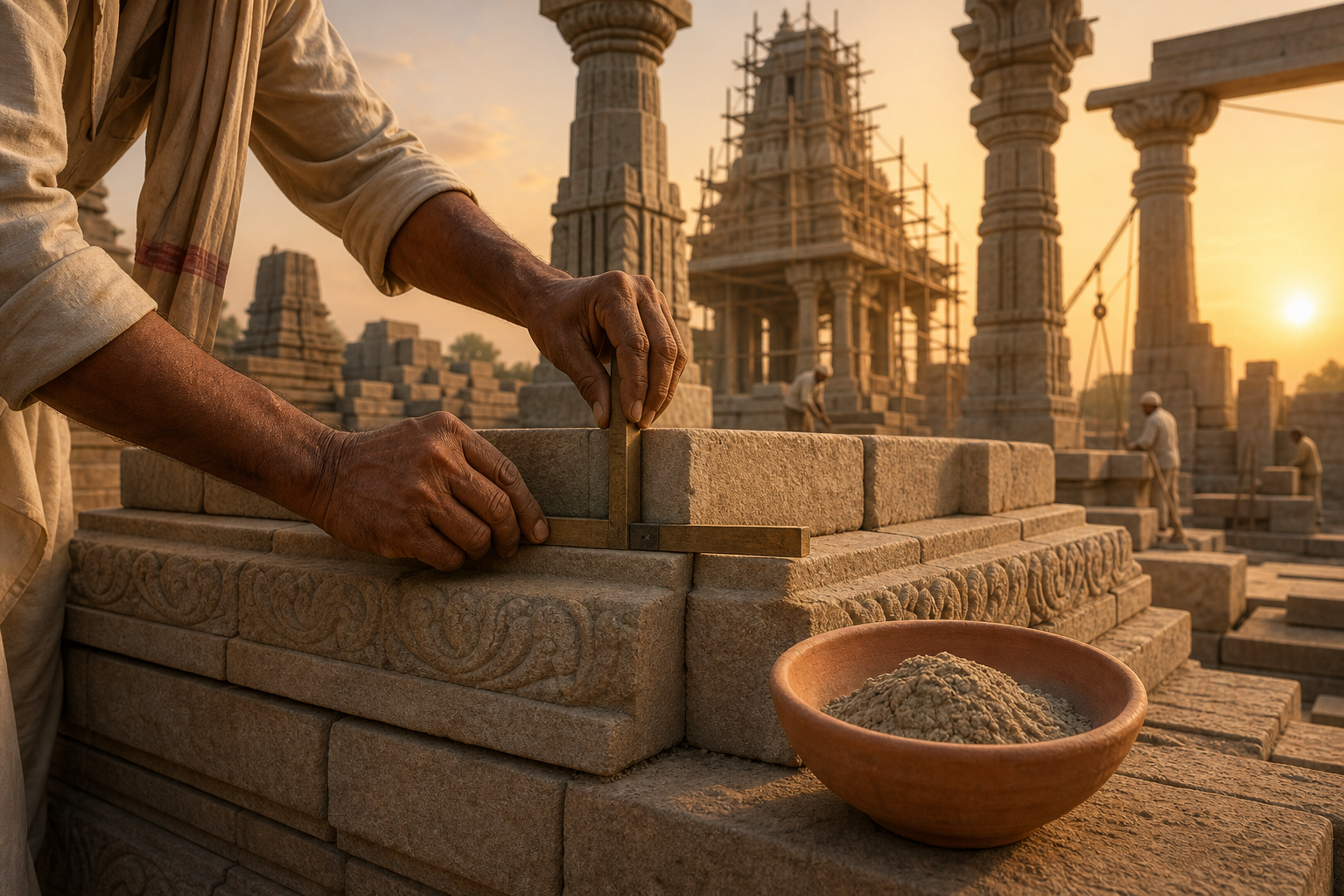
The surviving source extract places Bala within Hindu temple building, where material practice is presented as inseparable from sacred purpose. Because the supplied text stops mid-sentence, the most useful account is one that distinguishes what Hindu Blog actually reports from what remains unknown.
That distinction protects both heritage and accuracy. Respect for an inherited tradition does not require filling gaps with imagined recipes, properties, or technical claims.
What the source actually establishes
Hindu Blog characterizes Hindu temple construction as a sophisticated architectural tradition combining spiritual principles with advanced engineering techniques. It places Bala among the materials or ingredients used in this tradition and begins to describe Bala as structurally significant.
The provided passage ends before completing that description. It does not identify Bala’s composition, explain how builders prepared or applied it, name a textual authority, or connect the practice to a particular region, period, or temple. No formula, measurement, test result, or conservation guidance appears in the available material. Those omissions prevent a responsible article from presenting Bala as a fully documented building method.
Why material function and sacred meaning belong together
A temple is not merely an enclosure. Its plan, surfaces, thresholds, and materials support worship, ritual movement, communal gathering, and the transmission of memory. A traditional material may therefore be valued for practical performance, ritual significance, or both. The source’s framing of Bala points toward this integrated understanding, although the truncated extract does not explain the relationship in detail.
The two dimensions should not be confused. Sacred importance alone does not demonstrate structural performance, just as an engineering description cannot exhaust the religious meaning a community gives to a material. Sound heritage study preserves both questions and investigates each with appropriate evidence.
This layered approach also illuminates a broader Dharmic inheritance without erasing differences. Hindu mandirs, Buddhist viharas and stupas, Jain derasars, and Sikh gurdwaras arise from distinct teachings and practices, yet their built spaces can all sustain discipline, memory, service, and community identity. Bala itself, however, should remain a specifically Hindu temple-construction subject unless evidence establishes a wider use.
Key takeaways
- Hindu Blog places Bala among the materials or ingredients associated with Hindu temple construction.
- The surviving passage indicates structural significance but ends before explaining it.
- No composition, preparation method, application process, historical scope, or supporting authority is supplied.
- Responsible interpretation should combine respect for sacred craftsmanship with clear standards of textual and material evidence.
What a complete record of Bala would require
A genuinely useful account would first establish the term in its original linguistic and textual context. It would then identify the material, document its preparation and intended function, distinguish ritual prescriptions from engineering claims, and clarify whether the practice varied across regions or craft lineages. Where historic structures are concerned, qualified material analysis would also be necessary before drawing conservation conclusions or attempting physical use.
Until that evidence is available, Bala is best treated as an important lead rather than a reconstructed technique. Careful documentation can help artisans, temple communities, and conservation scholars carry this inheritance forward with reverence, intellectual discipline, and fidelity to the evidence.
Inspired by this post on Hindu Blog.
