
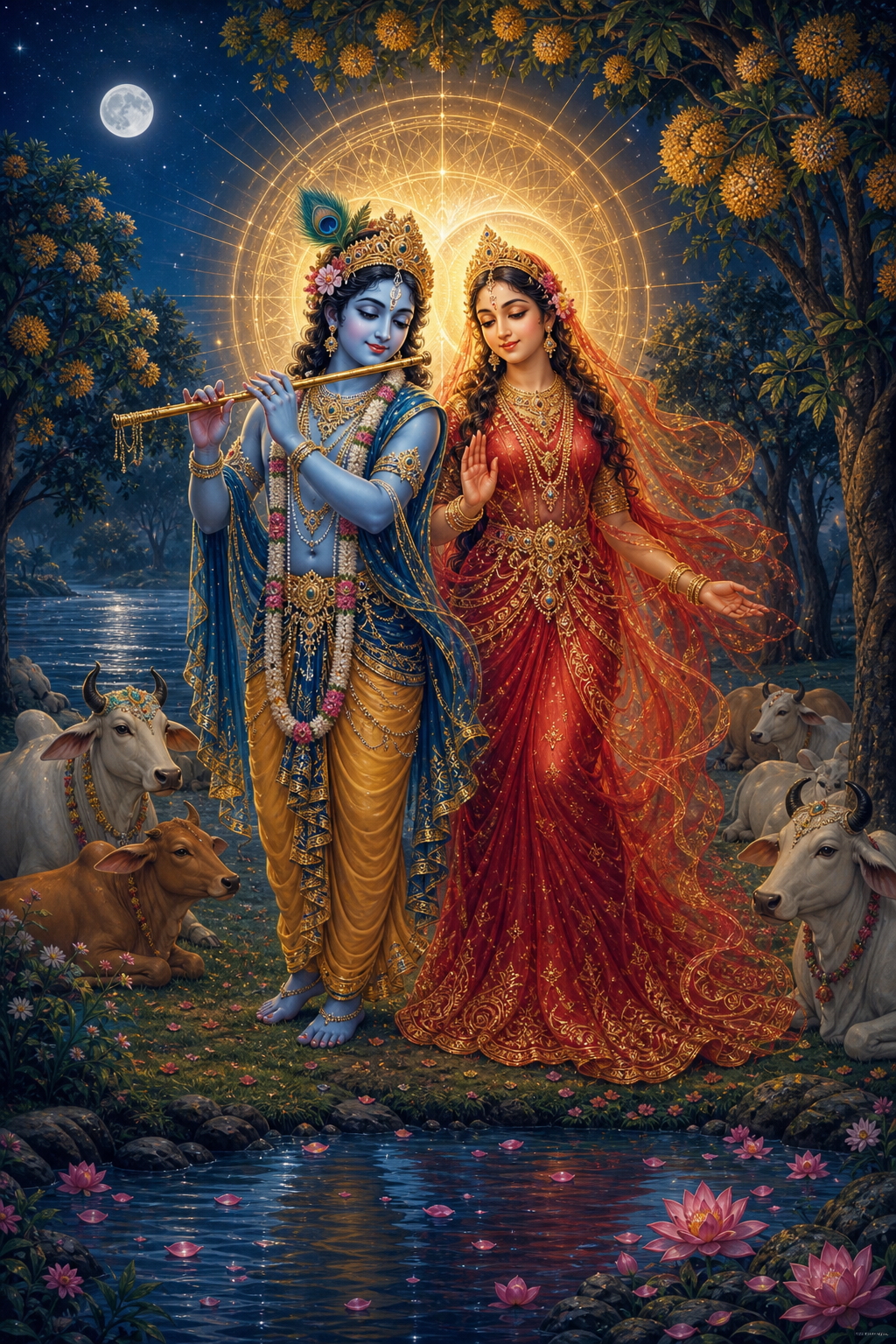
Gopala Sundari is best approached not as a simple composite name but as a theological question: can Krishna as the intimate, beloved Gopala and Shakti as the cosmic mother be understood as one divine fullness? The DharmaRenaissance account answers through the inseparability of divine consciousness and divine power.
That interpretation offers a meeting point for Vaishnava devotion, Shakta metaphysics, and non-dual reflection. It also requires care: the form is most illuminating as a bridge between devotional languages, not as proof that every Hindu lineage teaches an identical doctrine under this name.
What the joined name is meant to say
In the source article, “Gopala” evokes Krishna as the cowherd protector, divine child, beloved of Vrindavan, and approachable center of devotional affection. “Sundari” means the beautiful one, but the article gives beauty a theological depth. In its Shakta setting, especially through its association with Tripura Sundari, beauty signifies the radiance, wisdom, bliss, and auspicious order of divine consciousness.
Joining the names therefore does more than combine masculine and feminine imagery. The article does not present Gopala Sundari as a goddess positioned beside Krishna or as an external consort supplying something he lacks. It reads the name as a claim that the beloved deity and the power through which the cosmos is created, sustained, protected, and liberated are ultimately inseparable.
This distinction matters because a merely additive interpretation would leave two independent divine realities standing next to one another. The proposed theology is more integrated: Krishna’s sweetness is an expression of Shakti, while the mother’s cosmic sovereignty can appear as tenderness, play, and devotional intimacy.
How shaktiman and Shakti explain unity without erasing difference
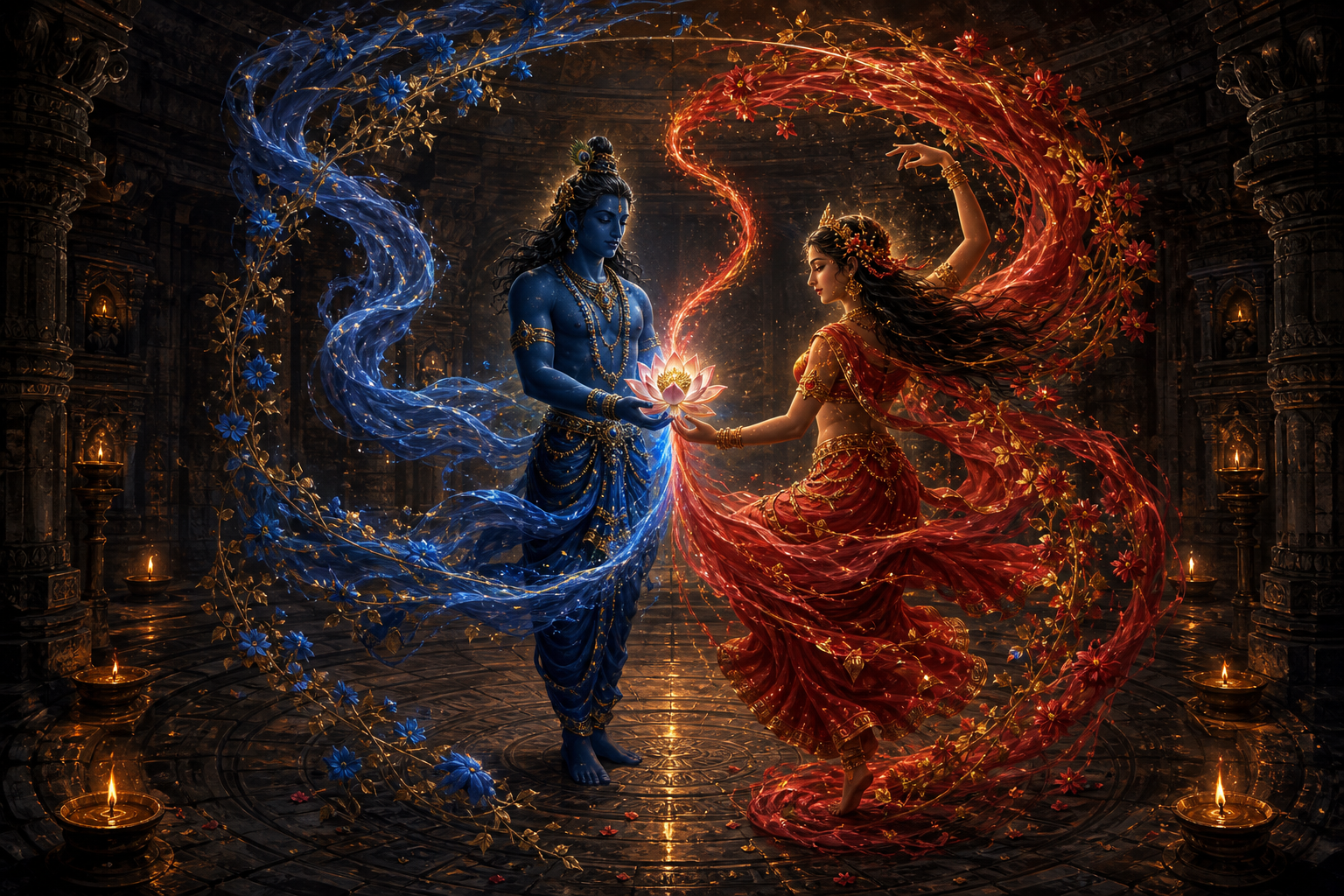
The conceptual center of the account is the relation between shaktiman, the possessor of power, and Shakti, the power itself. They may be distinguished so that devotion and philosophical analysis remain possible, but they cannot be separated in reality. The source uses familiar comparisons such as fire and heat, the sun and its light, and a flower and its fragrance to convey this relationship.
This framework permits two theological affirmations to be held together. Vaishnava traditions may approach Krishna as the supreme divine person, while Shakta traditions may approach Devi as the supreme consciousness-force from which manifestation and liberation arise. Gopala Sundari does not require either affirmation to defeat the other. It proposes that each describes the same fullness from a different devotional center.
The source supports this bridge by placing three scriptural visions in conversation. It describes the Bhagavad Gita as presenting Krishna as the source and foundation of the worlds, the Bhagavata Purana as presenting him as the compelling center of divine love, and the Devi Mahatmya as presenting the Goddess as the supreme power active behind the gods and the restoration of cosmic balance. Read through the article’s interpretive lens, these are not interchangeable texts, but they share concerns with supremacy, protection, compassion, and intimate divine presence.
Why beauty, motherhood, and play belong in one theology
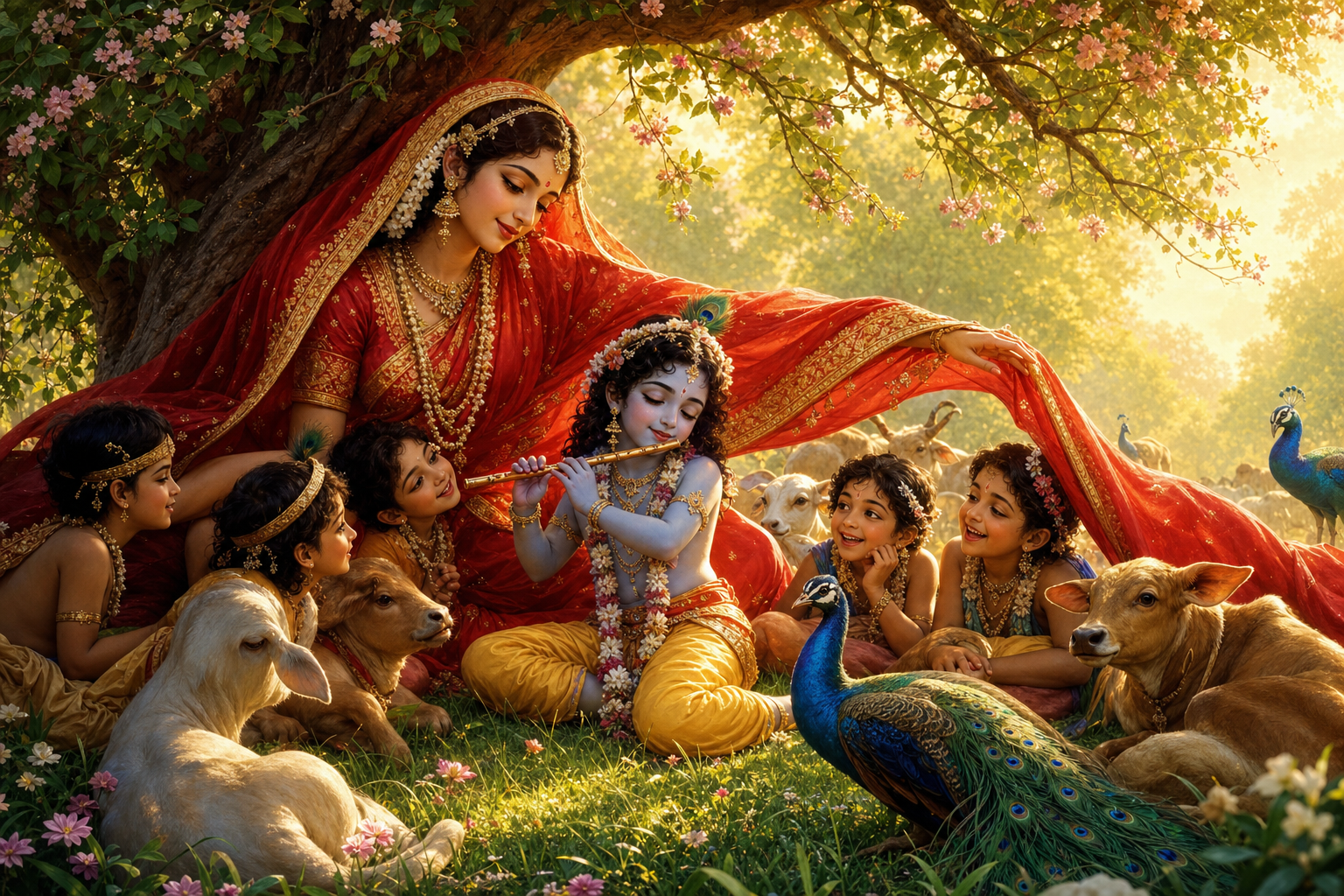
The two halves of the name correct possible limitations in one another. Gopala’s pastoral world makes supreme divinity approachable through affection: Krishna protects the vulnerable, plays, enchants, and accepts relationships of parental tenderness, friendship, and love. Sundari prevents that intimacy from being reduced to charming narrative by identifying beauty with the luminous power of consciousness itself.
Conversely, Gopala keeps cosmic power from becoming an impersonal abstraction. If Shakti can be encountered as the sweetness of Krishna, sovereignty includes nurture, delight, and nearness. Power is not defined only as command, and love is not treated as passive emotion; divine love becomes creative and protective, while divine power becomes relational.
The maternal and childlike dimensions are therefore not a logical contradiction. They indicate different sacred relationships through which one reality becomes accessible. The source’s larger premise is that divine names and forms make the infinite intimate without exhausting it. Gopala Sundari concentrates that premise into a single contemplative expression.
One symbol can support several readings without becoming vague
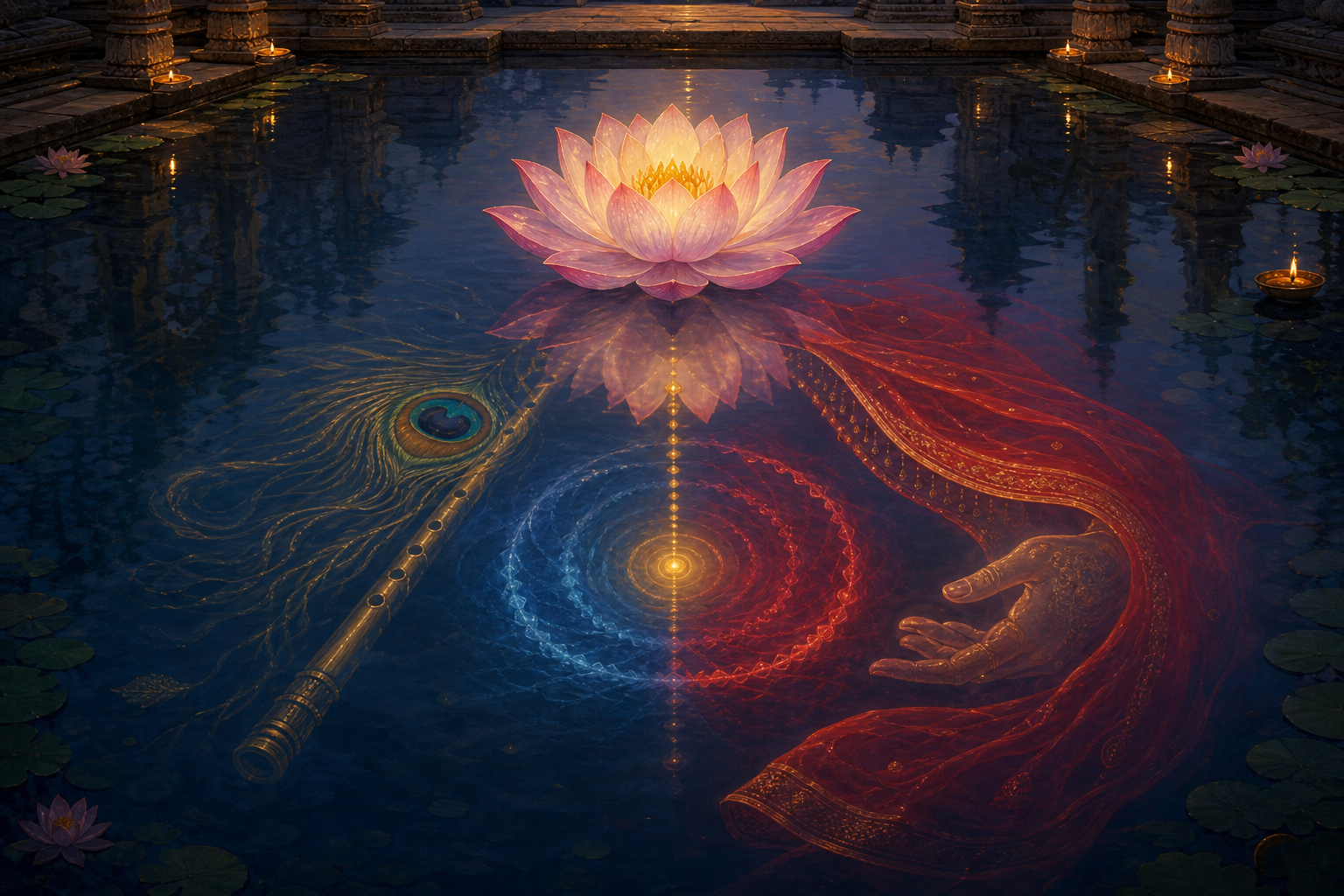
A Vaishnava reading can understand Gopala Sundari through Krishna’s own internal potency rather than through a second, independent deity. The source connects this possibility with Radha, whom many Krishna traditions understand as the embodiment of hladini shakti, the bliss-giving power of divine love. It presents Gopala Sundari as a related expression of Krishna-Shakti inseparability, not as a simple replacement for Radha or an assertion that the two names are technically identical.
A Shakta reading can begin with the Divine Mother and understand Krishna’s tenderness as one way her supreme consciousness appears. A Vedantic reading can emphasize the underlying non-duality disclosed through apparently different forms. These approaches need not use the same ritual practice or doctrinal vocabulary for the symbol to create a meaningful point of comparison.
The source situates the form alongside integrative Hindu images such as Harihara and Ardhanarishvara, as well as inseparable divine pairs including Radha-Krishna and Lakshmi-Narayana. The comparison establishes a broad theological pattern: distinction may serve relationship without implying ultimate separation. It does not, by itself, establish a standardized Gopala Sundari doctrine accepted by every Vaishnava, Shakta, or Vedantic community.
Key takeaways
- Gopala Sundari is interpreted as a statement about the unity of Krishna and divine power, not merely as two deities placed together.
- “Gopala” contributes intimacy, protection, play, and devotional sweetness; “Sundari” contributes cosmic motherhood, wisdom, bliss, and metaphysical beauty.
- The relation between shaktiman and Shakti preserves a devotional distinction while denying that the possessor of power can exist apart from the power itself.
- Vaishnava, Shakta, and Vedantic readers can approach the form differently, but lineage-specific claims require more evidence than this single interpretive account supplies.
The most fruitful path forward is a lineage-aware study of where the name appears in texts, ritual practice, mantra traditions, and living commentary. Such work could clarify which aspects belong to established transmission and which represent a modern theological synthesis, while preserving the form’s central invitation to contemplate love, beauty, consciousness, and power together.