
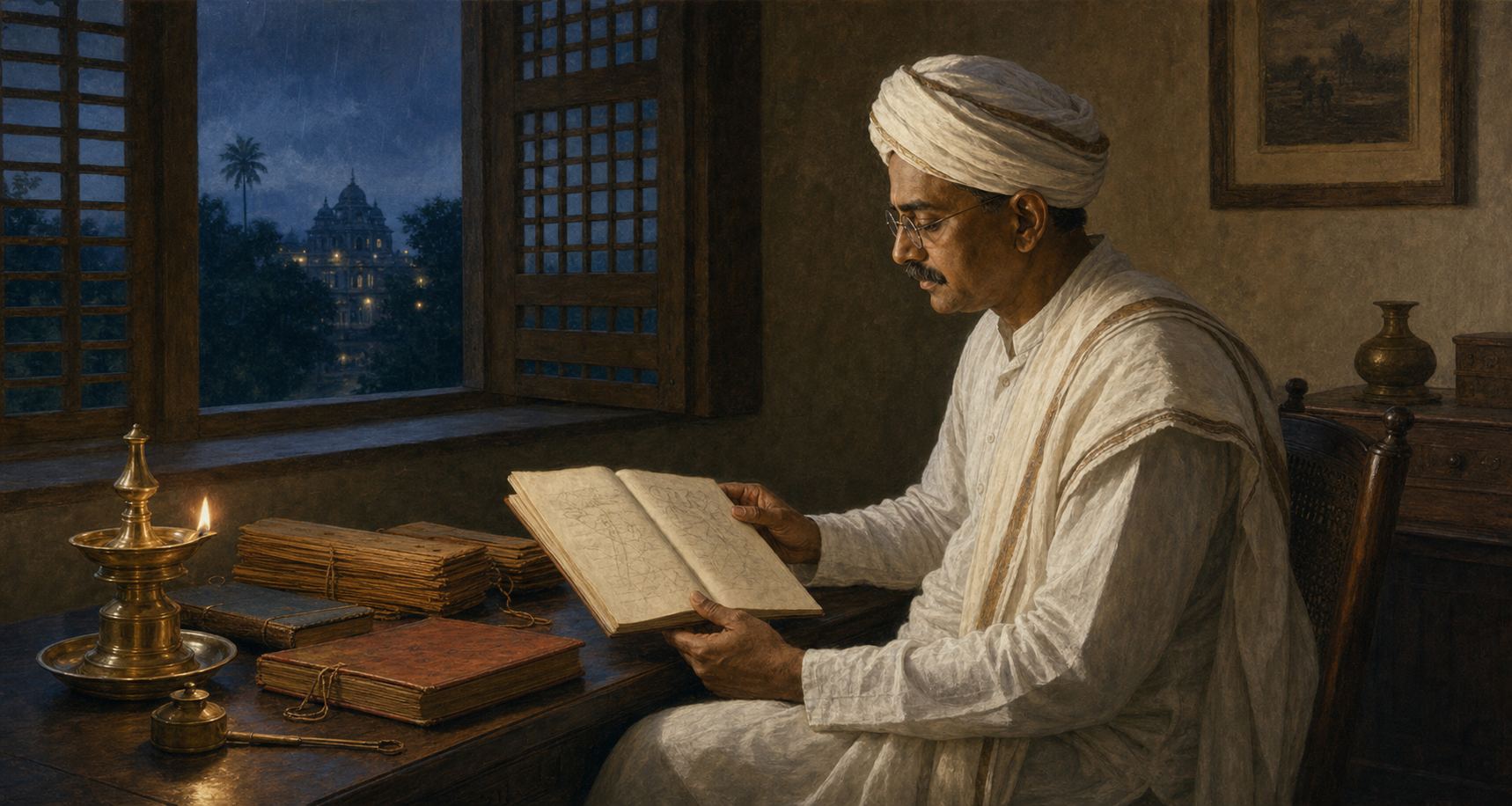
M. Hiriyanna’s private diary offers something his polished philosophical books cannot: a view of Vedantic understanding under construction. As presented in the available DharmaRenaissance account, it shows scholarship being tested through family life, sorrow, travel, contemplation and repeated self-examination.
The diary is therefore most useful neither as a doctrinal authority nor as a collection of inspirational sayings. Its value lies in revealing how philosophical learning can gradually become a discipline of attention and conduct.
Key takeaways
- Hiriyanna’s diary is best read as a record of philosophical formation, not a systematic guide to Vedanta.
- Study became practice through repetition, translation, contemplation and self-correction.
- Family obligations, bereavement and disappointment supplied tests that abstract argument could not.
- Travel joined literary perception, religious imagination and close attention to the changing world.
- Restraint in a private record should not automatically be interpreted as freedom from pain.
A private workshop rather than a spiritual manual
According to the DharmaRenaissance article, the surviving diary runs from May 7, 1897, Hiriyanna’s twenty-sixth birthday, to March 21, 1948, when its final entry recorded his return to Mysore because of illness. That long span permits the reader to observe intellectual and spiritual development without forcing it into a neat conversion story.
The warning written in the diary is crucial: “JOTTED DOWN FOR NO EYE BUT MY OWN”. The account consequently treats the document as a private aid to memory and conscience, not an autobiography composed to defend a reputation. Its unfinished judgments and ordinary details matter because they were not selected to make Hiriyanna appear exemplary.
The title, Chaff and Draff, reinforces this modest scale. As the source explains, both words refer to residues left after something valuable has been separated or extracted. Hiriyanna thus labelled his own notes as remainders. The gesture suggests humility, but it also establishes the diary’s form: refined reflections coexist with irritation, uncertainty, domestic concern and passing observation.
This mixture discourages two misleading readings. Treating every entry as settled teaching would give casual thoughts an authority they were never meant to possess. Dismissing the personal material, however, would remove the very circumstances in which Hiriyanna’s philosophical convictions were exercised. The diary becomes illuminating when read between these extremes.
Study became practice through repeated refinement
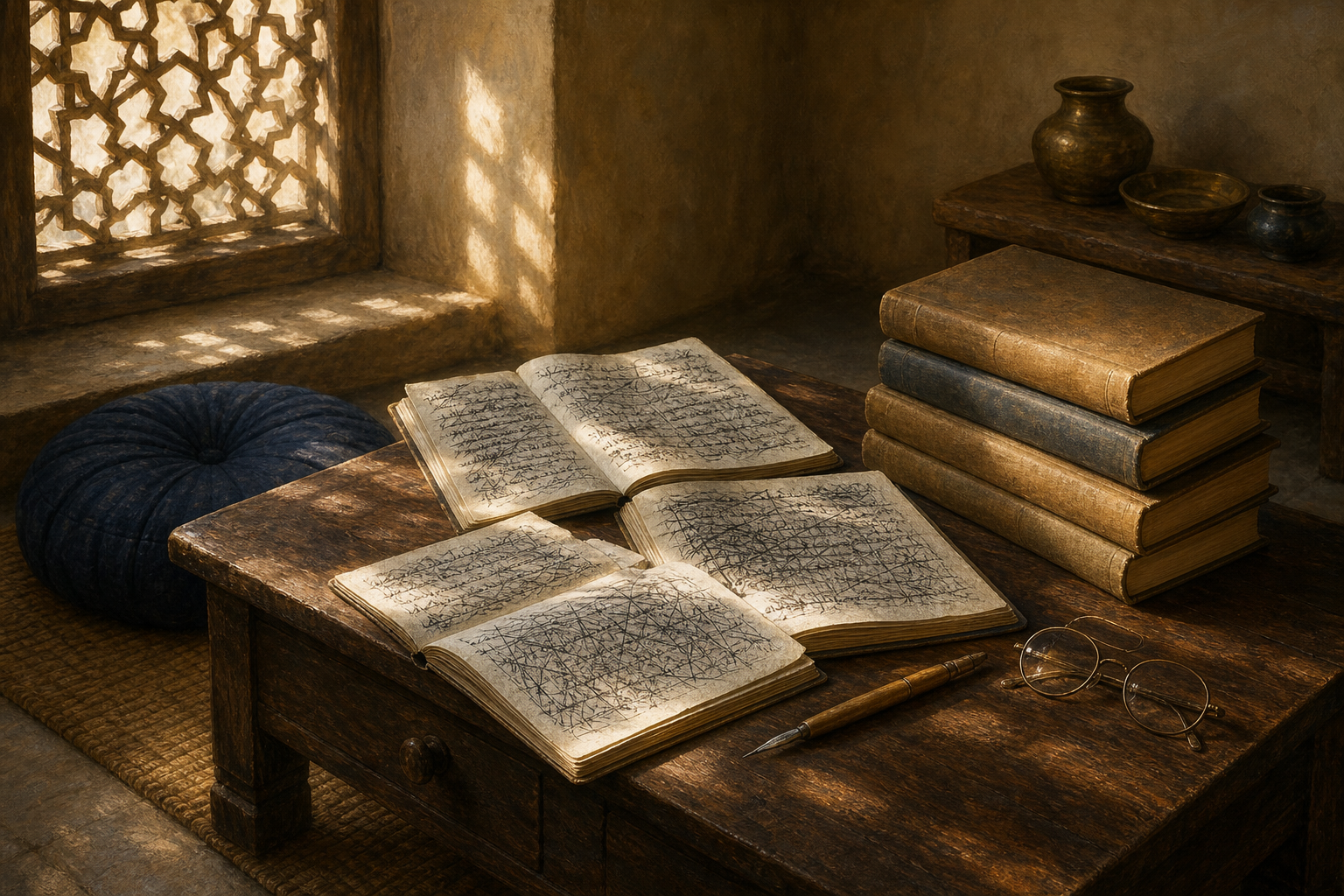
Hiriyanna’s public reputation, the source reports, rests on works including Outlines of Indian Philosophy, The Essentials of Indian Philosophy, The Quest After Perfection and essays collected in Art Experience. Their compressed and lucid exposition represents the finished surface of his scholarship. The diary points toward the sustained labour beneath it.
The recurring activities identified by the account include study, translation, contemplation and self-correction. Together they suggest a movement from receiving an idea to restating it, examining it inwardly and measuring conduct against it. Translation is especially significant in this pattern: it demands more than recognition of words, because the translator must determine what a thought means before expressing it in another form.
Self-correction prevents this intellectual routine from becoming mere accumulation. In the portrait emerging from the diary, mastery does not mean possessing a final stock of answers. It means remaining willing to revisit an interpretation, notice a weakness and bring understanding into closer relation with action.
This offers a restrained account of Vedantic practice. The source does not provide a daily regimen that readers can reproduce, and the diary was not written to prescribe one. What it does disclose is an orientation: learning is incomplete until it changes the quality of judgment, attention and response.
Family life and grief tested the reach of philosophy
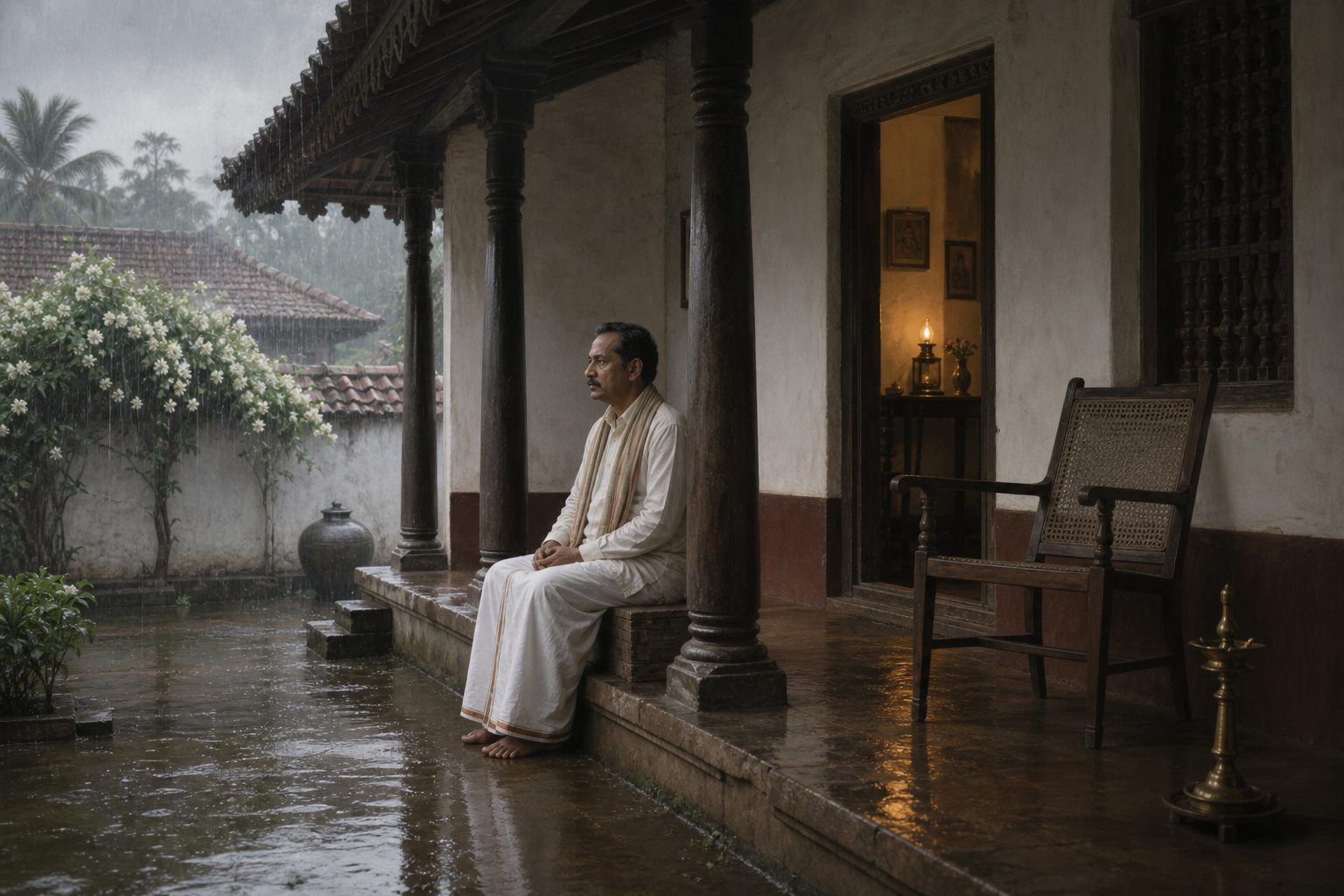
The DharmaRenaissance account identifies family experience, private inquiry, spiritual development and travel as four recurrent strands in the diary. Their interweaving is more revealing than any one strand in isolation. Domestic pleasures and disruptions do not interrupt the philosophical life; they provide conditions in which its claims are tested.
Bereavement is particularly important to this reading. Philosophical language may describe steadiness in abstract terms, but grief confronts the individual with attachment, vulnerability and the instability of the mind. Hiriyanna’s recorded sorrow therefore belongs to the history of his thought, even when it does not result in a formal argument.
The same caution applies to professional disappointment. The source notes that Hiriyanna did not dwell on such setbacks, but it refuses to treat this silence as conclusive proof that he felt no pain. A private diary remains selective: an omission may reflect restraint, discretion, fatigue or a decision that an event did not need to be recorded.
That interpretive restraint is essential when describing a Vedantic life. Equanimity should not be manufactured from gaps in the evidence. A more credible picture allows discipline and suffering to coexist. Practice then appears not as the disappearance of difficult feeling, but as the continuing attempt to respond without abandoning considered convictions.
Travel enlarged both aesthetic and religious attention
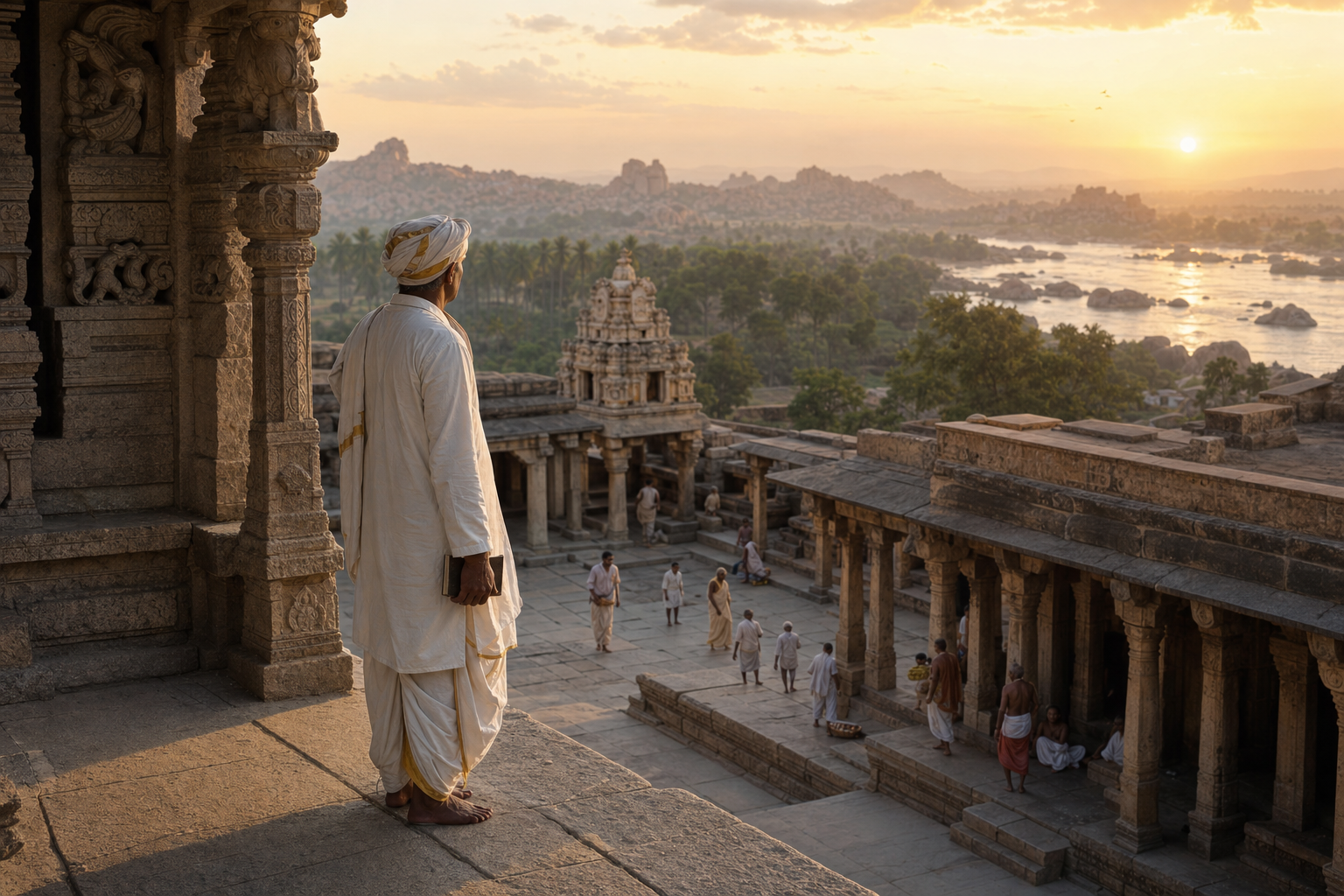
The diary also complicates the image of Hiriyanna as a scholar enclosed by books and classrooms. The source reports journeys across Karnataka and through regions then administered as the Madras and Bengal Presidencies, the United Provinces and elsewhere. His longer travel entries attend to landscapes, temples, institutions, architecture, clothing, public behaviour and the relation between settlements and their surroundings.
Two literary inheritances reportedly shaped these observations. English Romantic poetry offered one way to apprehend landscape, while Vedic and classical Sanskrit literature offered another. Rather than keeping them in separate compartments, Hiriyanna brought them into contact while observing rivers, hills, trees, ruins and sacred places. Travel thus became a setting in which comparative learning was converted into perception.
One example recorded by the account is his 1907 view from the hill at Tiruchirappalli. He observed the town, branches of the Cauvery and a wooded Srirangam where coconut and mango trees partly concealed the temple complex. The passage matters not simply as picturesque description. It preserves attention to sacred architecture as part of an environmental whole rather than as an isolated monument.
The travel record also belongs to a changing social landscape. The source situates Hiriyanna’s journeys after railways had altered routes and practical experiences of distance, while older networks of pilgrimage and hospitality remained active. His notes consequently place contemplation within history: attention to enduring forms occurred amid changing infrastructure, mobility and public life.
Hiriyanna’s example points toward a demanding future for philosophical practice. Preserving his legacy requires more than repeating conclusions from his published works; it requires cultivating the habits visible beneath them – careful study, honest revision, attentiveness to suffering and a willingness to encounter the world before interpreting it.