
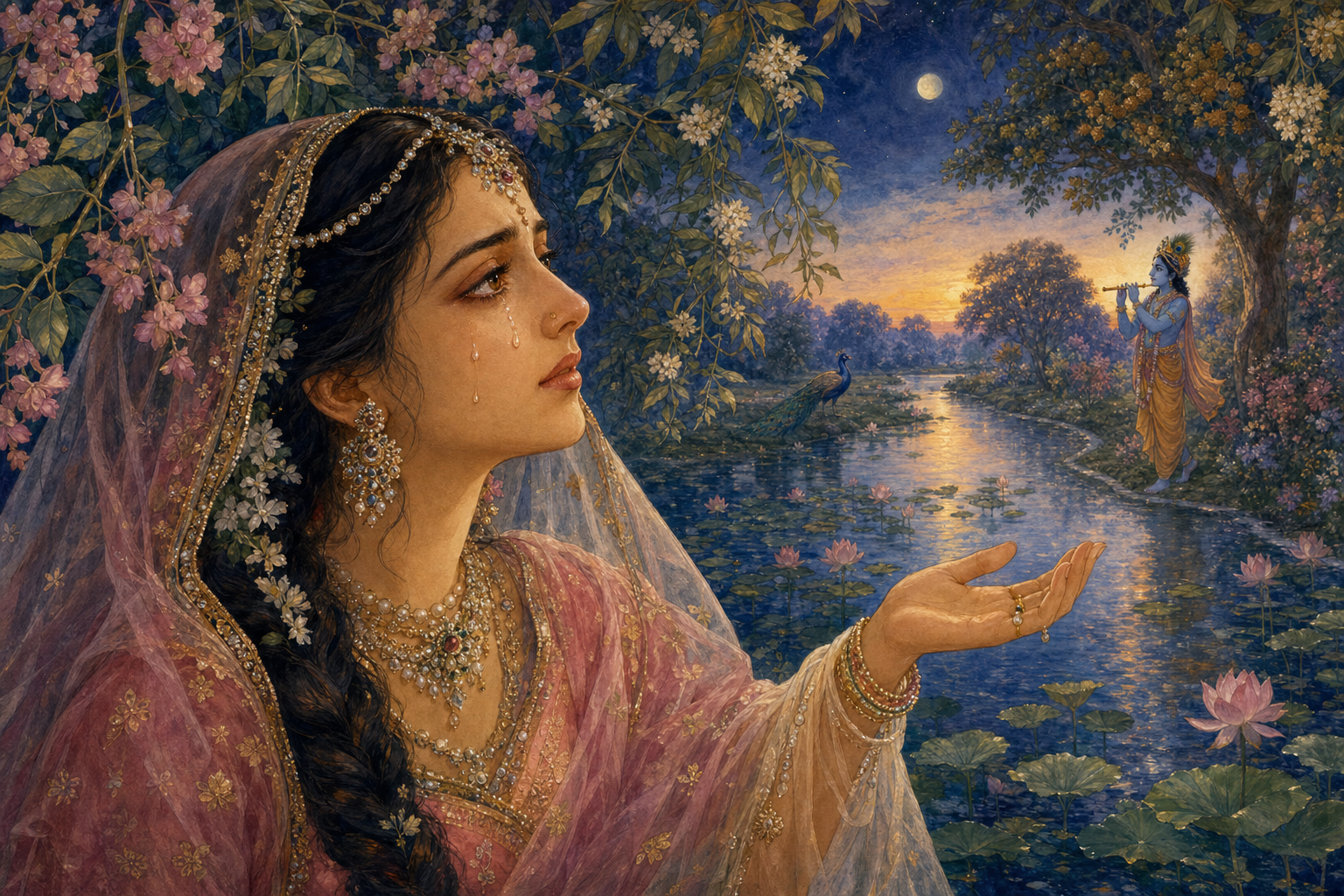
In Gaudiya Vaishnava theology, Sri Radha’s tears are not an isolated emblem of sadness. They are understood as an embodied disclosure of prema: love so thoroughly oriented toward Krishna that remembrance, longing, tenderness, and surrender become perceptible in the body. The useful question is therefore not merely why Radha weeps, but what makes a tear intelligible as bhakti-rasa.
The supplied source is a researched companion to an episode in Indradyumna Swami’s video series, not a transcript of the episode. Its explanations should therefore be read as the companion essay’s theological framing rather than as verified statements by the speaker. Organized around the reader’s central questions, that framing reveals a coherent account of sacred emotion, relational love, and spiritual discernment.
Why the outward symptom is not enough
A tear is visible, but its spiritual meaning is not self-evident. The source notes that tears may accompany grief, empathy, beauty, exhaustion, memory, relief, or devotion. Their appearance alone consequently cannot establish advanced spiritual realization. The same caution also prevents the opposite mistake: dismissing every tear as weakness or undisciplined sentiment.
Bhakti-rasa theology reads embodied emotion contextually. It asks what awakened the response, toward whom it is directed, what enduring disposition sustains it, and what kind of life proceeds from it. Sri Radha’s tears are therefore significant not because crying is inherently sacred, but because the tradition locates them within an unsurpassed relationship of selfless love for Krishna.
How bhakti-rasa makes emotion relational
According to the companion essay, the Gaudiya framework develops the vocabulary of classical Indian aesthetics into a theology of devotional relationship. Rasa, sometimes rendered as taste, mellow, or relish, is not a passing feeling viewed in isolation. It arises when an enduring devotional disposition and its supporting elements form an integrated, spiritually relishable whole.
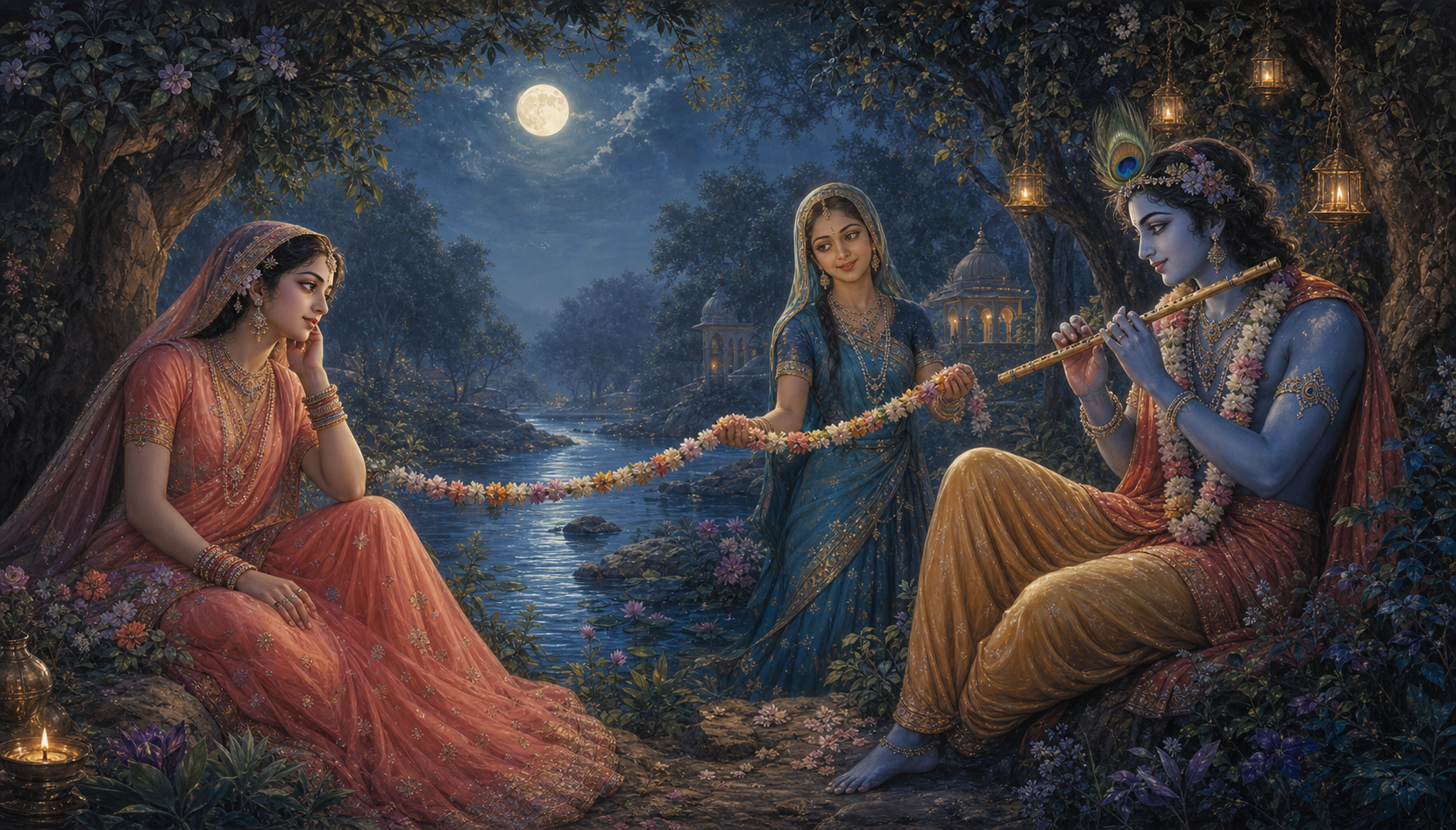
Vibhava denotes the supports and causes of devotional emotion. Its alambana dimension concerns the persons who ground the relationship, especially Krishna as the beloved object and the devotee as the bearer of love. Uddipana refers to features that awaken or intensify remembrance. The source, drawing on the framework associated with Rupa Gosvami’s Bhakti-rasamrita-sindhu and its English presentation in The Nectar of Devotion, gives such examples as Krishna’s qualities, activities, flute, footprints, garlands, places of pastimes, devotees, tulasi, and sacred occasions.
These stimuli do not mechanically manufacture realization. Their significance depends on an already cultivated devotional orientation. A flute melody or a place associated with Krishna may become a doorway to remembrance, just as an ordinary melody or fragrance can recover a human memory; the theological claim, however, is that purified remembrance increasingly serves devotion rather than nostalgia or possession.
Other elements complete the structure. Anubhavas are expressive responses through which inward devotion becomes perceptible, while vyabhicari-bhavas are accompanying states that enrich the dominant love without displacing it. At the center is sthayi-bhava, the durable devotional disposition that persists as other states arise and recede. This architecture explains why no isolated symptom, however dramatic, is identical with rasa.
The source identifies tears, or asru, among eight sattvika-bhavas, the involuntary bodily transformations associated with intense spiritual emotion. The other reported manifestations are stunned stillness, perspiration, bodily hair standing erect, alteration of the voice, trembling, change of complexion, and a fainting-like loss of ordinary external activity. Their classification as involuntary carries an important implication: deliberate display cannot substitute for the transformed consciousness these signs are meant to express.
Why Sri Radha is the decisive theological case
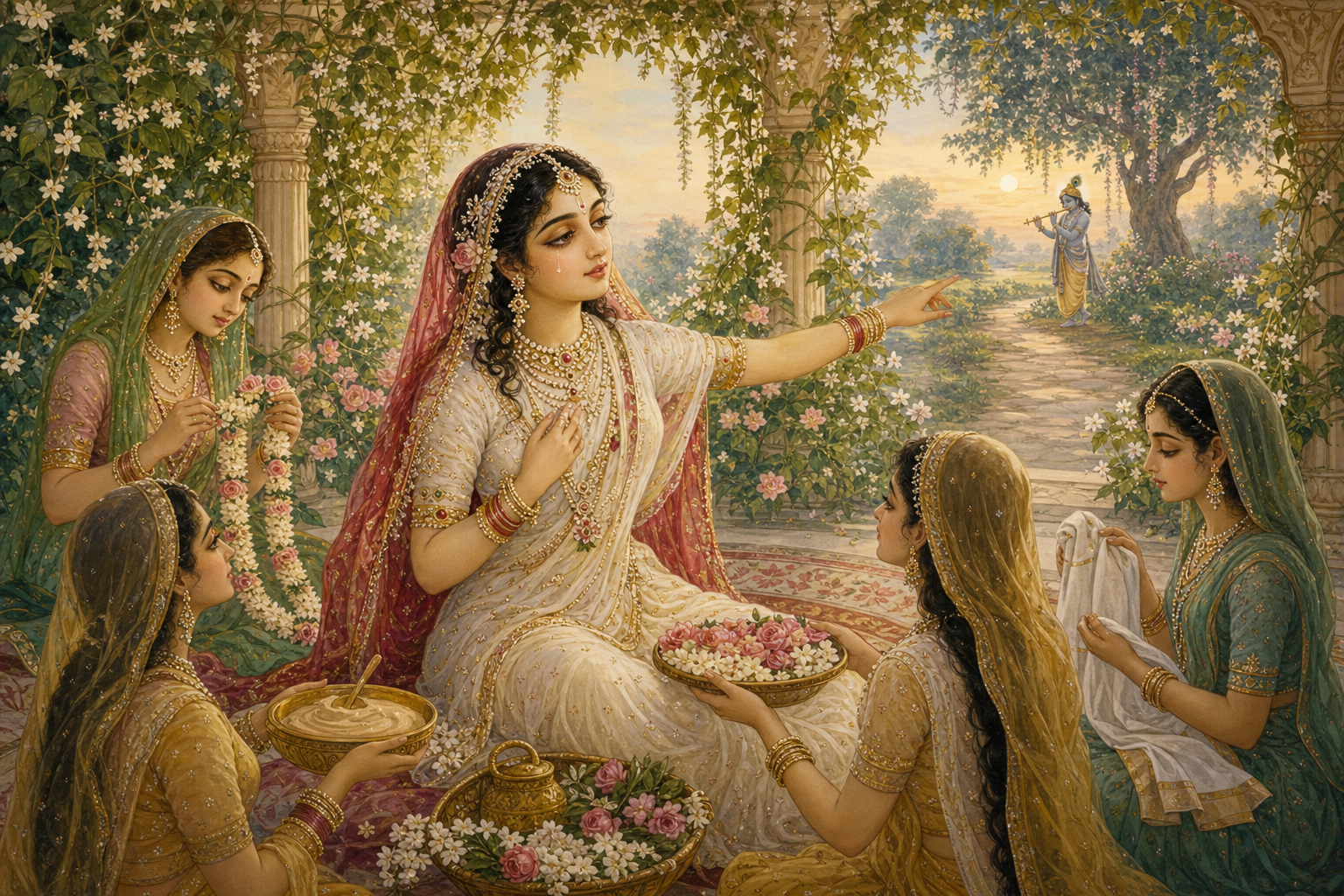
Sri Radha is not presented in this tradition merely as one accomplished devotee among others. The essay reports that Sri Caitanya-caritamrita, Madhya-lila, Chapter Eight, identifies mahabhava as the highest concentration of divine love and presents Radha as its embodiment. It also connects her with hladini-shakti, the Divine potency of bliss in Gaudiya Vaishnava theology.
This tradition-specific claim reverses a common way of reading religious emotion. Radha’s tears do not independently prove her spiritual rank; rather, her theological identity and enduring orientation toward Krishna give the tears their meaning. Because her love is described as seeking Krishna’s happiness rather than independent gratification, the bodily sign is interpreted as the overflow of selfless prema, not as emotional self-absorption.
The source also draws attention to the feminine dimension placed at the center of this theology. Tenderness, receptivity, longing, emotional intelligence, and loving service are treated as modes of apprehending the highest reality rather than as inferior alternatives to knowledge or authority. Read carefully, this is a theological elevation of relational capacities, not a license to reduce women or devotion to emotional stereotypes.
Discernment turns sacred emotion toward service
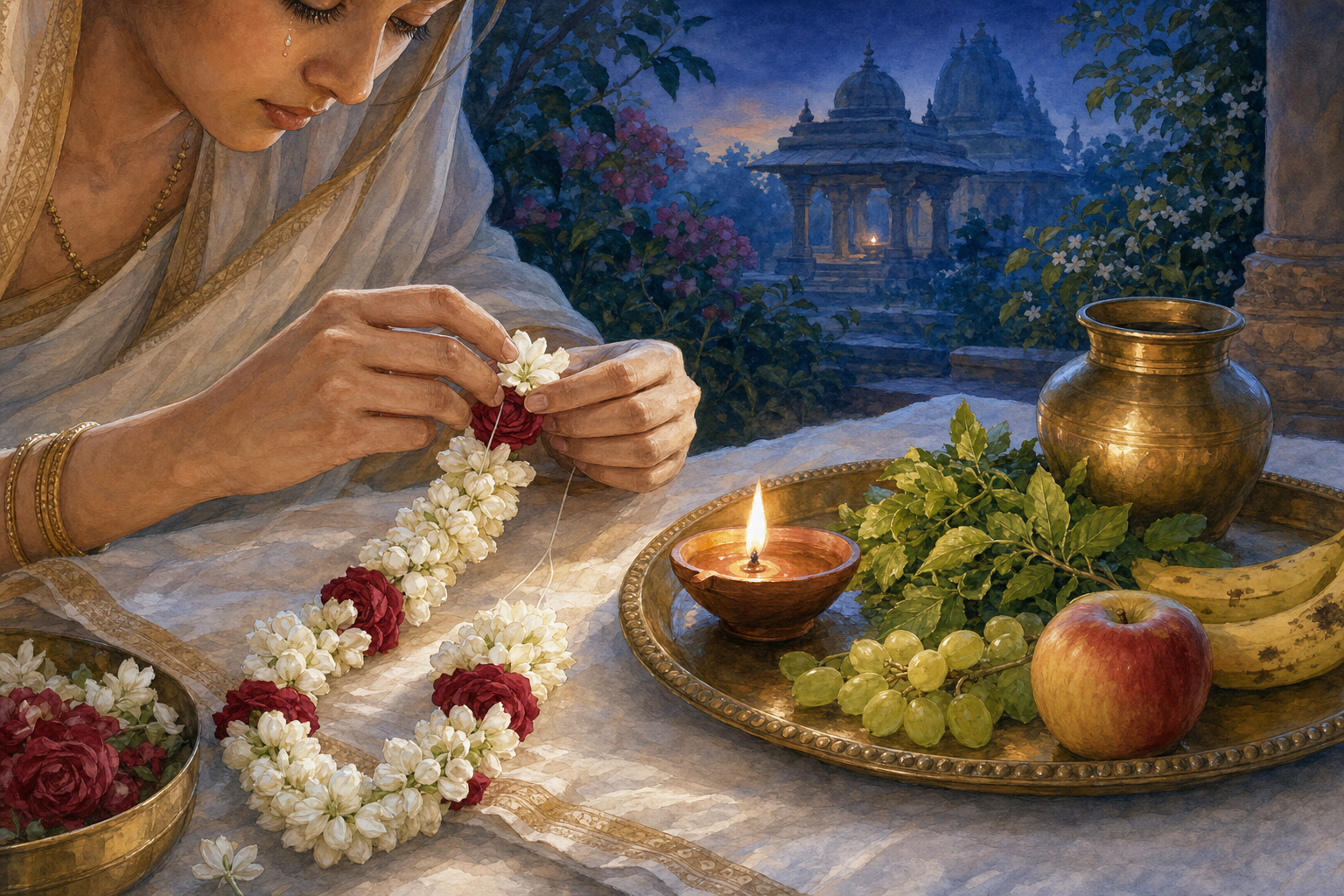
The practical value of this theology lies in the discipline it imposes on interpretation. The companion essay cites an example in which a servant regards ecstatic bodily changes as possible interruptions because faithful service remains more important than attending to visible emotion. Intensity is therefore subordinated to devotional purpose: an impressive manifestation is not the goal, and emotion gains credibility through the orientation and character it sustains.
Key takeaways
- A tear should be read through its relationship, stimulus, enduring disposition, and consequences, not through appearance alone.
- Uddipana awakens remembrance in a devotionally oriented heart; it is not a technique for manufacturing ecstasy.
- Authentic sacred emotion remains answerable to humility, steady practice, service, and freedom from self-display.
- Sri Radha’s tears signify the summit of love within a specifically Gaudiya Vaishnava account of mahabhava; that claim should not be generalized carelessly across every Hindu tradition.
A mature reception of Sri Radha’s tears will keep theology, practice, and humility together. Future reflection on sacred emotion can then move beyond deciding whether tears look weak or impressive and examine how devotional attention is cultivated, embodied, and made answerable to loving service.