
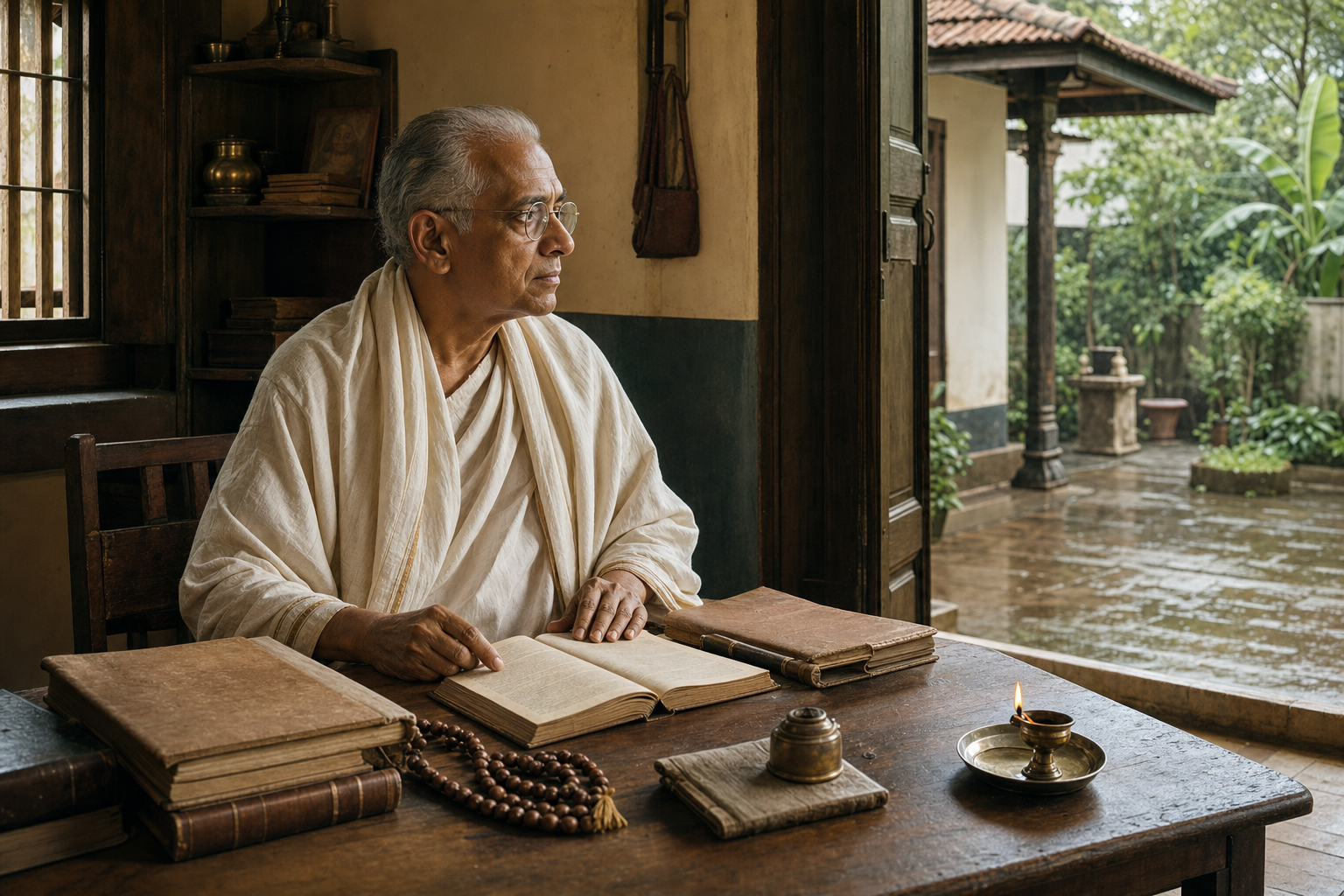
M. Hiriyanna’s Vedantic development is best understood not as a neat sequence of doctrinal changes, but as the gradual integration of scholarship, spiritual discipline and ordinary experience. The private record discussed in Chaff and Draff places his intellectual work beside family affection, bereavement, travel, poetry, aesthetic response and recurring self-doubt.
This perspective changes the central question. Instead of asking only what Hiriyanna concluded about Vedanta, it becomes possible to ask how he learned to inhabit philosophy: comparatively rather than narrowly, reflectively rather than dogmatically, and within the demands of a household and scholarly career.
A development reconstructed from private evidence
The DharmaRenaissance account reports that Hiriyanna lived from 1871 to 1950 and that his diary entries extend from May 7, 1897, to March 21, 1948. That span permits a view of formation across decades, from early adulthood to two years before his death. The record was not composed as a retrospective autobiography: Hiriyanna marked the notes as intended for no reader but himself.
That distinction matters. An autobiography commonly arranges earlier events in light of a known outcome, whereas a contemporaneous diary preserves uncertainty before later developments settle its meaning. Hiriyanna’s hesitation, emotional pressure and unfinished intuitions therefore belong to the evidence. At the same time, a private diary remains selective. It records what its author chose or remembered to note, not a complete transcript of his inner life.
Key takeaways
- The available account supports a long process of Vedantic maturation, not a simple conversion or sudden doctrinal break.
- Hiriyanna’s comparative study placed Vedanta within a wider field of Indian philosophies rather than treating it in isolation.
- Family responsibility, grief, travel and aesthetic experience appear as settings in which philosophical commitments were tested.
- His self-doubt and self-effacing treatment of the diary complicate portrayals of either an untroubled sage or a detached academic.
Comparative scholarship disciplined his Vedanta
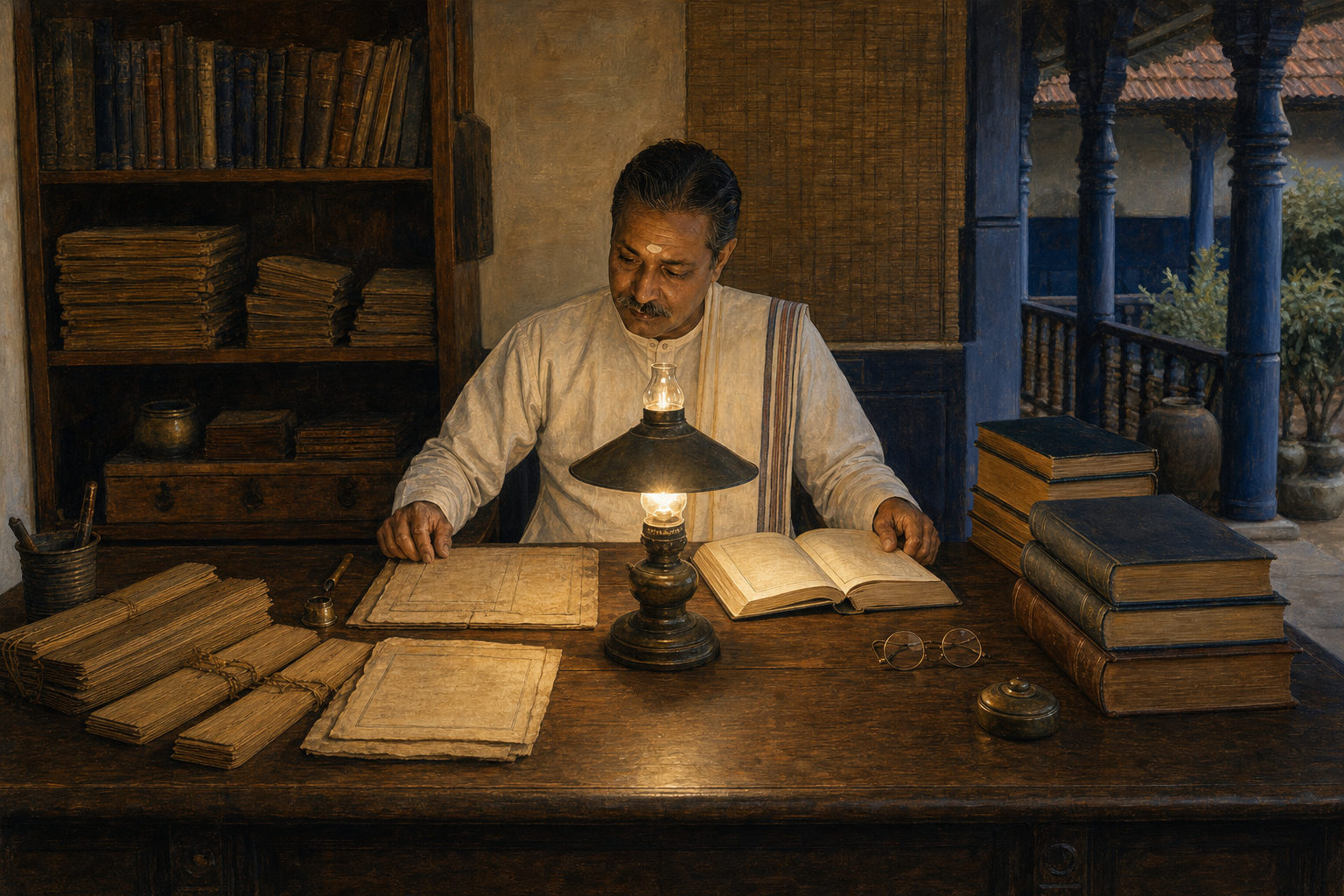
Hiriyanna taught for many years at Mysore University and became known for work on Indian philosophy, Vedanta and aesthetics, according to the source article. It also reports that an Oxford Academic assessment described his 1932 Outlines of Indian Philosophy as a standard text and emphasized his contributions to Vedanta, ethics, aesthetics and philosophical inquiry into truth.
The reported organization of Outlines is especially revealing. Its scope moves through Vedic and Upanishadic thought, the Bhagavad Gita, Buddhist and Jain traditions, Nyaya-Vaisesika, Sankhya-Yoga, Purva-Mimamsa and several Vedantic systems, including Advaita and Visistadvaita. This breadth does not establish a chronology of Hiriyanna’s private convictions, but it does show the intellectual environment in which his Vedanta matured.
Comparison here was more than cataloguing. Placing several traditions in relation to one another requires attention to their distinct questions, premises and standards of knowledge. The resulting picture is of a Vedantic thinker whose commitment was sharpened through difference. His scholarship did not need to erase rival systems in order to explain Vedanta, nor did comparative breadth require pretending that all Indian philosophies said the same thing.
This also qualifies the contrast sometimes drawn between scholarship and spiritual life. Hiriyanna’s concise published prose emerged, the source suggests, from prolonged preparation. The diary exposes some of the intellectual labor that polished exposition normally conceals: uncertainty, repeated reflection and the pressure of experience upon inherited concepts.
Family duty and grief became philosophical tests
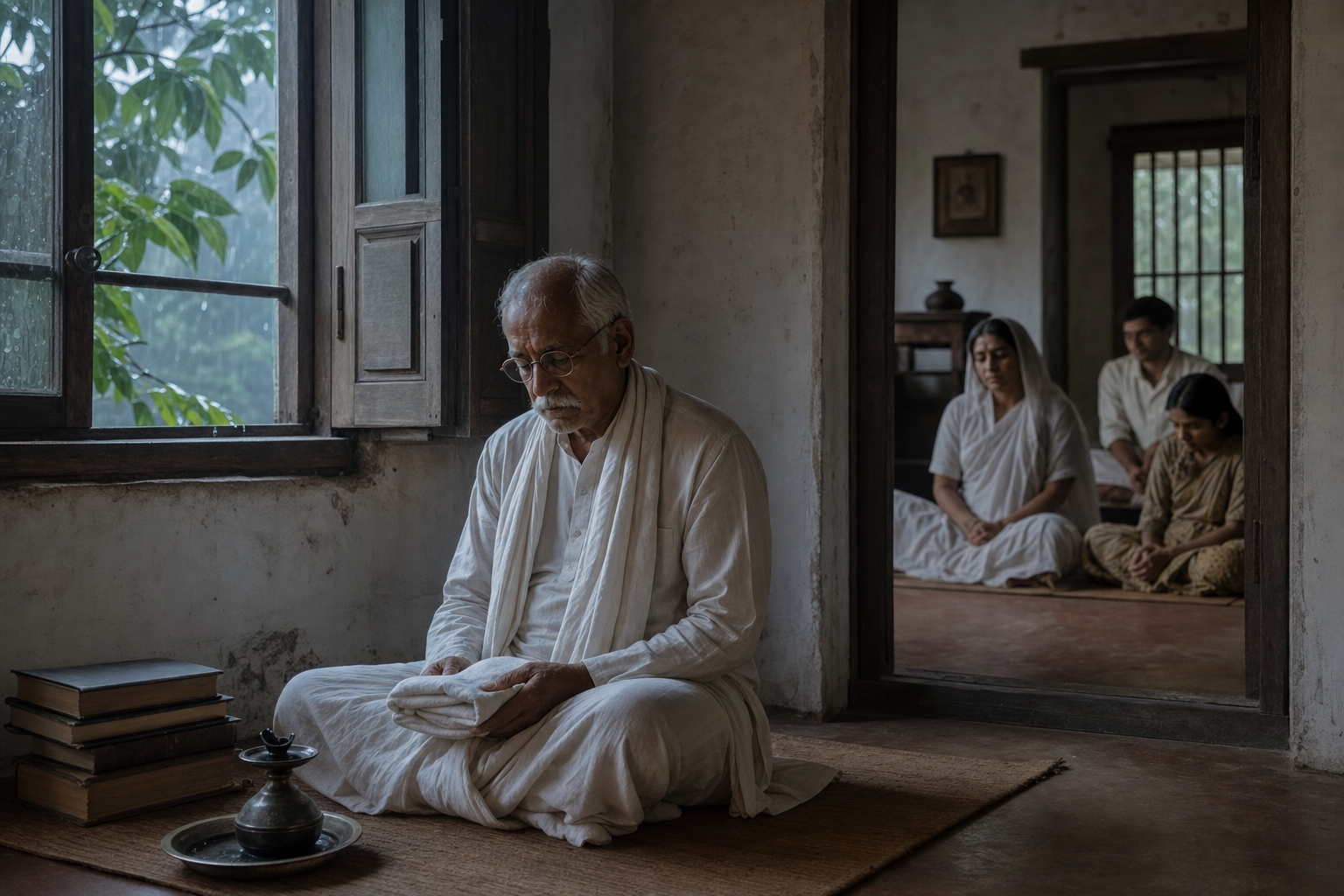
The diary’s recurring strands reportedly include family life, private reflection, spiritual development and travel. Hiriyanna appears in this account not only as a teacher and scholar, but also as a grieving husband and protective father. These identities should not be treated as biographical decoration around his philosophy. They indicate the conditions under which philosophical discipline had to function.
Bereavement can make metaphysical language either more substantial or less convincing; household obligations can expose the distance between abstract detachment and responsible conduct. In Hiriyanna’s case, the reported convergence of study, grief and duty suggests that Vedanta developed through repeated application rather than through withdrawal from ordinary attachments. This is an interpretive conclusion, not proof that every domestic event produced a particular doctrinal change.
The account’s treatment of professional disappointment supplies a related caution. D.V. Gundappa reportedly believed that Hiriyanna’s academic career received less recognition than his stature deserved, yet the diary does not make institutional resentment its governing theme. That silence cannot demonstrate an absence of hurt. It does, however, make grievance a poor master key for interpreting his development.
Seen together, these features make his composure look less like an effortless temperament and more like an achievement renewed under pressure. The diary does not overturn the public image of a tranquil teacher; it shows that tranquillity could coexist with sorrow, responsibility and self-questioning.
Aesthetic attention widened spiritual practice

Hiriyanna’s development also crossed the artificial boundary between philosophy and aesthetic experience. The source describes him as a lover of poetry and a restrained rasika, while identifying aesthetics as one of his recognized fields of contribution. Travel reportedly stimulated both historical perception and aesthetic response. These details suggest that receptivity to beauty formed part of his reflective discipline rather than merely providing leisure from it.
Aesthetic experience and Vedantic inquiry should not be collapsed into one another. Even so, both can demand sustained attention, freedom from hurried utility and sensitivity to the relation between immediate experience and deeper interpretation. Hiriyanna’s combined interests therefore illuminate how philosophical development may involve educating perception as well as refining arguments.
The diary also places him within a wider cultural and intellectual world. The reported entries mention figures including Raja Ravi Varma, Rabindranath Tagore, Gopal Krishna Gokhale, Ramana Maharshi and two Sankaracharyas of Sringeri. The significance of such references lies less in assembling a list of eminent contemporaries than in showing that his intellectual life unfolded amid artistic, political, scholarly and spiritual currents associated with the Indian Renaissance.
Self-effacement preserved the process behind the doctrine
The title Chaff and Draff names residues: husk left after threshing and spent grain left after brewing. As the source argues, Hiriyanna appears to have classified his private notes as miscellaneous remains rather than finished philosophical work. The title consequently embodies an intellectual paradox. What the author treated as residue may be valuable precisely because it preserves what formal scholarship removes.
The source also identifies a possible resonance with Tennyson, whose poetry Hiriyanna reportedly admired, but properly treats the connection as an inference rather than an established origin for the title. That restraint offers a sound principle for reading the diary as a whole: suggestive evidence should deepen interpretation without being promoted into certainty.
Hiriyanna’s final recorded sentence reportedly notes a return to Mysore because of illness. It provides no crafted culmination and no declaration that a philosophical journey had been completed. That unfinished ending is appropriate to the larger record. Vedantic development appears here as continuing work: learning across traditions, submitting ideas to loss and obligation, cultivating aesthetic attention, and resisting the temptation to turn private struggle into a polished legend.
Future study can build on this record by comparing particular diary entries with Hiriyanna’s published treatments of Vedanta, ethics and aesthetics. The most productive reading will preserve the diary’s incompleteness, using it neither to manufacture a saint nor to reduce a philosopher to his moments of doubt.