
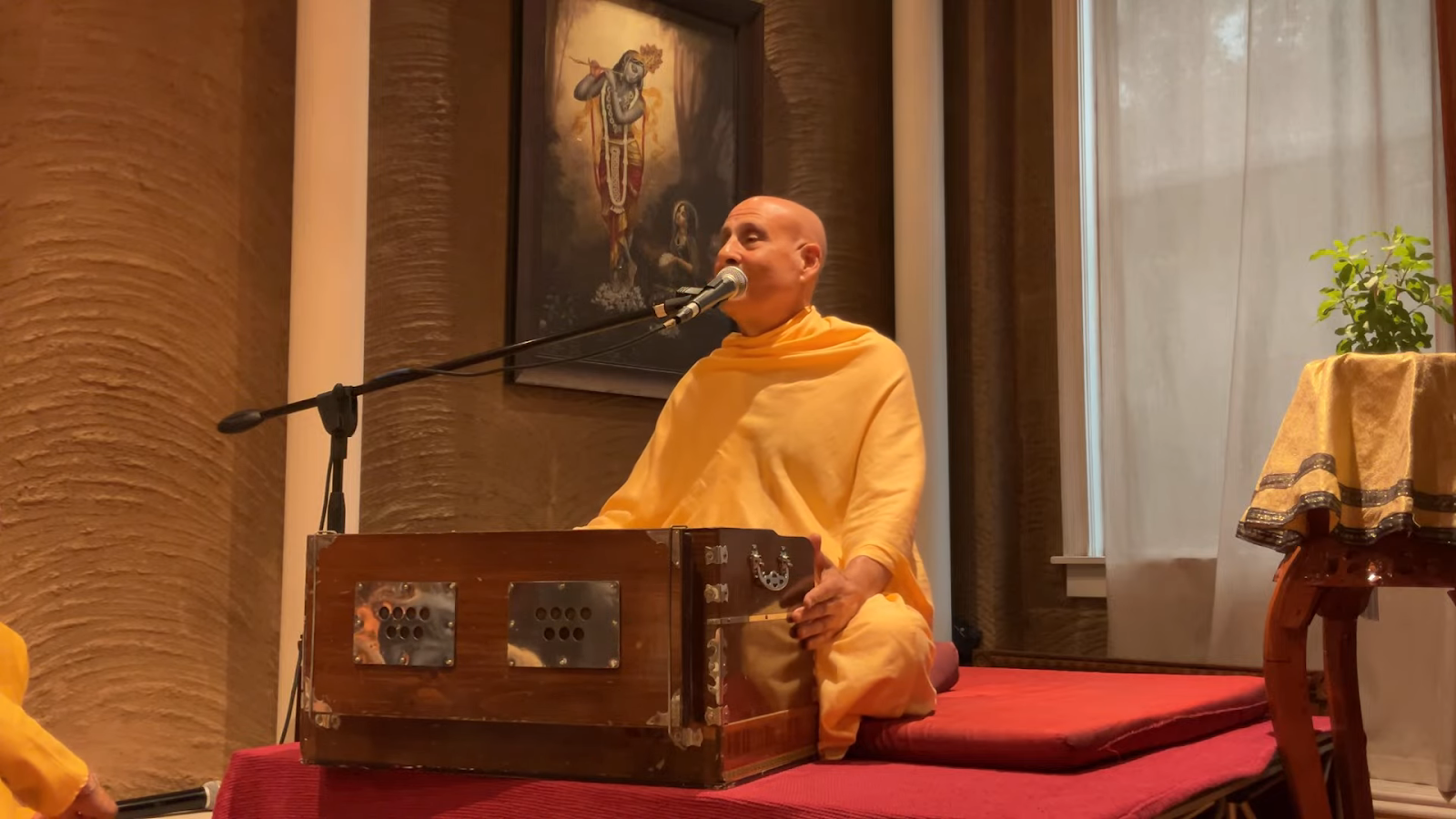
Dandavats presents an item titled HH Radhanath Swami – Wisdom Talk. The material supplied for this report is unusually limited: it contains a linked screenshot but no transcript, summary, quotation, or description of the talk’s subject.
This article therefore serves as a source note rather than attempting to reconstruct a teaching that is not in the record. It separates what the listing establishes from general guidance for engaging responsibly with spiritual discourse.
Key takeaways
- Dandavats identifies the item as a wisdom talk associated with Radhanath Swami.
- The supplied source contains an image but provides no substantive account of the discourse.
- No theme, quotation, argument, or spiritual instruction can responsibly be attributed to the speaker from this material alone.
Why the limited source requires restraint
Spiritual writing naturally invites reflection, but attribution establishes a firm boundary. A writer may discuss the general value of wisdom talks, attentive listening, or ethical practice; those reflections must not be presented as Radhanath Swami’s message unless the source actually records them.
This distinction protects readers from receiving speculation as instruction. It also respects the speaker, whose position could be altered if a presumed theme were attached to his name without a transcript or recording. In this case, the only reportable claim is that Dandavats posted a listing for the talk.
A Dharmic framework for careful listening
If the complete discourse becomes available, a sound approach would begin by hearing it in full, identifying what the speaker explicitly says, and only then considering how the teaching might inform conduct. Context should come before interpretation, while interpretation should remain distinct from quotation.
Hindu sampradayas and the Buddhist, Jain, and Sikh traditions differ in doctrine, vocabulary, and practice. Yet disciplined attention, ethical self-examination, and the effort to embody wisdom are recurring threads across the Dharmic family. Careful listening can therefore support unity without erasing the integrity of any particular path.
What a complete report would need
A substantive account would require the speaker’s actual subject, central reasoning, relevant examples, and enough surrounding context to distinguish a passing remark from a principal teaching. It would also need a clear separation between direct quotation, faithful summary, and editorial reflection.
Until a transcript, recording, or reliable synopsis is available, the responsible course is to preserve this listing as a pointer and withhold claims about the talk’s contents. Returning to the complete discourse when it can be examined will better serve both the teacher and the reader.
Inspired by this post on Dandavats.
