
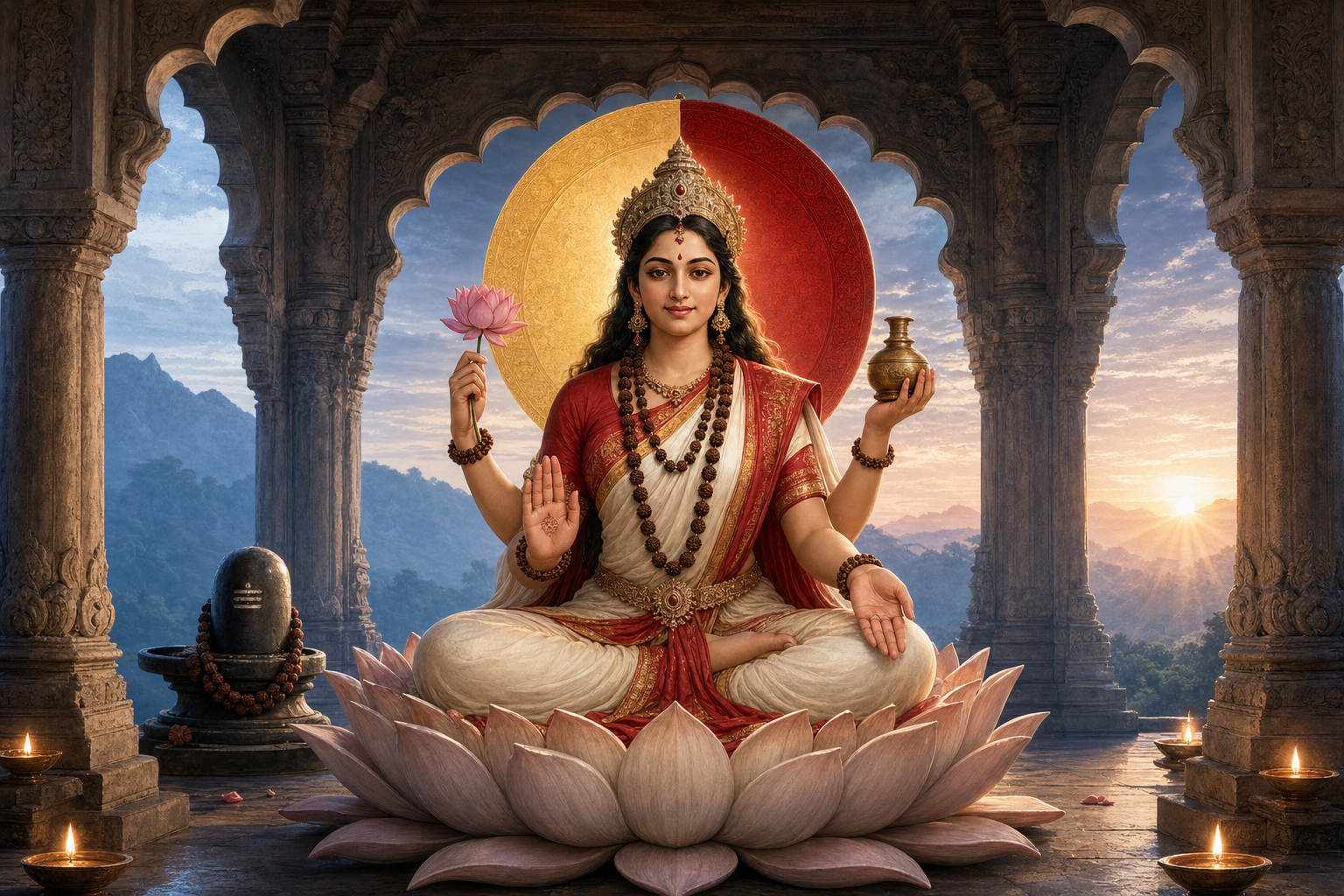
Goddess Isani becomes clearer when the search for a single, universally fixed image gives way to a study of names, relationships, and ritual settings. The DharmaRenaissance account presents Īśānī at the meeting point of feminine sovereignty, the power of Isana Shiva, wider Goddess traditions, sacred speech, and the northeast.
Reading these layers together helps distinguish what the reported texts establish from what later interpretation may infer. Isani is neither adequately described as only the wife of a directional deity nor securely documented as a separate goddess with one pan-Indian biography. Her significance lies in the connections made possible by her name.
A sovereign name, not merely a marital label
According to the source article, Īśānī belongs to the Sanskrit linguistic family formed around the root īś, associated with ruling, possessing power, and being capable. Related terms include Īśa, Īśāna, Īśvara, and Īśvarī. The feminine formation therefore carries the sense of a ruling or sovereign lady while also identifying the feminine power associated with Īśāna, a name of Shiva.
This grammatical relationship is theologically important. A relational identity does not necessarily imply a secondary status: it can describe the power through which divine consciousness acts, manifests, protects, or communicates knowledge. Shaiva interpretation can emphasize Isani as the effective Shakti of Isana, while a Shakta reading can place the sovereign Goddess herself at the center and understand Isana’s functions through her power.
The article also distinguishes the academically precise Īśānī from common spellings such as Ishani, Isani, and Eeshani, giving an approximate pronunciation of Ee-shaa-nee. Spelling matters when comparing sources because similar Romanized forms may conceal different Sanskrit words. Here, the long vowels and the sound represented by ś preserve the relationship between Īśānī and Īśāna.
Sovereignty in this setting should not be reduced to political domination. The source relates the name to mastery of knowledge, divine agency, ordered space, and freedom from limitation. Isani can consequently signify authority that is intellectual, cosmological, and spiritual at once.
One name across four different textual settings
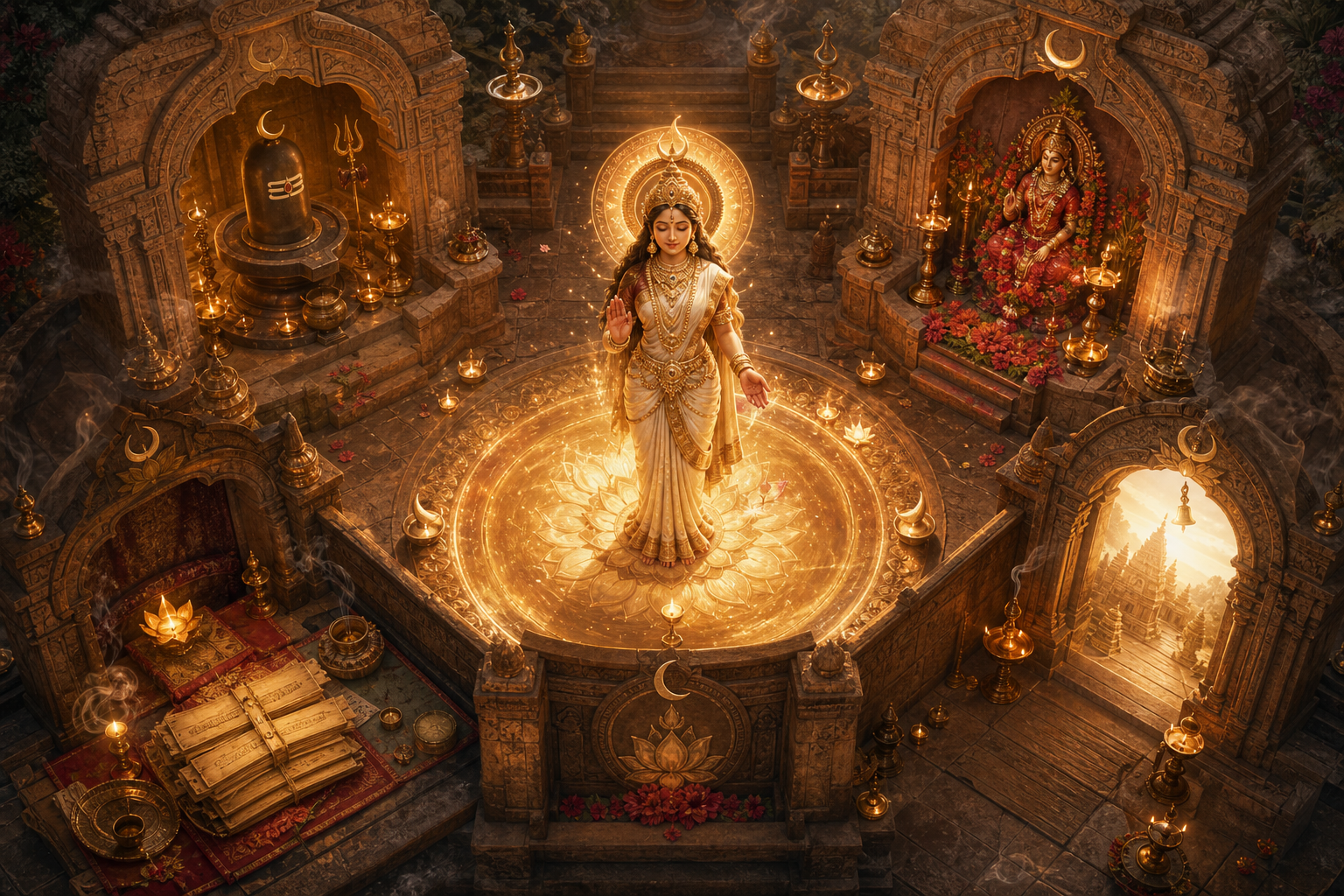
The Vedic horizon belongs first to Isana
The source traces an early theological background to the Taittiriya Aranyaka, where the masculine Isana is praised as lord of knowledge and beings. As the article carefully notes, this passage does not itself describe a goddess named Isani. Its relevance is contextual: it establishes a vocabulary of knowledge, lordship, and transcendence later associated with Isana and, through Shaiva-Shakta interpretation, with his power.
This distinction prevents a common evidentiary mistake. A passage about Isana can illuminate the conceptual environment of Isani without serving as a direct textual appearance of her name.
Isani as a name of Yogamaya
The DharmaRenaissance article identifies a direct occurrence in Bhagavata Purana 10.2.11–12. In the narrative associated with Krishna’s birth, Yogamaya is said to be worshipped under numerous names, including Durga, Bhadrakali, Vaishnavi, Chandika, Narayani, Sharada, Ambika, and Īśānī.
Within that passage, Isani belongs to a many-named Goddess rather than being confined to a directional relationship with Shiva. The reference establishes Īśānī as a scriptural divine name, but it does not by itself establish a separate Isani cult, standardized image, or independent mythology.
A forceful Durga in the Shiva Purana
The source also reports that Shiva Purana, Rudra-samhita 2.2.33.11–12, names Īśānī among nine Durgas accompanying Mahakali in the events surrounding Virabhadra and the destruction of Daksha’s sacrifice. This setting associates the name with a protective and corrective deployment of divine power.
The reported group should not be equated automatically with the Navadurga sequence widely recognized in contemporary Navratri observance. The difference demonstrates that Sanskrit traditions preserved multiple groupings of nine goddesses. A shared number does not guarantee identical members, ritual purposes, or theological contexts.
Isani as alphabetic Shakti
In a markedly different context, the source locates Īśānī in the Lalitopakhyana transmitted within the Brahmanda Purana. There the name occurs in an ordered series of Shaktis corresponding to Sanskrit vowels and is associated with the long vowel ī.
This is a technical ritual and linguistic placement rather than another episode in a divine biography. It reflects the reported Tantric understanding of phonemes as powers that can be correlated with mantra, body, and cosmos. Isani thus functions not only as a named goddess but also as a subtle potency of sacred speech.
These textual settings should not be compressed into one continuous life story or arranged as a simple evolutionary sequence. They answer different questions: the Vedic passage supplies the theological horizon of Isana; the Bhagavata passage places Isani among the names of Yogamaya; the Shiva Purana presents her among active forms of Durga; and the Lalitopakhyana assigns her a place within an alphabetic system of Shakti. The source further cautions that Puranic works are layered and survive in differing recensions, so numbering and wording may vary by edition.
The northeast connection—and the category it does not create
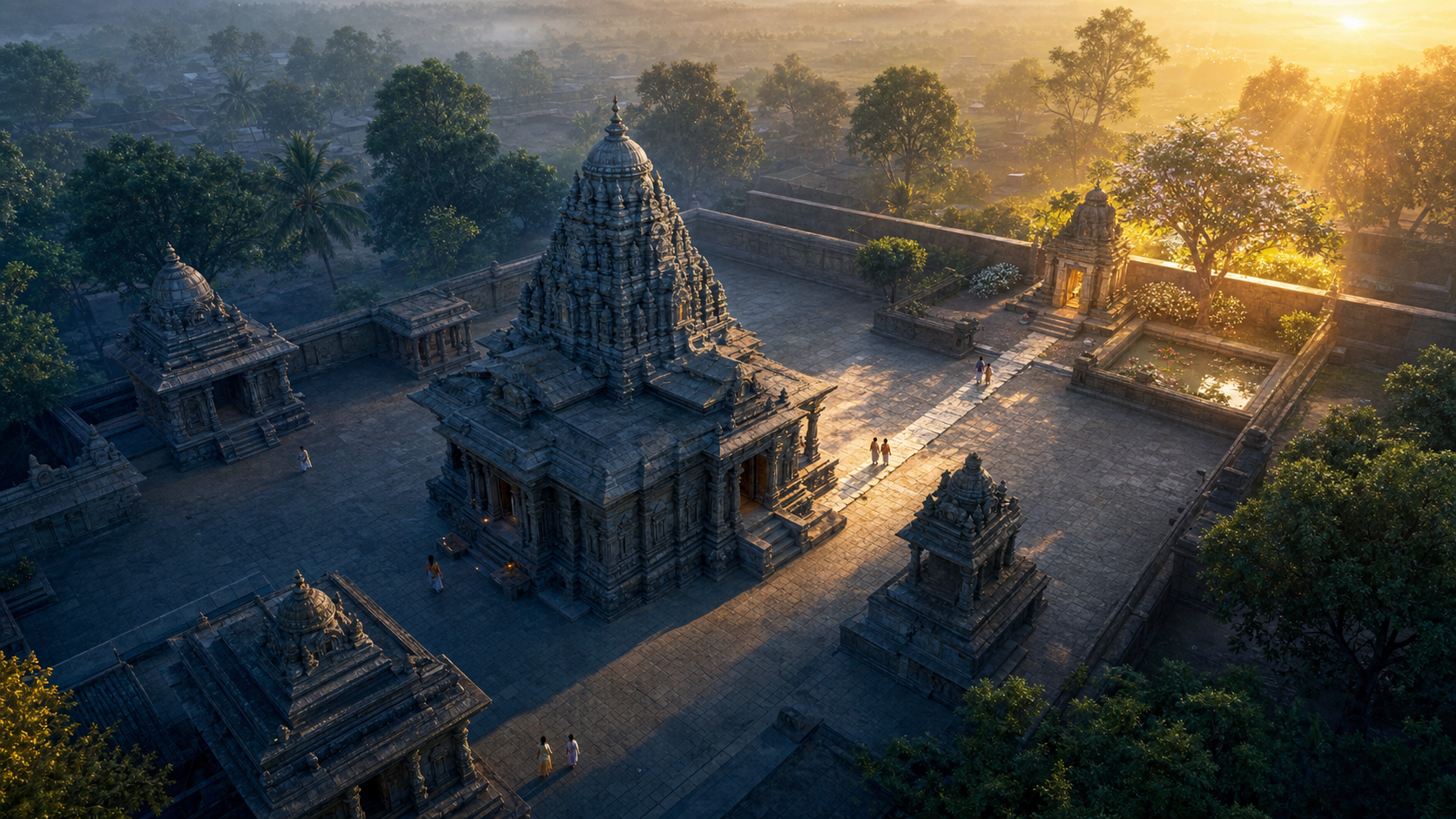
The description of Isani as Goddess of the Northeast is meaningful only with a crucial qualification. As reported in the source, the formal northeast guardian in the standard system of directional protectors is the masculine Isana, a Shiva-related deity. Isani can be understood as his Shakti or feminine counterpart, while Īśānī also remains an independent name of the greater Goddess in the textual settings already considered.
Three related claims must therefore remain distinct: Isana holds the directional office; Isani expresses or embodies his feminine power in a Shaiva framework; and Isani can name the Goddess beyond that directional system. Treating those claims as interchangeable would turn a theological relationship into an unsupported assertion that every tradition recognizes a separate female directional guardian with identical attributes.
The source connects the northeast, called īśāna or īśānya in ritual and architectural contexts, with the care sometimes given to that part of sacred space. Temple features may offer a visible route into the theology of Isana, but they do not prove that every northeast niche represents Isani. Identification requires attention to the particular temple’s iconographic program, inscriptions, regional conventions, and ritual system.
This is also why the absence of one universally attested vehicle, weapon set, festival, or iconographic formula is significant. It does not make the name empty; it indicates that textual epithet, directional theology, ritual power, and independent icon may belong to different classificatory levels.
How Shaiva and Shakta readings illuminate each other
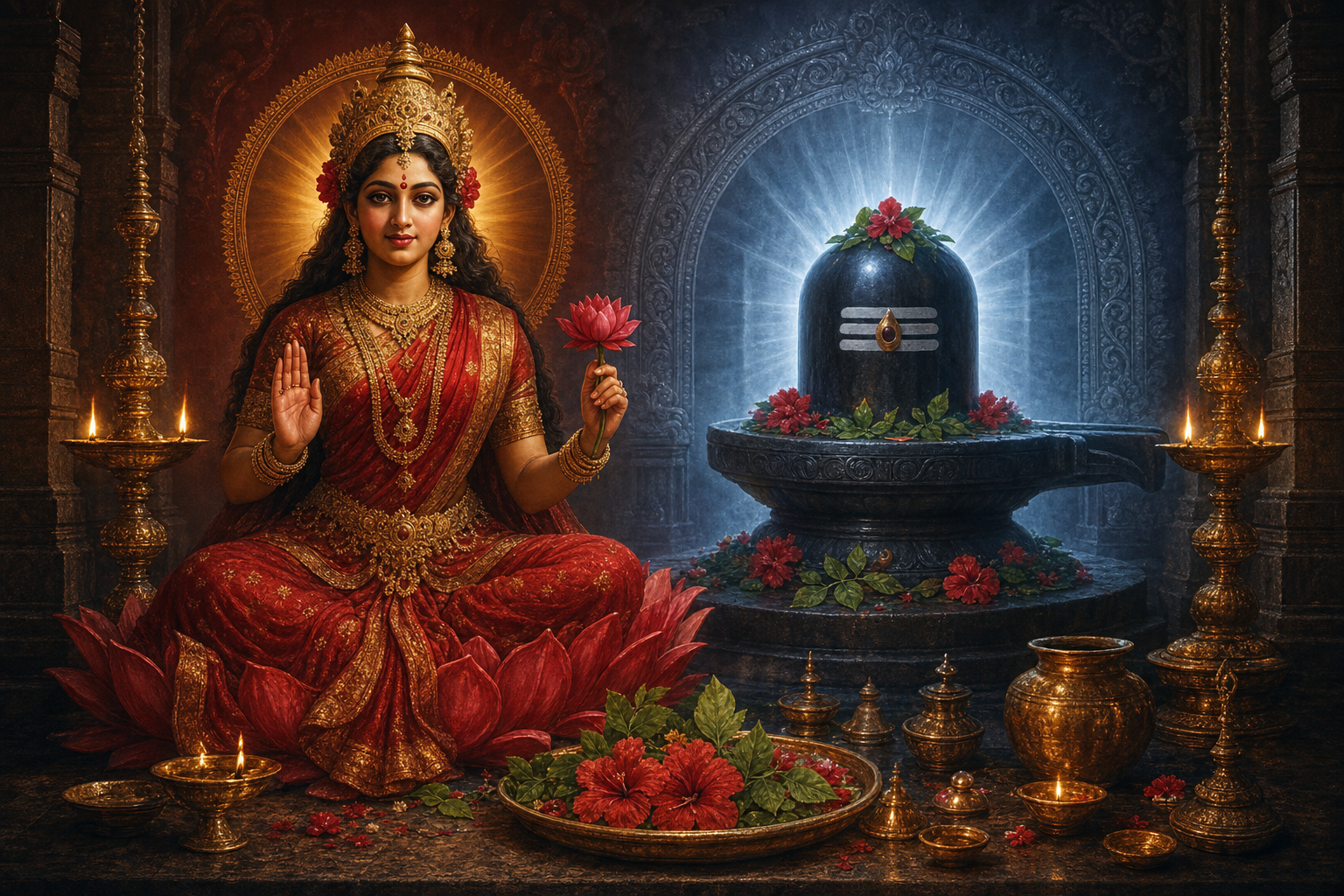
A Shaiva reading begins with Isana and asks how his knowledge, sovereignty, and transcendent agency become effective. Isani answers as Shakti: not an ornamental companion, but the capacity through which the divine functions attributed to Isana operate.
A Shakta reading changes the center of emphasis. Isani is the sovereign Goddess, and the powers associated with Isana are intelligible through her. The difference is not simply a dispute over rank. It reflects two theological ways of describing the relation between consciousness and power—one beginning with Shiva and his Shakti, the other beginning with Shakti as the enabling reality of divine action.
Together, these readings explain why calling Isani relational need not diminish her. A relationship can identify how a divine power is encountered without defining the limit of that power. The Bhagavata report broadens her beyond the role of counterpart; the Shiva Purana report places her among forceful Goddess forms; and the alphabetic setting presents her as a potency embedded in sacred sound.
The evidence summarized by the source nevertheless favors restraint in devotional claims. It supports approaching Isani through sovereignty, knowledge, protection, sacred space, and the inseparability of Shiva and Shakti. It does not establish one mandatory mantra, ritual manual, festival calendar, or visual form shared across Hindu communities.
Key takeaways
- Īśānī carries the sense of feminine sovereignty and can designate the Shakti of Isana without being reduced to a merely secondary spouse.
- The reported textual appearances serve different purposes: a name of Yogamaya, a form among nine Durgas, and an alphabetic Shakti associated with long ī.
- The northeast is formally governed by the masculine Isana in the directional system; calling Isani Goddess of the Northeast is a theological interpretation, not evidence of one universal female guardian image.
- The available account does not demonstrate a standardized pan-Indian cult or iconography, so textual, ritual, and regional contexts should be examined separately before being connected.
Further study can proceed most fruitfully by checking the Sanskrit spelling, the relevant textual recension, and the ritual or architectural system in which the name appears. That disciplined approach leaves room for regional evidence to deepen the picture without forcing diverse manifestations into a single artificial template.