
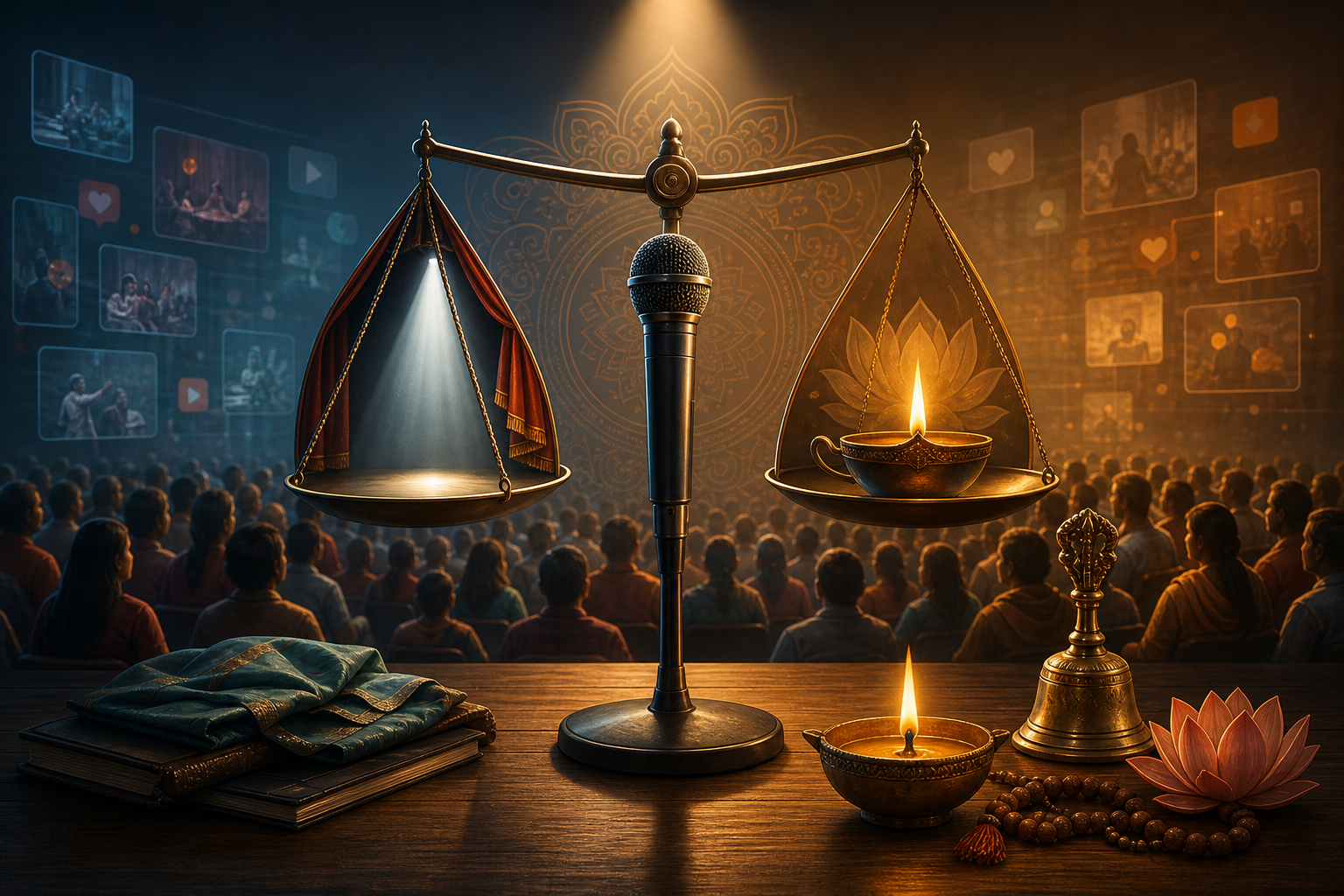
Comedy has always occupied a sensitive place in public life because it tests social comfort, exposes hypocrisy, and turns everyday tension into laughter. Yet the same artistic freedom that makes humour powerful can also become socially corrosive when it depends on obscenity, vulgarity, humiliation, or religious mockery. The present debate over stand-up performances and comedy shows is therefore not merely about taste; it is about the ethical boundaries of entertainment in a society where faith, family, and cultural memory remain deeply woven into public identity.
The central concern is the growing normalization of content that presents vulgarity as boldness and insult as intellectual courage. Humour can be sharp without being crude, critical without being contemptuous, and socially relevant without ridiculing sacred traditions. When performances repeatedly target religious symbols, community practices, revered figures, or civilizational values for easy applause, entertainment begins to lose its moral intelligence. A mature society need not fear satire, but it must be able to distinguish satire from calculated provocation.
In the Indian context, this issue becomes especially significant because public culture is not built around isolated individualism alone. Social life is shaped by intergenerational memory, dharmic traditions, community festivals, temple practices, family ethics, and shared reverence for the sacred. Hinduism, Buddhism, Jainism, and Sikhism have all preserved sophisticated traditions of debate, humour, philosophical disagreement, and self-correction. None of these traditions requires fragile defensiveness. However, none of them can be reduced to cheap stereotypes or mocked as entertainment without social consequences.
The technical question is not whether comedians should be allowed to speak. Freedom of expression remains essential to any serious democracy. The question is whether commercial platforms, event organizers, streaming services, and performers can claim cultural immunity when their content crosses into obscenity, deliberate religious provocation, or targeted humiliation. Rights exist within a framework of responsibility. India’s constitutional structure recognizes free speech, but it also permits reasonable restrictions in the interests of decency, morality, public order, and respect for social harmony. This balance is not censorship by default; it is the difficult architecture of plural public life.
A useful distinction must be made between critique and contempt. Critique examines ideas, practices, institutions, and power structures with reasoned seriousness or creative wit. Contempt, by contrast, treats the audience’s sacred commitments as objects of derision. A joke that questions hypocrisy within religious communities may serve a reformist function. A joke that relies on obscene references to deities, gurus, scriptures, rituals, or sacred symbols does something very different: it turns inherited reverence into a punchline. That shift explains why many viewers experience such performances not as comedy, but as cultural disrespect.
The entertainment economy has intensified this problem. Digital platforms reward virality, controversy, and short-form outrage. A performer no longer speaks only to a small room; a clip can circulate across regions, languages, and communities within minutes. What might once have been defended as a niche performance now becomes a mass cultural event. This change creates a higher duty of care. Performers, producers, and platforms cannot ignore the foreseeable impact of content simply because provocation generates attention.
There is also a commercial incentive to escalate offensiveness. Once ordinary humour loses algorithmic visibility, some performers turn to shock value, sexual vulgarity, abusive language, or religious irreverence to remain visible. This creates a race in which each performance must be louder, cruder, and more transgressive than the last. The result is not artistic courage but creative exhaustion. A culture that mistakes obscenity for originality eventually weakens its own artistic standards.
Social responsibility in comedy does not require humourless moral policing. India has a long tradition of wit, parody, folk theatre, street performance, poetry, and dramatic satire. The problem begins when humour becomes detached from proportion, empathy, and cultural literacy. A comedian who understands a tradition can critique it more intelligently than one who merely exploits its symbols. Responsible humour demands knowledge, timing, restraint, and awareness of social context. These qualities make comedy stronger, not weaker.
The emotional dimension of this debate should not be dismissed as oversensitivity. For many families, religious practices are not abstract ideologies but living bonds with parents, grandparents, festivals, childhood memories, pilgrimage, prayer, and community belonging. When sacred names or rituals are handled with obscenity, the hurt is not only theological; it is cultural and personal. A society that asks citizens to respect diverse identities must also respect the emotional reality of religious sentiment.
At the same time, public concern must be expressed through lawful and proportionate means. Threats, intimidation, vandalism, or mob pressure cannot be justified in the name of protecting culture. Dharmic traditions place strong emphasis on self-control, dignity, debate, and ethical conduct. Objection to offensive content is legitimate when it is pursued through complaints, public criticism, platform accountability, legal remedies, and peaceful civic pressure. Moral responsibility must apply both to performers and to those who oppose them.
Calls for stricter regulation of stand-up comedy and live performances therefore need careful design. A blunt regulatory system could suppress legitimate satire and creative experimentation. A complete absence of standards, however, leaves communities vulnerable to repeated cultural insult. The better approach is a layered model: transparent venue guidelines, age classification, content disclosure, platform moderation, grievance mechanisms, and narrowly tailored legal intervention only where content clearly crosses established boundaries of obscenity, targeted religious insult, or public disorder.
Event organizers must also bear responsibility. Ticketed performances are not private conversations; they are curated public offerings. Organizers select performers, promote themes, sell access, and profit from audience attention. They should therefore maintain clear codes of conduct, especially for shows involving religion, caste, gender, sexuality, ethnicity, or national identity. Such standards need not ban difficult subjects. They should ensure that difficult subjects are handled with seriousness, context, and artistic discipline.
Digital platforms have an even larger role because their distribution systems amplify content beyond its original setting. Platforms already moderate content for copyright, violence, sexual exploitation, misinformation, and harassment. Cultural and religious sensitivity should not be treated as an afterthought. Clear reporting pathways, consistent review standards, and visible enforcement can reduce both offensive content and reactionary outrage. In this sense, platform governance is now a cultural issue, not merely a technical one.
The discussion must also avoid selective outrage. A principled standard should protect all sincere religious communities, including Hindu, Buddhist, Jain, Sikh, and other traditions. Respect for one tradition cannot be built on contempt for another. The objective is not to create a hierarchy of hurt, but to cultivate a public ethic in which disagreement does not require desecration and humour does not require humiliation. This is essential for unity among dharmic traditions and for a healthier plural society.
From an artistic perspective, limits can actually deepen creativity. Some of the finest humour emerges from observation, irony, language, character, contradiction, and social intelligence. Vulgarity is often the shortest route to a reaction, but not the highest form of comedy. A performer who can make an audience laugh without reducing communities to targets demonstrates greater craft. Restraint is not the enemy of art; it is often the condition that forces art to become more refined.
The collapse of moral boundaries in entertainment should therefore be read as part of a broader cultural shift. Public speech has become faster, harsher, and more performative. Outrage sells, mockery travels, and nuance often disappears. Comedy is only one visible site of this transformation. The deeper challenge is whether society can rebuild shared standards of dignity without falling into authoritarian control or chaotic permissiveness.
A balanced cultural response would begin with education in media ethics, artistic responsibility, and religious literacy. Performers should be encouraged to understand the traditions they reference. Audiences should be encouraged to respond with discernment rather than impulsive anger. Platforms should be expected to enforce their own standards transparently. Legal institutions should intervene only where the harm is concrete, serious, and within the limits of established law. This balance protects both freedom and social trust.
The debate over humour and obscenity is ultimately a debate over civilizational confidence. A confident society allows criticism, welcomes wit, and tolerates discomfort. It does not, however, celebrate vulgar desecration as progress. Entertainment must remain free enough to question power, but responsible enough to respect the sacred bonds that hold communities together. When comedy remembers this responsibility, it can become a force for reflection rather than resentment.
The need of the hour is not a humourless public culture, but a more intelligent one. Comedy can challenge social hypocrisy, expose political absurdity, and help people laugh at themselves. Yet it must not normalize obscenity, religious mockery, or cultural contempt as markers of sophistication. Moral responsibility, cultural sensitivity, and artistic freedom can coexist when performers, platforms, regulators, and audiences accept that laughter is most powerful when it does not wound the dignity of the sacred.
Inspired by this post on Hindu Jagruti Samiti.
