
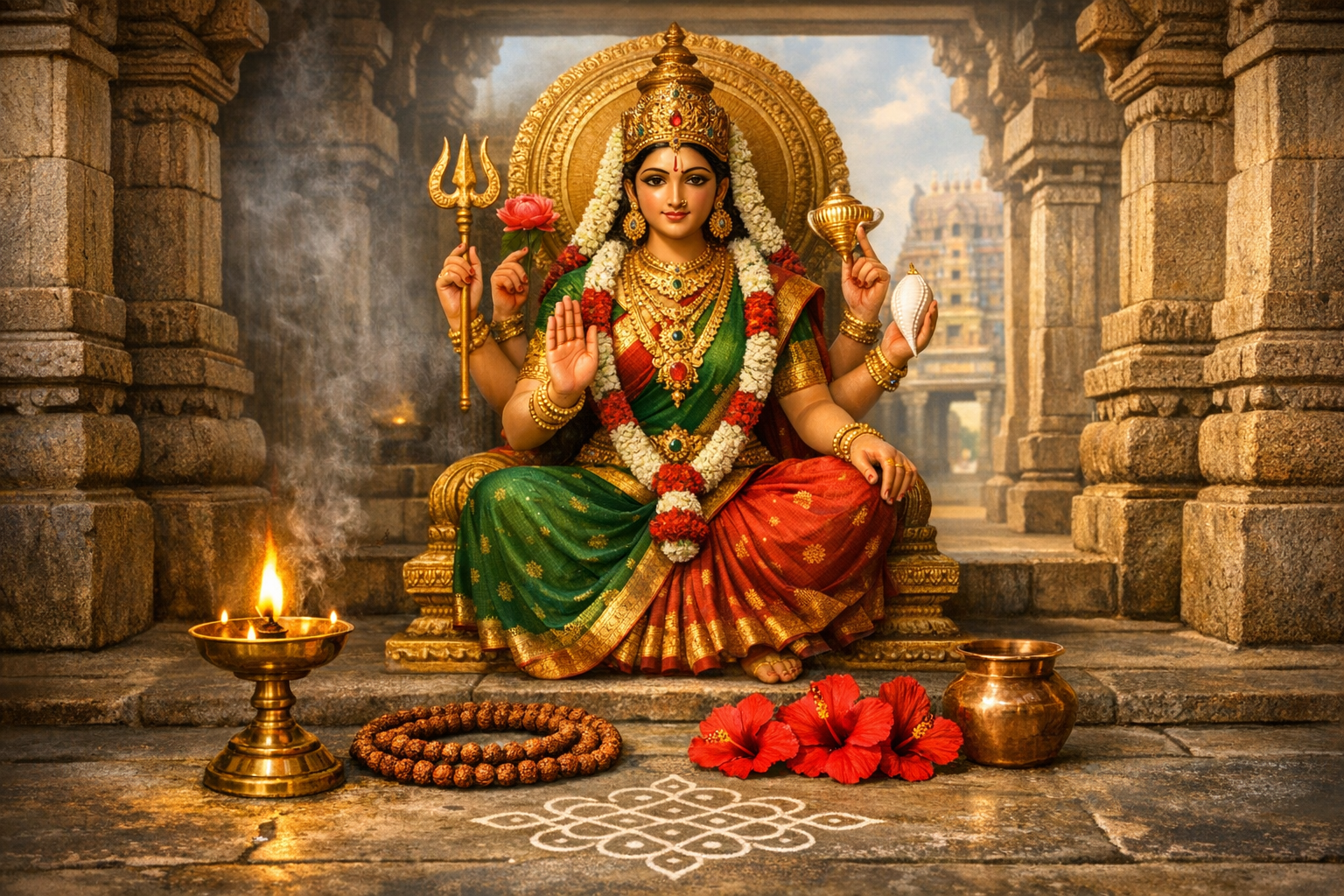
Patteeswaram Durgai Amman Ashtottaram is a living liturgical tradition that unites rigorous devotion with classical temple practice at the Thenupuriswarar Temple in Patteeswaram near Kumbakonam, Tamil Nadu. Centered on Ma Devi Durga, the Ashtottaram (the recitation of 108 sacred epithets) and the locally cherished Sri Patteeswaram Durgai Ashtakam (an eight-verse hymn) together articulate a theology of protection, compassion, and righteous courage that resonates across the Dharmic world.
Situated within the larger Saiva kshetra of Thenupuriswarar, the Patteeswaram Durgai shrine stands as a major devotional anchor in the Chola heartland. The temple complex, known for Dravida temple architecture matured between the 10th and 12th centuries, reflects a continuous ritual life that integrates Shakta worship within a Saiva framework, illustrating the organic plurality that characterizes Tamil Nadu heritage.
Clarifying terminology is essential: Ashtottaram (Aṣṭottara Śatanāma) denotes the systematic chanting of 108 names of the Deity, while Ashtakam refers to a hymn of eight verses. In Patteeswaram, both formats are venerateddevotees invoke the Patteeswaram Durgai Amman Ashtottaram for namavali japa and turn to Sri Patteeswaram Durgai Ashtakam for lyrical praise and meditative reflection.
The number 108 carries layered cosmological meaning in the Dharmic traditions: 27 nakṣatras multiplied by their four pādas yield 108; classical lists of 108 Upanishads are remembered in scholastic tradition; and in yoga and ayurveda, 108 marma points symbolize a complete mapping of the subtle body. An Ashtottaram thus aspires to holistic remembrancepraṇāma of the Deity through a complete circle of attributes.
In the Patteeswaram tradition, Sri Durga Devi is praised through core Shakta epithets that appear in both Ashtottaram and Ashtakam formatsSri Kaathyayani, Ambica, Kali, Lokamatanames that collectively reveal the Mother as the fierce protector, the compassionate guide, and the sovereign of moral order. Each name functions as a concentrated mantra, inviting reflection on an aspect of wisdom, fearlessness, or nurturing grace.
Iconographically, Durgai Amman at Patteeswaram bears the hallmark idiom of Mahishasuramardinimultiple hands wielding the weapons of the devas, the posture poised between śānta (serene) and ugra (protective). The visage conveys abhayam (fearlessness) and karuṇā (compassion), embodying the theological teaching that ultimate strength is inseparable from maternal care.
Textually, the shrine’s worship aligns with the Devi Mahatmya (also called Durga Saptashati) and agamic liturgy. The Ashtottara Shatanamavali format, common across temples in Tamil Nadu, maps theological categories drawn from puranic narrative, tantra-influenced mantra lists, and local devotional memory, allowing a fluid-yet-precise articulation of Devi’s tattva (principle) and śakti (power).
The names traditionally cluster into intelligible themes: cosmic motherhood (Lokamata, Jagadamba), ethical sovereignty (Dharma-rakshini, Shubha-kari), martial protection (Mahishasuramardini, Khadga-dharini), compassionate healing (Bhavani, Amba), and spiritual illumination (Mahavidya, Jñana-prada). Such clustering helps devotees meditate not only on narrative symbols but also on lived virtuescourage with compassion, firmness with fairness.
Chanting practicestep by step: prepare a clean space, light a deepam (sesame or ghee lamp), and set a simple offering (preferably red flowers such as hibiscus). After acamana (ritual sipping of water) and a brief pranayama to steady the mind, visualize Durgai Amman as enshrined in Patteeswaram, radiating abhayamudra. State the sankalpa (clear intention)for inner strength, ethical clarity, and the welfare of all beings.
Proceed to the Ashtottaram with a 108-bead japa mala if available, intoning Om before each name and Namah after it (for example, “Om Ambikayai Namah”). Move deliberately, allowing each epithet to land as a meditative seed. Those using the Sri Patteeswaram Durgai Ashtakam may recite the eight verses slowly, contemplating the imagery and predicates in each stanza.
Recommended times, while not mandatory, enhance attentiveness: Fridays, Navami and Ashtami tithis, and the Navaratri period are traditional. Sunrise and twilight are especially supportive for śakti upāsana; however, consistency and sincerity outweigh timing. Householders often adopt a weekly vrata rhythm, while travelers to Kumbakonam align their visit with temple alankaram days to experience the full devotional ambiance.
Common preliminaries that support focus include a brief dhyāna-śloka (such as “Sarva-maṅgala-maṅgalye śive sarvārtha-sādhike, śaraṇye tryambake Gauri, Nārāyaṇi namo ’stu te”) and the Durga Gāyatrī: “Om Kātyāyanāya vidmahe Kanyakumārīdhīmahi tanno Durgiḥ pracodayāt.” These can precede or follow the Ashtottaram, framing the recitation with reverence and clarity.
Conclude with a short kṣamā-prārthanā (prayer for forgiveness for any lapses), ārati, and a resolve to embody Devi’s attributesahimsa with strength, discernment with humility, and service with steadiness. Offer the merit (puṇya) universally, echoing the Dharmic ideal of lokasaṅgraha (the welfare and cohesion of society).
From a practitioner’s perspective, the Patteeswaram Durgai Amman Ashtottaram has three experiential impacts noted by devotees and teachers: first, a reduction in fear responses and anxiety through rhythmic breath–mantra entrainment; second, improved ethical clarity in decision-making due to sustained contemplation of Dharma-infused epithets; and third, a deepened sense of protective belonging, as the maternal symbolism of Ambica reframes adversity as a site for growth.
Festival contexts amplify these effects. During Navaratri, thematic alankarams highlight aspects such as Śailaputri, Brahmācharini, Chandraghanta, Kushmanda, Skandamāta, Kātyāyani, Kalarātri, Mahāgauri, and Siddhidhātri, allowing the Ashtottaram to be mapped to daily iconographic focus. Fridays in the Ādi month traditionally draw large congregations in Tamil Nadu, and the Patteeswaram shrine is a focal point for such śakti upāsana.
Architecturally, Thenupuriswarar Temple exhibits classic Chola planninggopuram gateways, concentric prakaras, and subsidiary shrines accommodating both Saiva and Shakta liturgies. The spatial relationship of the Durgai sanctum within the complex underscores the integrated vision of temple life: a Saiva kshetra that fully honors Devi as the protecting Mother of the field of Dharma.
Pilgrimage logistics are straightforward: Patteeswaram lies in the Kumbakonam temple belt, accessible by road and rail from major Tamil Nadu hubs. Temple timings customarily include morning and evening darshan sessions; however, schedules vary by season and festival, so it is prudent to check locally. Modest attire, mindful silence in queues, and adherence to archana protocols reflect traditional respect.
Theologically, Patteeswaram Durgai Amman Ashtottaram exemplifies how Hinduism’s Shakta strand coexists harmoniously with Saiva devotion. More broadly, its virtuescourage (vīrya), compassion (karuṇā), and self-discipline (tapas)are celebrated across Dharmic traditions. Parallels are evident in Buddhist invocations of protective compassion, Jain emphasis on steadfast ahimsa and inner mastery, and Sikh articulations of righteous valor; all affirm a shared civilizational ethic of strength in service of the common good.
From a cultural heritage perspective, the shrine’s ritual repertoireAshtottaram recitation, alankaram cycles, and community observancesconstitutes invaluable intangible heritage. It continues to be transmitted in families and sanghas, sustaining a pedagogy that blends text, rhythm, gesture, and ethical cultivationan integrated approach that has defined the South Indian temple ecosystem for centuries.
For students of religion and aesthetics, the Patteeswaram tradition offers a case study in how an Ashtottaram functions as both theology and practice: it is at once a conceptual map of Devi and a method for reshaping attention, breath, and emotion toward equilibrium (samatva). The practice retains academic interest in fields ranging from Indology and ritual studies to musicology and cognitive science of religion.
In summary, the Patteeswaram Durgai Amman Ashtottaram unites sacred text, temple architecture, and communal memory into a coherent path of devotion and self-cultivation. Whether engaged through the full 108-name namavali or through Sri Patteeswaram Durgai Ashtakam, the practice invites a steady refinement of courage, clarity, and compassionvirtues that fortify individual life and strengthen the broader fabric of Dharmic unity.
Inspired by this post on Hindu Pad.
