
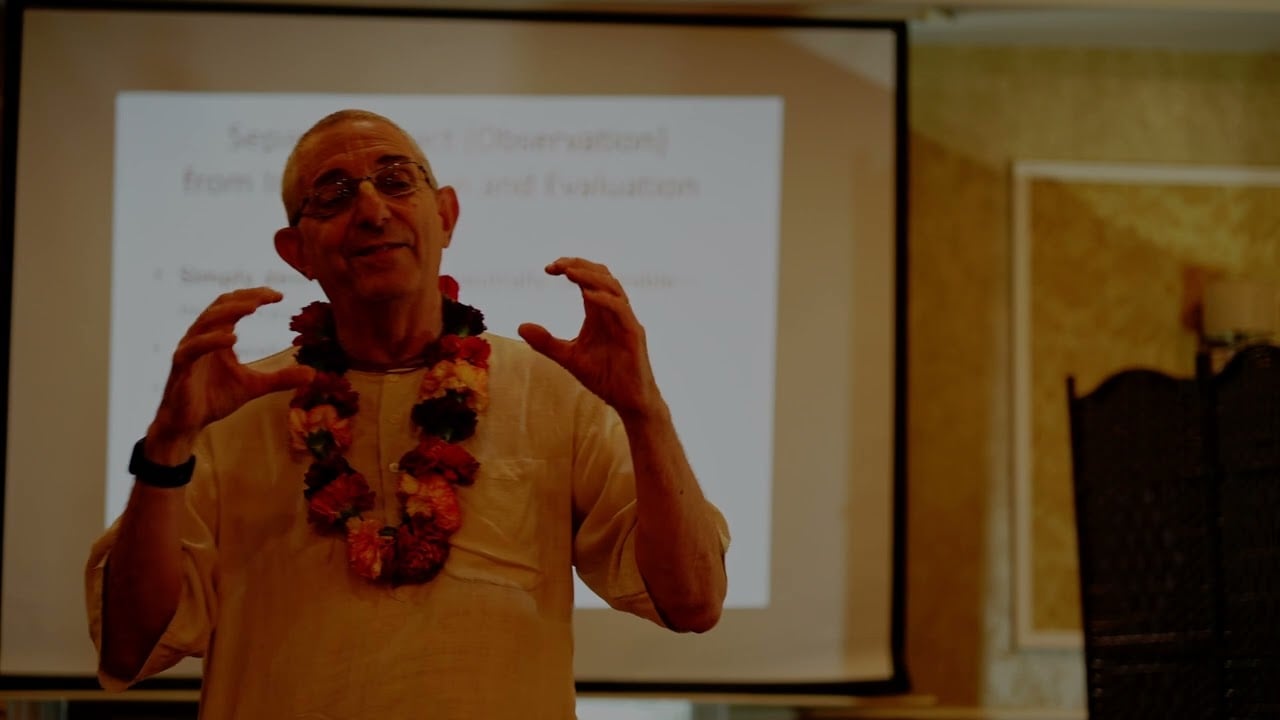
The session titled Vaishnava sanga 2025. Vraja Vihari Prabhu lecture 1, hosted by ISKCON Ottawa, examines how intentional association with practitioners of bhakti-yoga catalyzes inner transformation, stabilizes daily sadhana, and builds resilient community. This analysis distills its core contributions into a coherent framework grounded in scripture, supported by contemporary psychology, and oriented toward unity across dharmic traditions. It addresses why sanga matters, how it works, and how to implement it sustainably in modern life while maintaining fidelity to the Bhakti Tradition and the broader spirit of Sanatana Dharma.
In Vaishnava discourse, sanga is not casual socializing but value-aligned association centered on Krishna-katha, kirtan, japa, seva, and shared study. Gaudiya Vaishnavism emphasizes that such sadhu-sanga accelerates purification by creating a learning ecology where guidance, accountability, and compassion co-exist. The quality of association shapes priorities, daily rhythms, and ultimately identity; therefore, curating association is treated as a first-order spiritual decision rather than a peripheral lifestyle choice.
Scriptural foundations consistently elevate sanga. The Bhagavad-gita portrays devotion as a relational practice animated by remembrance and service, while the Bhagavata Purana describes how hearing and chanting in the company of devotees clarifies purpose and purifies the heart. Gaudiya sources further highlight six loving exchanges among devotees that cultivate trust and reciprocity, ensuring that instruction, care, and correction flow with humility and respect. In this sense, sanga is both the classroom and the clinic of spiritual life: it educates through shastra and heals through shared practice.
A useful analytic lens is the classic triad sambandha, abhideya, and prayojana. Sanga reinforces sambandha by continually situating the practitioner within a theistic worldview, abhideya by supporting daily disciplines such as japa, kirtan, svadhyaya, and seva, and prayojana by keeping the telos of pure devotion vivid and emotionally compelling. When these three dimensions are held together in community, practice moves from sporadic to steady, from effortful to joyful, and from self-referential to service-centered.
Practically, sanga operationalizes the nine processes of bhakti so they become livable routines rather than intermittent ideals. Hearing becomes structured svadhyaya with guided reflection; chanting is strengthened by shared kirtan and japa goals; remembrance is anchored by morning and evening check-ins; worship and service are coordinated through seva teams; friendship and surrender mature in circles of care; and everything is unified by regular satsang that nourishes both knowledge and affection.
Modern habit science helps explain why sanga is effective. Stable cues, shared routines, and social rewards reinforce practice automatically, reducing decision fatigue. Identity-based habits form when one repeatedly acts as a person who chants, studies, serves, and shows up for others; sanga makes that identity salient and supported. Implementation intentions, digital minimalism during sacred hours, and brief post-sadhana reflections create feedback loops that preserve momentum. Over time, the nervous system begins to associate devotional sounds and settings with calm focus and uplift, making consistency easier than inconsistency.
Community design matters. Sustainable sanga benefits from small, peer-led groups that meet predictably, clear norms that reduce prajalpa and encourage confidential sharing, and role rotation so leadership is distributed and burnout minimized. The Guru-Shishya Tradition is honored through transparent study lineages and timely access to guidance, while Vaishnava etiquette protects the culture of respect that prevents offences, nurtures humility, and keeps the center on seva rather than personality.
Progress needs compassionate measurement. Useful indicators include steadiness of daily japa and svadhyaya, qualitative shifts in attention and mood during kirtan, reduced reactivity in relationships, spontaneous gratitude, and greater readiness to serve. Periodic self-assessment, brief journaling after group sessions, and community feedback create a culture of learning rather than judgment. This aligns with the bhakti expectation that genuine practice is both klesha-reducing and virtue-generating.
A unifying dharmic perspective enriches this discussion. The Buddhist Sangha, the Jain fourfold sangha, and the Sikh sangat all affirm that wholesome association is a catalyst for ethical conduct, contemplative depth, and service. While metaphysical emphases differ, the shared intuition is clear: community shapes consciousness. Recognizing this common ground advances unity in spiritual diversity and strengthens interfaith dialogue within the family of dharmic traditions without diluting doctrinal integrity.
Methodologically, the lecture’s approach can be framed as a five-part cycle: orient with shastra; anchor daily practice with time and place; associate closely with committed practitioners; review progress through kind, evidence-based reflection; and refine practice through counsel and prayer. This cycle is scalable for individuals, families, and communities, and it translates well across cultural contexts where seekers balance study, work, and service.
Attendees and practitioners often report two experiential thresholds. The first is reliability: showing up for sadhana and sanga even on ordinary days, which gradually stabilizes attention and mood. The second is reciprocity: moving from receiving to giving, from consuming content to serving persons. Together, these thresholds reframe spiritual life from an individual performance to a shared pilgrimage, which is precisely where bhakti’s relational beauty becomes most tangible.
Common obstacles are addressable. Digital distraction can be reduced by device-free morning and evening windows and by keeping japa beads more accessible than screens. Time scarcity yields when practice piggybacks on existing anchors such as sunrise, meals, or commute. Cynicism softens through honest storytelling and small acts of trust. Most importantly, teams that combine scriptural competence with pastoral care provide both clarity and comfort, helping practitioners carry on during dry spells.
For communities wishing to implement these insights, a simple 30-60-90 day plan works well. Begin with a weekly satsang focused on Bhagavad-gita or Srimad-Bhagavatam, a shared japa target, and micro-groups of three to five for mutual support. In the next window, add service teams and a mentorship lattice to strengthen the Guru-Shishya continuum. By day ninety, convene an inter-dharmic dialogue with neighboring Buddhist, Jain, or Sikh communities on the theme of compassionate community. Such steps honor ISKCON’s outreach ethos while embodying vasudhaiva kutumbakam in practical, local ways.
In sum, Vaishnava sanga 2025. Vraja Vihari Prabhu lecture 1 underscores a durable truth: association crafts aspiration. When sanga is anchored in shastra, animated by kirtan and japa, protected by etiquette, informed by habit science, and widened by inter-dharmic friendship, bhakti-yoga becomes not only sustainable but joyfully contagious. This is a roadmap for personal steadiness, communal resilience, and unity in spiritual diversity that speaks to seekers across Hinduism, Buddhism, Jainism, and Sikhism today.
Inspired by this post on Dandavats.
