
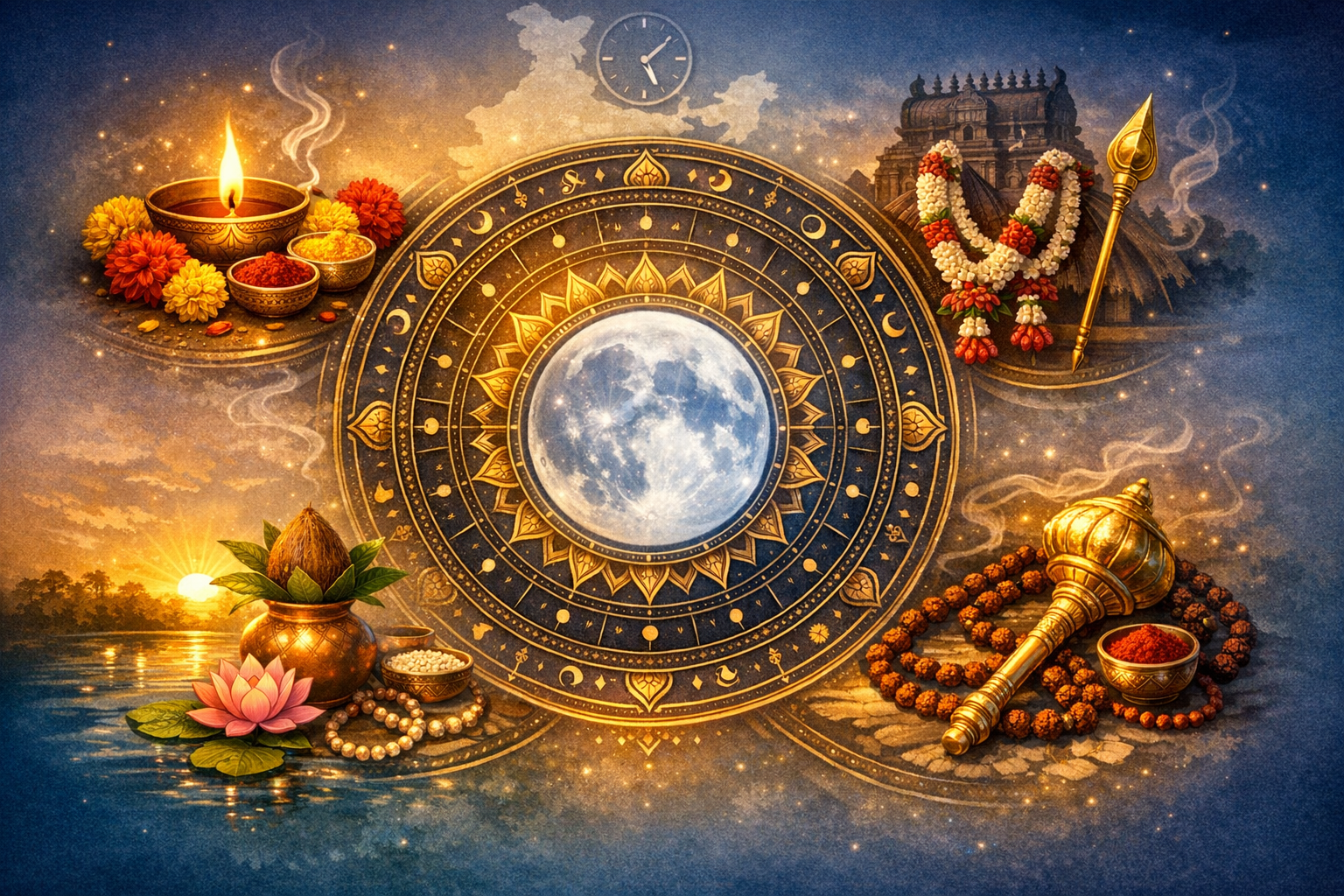
This guide consolidates the key Hindu festivals, vrats, and ritual observances in April 2026 based on major Panchang traditions used across India, with dates presented in Indian Standard Time (IST). It explains how tithis and nakshatras govern observance dates, clarifies regional calendar differences, and offers practical, evidence-based guidance for fasting and puja. The approach emphasizes shared dharmic values across Hindu, Buddhist, Jain, and Sikh traditions to encourage unity through common practices such as meditation, seva, and ethical self-discipline.
Key dates (IST): April 1 – Renuka Chaturdashi; April 1 – Panguni Uthiram; April 1 – Purnima Vrat; April 2 – Hanuman Jayanti – Purnima; April 3 – Vaishakh month begins in North India. Because tithis may straddle two civil dates, some observances cluster across consecutive days; the guide notes these nuances for clarity and planning.
Understanding the calendar basis improves confidence in planning. A Hindu day is anchored by the lunar tithi, defined by the elongation between the Sun and Moon (each tithi is roughly 12 degrees of lunar elongation). Calendar families differ in month reckoning: the Purnimanta system (common in much of North India) considers months from one full moon to the next, while the Amanta system (common in peninsular India) runs from one new moon to the next. Tamil Nadu follows a solar month framework; Panguni corresponds to the Sun’s transit through Pisces, and Panguni Uthiram is marked by the Uttara Phalguni (Uttiram) nakshatra aligning near the full moon. These principles explain why April 2026 shows Purnima-related observances across April 1–2 and the new lunar month onset on April 3 (Purnimanta convention).
April 1 – Renuka Chaturdashi: This observance venerates Renuka Devi (Yellamma), widely revered in Karnataka, Maharashtra, Telangana, and parts of Andhra Pradesh. In the Puranic stream, Renuka is acknowledged as the mother of Parashurama and is honored as an embodiment of Shakti. Communities associate this day with purification, resilience, and maternal protection. Local yatras and jatra traditions often emphasize charity, healing rites, and vows that reinforce ethical self-restraint and communal care.
Ritual framework for Renuka Chaturdashi typically includes an early bath (snana), lighting a lamp (deepa), and simple offerings such as red or yellow flowers, turmeric-kumkum, and naivedya according to regional custom. Many practitioners undertake a mild fast (phalahar) on Chaturdashi, concluding after the tithi ends. In households, elders guide children through stories of Renuka’s compassion and fortitude, making the observance both devotional and educational. As with all vrats, individuals with health considerations adopt balanced dietary alternatives while maintaining the spirit of vrata through charity, mantra-japa, and service.
April 1 – Panguni Uthiram: In Tamil traditions, Panguni Uthiram is the auspicious conjunction of the Uttiram star with the full moon during Panguni. The day is celebrated for the celestial weddings (kalyanam) of deities, prominently Shiva–Parvati, Muruga–Deivanai (and Valli in some traditions), and Sriman Narayana–Sri Lakshmi in Vaishnava temples. The theological emphasis rests on dharmic companionship, household harmony (grihastha-dharma), and the integration of love, duty, and devotion.
Temples conduct Kalyana Utsavam, processions, and special archana through the day. Murugan devotees often observe kavadi pledges or offer paal abhishekam (milk ablution), reflecting gratitude and resolve. Families typically participate together, reinforcing intergenerational transmission of culture and values. The atmosphere around Panguni Uthiram evokes community unity; devotees from diverse regions, including the diaspora in Southeast Asia and beyond, share a sense of belonging grounded in common ritual forms and shared ethical aspirations.
April 1 – Purnima Vrat: The full moon, Purnima, is a pan-dharmic touchstone for contemplation and self-regulation. Within Hindu traditions, Chaitra Purnima marks a luminous moment for satvika upasana, charity (dana), and mantra-japa. Related resonances occur across the dharmic spectrum: Buddhist communities hold Uposatha on full-moon days centered on meditation and sila; many Jains observe disciplined fasting or partial fasts on full and half months; Sikhs often emphasize seva, sabad kirtan, and reflective study, aligning with the spirit of ethical living and community uplift. These parallel practices embody a shared civilizational ethic of inner refinement and compassionate action.
A typical Purnima Vrat observance follows sunrise-to-moonrise fasting with sattvika meals if needed (fruits, milk, and light preparations), sustained by japa such as ‘Om Namo Narayanaya’, ‘Om Namah Shivaya’, or hymns to the chosen Ishta Devata. Many observe evening worship during moonrise, offer arghya to the moon, and conclude with charitable givinggrains, ghee, or prepared meals for those in need. Where fasting is not medically advisable, one may keep a vrata by reducing intake, avoiding rajasic–tamasik foods, and dedicating the day to prayer, study, and structured acts of kindness.
April 2 – Hanuman Jayanti – Purnima: In many regions, Hanuman Jayanti is observed on Chaitra Shukla Purnima, celebrating the birth of Sri Hanuman. The day honors the synthesis of bhakti (devotion), buddhi (discernment), and bala (strength). Regional practices varysome communities in parts of South India commemorate Hanuman Jayanti in other monthsyet the devotional core remains remarkably united: steadfast remembrance of Rama-Nama, protection of dharma, and humble service.
Rituals commonly include abhisheka with water, panchamrita, or sesame oil and application of sindoor; recitation of Hanuman Chalisa, Sundara Kanda parayana, and 108-name archana; and lighting of lamps with collective singing of sankirtan. Many observe an anukula fast, breaking after evening worship. The best practice is to align temple visits and home puja with the local tithi window as per the regional Panchang; doing so preserves scriptural fidelity while ensuring community synchrony. Children engage meaningfully by learning stotras and participating in akhanda japa circles adapted for their attention spans.
April 3 – Vaishakh month begins in North India (Purnimanta system): The day after Chaitra Purnima commences Vaishakh in Purnimanta calendars predominant in large parts of North India. Vaishakh is traditionally recommended for the snana–dana–japa triad: early-morning sacred bathing where possible, liberal charity, and sustained mantra practice. Classical texts accord Vaishakh high merit for pilgrim bathing, feeding of beings, and sustained scriptural recitation. Many households plan annadana or structured seva during this month to translate devotion into tangible social good.
Note on regional synchronization: While Vaishakh begins now in the Purnimanta convention, Tamil, Malayalam, and other solar calendars follow distinct markers; likewise, the Sikh festival of Vaisakhi (Baisakhi) is observed according to the solar Mesha Sankranti around mid-April and commemorates the formation of the Khalsa. Recognizing these parallel frameworks underscores the underlying unity of dharmic traditions: an emphasis on courage, service, truthfulness, and communal solidarity expressed through varied calendrical lenses.
How to plan these clustered observances (April 1–3) with confidence: mark tithi windows from a reliable Panchang set to IST; prepare satvika ingredients in advance to reduce waste; coordinate family schedules for temple kalyanam darshan on Panguni Uthiram; set aside morning or evening time for Purnima meditation and japa; keep water, electrolyte, and fruit for gentle fasting; and plan a small act of dana or seva each day. This approach balances scriptural precision with the realities of modern family life.
Health and fasting ethics: Vrata aims to refine awareness, not to harm the body. Pregnant individuals, elders, children, and those with medical conditions should adopt moderated observancessimple meals, digital minimalism, reflective readingand prioritize rest. Physicians often advise ample hydration and avoiding sudden dietary shocks; such guidance aligns with dharmic principles of ahimsa and self-care.
Ritual precision and inclusivity: For home puja, simple sequences sufficeclean space, sankalpa naming the tithi and place, invocation with deepa and dhupa, short stotra recitation, quiet meditation, and arati. Whether one chooses ‘Om Namo Narayanaya’, ‘Om Namah Shivaya’, or the Hanuman Chalisa, the unifying thread remains concentrated remembrance. Communities often share tips across linguistic and sectarian lines, illustrating how diversity in mantras, melodies, and murtis gracefully coexists within a single civilizational family.
Regional and diaspora considerations: Dates here are in IST. Those outside India should consult a trusted local Panchang or temple calendar because tithi boundaries shift with longitude and local sunrise. When communities adapt observances to weekends for practical reasons, many also add a sankalpa acknowledging the canonical tithi, thereby honoring both scriptural intent and community participation.
Environmental mindfulness: Traditional observances increasingly integrate eco-conscious choicesreusable lamps, minimal plastic, local flowers, and measured naivedya quantities to avoid waste. These choices resonate with the dharmic ethic of stewardship, offering a practical way to align spiritual practice with sustainability goals.
Emotional and cultural resonance: Many households recall formative experiences around these April observancestemple kalyanams on Panguni Uthiram, collective chanting on Hanuman Jayanti, moonrise prayers on Purnima. Such memories nurture belonging and reinforce intergenerational bonds, turning ritual into living pedagogy. Shared participation across Hindu, Buddhist, Jain, and Sikh familiesthrough seva, meditation, and ethical reflectionstrengthens a culture of mutual respect and unity.
Summary of April 2026 highlights (IST): April 1 concentrates Renuka Chaturdashi, Panguni Uthiram, and Purnima Vrat, offering a rare confluence of Shakti worship, divine kalyanam celebrations, and contemplative fasting; April 2 centers on Hanuman Jayanti with collective recitation and seva; April 3 initiates Vaishakh in the Purnimanta convention, opening a month oriented toward snana–dana–japa. Integrating these observances with compassion, discipline, and community engagement fulfills both personal spiritual goals and the broader dharmic aspiration of social harmony.
In all cases, consult a local Panchang for precise tithi start and end times if performing samskaras or time-critical rituals. For general household worship, balance precision with steadiness of practice; in dharmic tradition, sincere intention, ethical conduct, and regularity are the enduring pillars of sadhana.
Inspired by this post on Hindu Blog.
