
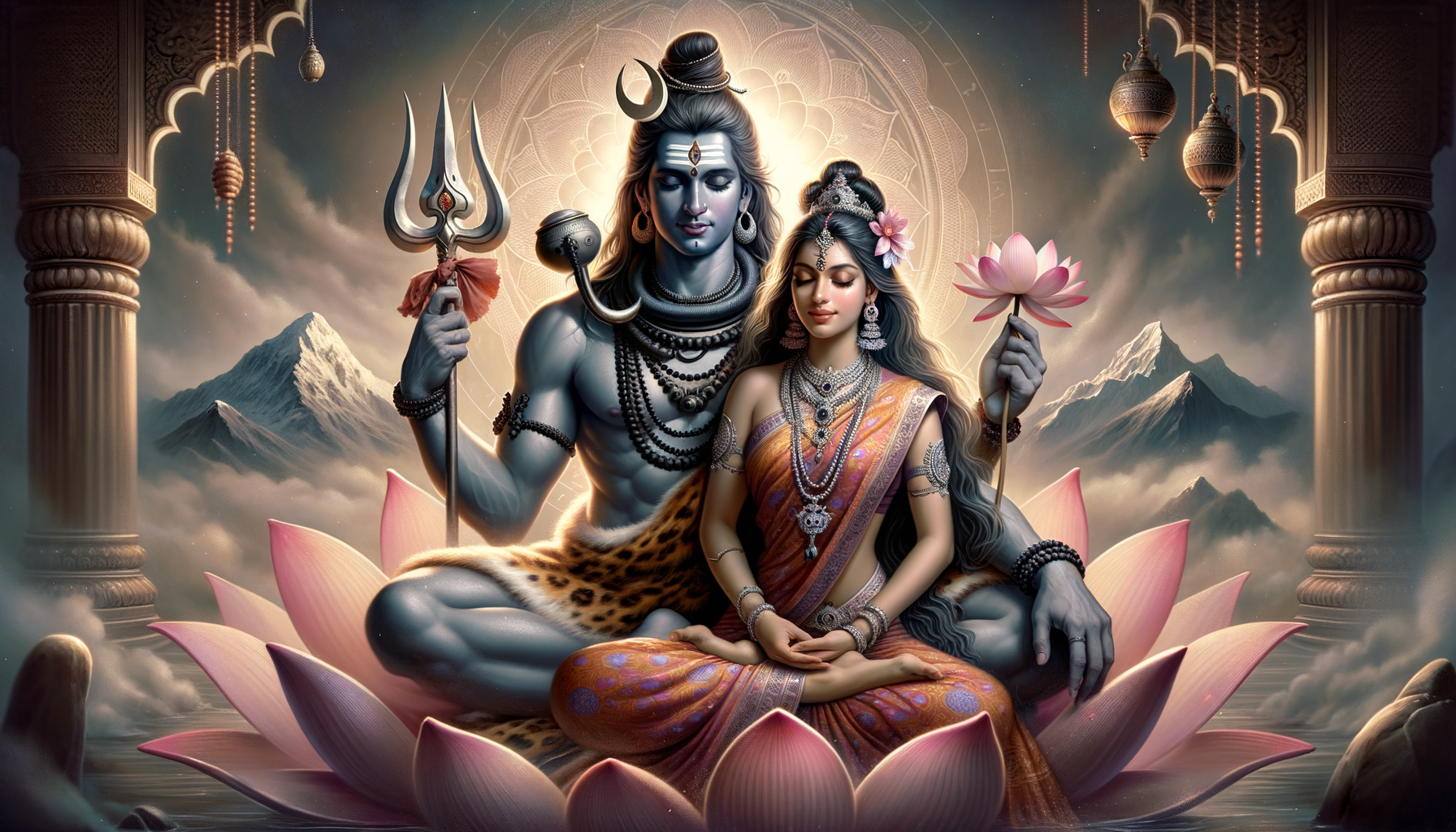
Chitrakanya, often translated as the “Beautiful Maiden” or “Variegated Girl,” is described within Tantric Hindu traditions as a refined embodiment of divine feminine energy. Presented as the eternal consort seated upon Lord Shiva’s lap, Chitrakanya symbolizes the intimate, non-dual union of Shakti and Shivapurity and passion in harmonious balance. This portrayal places the goddess within the broader theological vision of Hinduism, where transcendence and immanence meet, and where the sacred feminine is central to spiritual realization.
The epithet “Chitrakanya” suggests multiplicity, nuance, and beautyqualities that align with Tantric aesthetics, which celebrate the manifold expressions of sacred reality. In this sense, “variegated” points to the many hues of experience and consciousness, affirming that the divine reveals itself through diversity as much as through unity. Such naming sensitizes practitioners to the many-sidedness of truth while affirming a coherent spiritual center.
The iconographic motif of the goddess seated upon Shiva’s lap, familiar in many Shaiva contexts, conveys a profound metaphysical statement: the inseparability of energy (Shakti) and awareness (Shiva). In Tantric exegesis, this intimate posture communicates non-duality (advaya) without negating the tangible world; instead, it dignifies embodied life as a site for realization. The image becomes a contemplative aid, inviting recognition that stillness and dynamism, detachment and devotion, are complementary rather than conflicting.
Practitioners observing this imagery often report an ethical and emotional integration that supports daily life. Contemplation of Chitrakanya’s form within the lap of Shiva can cultivate steadiness amid complexity, refine emotional clarity, and encourage compassionate action. In a measured, academic sense, such reports indicate that Tantric visualization functions not only as metaphysical teaching but also as a practical psychology of wholeness, aligning thought, feeling, and conduct.
Viewed through the lens of the broader dharmic family, the significance of the sacred feminine resonates across traditions. In Buddhism, particularly Vajrayana, the union of upāya (skillful means) and prajñā (wisdom) mirrors the Shiva–Shakti complementarity; in Jainism, reverence for figures like Ambikā as yakṣiṇī foregrounds nurturing virtue and the protection of dharma; in Sikhism, the transcendence of Ik Onkar and the emphasis on ethical courage acknowledge qualities often associated with shakti while affirming the divine beyond gender. Together, these perspectives reinforce unity in spiritual diversity and encourage mutual respect among Hinduism, Buddhism, Jainism, and Sikhism.
It is important to note that references to Chitrakanya vary by lineage, region, and oral transmission. Tantric traditions often preserve localized forms and names whose documentation may be selective or context-bound. An academically responsible approach recognizes these variations, engages sources with care, and honors living practice without overstating textual uniformity. Such humility fosters dialogue across schools and helps preserve the integrity of regional sacred art and ritual.
For contemporary readers and seekers, Chitrakanya’s symbolism offers a reflective framework for balanced living. The union of purity and passion invites disciplined compassion; the lap-seat iconography models a reconciled inner life where contemplation and action reinforce each other. In practical terms, brief meditative pausesattending to breath and recalling the Shiva–Shakti harmonycan help transform conflict into clarity and reactivity into responsiveness.
Ultimately, the image of Chitrakanya enthroned upon Shiva’s lap stands as a luminous reminder of Tantra’s central insight: the sacred is not elsewhere. By recognizing the sacred feminine as indispensable to realization, this tradition deepens understanding of Hindu Goddess theology while supporting a wider dharmic vision of shared valueswisdom, compassion, courage, and unity. In honoring this vision, communities can celebrate distinct paths while walking together toward a more harmonious spiritual culture.
Inspired by this post on Hindu Blog.
