
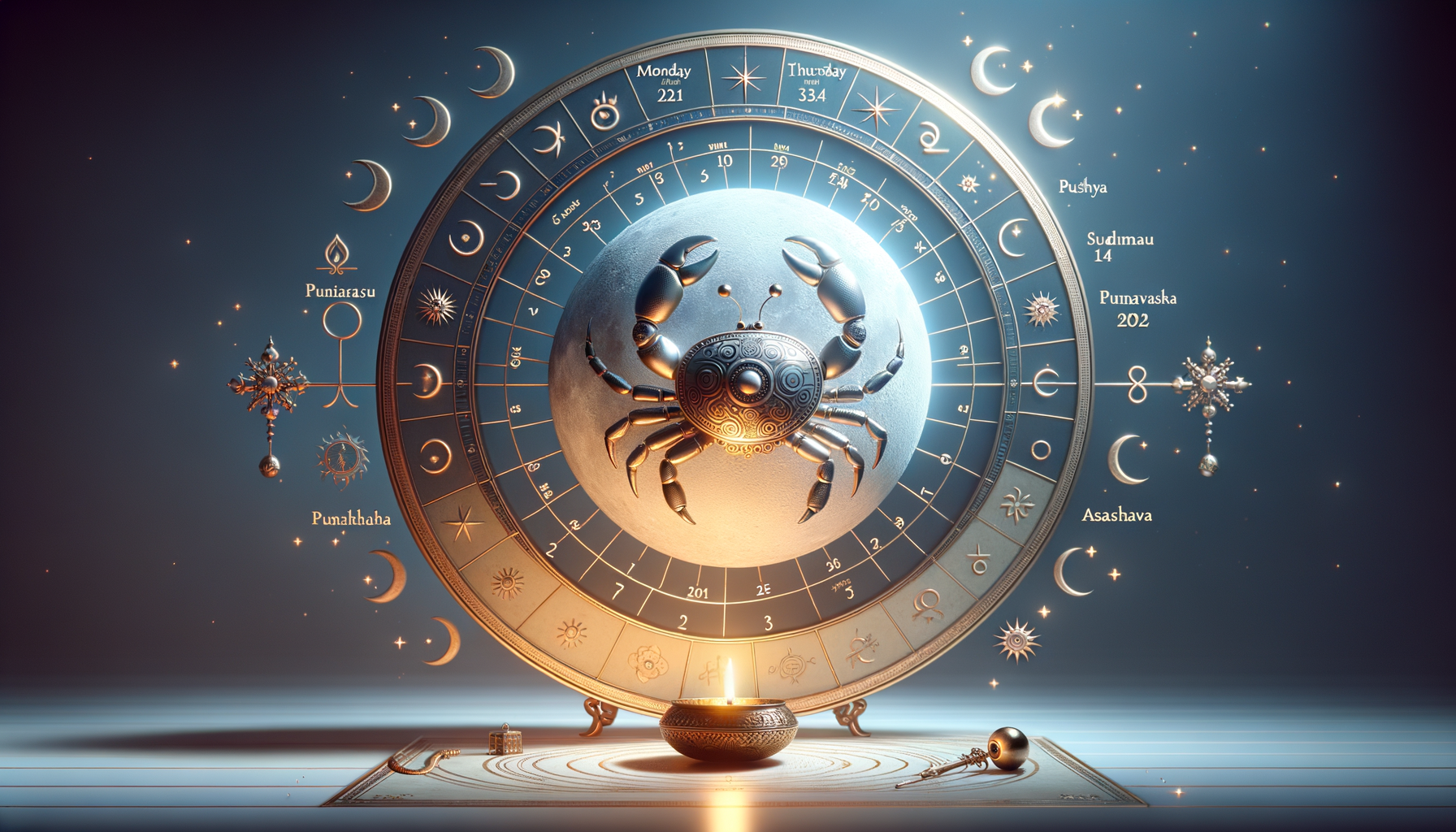
Auspicious days for Karka Rashi in 2026 are best identified by aligning lunar rhythms with the principles of Vedic astrology and the Hindu calendar. Karka Rashi is the fourth sign of the zodiac and corresponds to the tropical sign of Cancer (approximately June 22 to July 22). It comprises Punarvasu Nakshatra (4th quarter), Pushyami Nakshatra (1, 2, 3 & 4 quarters), and Aslesha Nakshatra (1, 2, 3 & 4 quarters). This framework offers a precise lens to observe Shubh Muhurat selections throughout the year.
Many born under Karka (or those with Karka Lagna/Chandra) report a noticeable clarity and calm when the Moon transits Karkatypically for about two and a half days each lunar month. Monday (Somavar), governed by the Moon, often enhances emotional stability, making it a supportive weekday for personal vows, study, and family-centered events. Within this window, Pushyami (Pushya) is widely regarded as highly auspicious, while Punarvasu favors renewals and returns; Aslesha may be conducive for introspection, research, and healing rites when used with discernment.
Determining auspicious days benefits from a layered approach. First, prioritize favorable tithis in Shukla Paksha such as Dvitiya, Tritiya, Panchami, Saptami, Dashami, Ekadashi, and Trayodashi for beginnings, learning, and travel. Second, select supportive yogas like Siddha or Amrita Siddhi where available. Third, prefer constructive karanas such as Bava, Balava, and Kaulava for smooth execution. Finally, match weekday strengthsespecially Monday (for mind-centered efforts) and Thursday (for guidance, education, and counsel)to the intended action.
For 2026 planning, consult a monthly Panchang specific to one’s location. Note the exact ingress of the Moon into Karka Rashi, then overlay the day’s tithi, nakshatra, yoga, and karana. Cross-check standard cautions such as Bhadra and Rahu Kaal for time-bound activities. This method transforms the calendar into a practical tool, ensuring that each Shubh Muhurat is grounded in observable celestial conditions and real-world timing.
Expect a recurring monthly pattern: as the Moon enters Karka, a sequence of Punarvasu (Q4), Pushyami, and Aslesha unfolds across roughly 2.5 days. Within this brief period, moments featuring Pushyamiespecially in Shukla Pakshaare often preferred for initiations, education-related milestones, financial planning, and family rites. Because time zones and local sunrise timings affect Panchang calculations, confirmations should be made using a regional almanac or reliable software configured to local coordinates.
Across dharmic traditionsHinduism, Buddhism, Jainism, and Sikhismattention to time fosters mindfulness, discipline, and compassionate action. While the vocabulary differs, the shared intent is resonance with nature’s cycles and community well-being. Approaching Karka Rashi auspicious days with this inclusive spirit supports unity, mutual respect, and a deeper appreciation of sacred time.
In practical terms, learners and professionals frequently select Monday in Shukla Paksha during the Moon’s Karka transit for study, interviews, or planning. Household observances, charity, and wellness routines often benefit from Pushyami’s nourishing quality. Reflective, research-oriented, or cleansing practices can be scheduled during Aslesha, provided the activity aligns with its introspective character and is timed outside sensitive periods like Rahu Kaal.
Personalization remains essential. Individual charts, including Karka Lagna, dasha-bhukti periods, and transits to the natal Moon, refine suitability. A competent Panchang-based review ensures that general guidelines become context-specific choices. Rather than rigid rules, this approach offers a steady frameworkone that balances classical jyotisha principles with thoughtful application in daily life.
In summary, auspicious days for Karka Rashi in 2026 emerge where lunar transit in Karka, supportive tithis of Shukla Paksha, and favorable yogas and karanas convergeespecially on Mondays. With attentive use of the Panchang and an inclusive, dharmic ethos, scheduling important activities becomes a calm, confident practice grounded in Vedic astrology and communal harmony.
Inspired by this post on Hindu Pad.
