
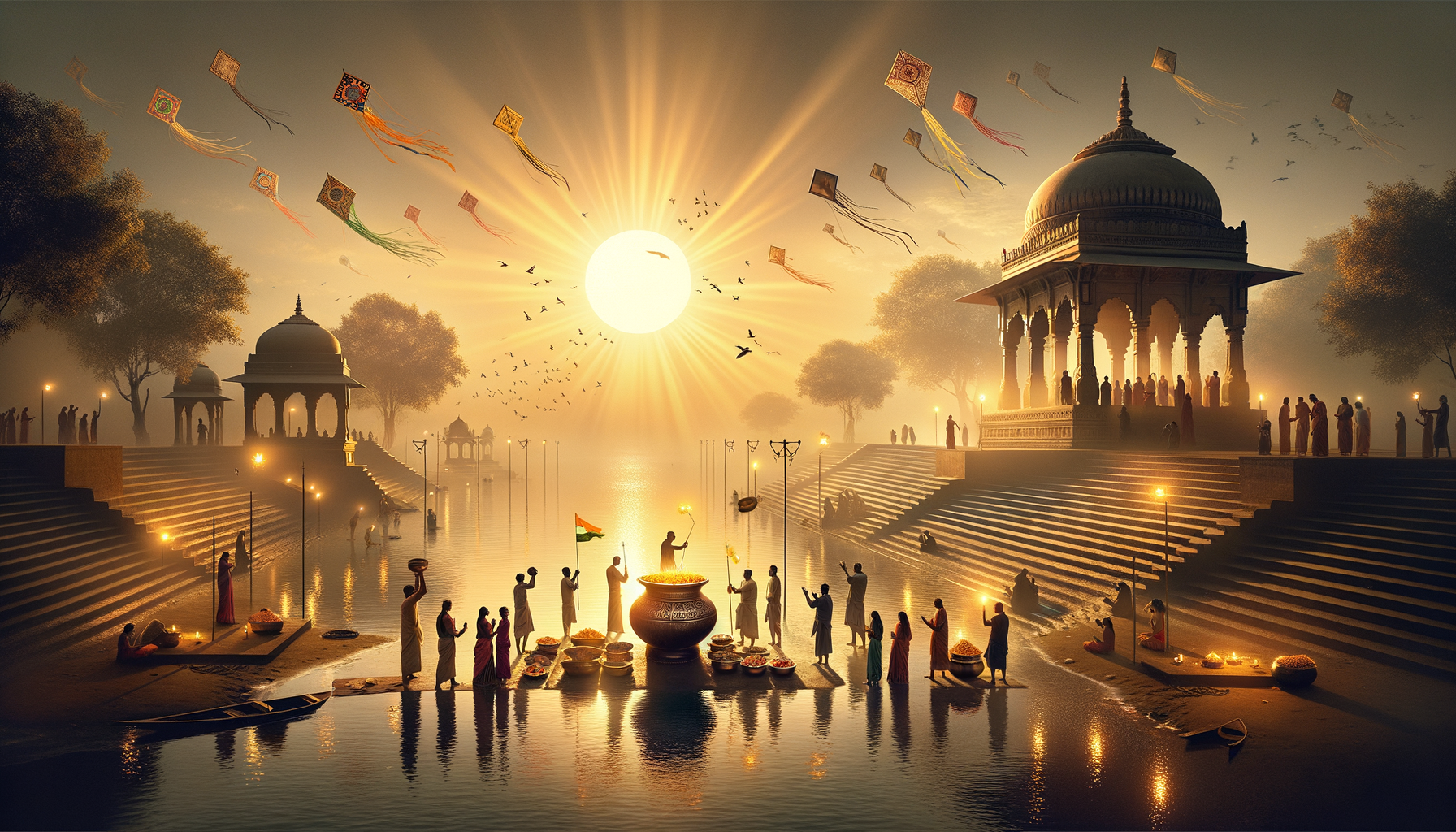
Uttarayanalso known as Uttarayanam or Uttarayana Punyakalamdenotes the six-month period of the Sun’s northward journey in the Hindu calendar, spanning from Makara Sankranti (Makar Sankraman) to Karka Sankranti (Karka Sankramanam). In 2026, Uttarayan begins on January 14, when the Sun transits into Makara Rashi (Capricorn). The complementary half-year, Dakshinayanam, extends from mid-July (Karka Sankranti) to January 14. Together, these two arcs structure time reckoning, ritual calendars, and seasonal rhythms across the subcontinent and the diaspora.
Astronomically, Uttarayan reflects the Sun’s apparent northward shift after the winter months, an idea historically aligned with the Winter Solstice. Due to precession and the use of a sidereal zodiac in the traditional Panchang, the start of Uttarayan now falls in mid-January rather than precisely on the solstice. This distinction is a hallmark of solar year calculation within Vedic and regional calendrical systems and explains minor date variations by locale and Panchang tradition.
Culturally, the commencement of Uttarayan is celebrated through diverse Hindu festivals: Makara Sankranti across much of India, Pongal in Tamil Nadu, and Magh Bihu (Bhogali Bihu) in Assam. Gujarat’s vibrant kite-flying tradition famously marks Uttarayan as a public celebration of clear skies, changing winds, and shared community joy. Despite regional variety, these observances emphasize gratitude, charity (dāna), and renewed discipline at a season of transition.
Across dharmic traditionsHinduism, Jainism, Buddhism, and Sikhismthe northward course of the Sun is widely acknowledged in calendars and community life. Many communities treat the early phase of Uttarayana Punyakalam as favorable for vrata, tapas, study, and service. In northern India, Sikh observances around Maghi occur near this solar transition, while Jain communities highlight seasonal periods conducive to austerity and ethical reflection. This converging rhythm fosters interfaith resonance around Surya’s life-sustaining presence and the shared aspiration toward well-being and virtue.
In household practice, Uttarayan often begins with a dawn snāna, an offering (arghya) to Surya, and the sharing of sesame and jaggery preparations that symbolize warmth and friendship in the cool season. Communities organize food drives, distribute blankets, and host collective prayers, reinforcing bonds that transcend region and language. Such practices deepen social cohesion while aligning daily life with cosmic cycles referenced in Hindu calendar traditions and Vedic astronomy.
For 2026, Uttarayan starts on January 14 and continues until Karka Sankranti in mid-July, forming a six-month window considered auspicious for study, pilgrimages (Tirtha-Yatra), community initiatives, and new undertakings. The exact end date can vary slightly depending on geography and local Panchang; consultation of a trusted regional almanac ensures precise observance, especially for sunrise-based rituals and Sankranti moments.
Understanding Uttarayan within the broader framework of time reckoning illuminates why festival dates can differ between regions while remaining internally consistent with their calendrical logic. This awareness supports inclusive celebration, encourages respect for diverse Panchang traditions, and nurtures unity among dharmic communities who look to the same sky and honor the same solar journey with distinct yet harmonious expressions.
Ultimately, Uttarayana Punyakalam is received as a season of renewalan invitation to harmonize intention and action, to practice generosity and learning, and to recognize the common light that guides Hindu, Jain, Buddhist, and Sikh communities. By anchoring spiritual life to the Sun’s northward path, these traditions cultivate a shared ethic of resilience, compassion, and collective uplift.
Inspired by this post on Hindu Pad.
