
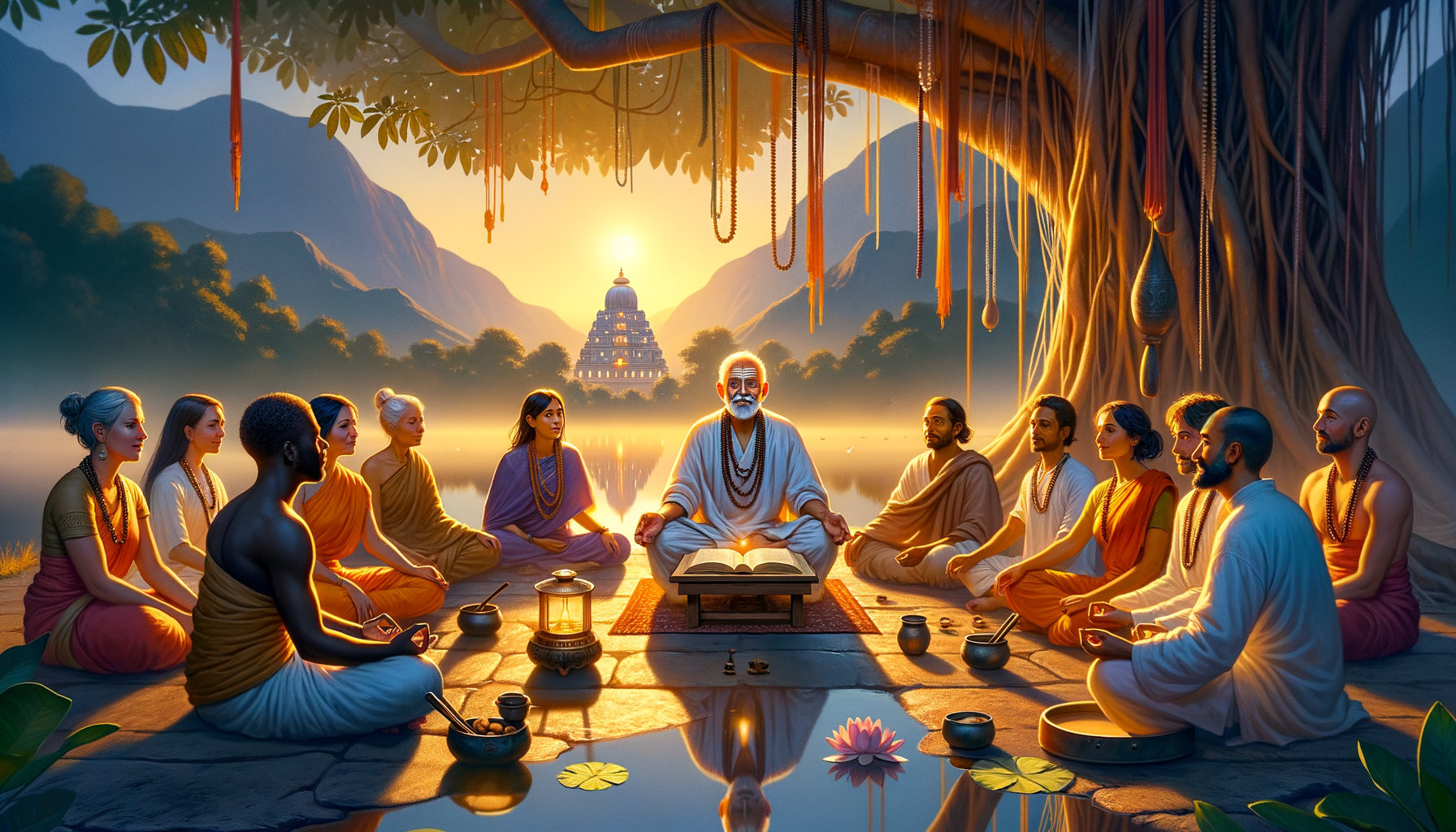
Building on reflections by Krishna Dharma das and Chintamani Dhama dasi, this discussion clarifies why spiritual practice can feel stalled and how the progression from sraddha to nishtha reliably unfolds when anchored in authentic sadhu sanga. The arc described in the Bhakti Tradition is both simple and profound: initial faith is strengthened through wise association, which then informs and refines daily spiritual practices.
In this progression, sraddha matures through sadhu sanga and expresses itself as well-guided bhajana-kriya. As practice becomes consistent and properly understood, unhelpful habits and misconceptions are gradually released in anartha-nivritti, which naturally leads to the steadiness of nishtha. Each stage is interconnected, and the quality of association often determines whether the journey advances with clarity or encounters avoidable setbacks.
Many practitioners encounter a familiar pattern: early enthusiasm gives way to doubt, irregular routines, or confusion about method. When sadhu sanga is genuine, faith is not merely affirmed; it is informed. Compassionate mentors translate principles into lived routines, calibrating spiritual practices such as japa, kirtana, seva, study, and contemplation. Small but precise correctionsregular timing, scriptural grounding, service orientation, and accountabilityturn fluctuating effort into stable momentum.
These insights resonate across the wider family of dharmic traditions. Buddhism emphasizes the Sangha as essential to moving from initial saddha to sustained practice and equanimity. Jainism underscores samyak-darshana and community guidance to consolidate ethical discipline and inner steadiness. Sikhism illumines the power of the Guru and Sadh Sangat to cultivate unwavering commitment. While vocabulary differs, a shared principle emerges: community with realized guides transforms fragile faith into resilient conviction.
Authentic sadhu sanga carries recognizable markers. It is rooted in śastra-based reasoning and lived example, fosters humility over personality cults, prioritizes service and compassion, and respects unity in diversity across dharmic paths. It supports the Guru-Shishya Relationship without sectarian exclusivism, aligning personal temperament with appropriate spiritual practices while honoring the broader harmony of Hindu spirituality, Buddhism, Jainism, and Sikhism.
When sadhu sanga is properly embraced, bhajana-kriya becomes sustainable rather than sporadic. Anartha-nivritti accelerates as tendencies toward distraction, pride, or discouragement recede. Measurable outcomes appear: regularity in practice, ethical coherence, a calmer mind, and deepening joy in service. These are the practical signs of movement toward nishthasteadiness that is felt not as strain but as natural alignment.
For seekers wondering why the process seems not to be working, the corrective often lies in the texture of association rather than the quantity of effort. Re-centering around qualified guidance, satsang that uplifts rather than divides, and daily disciplines that match one’s stage can restore confidence and clarity. The path from sraddha to nishtha is time-tested and inclusive; walked with authentic company, it becomes a shared journey that strengthens unity across dharmic traditions.
In essence, the journey thrives on three reinforcements: informed faith, meaningful community, and methodical practice. Nurtured together, they carry devotion from hope to habit to unshakable conviction.
Inspired by this post on Dandavats.
