
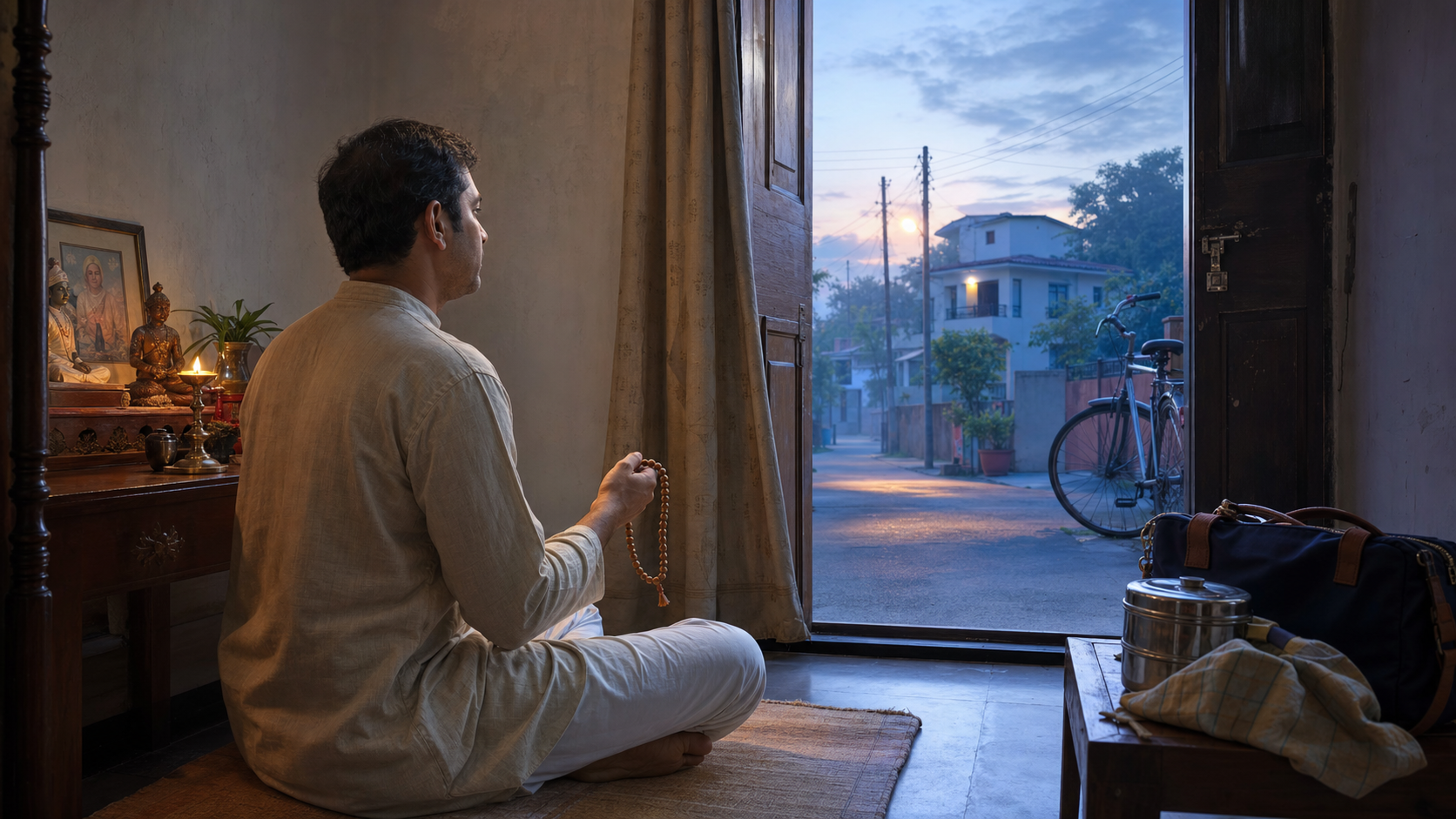
Your devotion may feel sincere during puja, japa, kirtan, or quiet contemplation, yet disappear as soon as work becomes tense or somebody wounds your pride. That gap is not proof that bhakti has failed. It shows where bhakti still has to enter your life.
The practical question is not how to preserve a devotional mood all day. It is how to let remembrance of the Divine change the person who answers criticism, carries responsibility, meets disappointment, and serves others. Bhakti-yoga becomes a path to liberation when knowledge, devotion, and conduct begin reinforcing one another.
Liberation begins when identity loosens its grip

Śrīmad-Bhāgavatam 4.13.8–9 connects deepening knowledge of the Supreme Brahman with release from bodily bondage. Nirvāṇa, in this bhakti framework, is therefore more than the end of distress. It is a living freedom sustained by devotion and experienced as transcendental bliss.
Bodily identification is not simply awareness that you have a body. It is the assumption that your physical condition, social position, possessions, reputation, preferences, and passing emotions fully define who you are. A threat to any of them then feels like a threat to your entire being. Praise inflates you, criticism diminishes you, and an interrupted plan seems to interrupt the self.
Liberation weakens that false equation. You continue to care for the body, honour your relationships, and fulfil legitimate duties. The body is not despised or neglected; it is placed in the right relationship to the deeper self and the Divine. Responsibility remains, but possessiveness begins to loosen.
This distinction protects you from a common spiritual error. Saying that you are not the body does not excuse indifference to illness, grief, injustice, family obligations, or the consequences of your actions. If a spiritual idea makes you less accountable, it is being used to defend the ego rather than free you from it.
Transcendental bliss also needs careful definition. Ordinary pleasure depends on obtaining a desired condition. Relief depends on an unwanted condition ending. Bhakti directs happiness toward a relationship with the Divine that can remain meaningful through changing conditions. Ever-expanding bliss need not mean ever-increasing emotional intensity. It can mean that remembrance becomes less dependent on setting and gradually enters more of ordinary life.
After meditation or worship, notice what happens at the first inconvenience. Can you remember who you are before defending your status? Can you respond to the duty in front of you instead of obeying the first surge of irritation? Those moments reveal more about liberation than the pleasantness of the preceding ritual.
Build practice around remembrance, study, and service

Bhakti matures through continuity, not through occasional intensity. The aim is to create a rhythm in which contemplative knowledge corrects your vision, remembrance turns that vision toward the Divine, and service tests whether the change has reached your conduct.
- Choose a stable anchor of remembrance. Use a Divine Name, mantra, prayer, sacred form, or verse that belongs to your path. If you follow a guru or established sampradāya, let that discipline guide the choice. Constantly collecting new techniques can become another form of restlessness.
- Read for transformation, not accumulation. Stay with a short passage until you can identify what it corrects in your understanding. Ask which attachment, fear, or claim of ego the teaching exposes, and what response it asks of you today.
- Attach remembrance to ordinary transitions. Recall the Divine before opening your messages, beginning work, eating, entering your home, or answering a difficult person. A transition cue carries devotion out of the shrine room without requiring an artificial devotional mood.
- Turn a necessary duty into sevā. Choose work that genuinely benefits another person, especially work that brings little recognition. Perform it carefully as an offering. The absence of applause helps reveal whether service is still bargaining for status.
- Examine the day without self-dramatization. Notice where ahaṅkāra took control, where remembrance changed a response, and where repair is needed. Admit a fault, correct avoidable harm, and return to practice. Honest return is more useful than either self-condemnation or spiritual excuse-making.
Keep the structure simple enough to survive an ordinary day. An elaborate routine that works only when you are rested and undisturbed will remain separate from the conditions in which attachment actually appears. A modest discipline repeated amid work, family, and community life gives bhakti access to the places where identification is strongest.
Remembrance should also change the quality of study. Knowledge of Brahman is not merely information about ultimate reality. It is meant to challenge the false centre from which you usually act. When study leaves your defensiveness, vanity, and treatment of others untouched, retain the teaching and question the way you are applying it.
Judge progress by conduct rather than spiritual sensation

Bliss is easy to confuse with an emotionally powerful experience. Tears, stillness, enthusiasm, absorption, or a strong sense of presence may accompany devotion, but none is a dependable scorecard by itself. Experiences change. The more reliable question is whether practice produces greater patience, steadier attention, spontaneous compassion, equanimity, and purpose.
| Marker | What to notice in daily life | A practical adjustment |
|---|---|---|
| Patience | More space appears between irritation and your response. | Recall the Divine before replying, then answer the actual issue rather than the injury to pride. |
| Attention | You notice distraction earlier and return without turning it into a crisis. | Keep your chosen remembrance anchor visible and resume it at the next natural transition. |
| Compassion | Another person’s need becomes visible even when helping offers no recognition. | Perform a useful act that does not need to be announced. |
| Equanimity | Success and failure no longer erase your sense of duty. | Offer the work before you know its result, and let the result inform your next action without defining your worth. |
| Purpose | Routine work begins to feel connected to worship rather than opposed to it. | Name the service or sacred intention behind a task before beginning it. |
Look for a direction of change, not perfection on a particular day. A difficult encounter may reveal an attachment that peaceful practice had not exposed. The useful response is neither to deny the reaction nor to declare the entire path ineffective. Identify the threatened identity, remember the deeper relationship, make any necessary repair, and continue.
Be especially cautious if devotion produces contempt. Feeling superior to people with another practice, another community, or no devotional vocabulary is not transcendence of ego. It is ego wearing sacred language. Liberation should become outwardly legible as clarity, compassion, steadiness, and responsible action.
You can therefore test a claim of bliss without trying to read somebody’s inner state. Does the claimed realization reduce compulsive self-defence? Does it make service less transactional? Does it preserve moral attention when circumstances become unpleasant? If not, the language of bliss has moved ahead of the transformation.
Recognize Dharmic kinship without erasing real differences
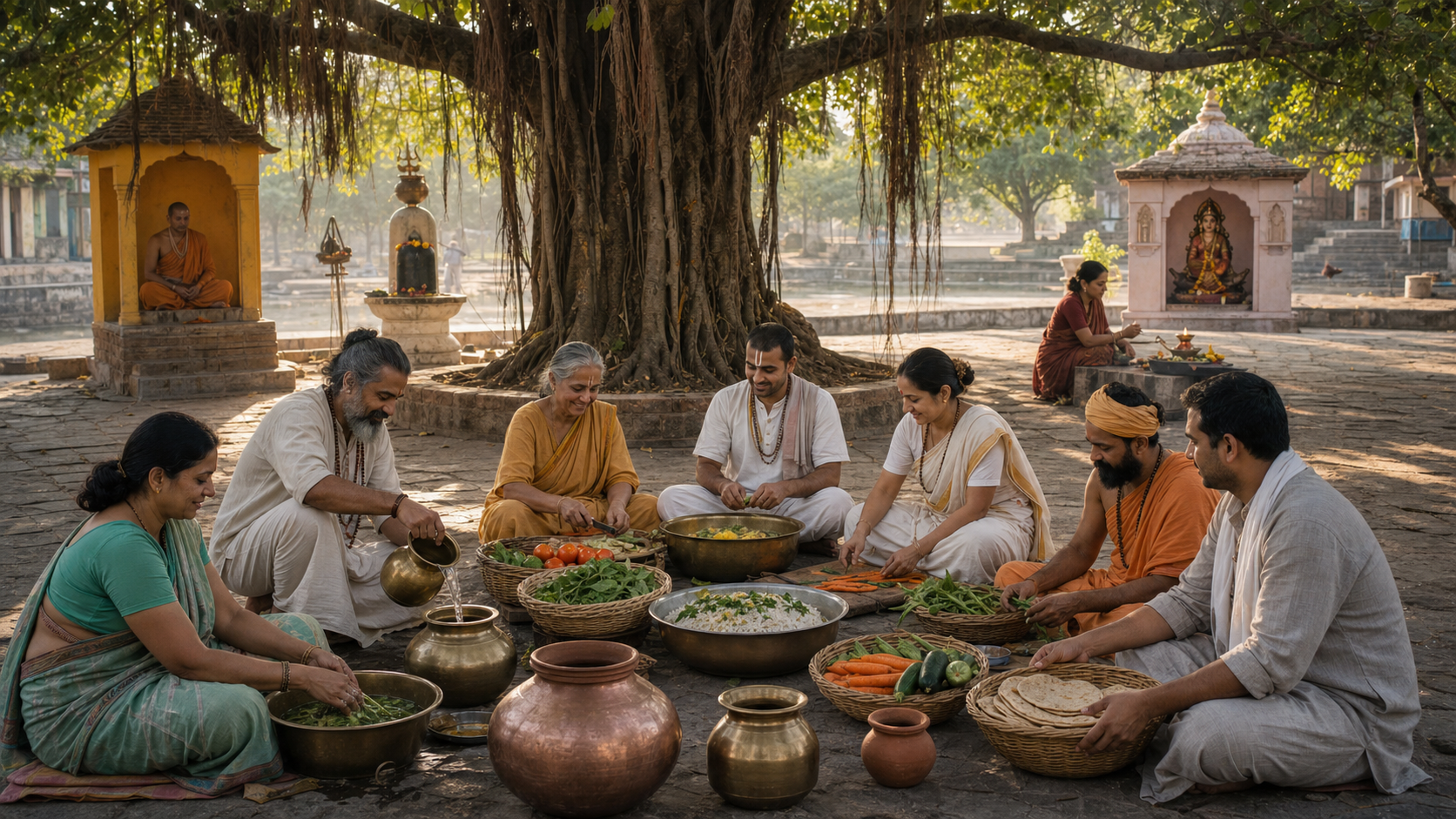
The Dharmic traditions share a serious concern with bondage, ignorance, affliction, ethical purification, and freedom. Hindu traditions speak of moksha through diverse philosophical and devotional frameworks. Buddhism uses the language of nirvāṇa, Jainism speaks of kevala jñāna, and Sikh thought centres liberation in relation to Naam and Ik Oankar. These terms can illuminate a family resemblance, but they are not interchangeable labels for a single doctrine.
You do not need to flatten those differences to recognise shared spiritual fruit. Clarity should displace confusion. Compassion should become more natural. Afflictive habits should lose authority. Peace should become less vulnerable to every change of circumstance. Each tradition explains the nature of the self, bondage, ultimate reality, and liberation in its own way, and those explanations deserve to be heard on their own terms.
When learning across Dharmic paths, ask precise questions: What does this tradition say binds the being? What exactly is liberated? Which discipline removes the obstruction? How should realization appear in conduct? Those questions allow genuine dialogue while preventing attractive words such as moksha and nirvāṇa from becoming vague synonyms for feeling peaceful.
Shared ethical action is often a better meeting ground than a blended theology. Hindus practising bhakti, Buddhists cultivating freedom from affliction, Jains pursuing purification, and Sikhs living through Naam and sevā can recognise discipline and compassion in one another without pretending that their metaphysical claims are identical. Unity becomes stronger when it can bear honest distinction.
Key takeaways
- Liberation from bodily identification does not mean neglecting the body or abandoning duty. It means no longer treating condition, role, possession, or reputation as the whole self.
- Transcendental bliss is better recognised as growing freedom and stable Divine orientation than as a permanent emotional high.
- Bhakti becomes continuous when sacred remembrance is joined to contemplative study, ordinary transitions, selfless service, and honest self-examination.
- Patience, steadier attention, compassion, equanimity, and purpose are more dependable signs of progress than dramatic spiritual experiences.
- Dharmic traditions can share aspirations toward freedom and peace without treating moksha, nirvāṇa, kevala jñāna, and liberation through Naam as identical doctrines.
At your next period of practice, carry one teaching, one form of remembrance, and one concrete act of service into the rest of the day. Then examine your first difficult reaction. That is the threshold where bhakti stops being an isolated devotional activity and begins functioning as yoga: a disciplined path from identification to freedom, and from borrowed ideas about bliss to a life that can actually bear it.
References
