
You may have found Srila Gaura Kisora Dasa Babaji Maharaja’s disappearance day on a Vaishnava calendar and wondered what you are meant to remember. The date is not simply an anniversary of a saint’s death. It invites you to look closely at a life in which household duty, sacred hearing, nama-japa and radical detachment formed a single path.
To observe the day meaningfully, keep three things in view: his place in the Gaudiya Vaishnava lineage, the difference between genuine renunciation and its outward appearance, and the devotional practices that occupied his life.
Why Gaudiya Vaishnavas call it a disappearance
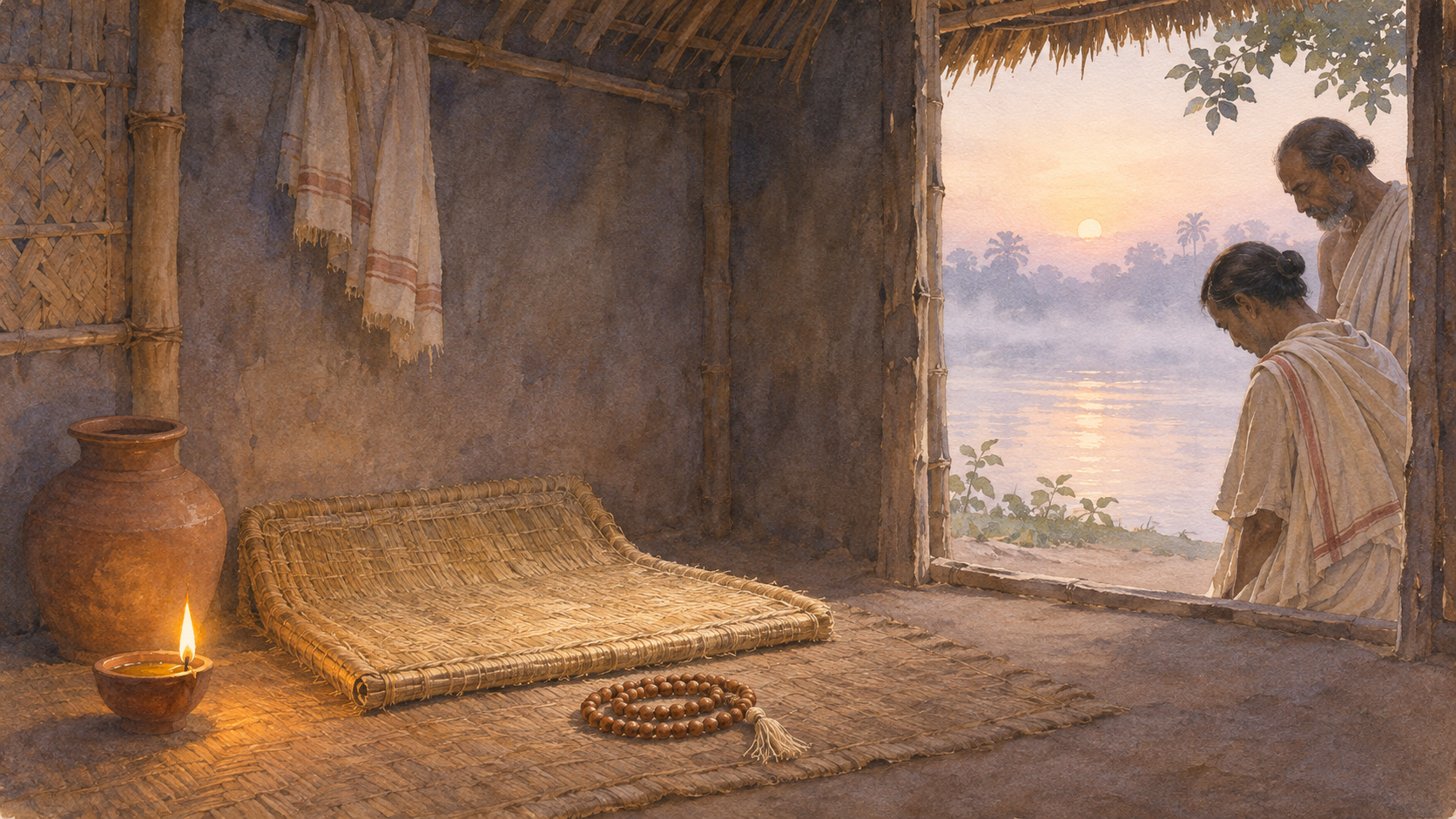
In Vaishnava usage, “disappearance” is reverential language for a devotee’s departure from manifest earthly life. It does not mean that the person went missing, nor does it deny that an earthly life came to an end. It places the event within the devotional understanding that the relationship between Bhagavan and His devotee is not extinguished by bodily death.
Gaura Kisora Dasa Babaji departed on November 17, 1915, on the auspicious Utthana Ekadasi. Both parts of that statement matter. November 17, 1915 is the historical date; Utthana Ekadasi identifies the sacred calendar day on which his departure occurred.
If you are preparing an annual observance, do not assume that November 17 will always be the day used by your community. Confirm the current year’s Utthana Ekadasi observance with your temple or the Vaishnava calendar it follows. When speaking to newcomers, give the historical date as well. That simple distinction prevents a lunar observance and a fixed civil anniversary from being confused.
His path to Navadvipa began with household responsibility
Gaura Kisora’s life should not be reduced to its most severe ascetic details. The known outline begins in a Vaisya family in Bagjana, near Tepakhola on the bank of the Padma. As a householder he was called Vansidasa, a name distinct from that of Vamsi Dasa Babaji. He earned his livelihood through agricultural trade and honestly maintained his wife and family. After his wife’s death, he left household life and went to Vrindavana.
This sequence corrects a common misunderstanding about renunciation. His detachment did not begin as contempt for ordinary duty. He first supported his household through honest work. Only after a decisive change in his circumstances did he take up the life for which he later became renowned. If you recount his life to younger devotees, include this householder period. Otherwise, austerity can be mistaken for avoidance of responsibility.
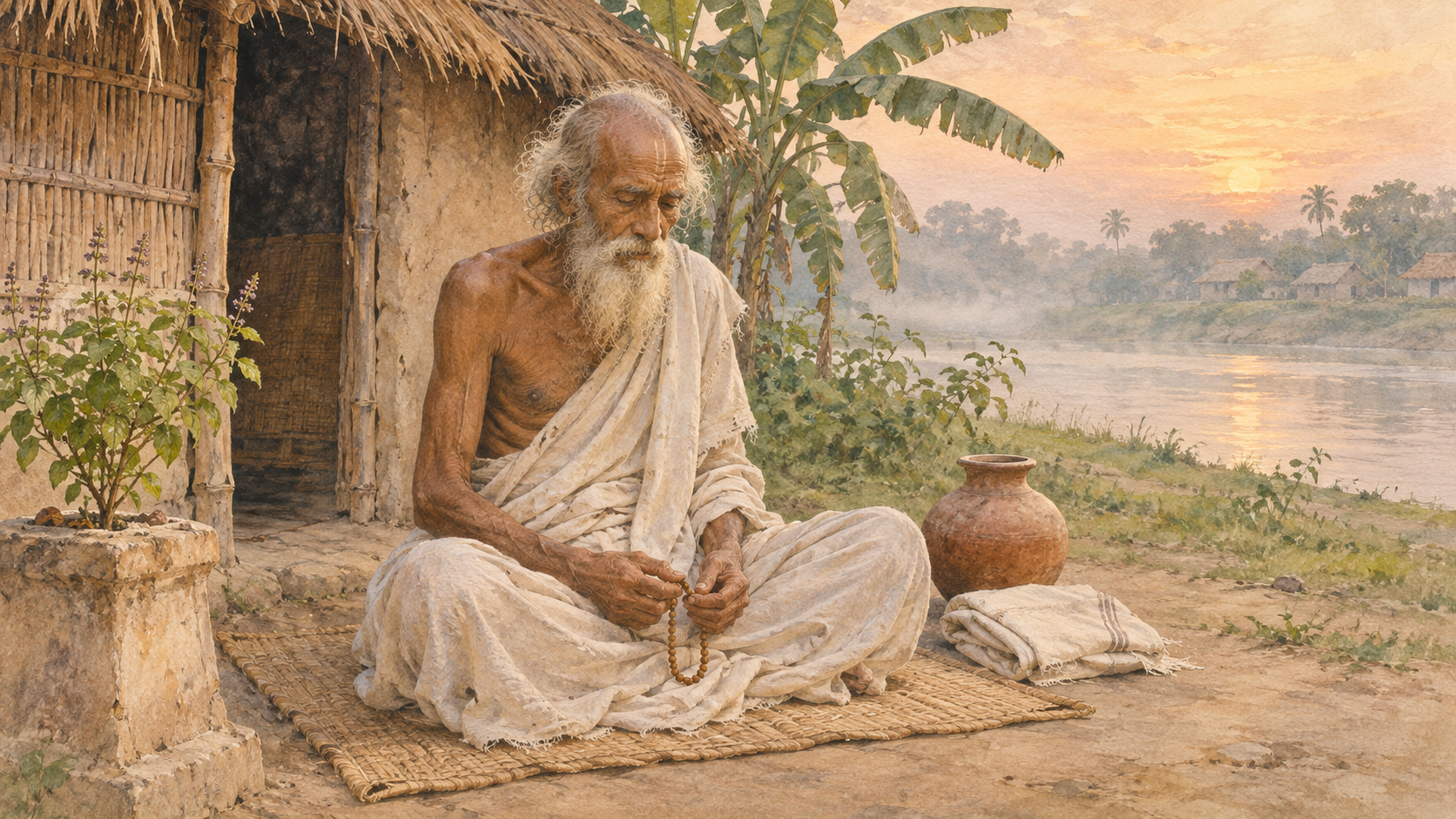
In 1897 he came from Vrindavana to the Mayapur-Navadvipa dhama, where he was honored as a “Bhajananandi.” His life there was centered on absorption rather than public position. He wandered beside the Ganges, sometimes dancing and chanting “Gaura, Gaura,” and at other times becoming unconscious in intense spiritual emotion. He regarded the riverside groves as places of Sri Sri Radha-Govinda’s divine pastimes.
His practical devotional life was equally revealing. He performed japa with beads or made knots in a cloth when beads were unavailable. He also went at times to Godruma Dvipa to hear Srimad Bhagavatam from Bhaktivinoda Thakura. These are the elements worth placing at the center of a remembrance: the holy name, hearing Bhagavatam, awareness of dhama and freedom from concern for prestige.
His austerity is a standard of sincerity, not a costume
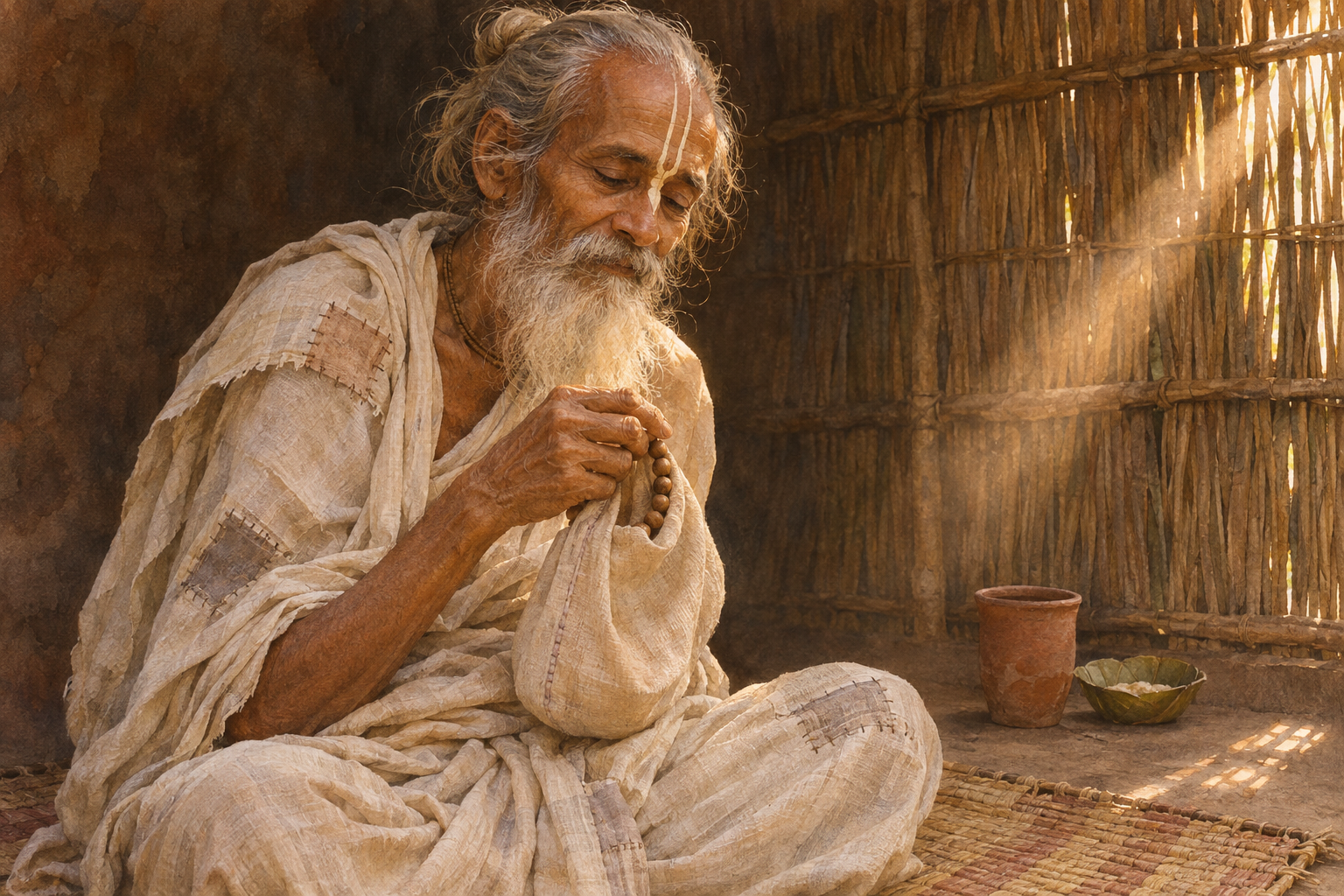
The outward details of Gaura Kisora’s renunciation are intentionally difficult to romanticize. He wore cloth discarded from bodies left on the Ganges bank. He begged rice, soaked it in river water and ate it with salt and chilli. He possessed almost nothing, sought no favors and sometimes went without conventional clothing.
Bhaktivinoda Thakura pointed to this conduct as an example of nirapeksa, or profound indifference to worldly dependence. The operative principle is independence from comfort, approval and calculated support. The unusual food and clothing were expressions of that inner state; they were not techniques that mechanically produced it.
For you, that distinction is essential. Do not imitate historically extreme food, clothing or public behavior. Copying the surface of an advanced renunciant can end in theatre, neglect or danger while leaving attachment untouched. A more honest application is to identify one optional comfort or form of recognition that repeatedly controls your choices, set it aside for the observance, and give the recovered attention to japa or sacred hearing.
Use a simple test: does your austerity reduce your demands on other people and deepen remembrance of Bhagavan, or does it make other people notice and accommodate you? Gaura Kisora’s life points toward the first. Renunciation that becomes a claim upon an audience has moved in the opposite direction.
His solitude remained rooted in guru-parampara
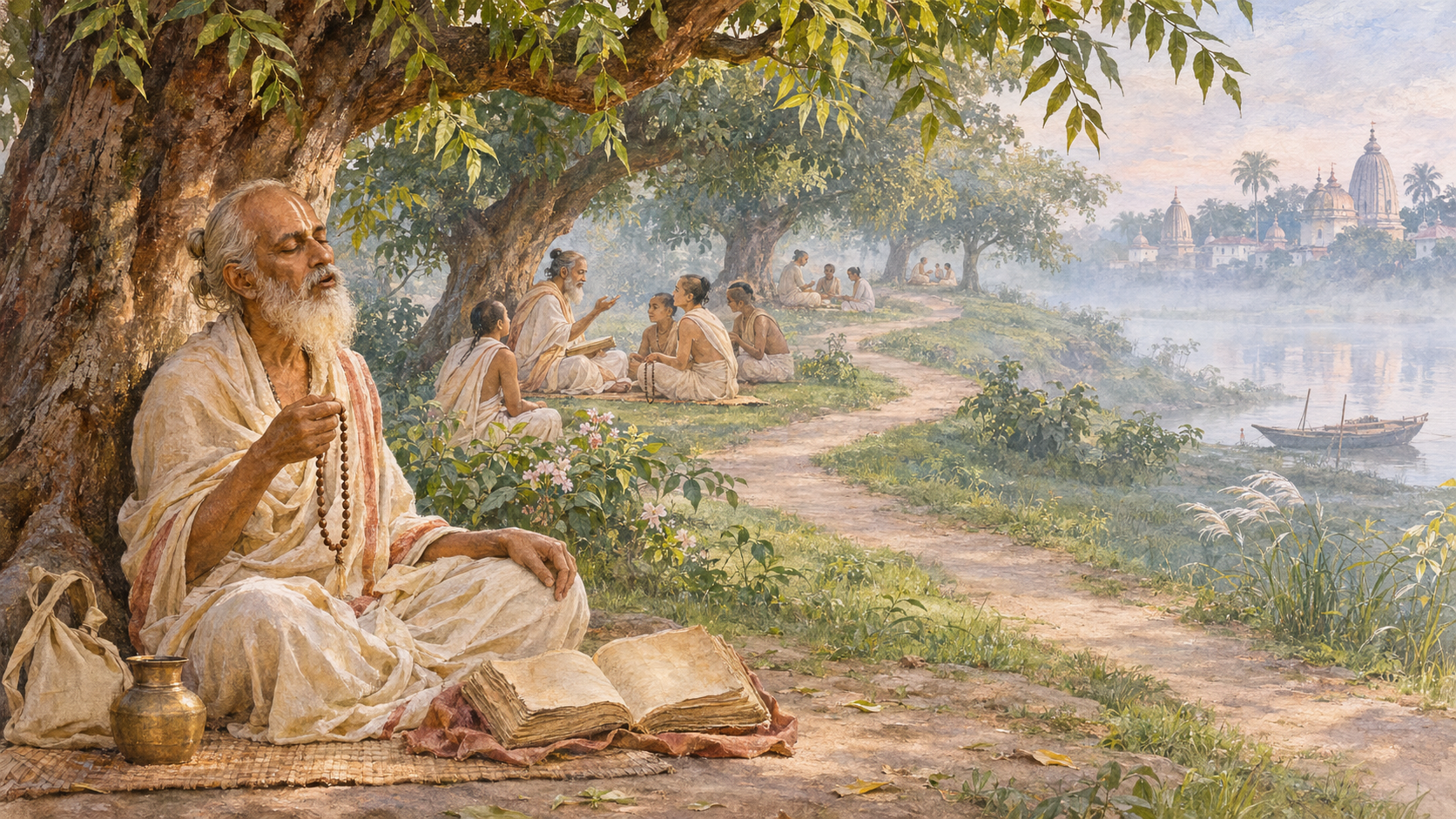
Gaura Kisora lived without possessions or institutional ambition, but he was not a self-appointed mystic standing outside disciplic succession. He was a disciple of Bhagavat Dasa Babaji, who was a disciple of Jagannatha Dasa Babaji. He in turn became the guru of Srila Bhaktisiddhanta Sarasvati Gosvami, the founder of the Caitanya Mathas and Gaudiya Mathas.
The lineage can be remembered in one clear sequence: Jagannatha Dasa Babaji, Bhagavat Dasa Babaji, Gaura Kisora Dasa Babaji and Bhaktisiddhanta Sarasvati Gosvami. Learning that sequence prevents two errors. It keeps Gaura Kisora from being presented as merely an eccentric solitary ascetic, and it shows how a person indifferent to organization and status could still transmit spiritual authority to a disciple whose work had a major institutional form.
His association with Bhaktivinoda Thakura adds another dimension. Gaura Kisora went to hear Bhagavatam from him, while Bhaktivinoda recognized the extraordinary depth of Gaura Kisora’s renunciation. The relationship reminds you that spiritual maturity does not make hearing unnecessary. Even one remembered as a Bhajananandi continued to sit before sacred narration.
How to mark the disappearance day with substance
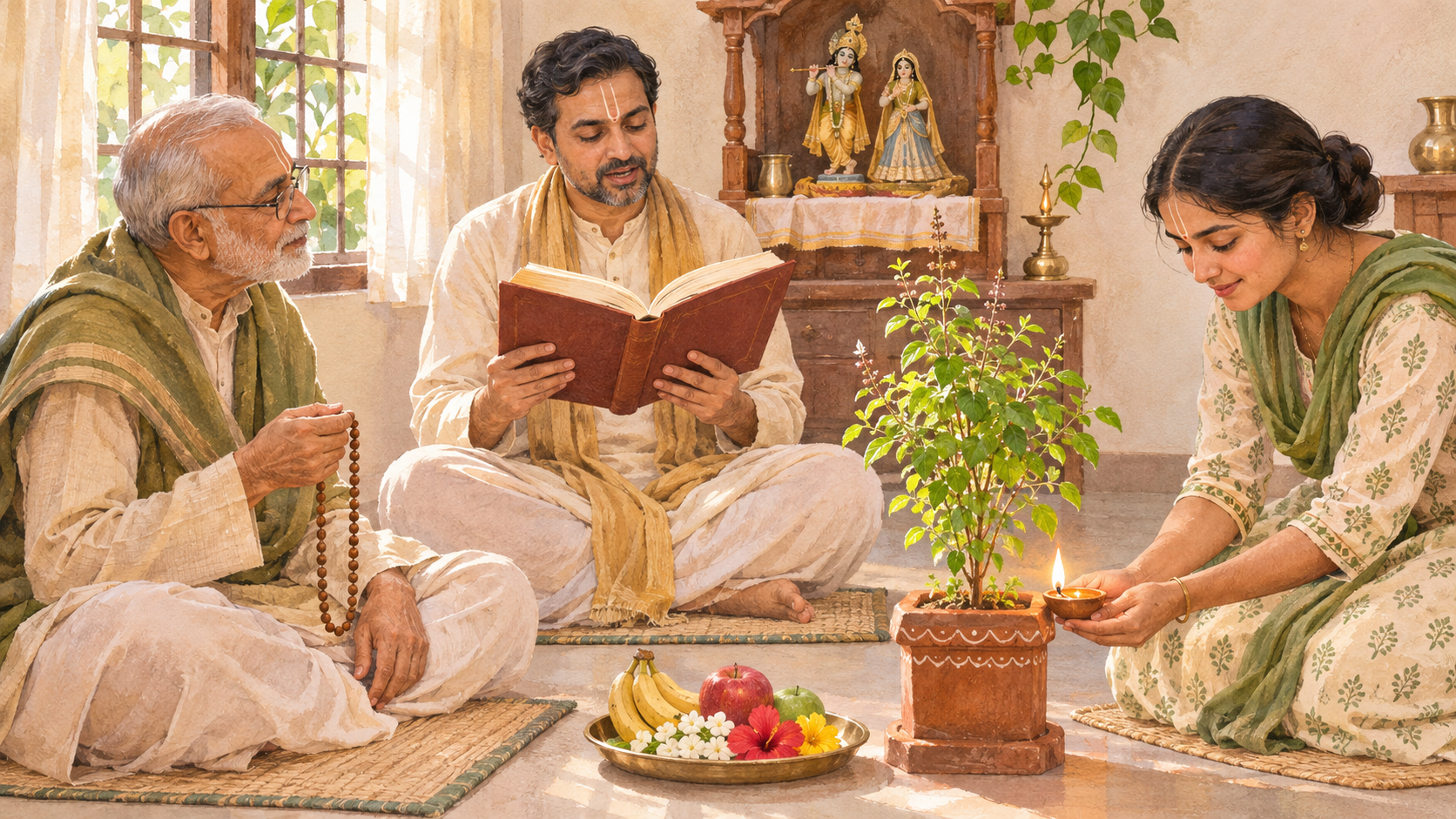
You do not need to manufacture an elaborate ceremony to honor Gaura Kisora. A restrained observance is closer to the character of the life being remembered. Whether you are alone, with family or helping at a temple, the following sequence keeps the focus clear.
- State the historical anchor. Remember that he departed on November 17, 1915, on Utthana Ekadasi, and explain what “disappearance” means in Vaishnava usage.
- Tell the whole outline. Include his honest household livelihood, his renunciation after his wife’s death, his years in Vrindavana and his arrival in Mayapur-Navadvipa in 1897. Do not begin and end with sensational austerities.
- Name the lineage. Recite the connection from Jagannatha Dasa Babaji through Bhagavat Dasa Babaji to Gaura Kisora, and from Gaura Kisora to Bhaktisiddhanta Sarasvati.
- Practice what occupied him. Chant japa attentively, remember his chanting of “Gaura, Gaura,” or hear Srimad Bhagavatam. Choose what your actual setting permits and do it without display.
- Examine one dependency. Ask which comfort, favor or form of approval has begun to govern your devotional choices. Loosen that dependency quietly rather than announcing a dramatic vow.
Key takeaways
- Gaura Kisora Dasa Babaji departed on November 17, 1915, on Utthana Ekadasi.
- His renounced life followed a period of honest work and household responsibility.
- His severe austerity expressed nirapeksa; it is not a set of external acts for casual imitation.
- His devotional life centered on nama-japa, hearing Srimad Bhagavatam and remembrance of the sacred dhama.
- His place between Jagannatha Dasa Babaji’s lineage and Bhaktisiddhanta Sarasvati’s mission makes him an important link in Gaudiya Vaishnava history.
When the next observance arrives, begin with his name and the historical date, then turn remembrance into practice. Chant with attention, hear Bhagavatam if you can, and quietly release one unnecessary demand. That is a more faithful tribute than trying to reproduce the visible severity of his life.
References

Leave a Reply
You must be logged in to post a comment.