

If Sanatana Gosvami’s disappearance day has appeared on your devotional calendar, you may be wondering what you should actually do, especially when no nearby temple is holding a full program. You do not need elaborate arrangements to observe the day meaningfully. You need a clear purpose, a trustworthy practice, and one act of service that carries remembrance into daily life.
The measure of the commemoration is not how many ritual items you assemble. It is whether remembering Sanatana Gosvami makes your hearing more attentive, your conduct more disciplined, and your service less concerned with recognition.
Begin with the meaning of disappearance
In Vaishnava devotional language, a saint’s disappearance marks the end of that teacher’s visible earthly presence. The word does not ask you to deny ordinary sorrow. It redirects attention from physical absence to the continuing guidance available through instruction, example, and the community of practice that preserves them.
That distinction determines the tone of the day. This is neither a festive birthday celebration nor an occasion for vague praise. It is a time to approach Sanatana Gosvami as a teacher. Instead of asking only, “What happened in his life?” ask, “What does his example require me to correct in mine?”
Within the Gaudiya Vaishnava tradition, Sanatana Gosvami is remembered among the great teachers whose learning was inseparable from disciplined devotional life. That combination matters. Religious knowledge becomes sterile when it never changes behaviour, while emotion becomes unstable when it is cut loose from teaching. Your observance should therefore include both hearing and application.
Avoid another common mistake: imitating the outward austerity of a saint without possessing the corresponding maturity. If you have family, work, or community responsibilities, neglecting them is not renunciation. Translate the principle into your actual station. Reduce one avoidable indulgence, surrender one argument driven by status, finish one neglected spiritual duty, or give unhurried help to someone seeking guidance. Choose something concrete enough that you will know whether you did it.
Use a simple home or temple observance

A home observance can be brief without becoming casual. Prepare it before the day begins so that you do not spend the available time searching for a reading, debating a format, or scrolling through unrelated material.
- Prepare a quiet place. Clean the area, silence your phone, and place the devotional text or trusted biographical material you intend to use within reach. Simplicity is better than decoration that distracts you from hearing.
- Offer respectful pranama. If your lineage has given you an authorized prayer, use it. If you do not know one, offer respectful words in the language you understand. Do not manufacture Sanskrit or borrow a mantra whose meaning and place in practice you have not learned.
- Hear before you comment. Read a short passage from material already trusted by your temple or teaching community. Give the teacher’s instruction priority over modern speculation about his personality.
- Continue your regular chanting with greater attention. Use the practice and commitment you have already received. A commemoration is a poor occasion for a dramatic vow that will be abandoned immediately afterward.
- Perform seva on the same day. Help maintain a sacred space, assist with prasada, support a devotional program, help a newcomer find reliable teaching, or quietly complete an overlooked community task.
- Close with one accountable intention. Write a sentence describing what you will change. “I will become more devotional” cannot guide conduct. “I will complete my regular reading before opening social media” can.
If you are joining a temple program, follow its established calendar, etiquette, and sequence rather than arriving with a competing observance assembled online. Ask the organizer what participants should bring, when the program begins, and whether there is a particular service that needs help. Participation becomes more meaningful when you remove work from the community instead of adding demands to it.
A group program works best when it moves from prayer or kirtana to concise remembrance, teaching, reflection, and practical service. A long succession of speakers can leave little room for the very hearing the day is meant to deepen. If you are organizing, give contributors a clear subject and a defined place in the sequence.
The commemoration is not limited to Bharat or to places closely associated with Sanatana Gosvami. Devotees have also marked his disappearance in Paris, France. If you live far from a major temple, do not mistake distance for disqualification. Observe faithfully where you are, connect with a genuine devotional community where possible, and resist turning sacred memory into exotic staging.
Let the idea of a political saint discipline public conduct
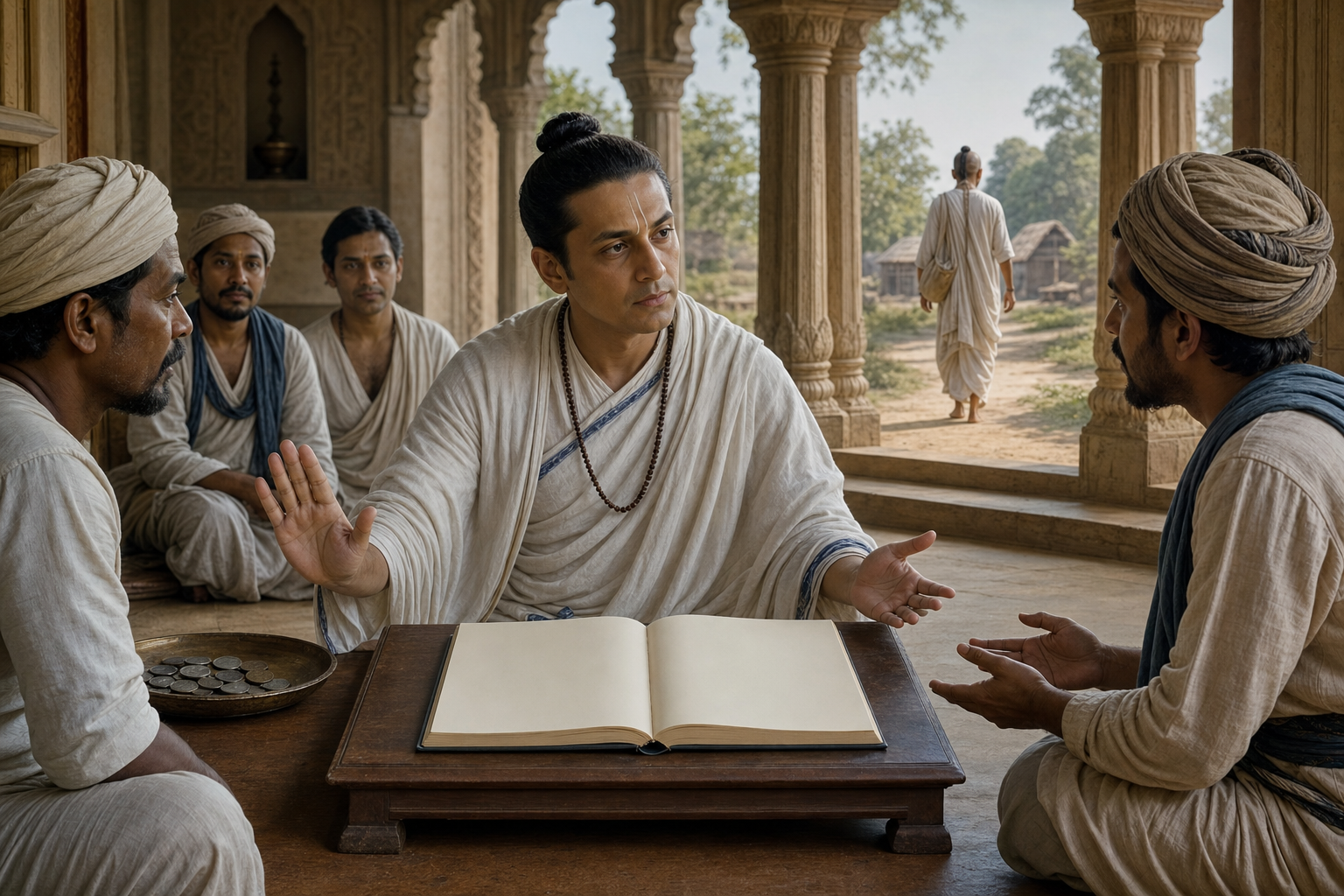
The description “political saint” raises a useful question, but it must be handled carefully. It is not permission to recruit Sanatana Gosvami into a present-day party, campaign, or dispute. A historical saint cannot honestly be made to endorse institutions and controversies he never encountered.
The more demanding question is how spiritual discipline should govern public responsibility. For a reader concerned about Dharma, Bharat, and the protection of civilizational memory, this is not an argument for withdrawal. It is an argument against allowing anger, vanity, or careless claims to masquerade as service.
Before sharing a political claim in the name of Dharma, test your conduct with questions that expose motive as well as accuracy:
- Have you verified the claim, or are you forwarding it because it confirms what you already believe?
- Are you defending a principle, or using that principle as permission to express contempt?
- Will your action protect people, preserve memory, strengthen an institution, or educate someone more accurately?
- Would you use the same language in a sacred space before a respected teacher?
- What real service accompanies your opinion?
Choose one public-facing discipline for the disappearance day. Correct an unverified statement you shared. Support a trustworthy cultural or devotional institution. Help a younger reader locate dependable teaching. Study an issue before commenting on it. Undertake useful local service without turning it into a performance for social media.
This approach keeps two errors apart. Devotion need not become indifferent to society, but public identity must not replace devotion. The saint is not a mascot for our existing preferences. The saint is a standard by which our preferences, methods, and motives are examined.
Key takeaways
- A disappearance commemoration centres on continuing guidance through teaching, example, and service rather than on physical absence alone.
- A sound home observance can consist of respectful prayer, trusted reading, attentive regular chanting, practical seva, and one accountable resolution.
- Do not invent mantras, imitate mature renunciation, or make devotional promises you are unlikely to keep.
- Living outside Bharat does not prevent meaningful participation; observe where you are and connect with an established community when possible.
- Do not conscript Sanatana Gosvami into current partisan arguments. Let saintly remembrance make your public conduct more truthful, restrained, and useful.
Before the day arrives, decide on your reading, your service, and the single habit you will address. Then let the commemoration leave evidence in your conduct after the program has ended.
References
