

If you found Jaya Tirtha Charana Prabhu’s name after seeing a request for prayers, begin with one careful distinction: he was reported to be preparing to leave his body, not reported dead. Do not turn an end-of-life appeal into an obituary before a confirmed announcement.
You can honor him now without adding speculation. Pray in the manner of your tradition, protect his family’s privacy, preserve the exact status when sharing it, and help safeguard the devotional work for which he became known.
Key takeaways
- Treat the message about Jaya Tirtha Charana Prabhu as a request for prayer, not as confirmation that he has departed.
- His epithet, “Saligram Sila acarya,” points to two concrete forms of service: elaborate puja involving a large collection of silas and the curation of a specialized website for committed worshippers.
- When you share his story, separate what is known from what has not been established. Do not invent offices, lineage details, dates, or a fuller biography.
- Preserve his archived digital work carefully, but do not assume that preservation gives you permission to republish everything publicly.
- Let admiration produce one sustainable act of seva: sincere prayer, steadier personal practice, or careful preservation undertaken with permission.
Why devotees call him the “Saligram Sila acarya”
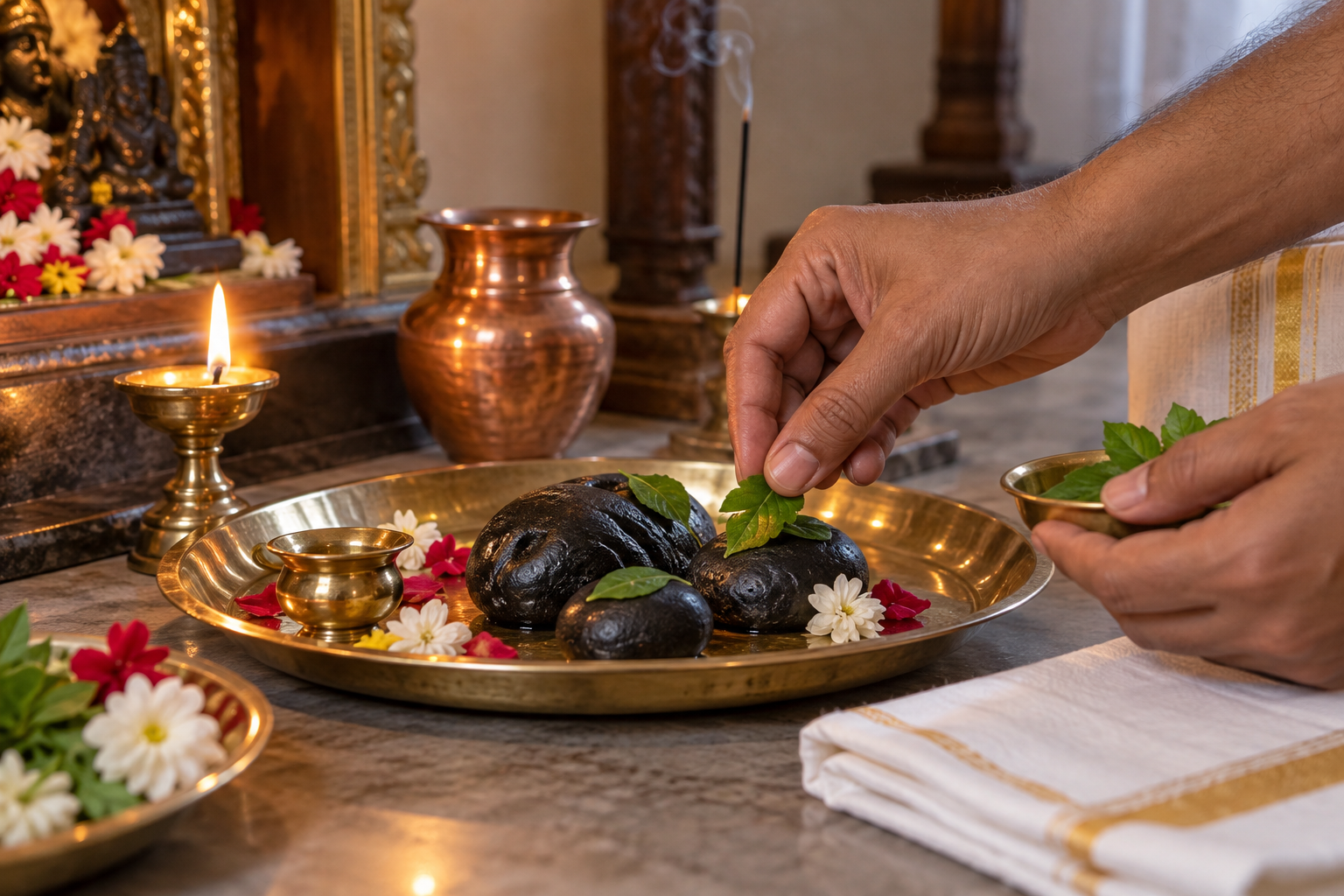
Saligrama-sila, also written Saligram sila, is revered in Vaishnava practice as a sacred form of Bhagavan. Its worship is not the display of an interesting stone or the accumulation of a collection. It belongs to a disciplined relationship of reverence, regularity, cleanliness, mantra, offering, and responsibility under appropriate guidance.
Jaya Tirtha Charana Prabhu became known as the “Saligram Sila acarya” through elaborate puja, a large collection of silas, and his work curating a specialized website. The title therefore describes a reputation grounded in sustained seva and the sharing of specialized knowledge. It should not be inflated into claims about institutional positions or biographical details that have not been established.
This distinction matters whenever you preserve the memory of a respected devotee. Begin with the service actually performed. Ask whom it helped and what evidence remains. Only then describe the person’s influence. Grander language may sound respectful, but an unsupported claim makes a legacy less reliable for the next generation.
The restricted character of his website also deserves attention. It was curated for people already dedicated to Saligram-sila worship rather than for indiscriminate circulation. That design suggests that context mattered alongside information. A page can preserve instructions, but it cannot assess a reader’s preparation, answer a personal question, or replace guidance received within a living sampradaya.
How to respond faithfully to the end-of-life request
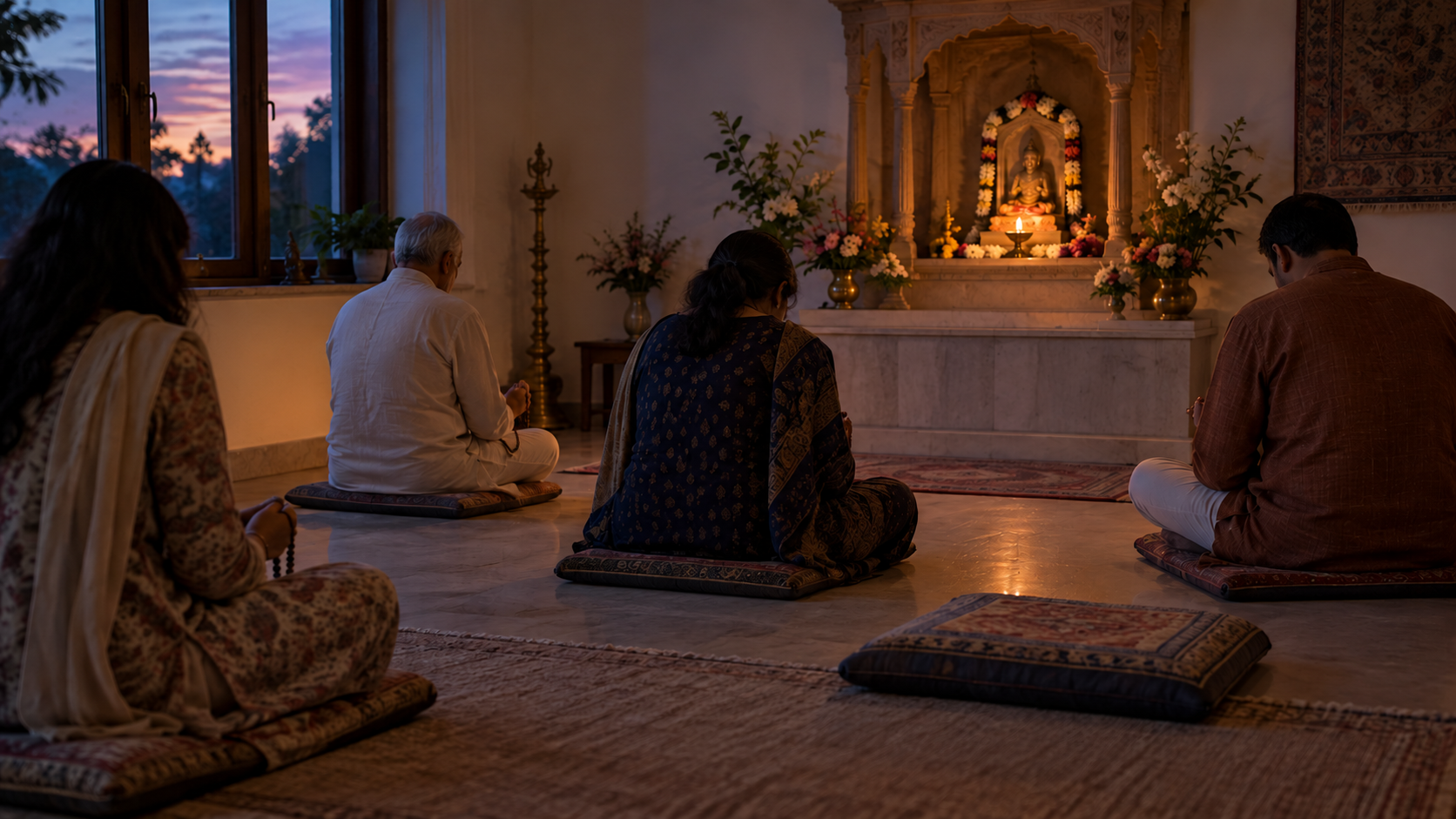
At the time of the request, his son, Gaura Gopal Dasa, reported that Jaya Tirtha Charana Prabhu was at home in New Zealand with stage 5 kidney failure at the end-of-life stage. He was described as conscious but unable to speak, eat, or drink, and largely unable to move. Those details call for prayer and restraint, not remote medical commentary or demands for updates.
The requested spiritual intention was clear: devotees were asked to pray for Krishna’s mercy, freedom from material suffering, and his eternal service to Sri Sri Radha-Krishna and Sri Sri Gaura-Nitai. You do not need to improve that intention with dramatic language. Simplicity is more fitting at such a threshold.
- Pause before reposting. Keep the status as “preparing to leave his body” or “approaching the end of life.” Do not write that he has departed unless the family or a responsible community representative confirms it.
- Offer a definite devotional act. Chant the holy names, offer japa or kirtana, or make a brief prayer before your altar. Name Jaya Tirtha Charana Prabhu and ask that Krishna be merciful to him. A specific offering is more meaningful than a vague expression posted for visibility.
- Protect the household’s attention. Do not seek private contact details, repeatedly request updates, or send unsolicited treatment suggestions. Family members caring for someone at the end of life should not have to manage the curiosity of distant readers.
- Share only what is needed for prayer. Preserve the person’s name, location only if already public, stated condition, and requested spiritual intention. Leave out conjecture about timing, consciousness, visions, last words, or medical decisions.
- Correct errors openly. If you accidentally circulate an unconfirmed death announcement, edit or delete it and publish a clear correction. Do not let an inaccurate version remain merely because it has already been forwarded.
This discipline is part of seva. Accuracy protects the devotee’s dignity, the family’s peace, and the credibility of the Vaishnava community.
Preserve the archive without stripping away its context
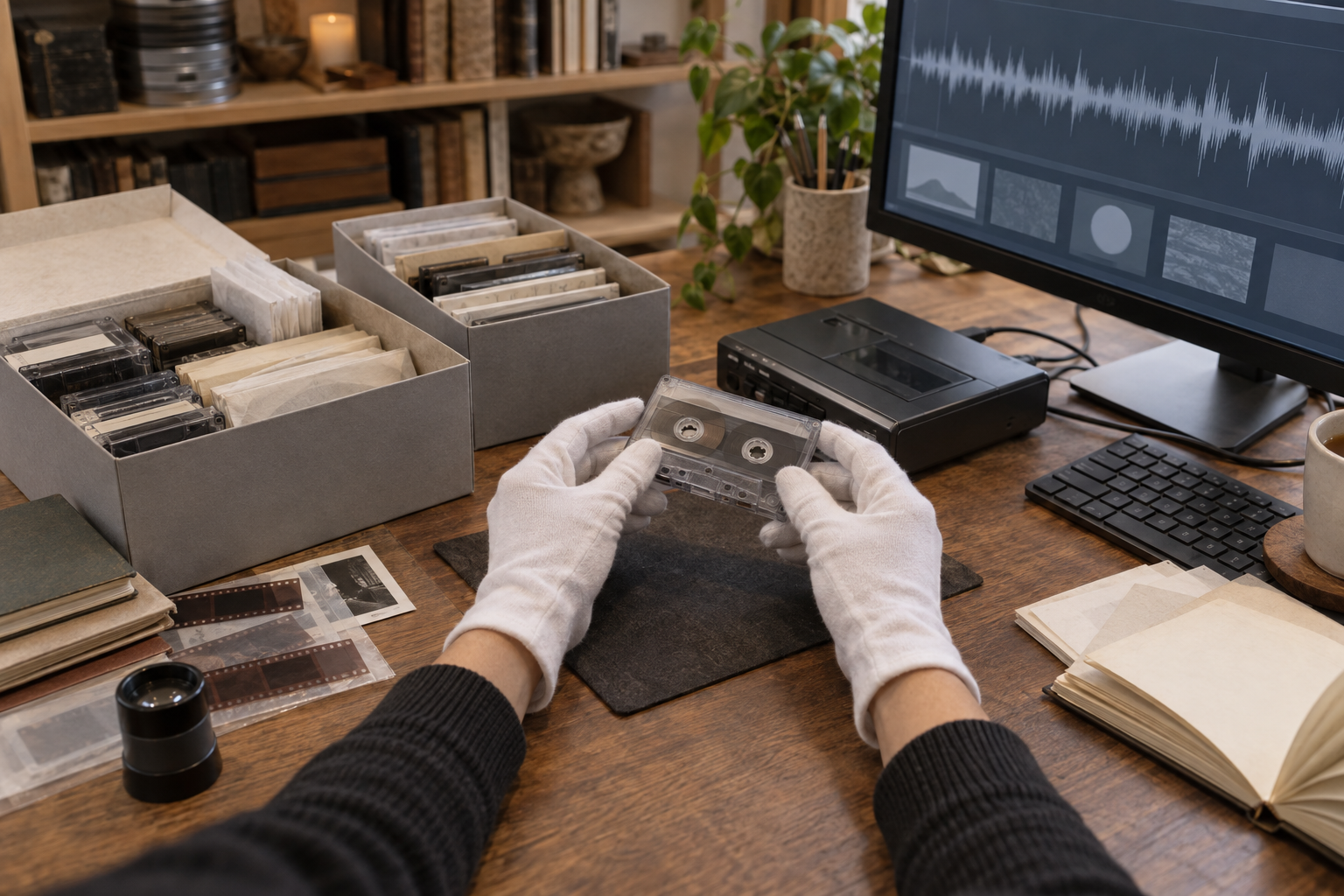
Jaya Tirtha Charana Prabhu’s website had ceased to be available in its original public form, leaving a Wayback Machine copy of the Saligram-sila resource as the identified path to it. That makes preservation urgent, but preservation and unrestricted republication are not the same act.
If you are helping a temple, family, or Vaishnava community preserve this work, use a process that another person can verify:
- Record both links. Save the original public remembrance and the archive link. An isolated ritual page without provenance is difficult to evaluate later.
- Document each snapshot you consult. Record its full URL, visible page title, and the date on which you accessed it. If different snapshots contain different material, keep them separate rather than silently combining them.
- Create an inventory before copying content. List page titles, navigation paths, images, downloadable files, and broken links. This reveals what survives and what is missing without altering the evidence.
- Identify a responsible custodian. Ask the family, an authorized community representative, or the person responsible for the original site about ownership, privacy, and appropriate access before creating a public mirror.
- Preserve an unedited master. If you have permission to make a copy, retain one version exactly as recovered. Put spelling corrections, annotations, and updated instructions in a separate edition so readers can distinguish the curator’s work from later changes.
- Keep attribution attached. Every copied page should retain Jaya Tirtha Charana Prabhu’s connection to the collection. Do not detach instructions from their curator and recirculate them as anonymous material.
- Mark gaps rather than filling them from memory. A missing image, mantra, or paragraph should remain visibly missing until an authenticated copy is found. A plausible reconstruction can quietly become a false tradition.
The website’s original audience also sets a boundary. Do not use an archived page as your sole authority for beginning or changing Saligram-sila worship. Preserve technical material as part of a devotional inheritance, then consult a qualified teacher in your own tradition about how, or whether, it applies to your practice.
Turn remembrance into a sustainable form of seva
If you already worship Saligram sila
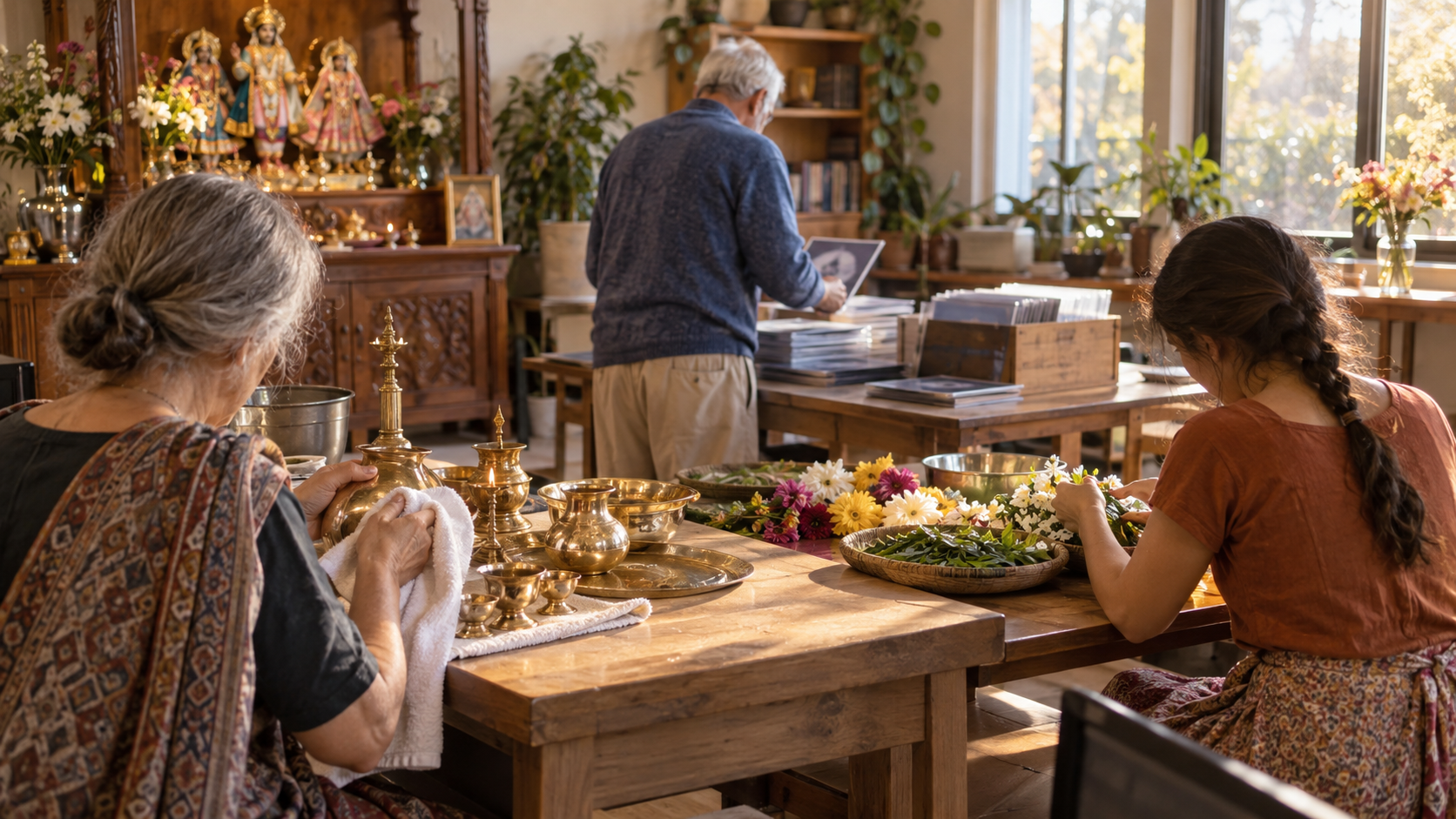
Do not measure your devotion against the size of another person’s collection. A more useful response is to examine the service already entrusted to you. Is your daily worship regular? Do you understand the commitments you have accepted? Is there a trusted devotee who could maintain the seva during illness, travel, or incapacity? If any answer is uncertain, speak with the teacher or senior Vaishnava who guides your worship before adding another obligation.
You can also document practical continuity without exposing sacred details. Keep the appropriate contact names, care arrangements, and location of authorized instructions where the person responsible for your household worship can find them. Jaya Tirtha Charana Prabhu’s digital legacy shows why such knowledge should not depend on one memory or one website.
If you do not worship Saligram sila
Do not begin from a moment of grief or admiration alone. Learn why the sila is worshipped, what continuing service entails, and how your sampradaya transmits that responsibility. Seek personal guidance before acquiring a sila or attempting a puja assembled from archived pages.
You can still serve the legacy directly. With permission, help index archived pages, identify broken media, transcribe material accurately, compare snapshots, or prepare a catalog for an authorized custodian. This work may be quiet, but it allows devotional knowledge to remain findable without pretending that an archive can replace a teacher.
Before you leave, choose one faithful act: offer a prayer using his full name, correct an unconfirmed claim, save the archive’s provenance, or contact an appropriate custodian about preservation. A precise act of service honors Jaya Tirtha Charana Prabhu more securely than a grand statement that no one can verify.
References
- Dandavats – Jaya Ttirtha Charana Prabhu the “Saligram Sila acarya,” about to leave this world
- Wayback Machine – archived Saligram-sila website associated with Jaya Tirtha Charana Prabhu

Leave a Reply
You must be logged in to post a comment.